Category Archives: Namibia

Confession time.


I have a confession to make. We didn’t camp quite as much as we’d hoped. It started well in Waterberg, although the shewee’s one outing ended in failure. I’ll just say it needs a wide legged stance not suited to standing on a camping ladder, to avoid leg sprayage. Also some snuffly animal appeared outside the tent just after I’d been and zipped myself back in and thereafter I never got up. The thought of having to put on shoes, not flip flops due to snakes and scorpions, descend the ladder, fend off jackalls that unlike the feared lions do circle your camp in the hope of nabbing a lamb chop and who knows, a nice juicy ladder-descending buttock, kept me pinned to my matress until dawn broke. However we had our own private bathroom along a little path, a bbq, a shaded table and chair area, and delightful little pools surrounded by the shade of bird-crammed trees where we could drowse and cool down during the midday heat.
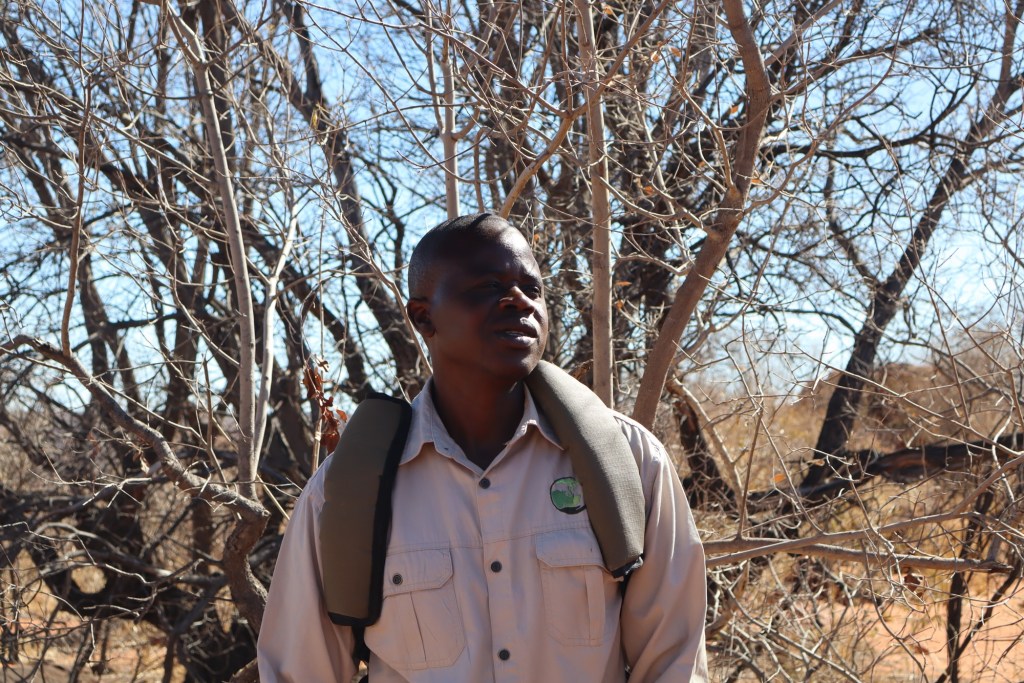
We’d taken a walk up to the plateau where our guide showed us the shocking site of a white rhino’s poop on top of a back rhino’s. This meant war, he told us. The white rhino is saying “I see you, black rhino.” Did this mean a fight to the death will ensue soon, someone asked? “Oh no,” he replied, scornfully, “They are not that stupid, they want to live. It stops with the shit.” If only the human world had as much common sense. Stinky, but bloodless.

At this point I decided that this is the life for me. The tent on the roof took less than 4 minutes to set up. Once the sun went down, sitting in the balmy warmth with burring ciccadas and moaning lions our audio-backdrop, I decided we’d sell the house and buy a gigantic camper van and travel the world! Yeehaa! 
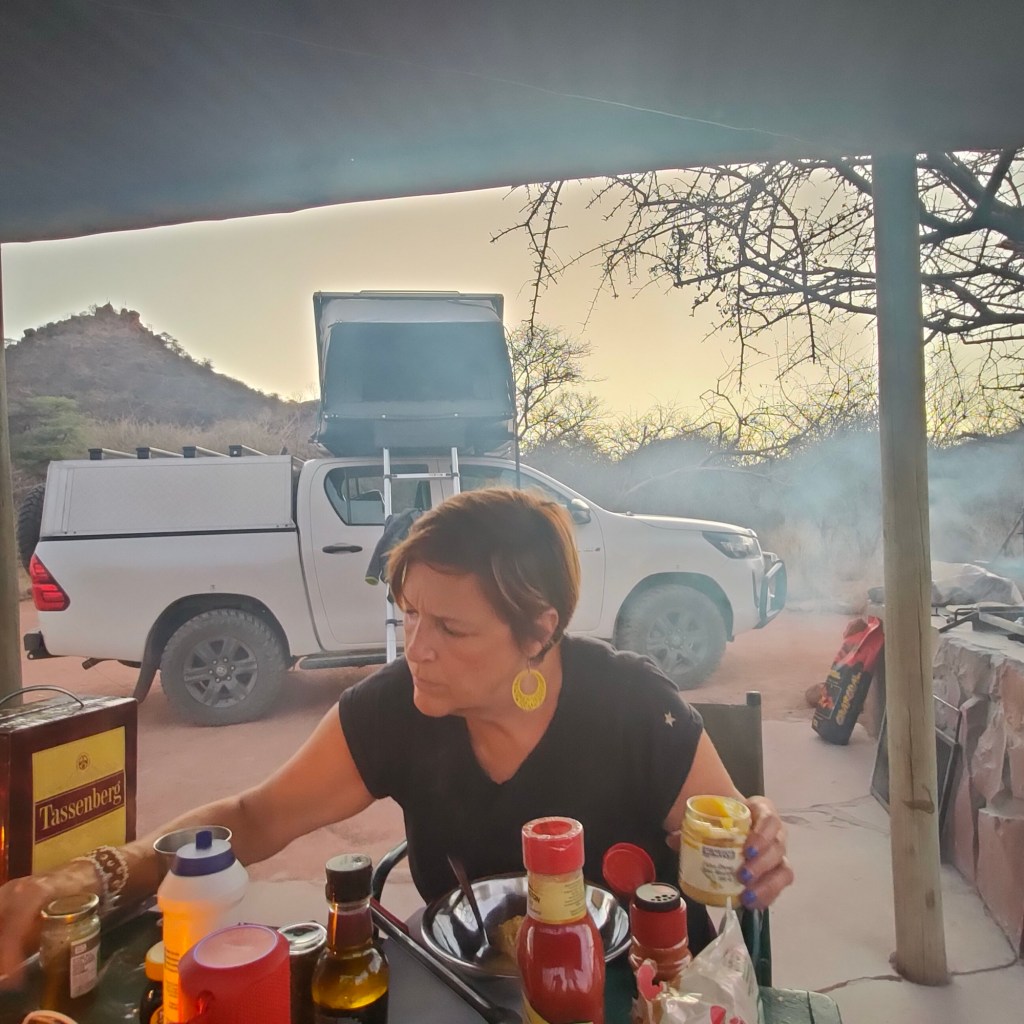
First night making complicated BBQ sauce. You can take the girl out of the kitchen but….

But….

The sun rises at 5.30am and sets at 7.30pm, during which it is mostly above 35 degrees. We moved on from Waterberg to the state run camps in Etosha. We’d decided on these rather than the usually nicer privately run ones outside the park as you can only do night and dawn game drives when you are inside the gates. Facilities became shared, and more basic, with little shade. They had an amazing waterhole where we sat and watched lions, elephants, zebras and all the familar animals we’d met for the first time at Harnas – ostriches, springbok, Eland, Oryx (forever childishly in my head called “Olivias”), who came and drank, because at this time of year, there’s no water anywhere else.

Waterhole at Halili Camp, Etosha.
The zebras are leaving, it’s the impalas’ turn. Western cattle egrets in the foreground.

It also felt extraordinary to be driving ourselves across the bush and come across giraffes, zebras and wildebeest.

Driing across Etosha with a giraffe.

On a night drive (not driven by us) we came across a freshly caught zebra, still struggling as the entire pride, babies and all, piled in. Literally a little too close to the bone, we then had an added frisson of excitement as a tyre burst. But the driver seemed supremely confident that the lions were too engorged with zebra to be interested in his skinny bod, and he was right.

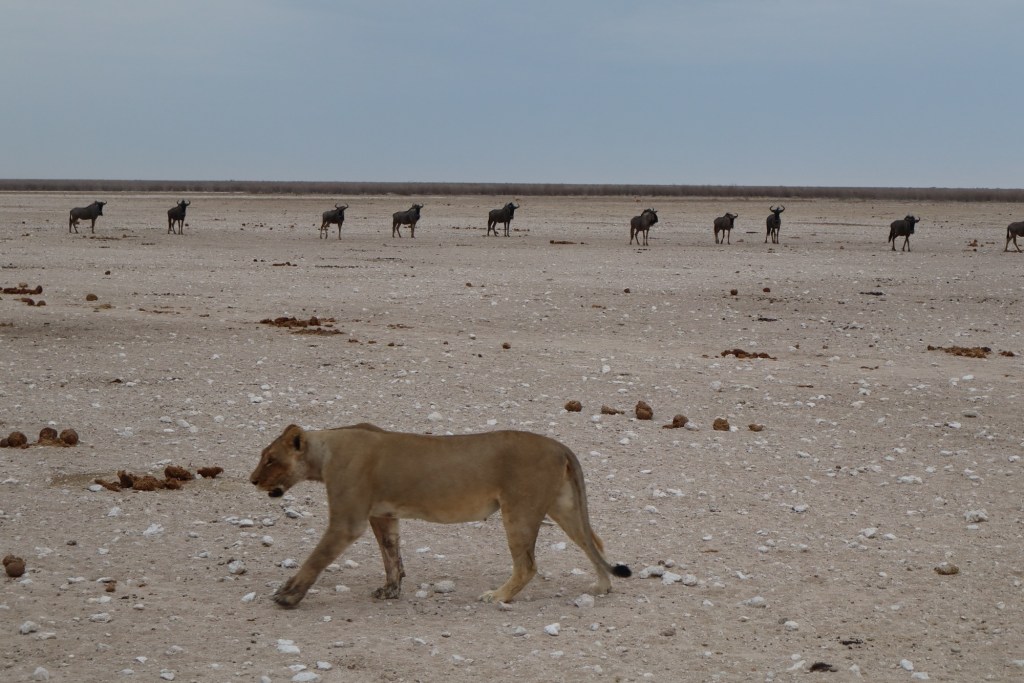
A zebra feeds 9 lions.

We worked around the heat by booking camping for one night inside parks and then fleeing in the mornings to lodges with air con and shade. One day we spent most of the day in a swimming pool, lolling like hippos under the water. Some of the lodges had vast amounts of food available and indecently green lawns.

On our way out of Etosha to see rock carvings and paintings, people were waving us down with empty water bottles asking for food. The bore holes have dried up, and there is no water now in the North. Had you been spying on us in the mornings at lodges, you’d have seen us making huge piles of cheese and ham sandwiches, some bacon and egg ones (messy), piling extra plates with large amounts of fruit, piles of dried seeds, bananas and nuts, all shovelled into my rucksack when I thought no-one was looking and then redistributed on our travels along the roadsides, together with lots of water we bought from supermarkets. We were searched for poached meat on leaving game parks. You can’t blame people for poaching oryx, which is plentiful, and delicious – sorry Olivia!
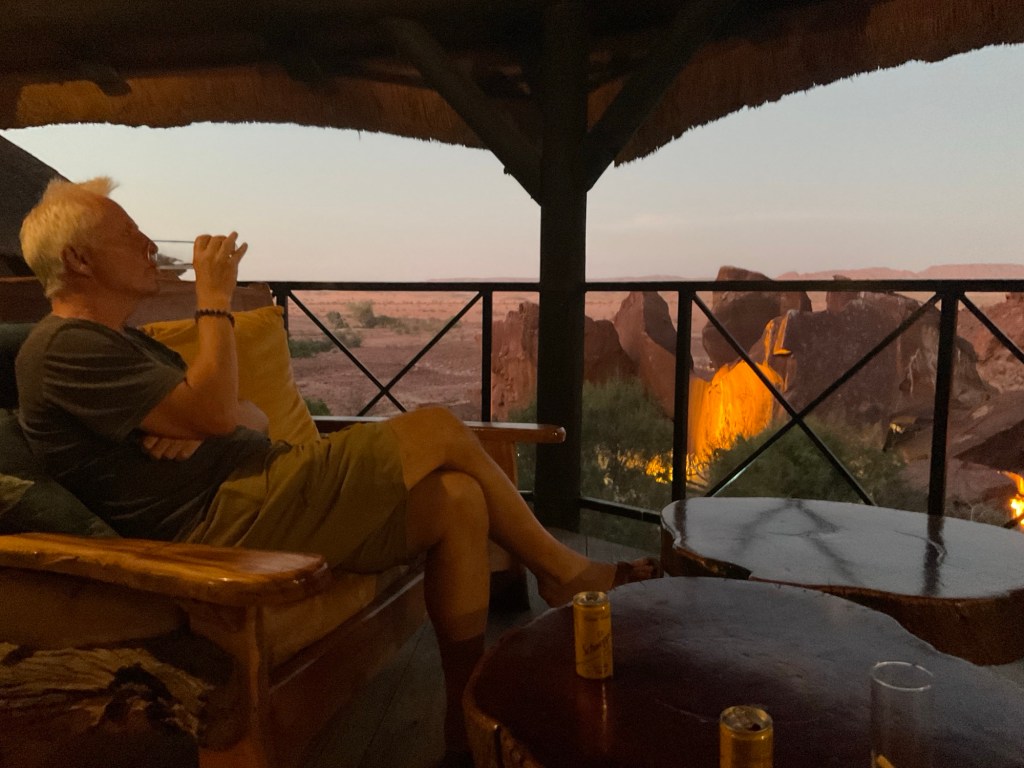
Clive sipping G and T in the lodge we pillaged.


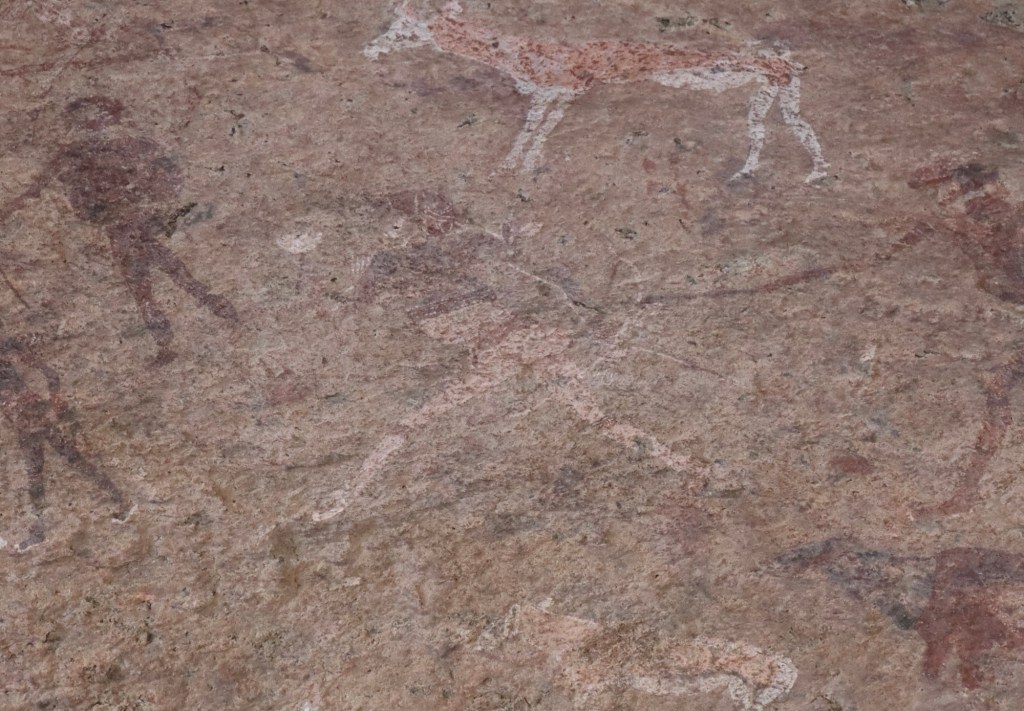
Ancient rock art.

Seeing the 10,000 year old Koisan art on the rocks, together with the drought made me wonder. The San were the first people of the earth. Would they also be the last? 

In Brandberg, the site of “The White Lady”, who is actually a male shaman, we stayed in our first lodge after several days camping. It felt like a different holiday, one where me and my clothes weren’t in a constant state of sweaty sandiness striding like adventurers through the wilderness. To have our own shower! A bed! Clive immediately blocked the sink after washing his socks and pants as the plug didn’t work, leaving an embarassingly grey pool of water we had to fess up to the owner about like guilty school kids.
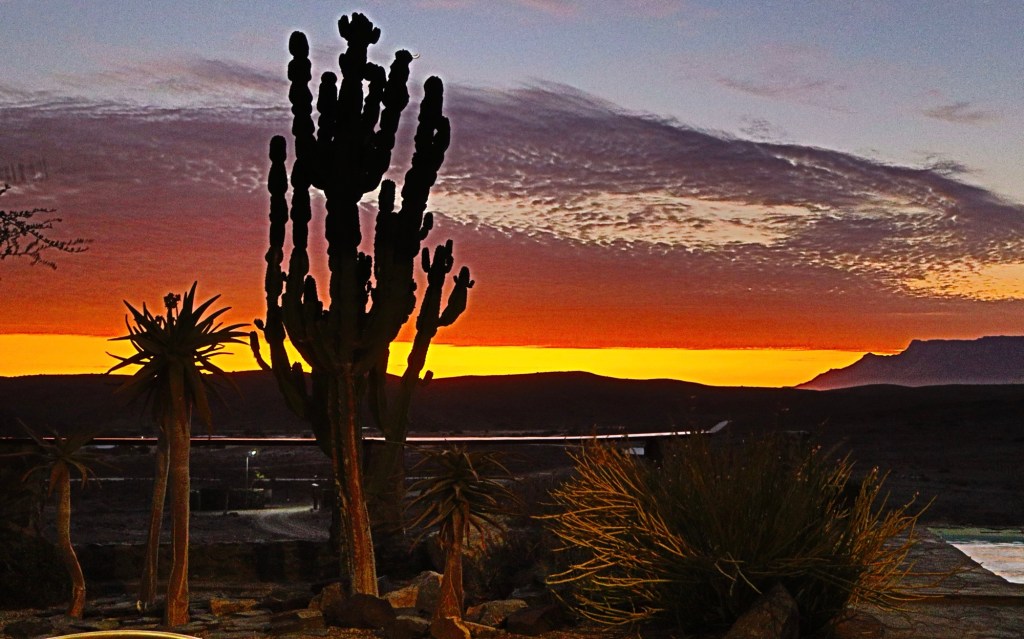
  

A trip to the coast, and to the darkest depths of despair.

From here we headed west to the coast. I fondly imagined sea air, empty golden beaches, gambolling seals. How wrong I was.  Never have I encountered such dreary, depressing, bleak scenery. Mile after mile of chilly grey nothingness, steeped in sea fog, the coast line occassionally dotted with ship wrecks. There used to be millions of whale bones washed up along the beaches from the whaling industry, hence it’s name, The Skeleton Coast.
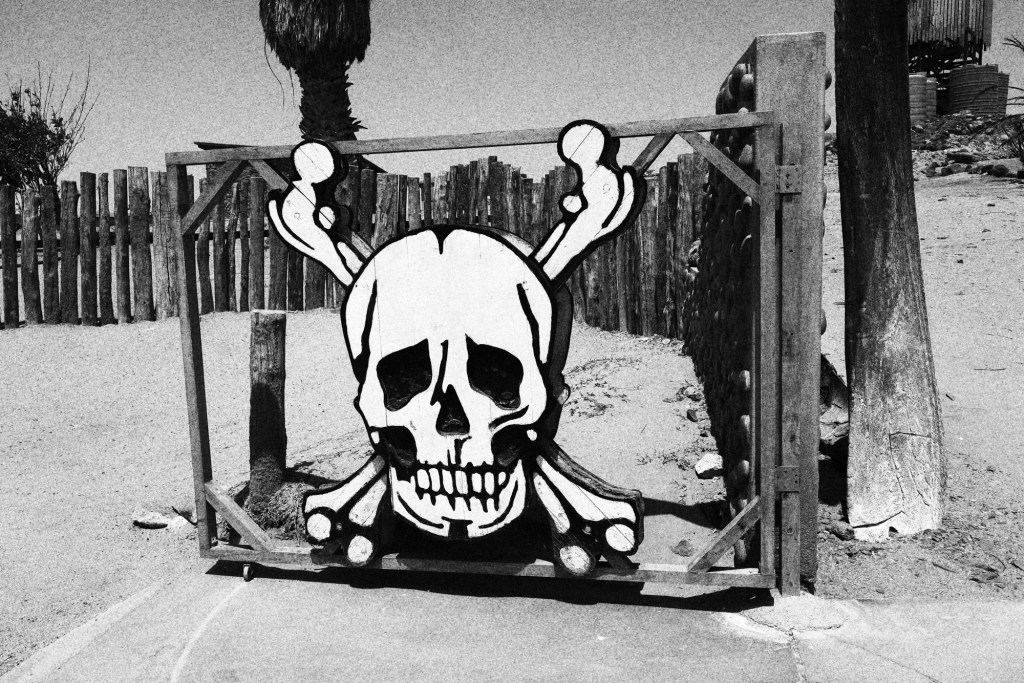
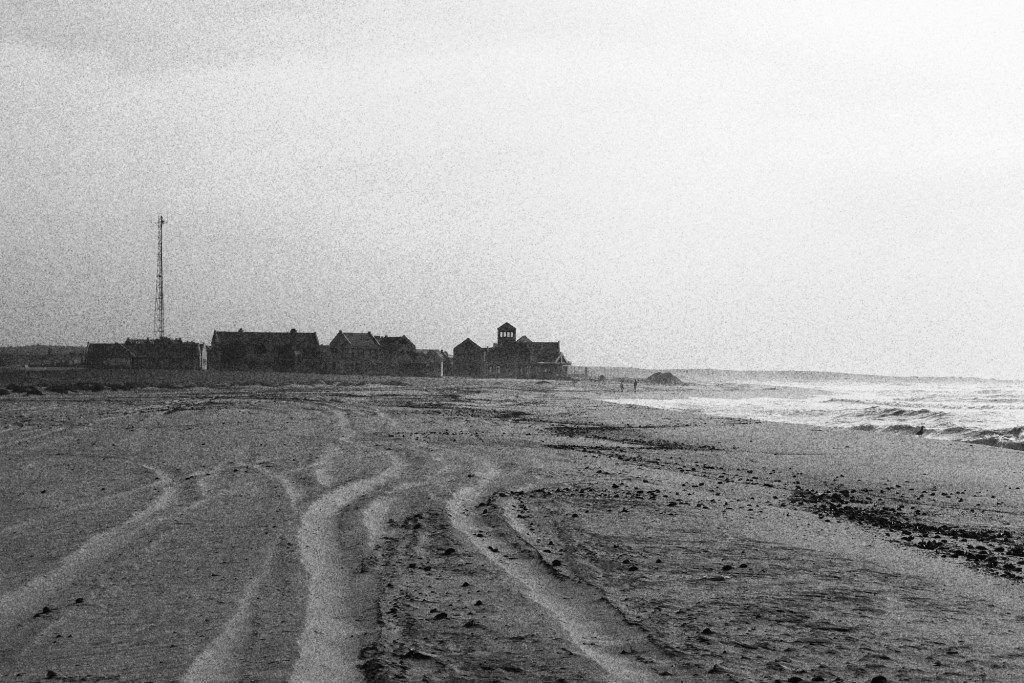
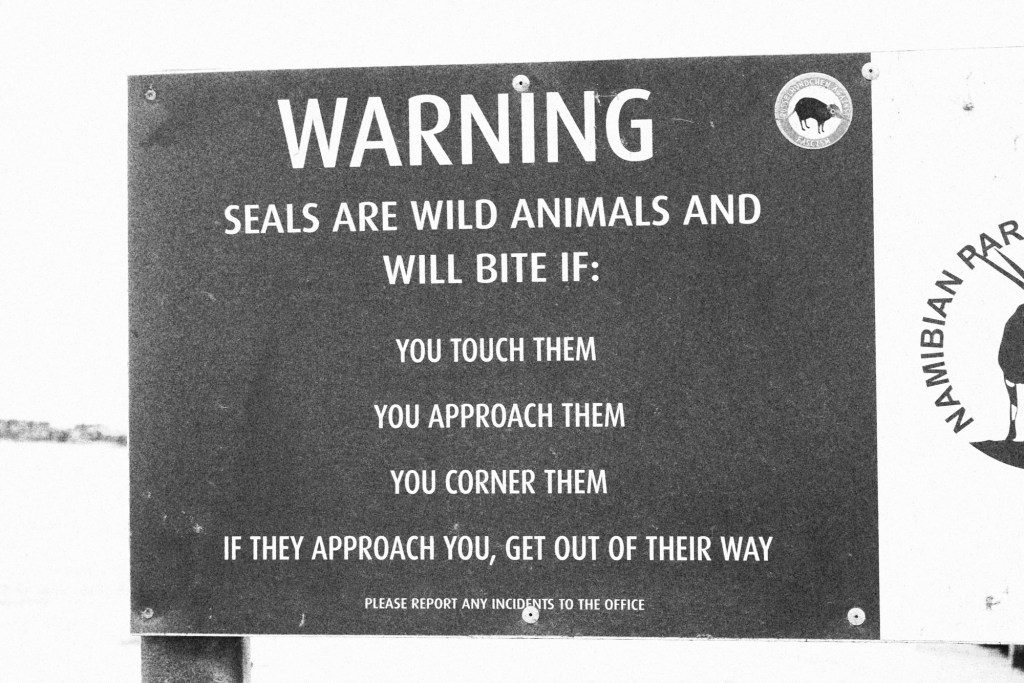
As each mile passed, I felt tendrils of despair creep around my soul until by the time we reached the cheerily named ”Saint Nowhere”, the campsite we were supposed to stay at, I refused point blank to get out of the car, and kept driving in the hope we’d find somewhere less suited to mass suicide. Which we did, a delightful refuge with a roaring fire and squishy sofas where we played backgammon, drank copious amounts of red wine to assuage the guilt felt that we hadn’t camped again, and slept on a deliciously soft matress to the sound of crashing waves and the wiffy pong of the largest seal colony in Namibia along the bay at Cape Cross. 
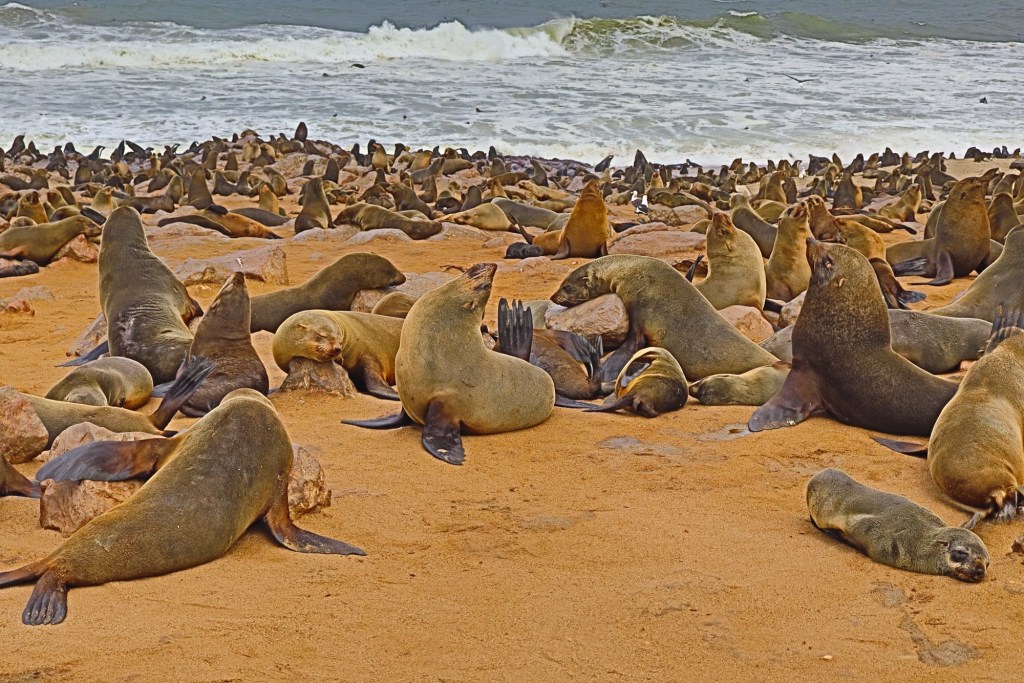
 

Lost baby seal
Cape Cross, so called as Diogo Cǎo “discovered” it in the 1400’s and planted a cross here. Actually the San had been here 11,400 years earler.

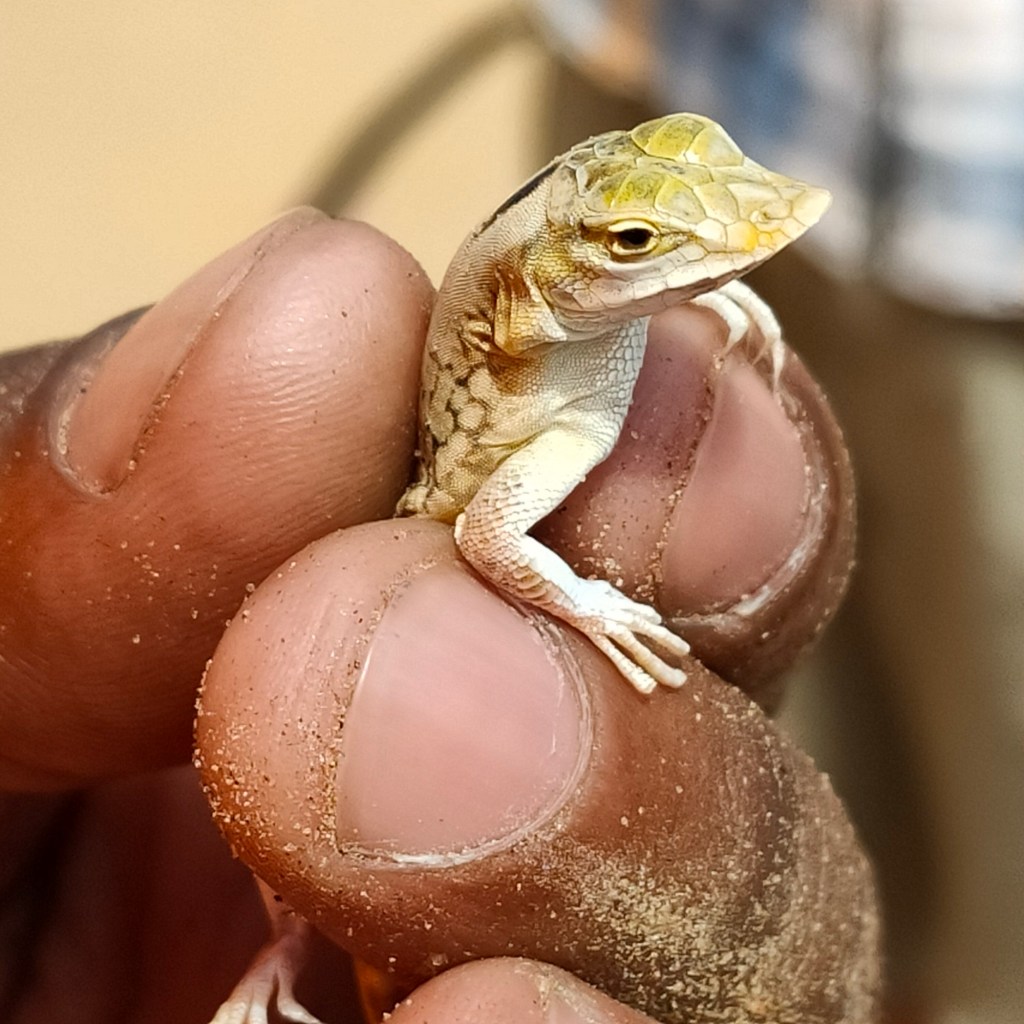
Searching for the Small Five.

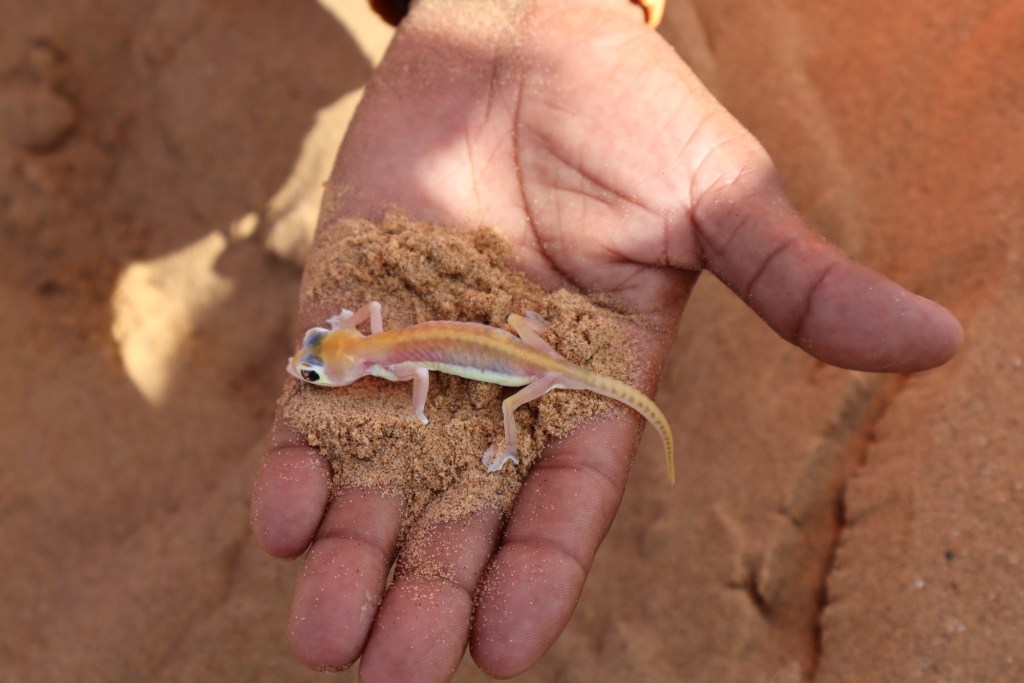
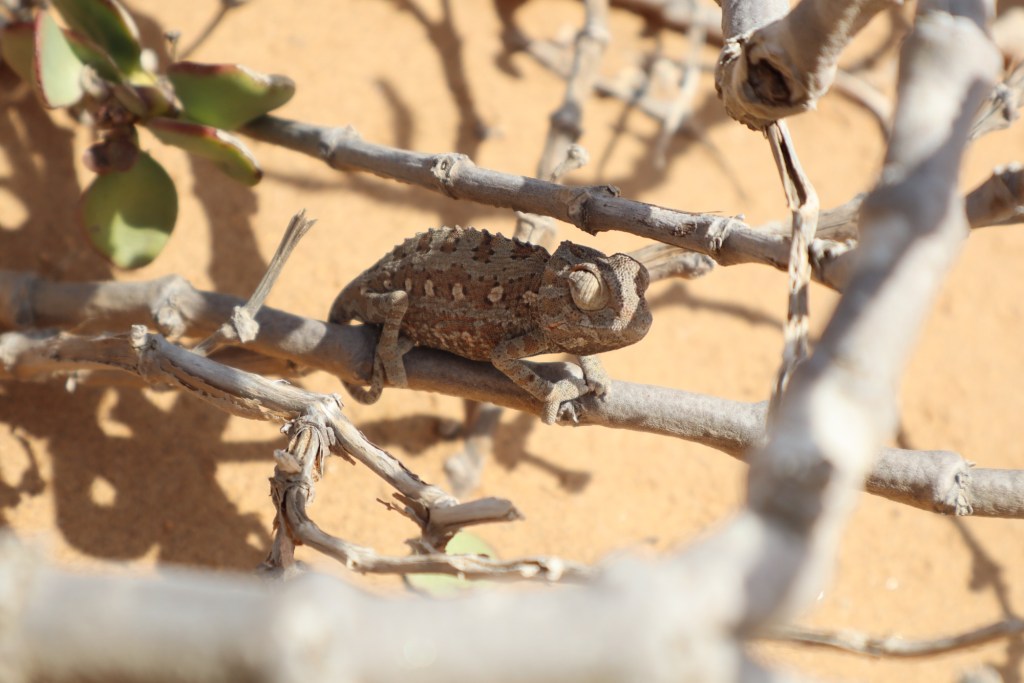
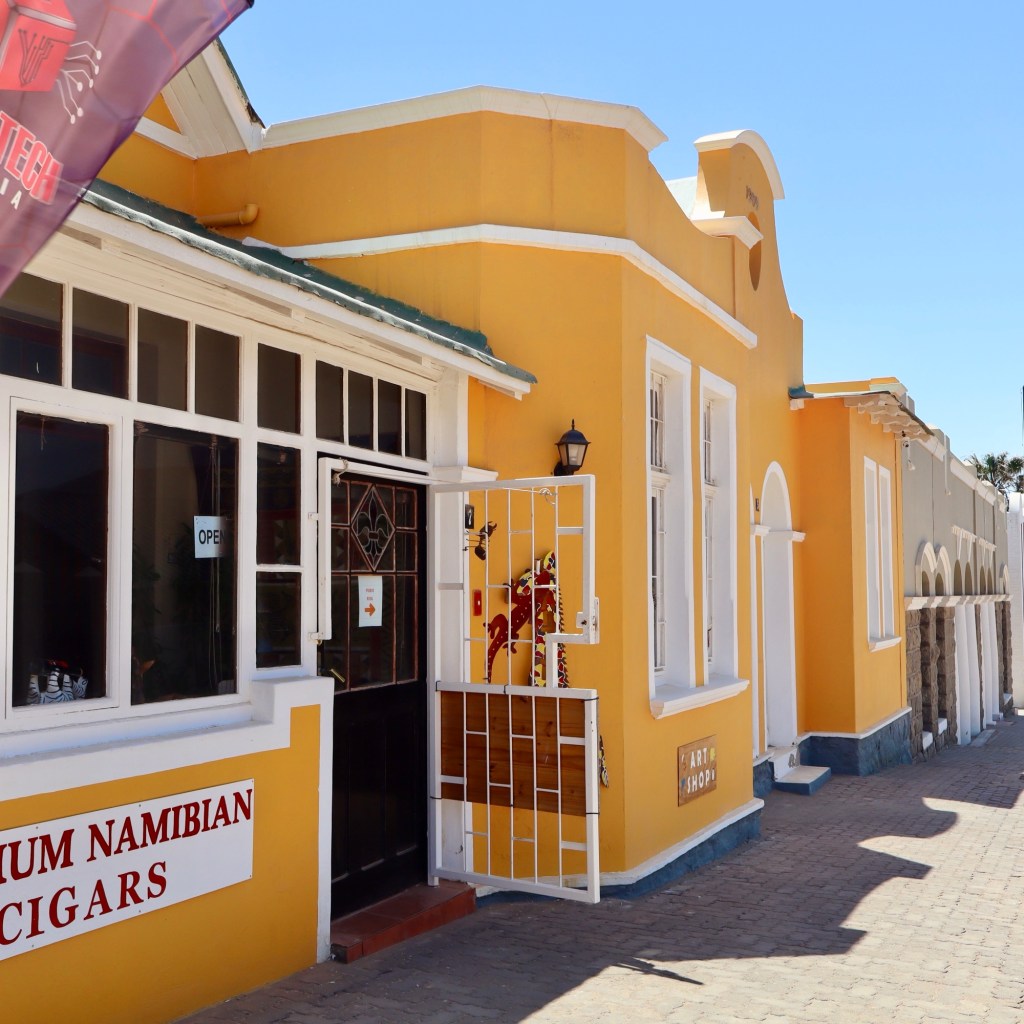
We have a blissful three night rest up in Swakopmund, strangely like a mini-Germanic Bournemouth supplanted onto the Namibian coast, again, ahem, not camping. There is a lot on offer here, from sky-diving to dune surfing, and we go for a morning on quad bikes, looking for the “Small Five” – a side-winding puff-adder, a Namaqua Chameleon, a shovel-snouted lizard, the transparent Palmato Gecko, and the white spider. Our guides find 4/5, as the spider had gone on walk-about.

Big Daddy Hides in Sea Mist

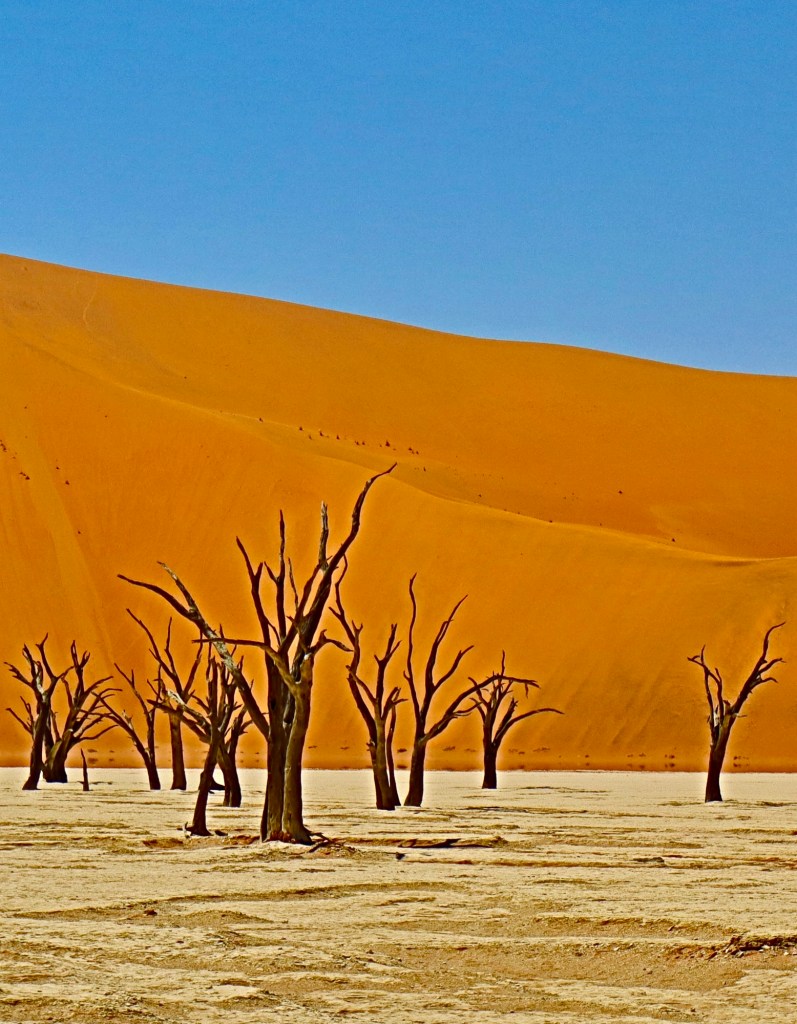
Then we made for Big Daddy and Deadvlei, a giant sandune and a small 1000 year old dead forest. Like lemmings, having read that sunrise is the best way to see this, we were up at 5am as the gates opened and followed in convoy all the other campers doing the same as us. It is a real palaver to get to them, as after 60km you have to drop your tyre pressure for the last 4 km as it is a pure sand road. Cars often get stuck, and one did when we were there. Feeling like we were in some kind of race we triumphantly reached the final carpark to find the famous sand dunes swathed in sea fog, the imagined perfect photo of a dead tree against a blue sky and orange sand dune was not going to happen. By the time we got back to the car park and reinflated our tyres, the fog had burnt off and so we returned to do the whole thing again via shuttle this time. Comically the dune all the early risers had sat along at the top wasn’t the top at all. Once the mist burnt off, we could see it unconquered quite a bit higher than the one we had all scambled up.

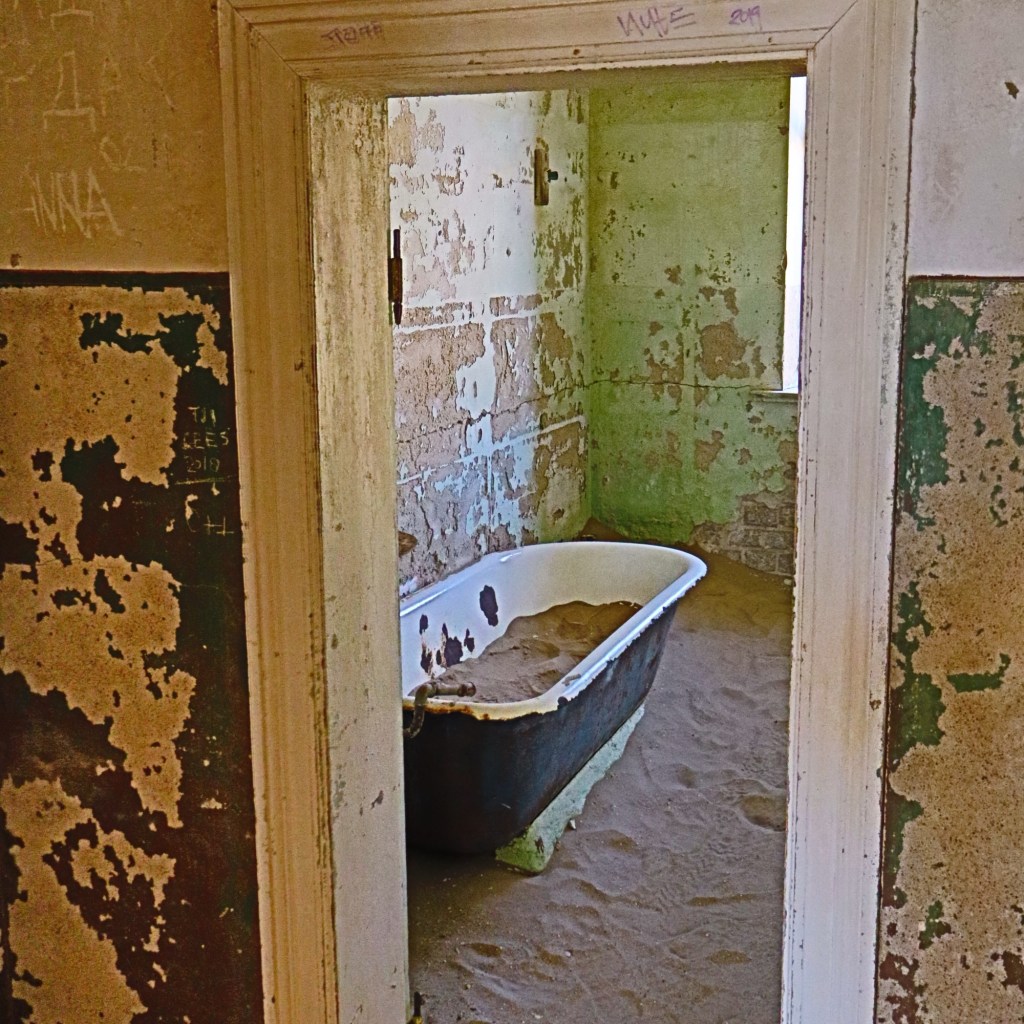
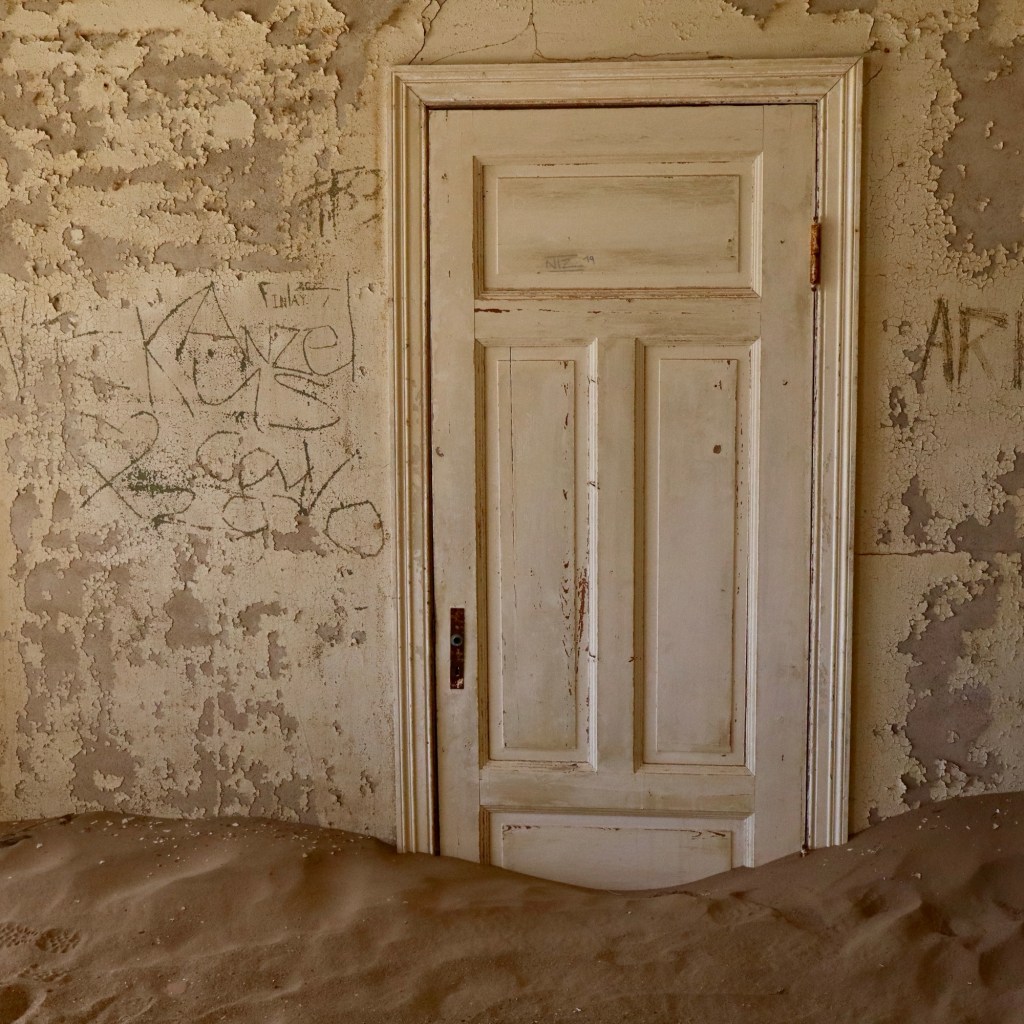
A ghost town.
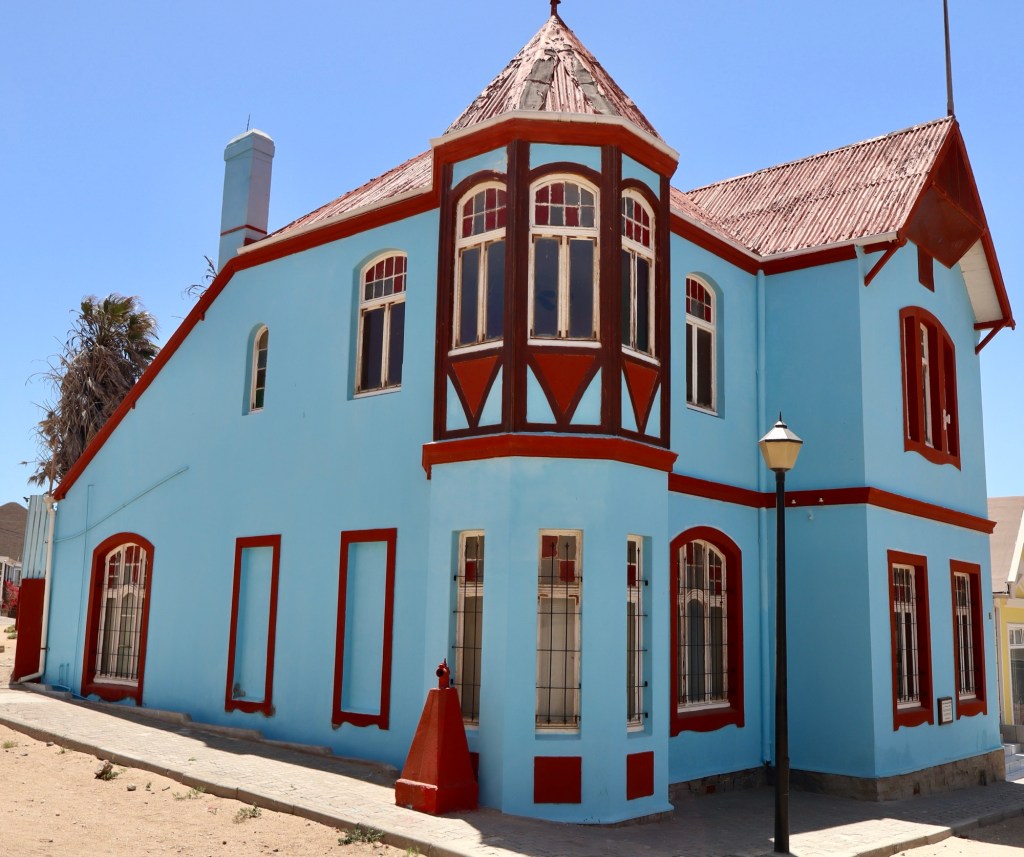
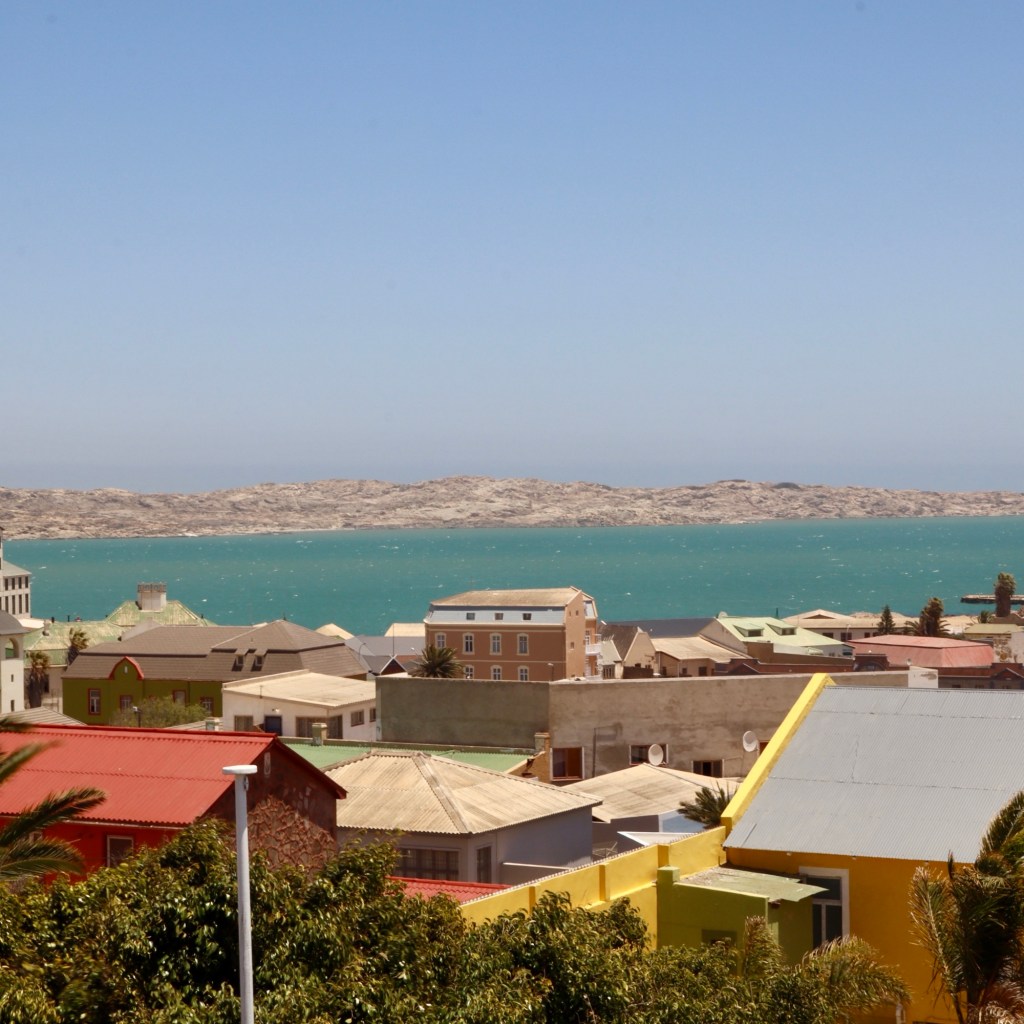
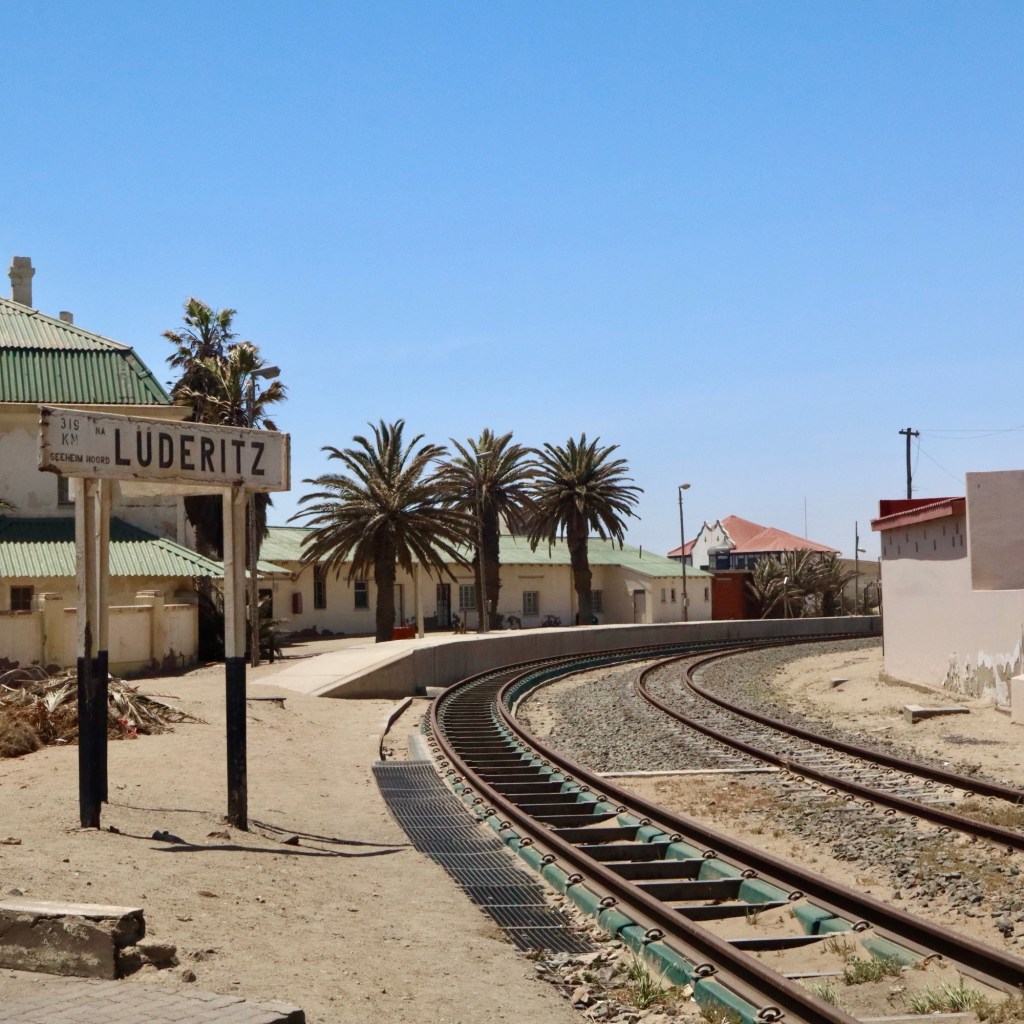
Sat in a sunlight filled loft apartment in Luderitz, the regular afternoon wind was building but not yet at the levels when we arrived the day before when we drove through a sandstorm, hitting a small innocuous looking sand dune across the main road into Luderitz which nearly blew a tyre. Originally built as a diamond mining town, it is like a cross between Shetland and the Wild West, somehow managing to be cosy yet industrial. There are less tourists here because it is in the back of beyond and a 6 hour drive from anywhere. There’s an abandoned diamond mining town nearby called Kolmanskop where we stop by as we leave.
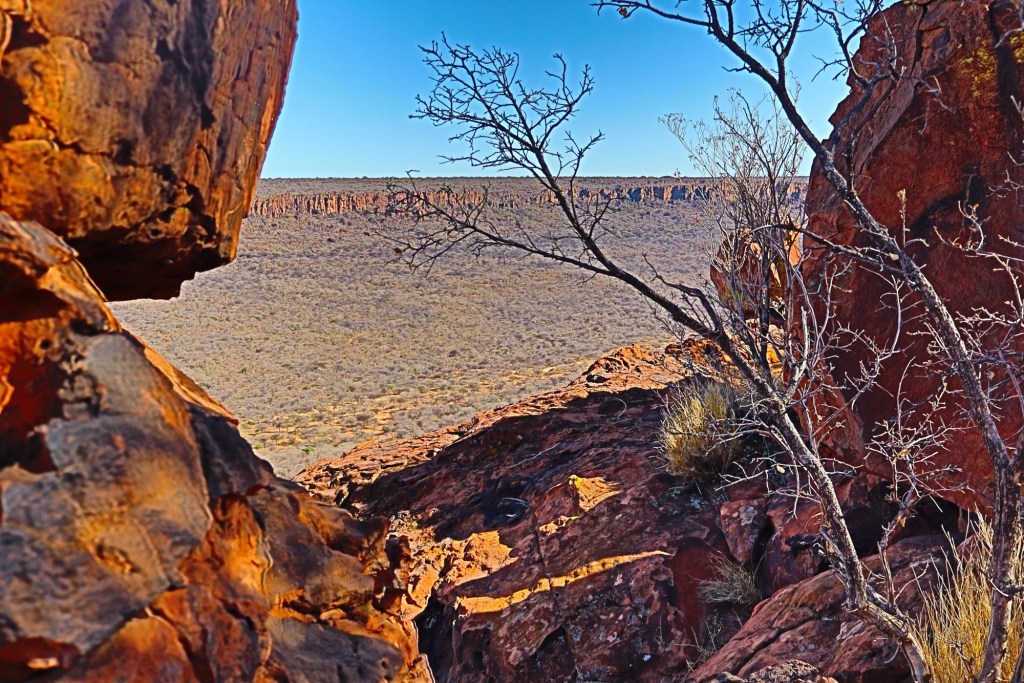
Fish River Canyon.

At our last stop before heading 8 hours drive back up to Windhoek we are in Fish River Canyon gawping with everyone else at the view.
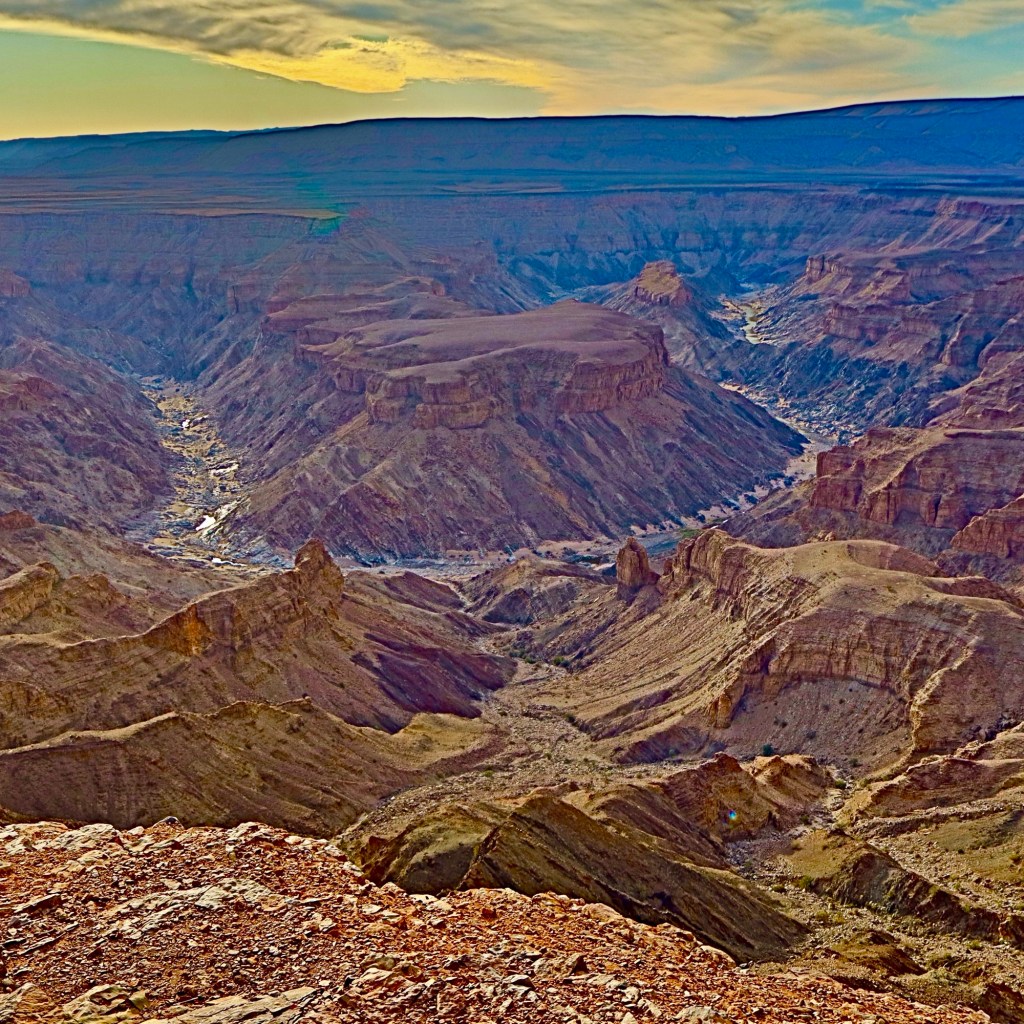
Twelve German friends on a luxury tour offer us two of their G and T’s with copious ice. They clearly think we are insane to camp; I suspect most of the men have prostate issues and would be up and down that ladder most of the night. Would I swap our camping trip with their luxury one? Yes I bloody would. But back in Windhoek I see several pristine white 4 by 4’s parked-up waiting to set off on their trips. Rather like the shifty-eyed reassurance given to a very pregnant woman asking if labour is painful, would I lie if they asked us how our experience went? I’d tell them they need the bladder of a camel, to stay away from baboons especially if they’re female, and take plenty of small change to tip the many desperate people they will meet on their travels. But in the same way labour is indescribably hard yet you find yourself doing it again, we’re already planning another camping trip.

They were Russian, not Italian. Excuse my swearing.


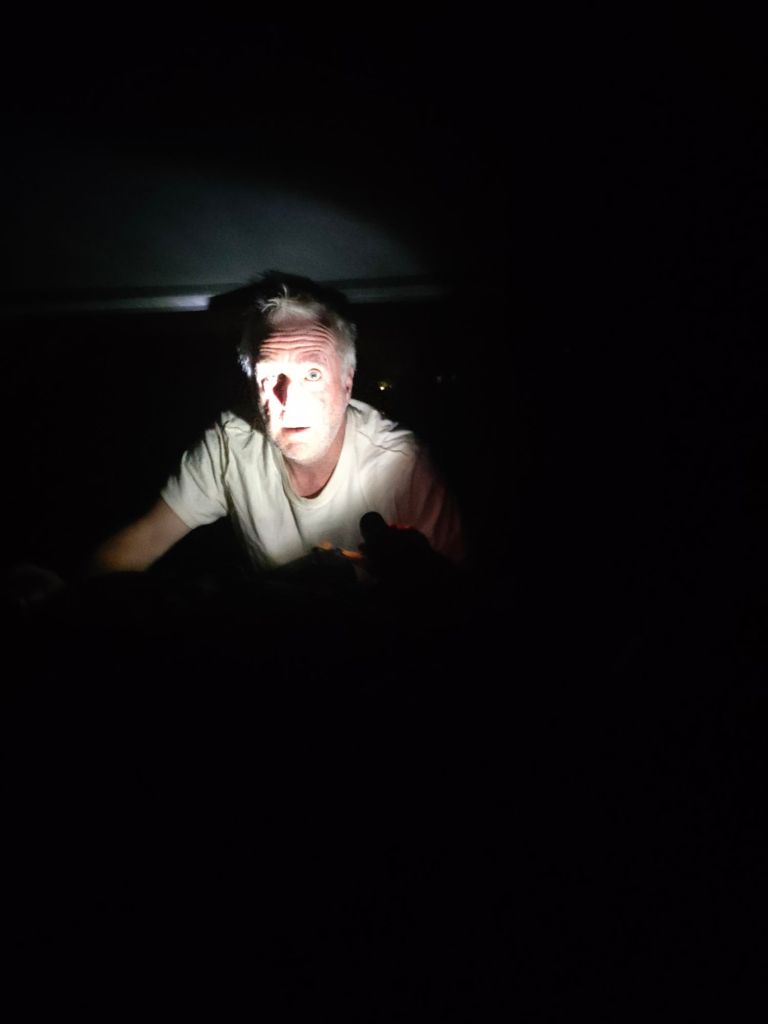
Clive’s Go-Pro of the milky way.

Noon massacre.

James’s experience of School. His choice of vet medicine as a career is probably wise.

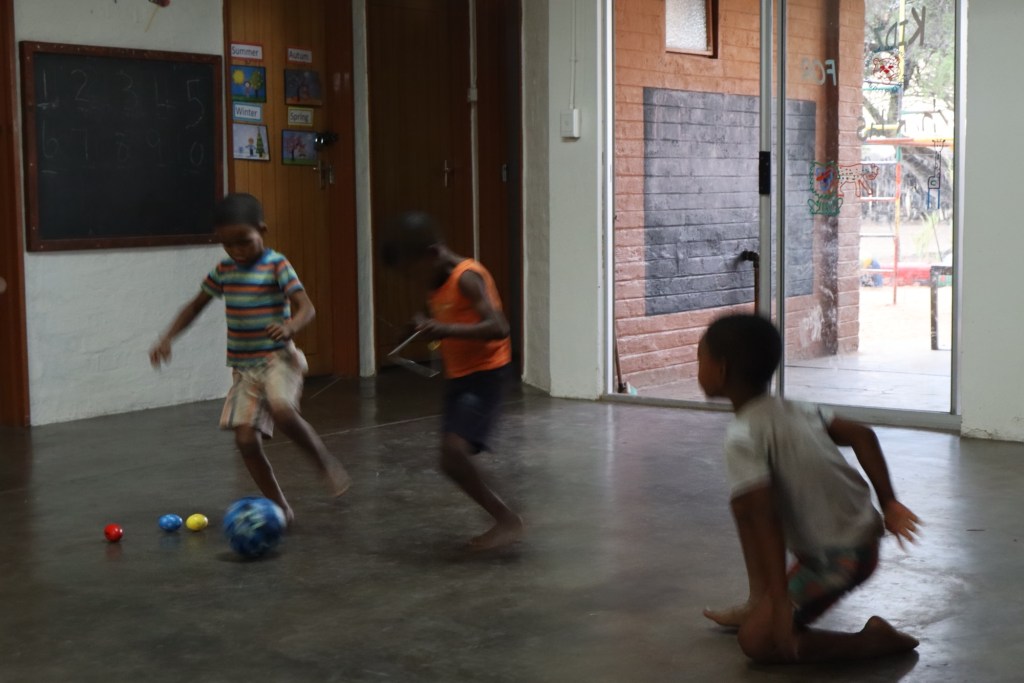
School – but not as we know it.

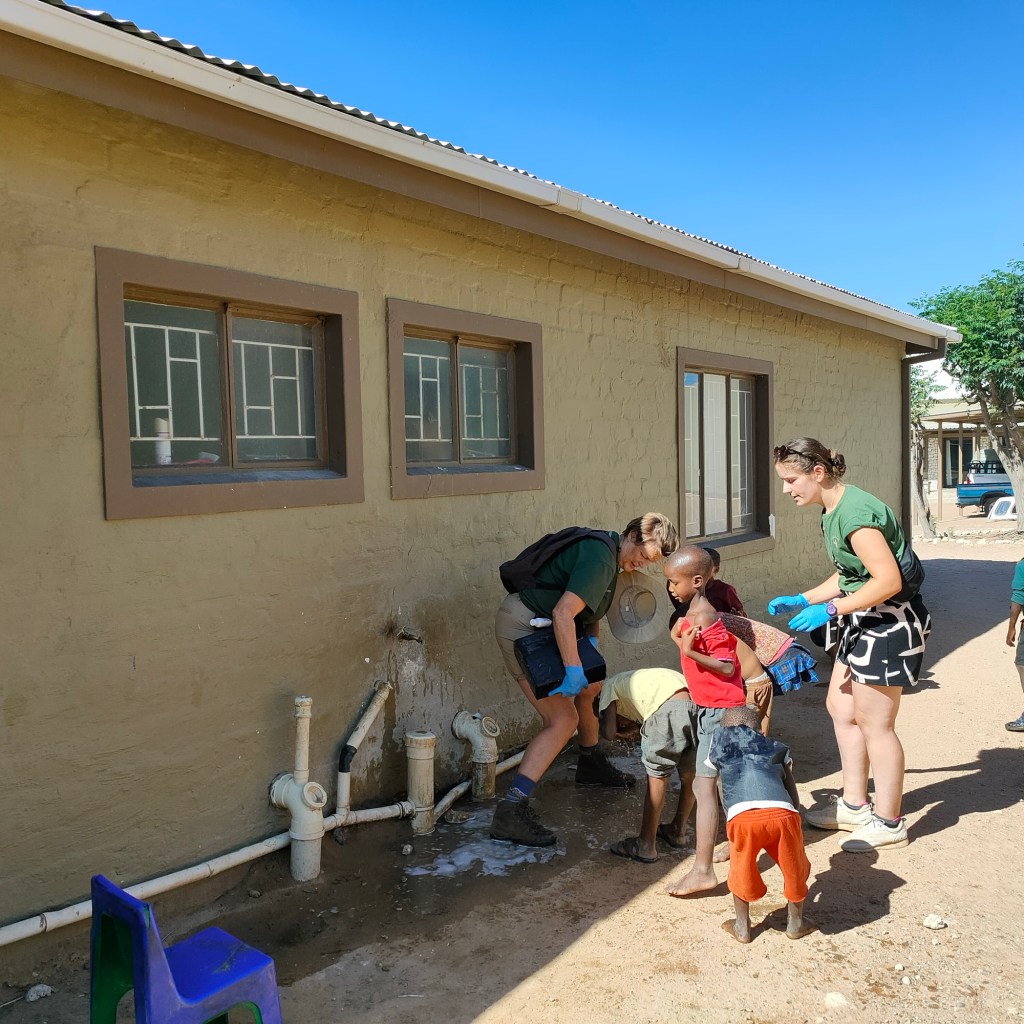
Hearing Maria call out the dreaded words “Cheetahs are in school this afternoon” struck fear into our hearts. We’d seen the exhausted Crocs as they staggered back the night before, heading straight to the bar. We’d seen Simon’s point blank refusal to ever do it again; (he seemed to have a golden ticket to do whatever he fancied, I suspect his frequent assertion that he is leaving all of his money to animal charities might have something to do with that. And being 78, so no longer giving a fig.) We’d seen James’s video of a few of the 5 year olds massacring a white doll. Make of that what you will. The crocs had stayed until 6pm, thowing down a gauntlet. The instruments sent to me by Sue Bullimore, an old school friend, helped enormously. For around 10 minutes. Then we played a version of “It” that was perhaps unwise in 40 degrees. Clive managed to then muster enough energy to play football with the balls we’d brought, but the rest of us could only lie on the floor in a pool of our sweat while the children bounced on our heads. The quiet stillness of their teacher, a quizzical smile on her face as she sat behind her desk watching us slowly dehydrate from grapes to raisins, showed the way it should be done. We sidled off at 4.45pm, on our hands and knees, muttering “never again,” and in my case “Mother, I salute you.” (she taught primary school children for 40 years).

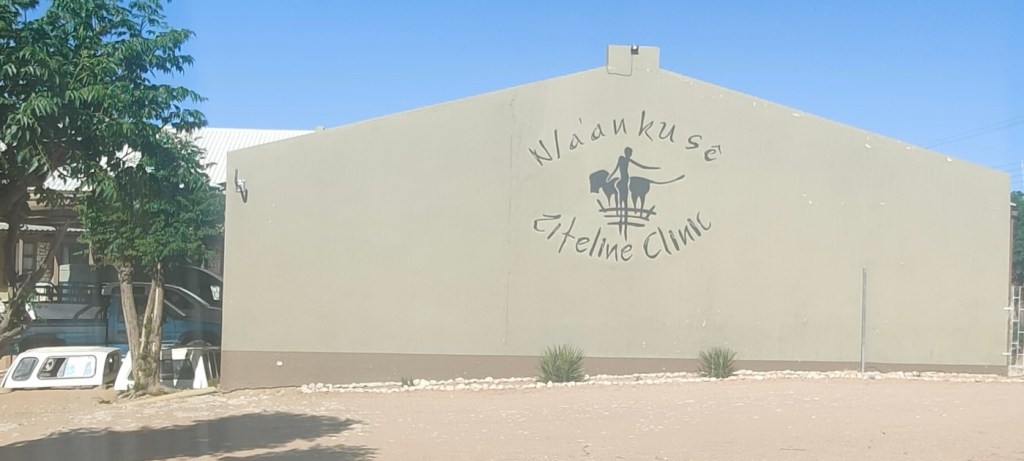
The Lifeline clinic.

The Naankuse Life line Clinic in Omawewozonyanda.

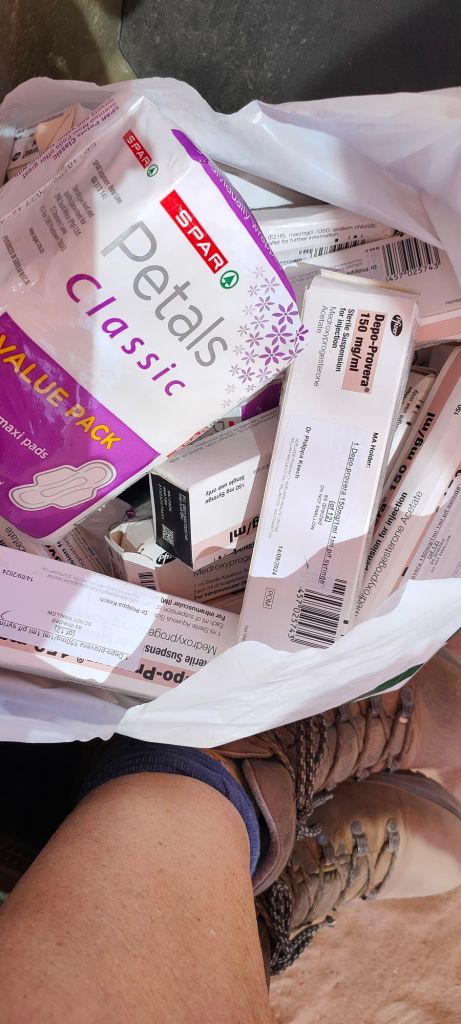
 The clinic is around an hour’s drive away and a source of great interest to many of the volunteers. Helen Bennett, a nurse from Clive’s art group in Minstead had given us a defibrillator as well as a spanking new digital thermometer and 10+ sats monitors. We also had 12 contraceptive injections and bags of sanitary towels. Theo, the clinic’s manager and chief nurse, had put the defib at the top of a wishlist sent to us in the UK. He received it with such joy and enthusiasm, the battery having expired 18 months ago on their previous one. Due to an admin snafu they have had no doctor for the last two years.

Theo with the new defib donated by Helen Bennett from Minstead.

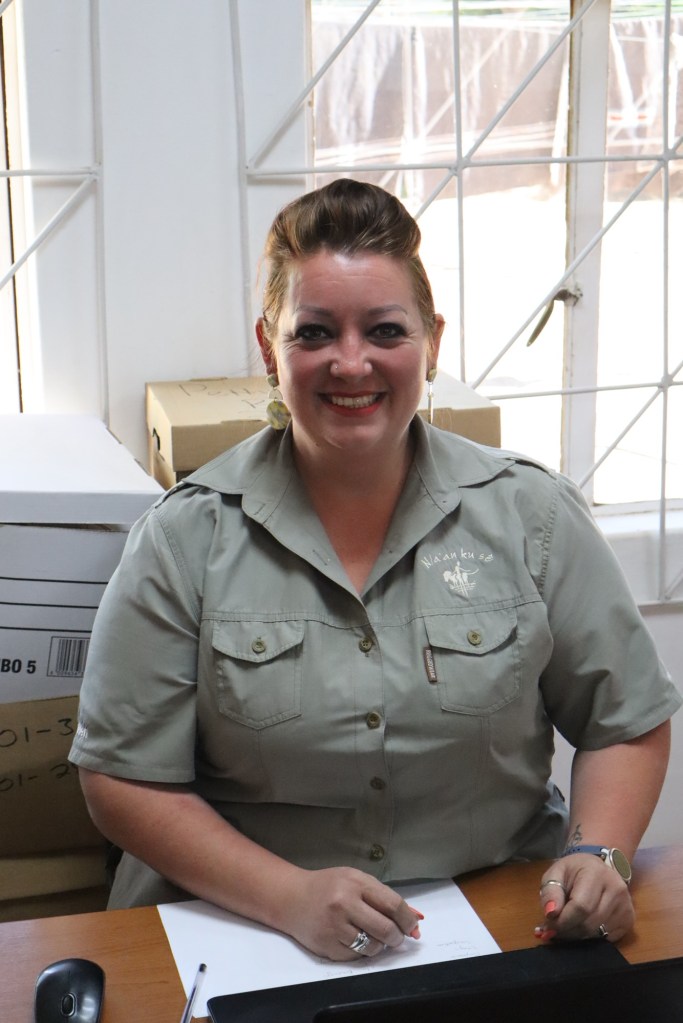
We had come with 6 “special guests”, Austrians staying at Harnas for two weeks like us but only doing “fun” jobs like cleaning the lion’s den, which is fair enough, I am sure they paid a lot for this. But they showed very little interest in the Clinic, spending most of their time smoking in the shade of a bbq area. A shame as so many of the, shall we call them “bog standard” volunteers, wanted to come and see it and even a short time in this place might have influenced their choices in life. The clinic itself covers a vast area, Theo sometimes driving 100 km to deliver babies as the ambulance service is busy elsewhere. There is a massive problem with malnutrition, fulled by a drought that means they can’t grown their own food, and are dependent on imported South African food which means inflation is stratospheric. Unemployment is also a real problem. They deal with a lot of drug addiction, depression and homeless children left because their parents have committed suicide. There were only two volunteers working there, Maria a medical student from Brazil  and Jessica a nurse from Romania.

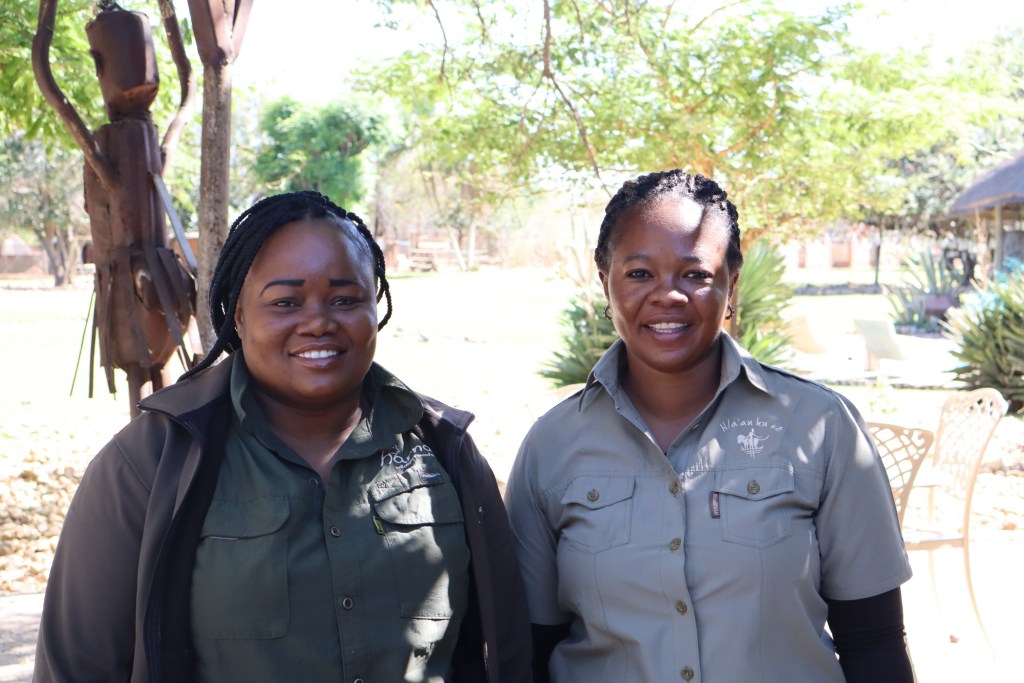
Jess on left , Maria on right.

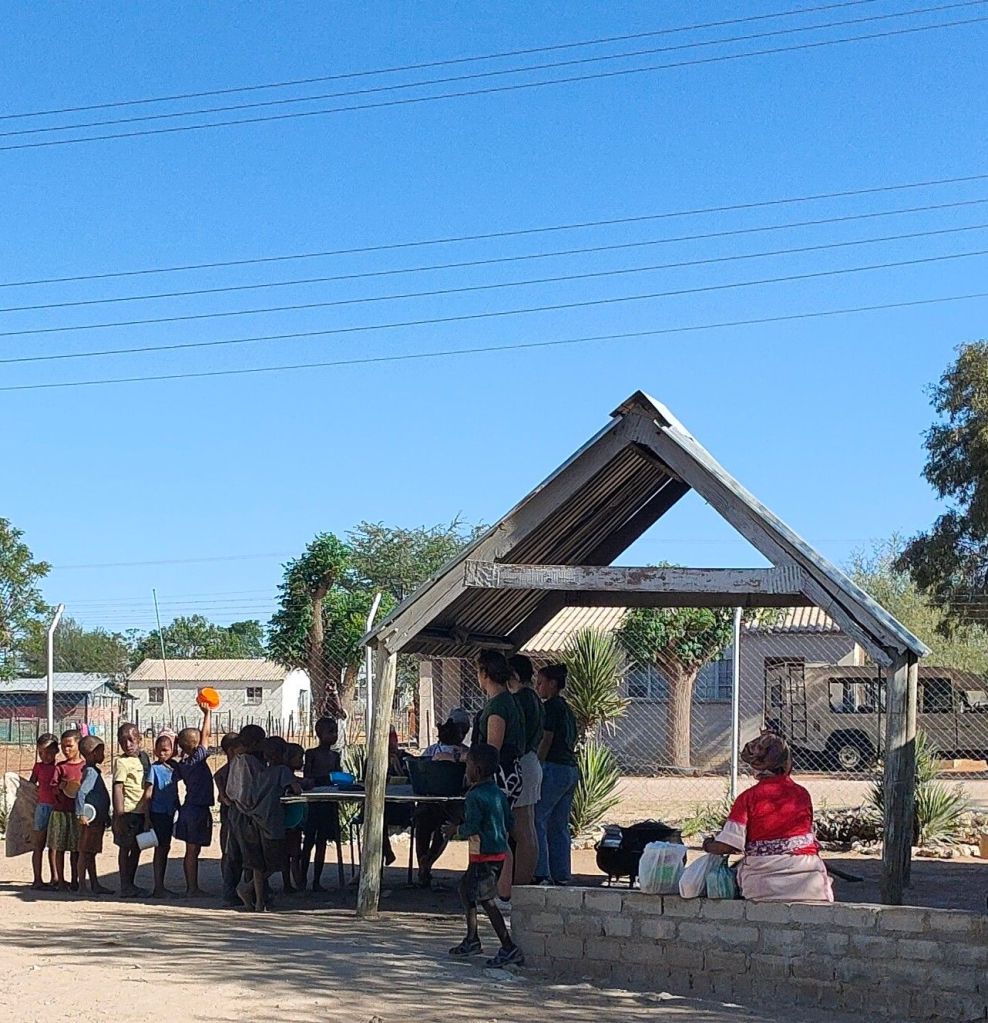
They cooked a huge vat of mainly vegetables and pasta every morning and then doled it out every lunchtime, to all comers. They came to Harnas at weekends, and found the sheer amount of food given to the animals quite shocking compared to what they had to give to the people in village. It is true that the Harnas meerkats get better quality meat than the Naankuse clinic kids,, each meercat getting a succulent piece of horse meat twice a day, while there is a small piece of meat cooked more to add flavour than calories to the village pot. 

  One of the special guests, whom I will call “Brows”, kicked off about having to wait to drive back to Harnas so that one of the local women could have her depo injection. She had been seen throwing her teddy out of the pram on several occassions while waiting at the bar. It’s fair to say this ran on “Africa time.” A favourite saying I heard a few times – “I will do it now-now,” means sometime, maybe soon, maybe not, depending. They were also extremely busy, and had to cope with frequent power cuts, which I loved, as the silence washed over us, the only sounds the lions moaning in the distance, birds clamouring in the trees, the parrots kicking off as soon as anyone raised their voice, Olivia the three hoofed Oryx’s snuffling breath as she snuggled up to your ear, gas lanterns throwing light across the happy faces of our fellow volunteers as we drank together at the end of our own busy days.

We now head up country, to pick up the camper van and head off for more adventures.


James, three sheets to the wind, dancing with Maria.
Bush bird sounds.

HARNAS WILDLIFE CENTRE

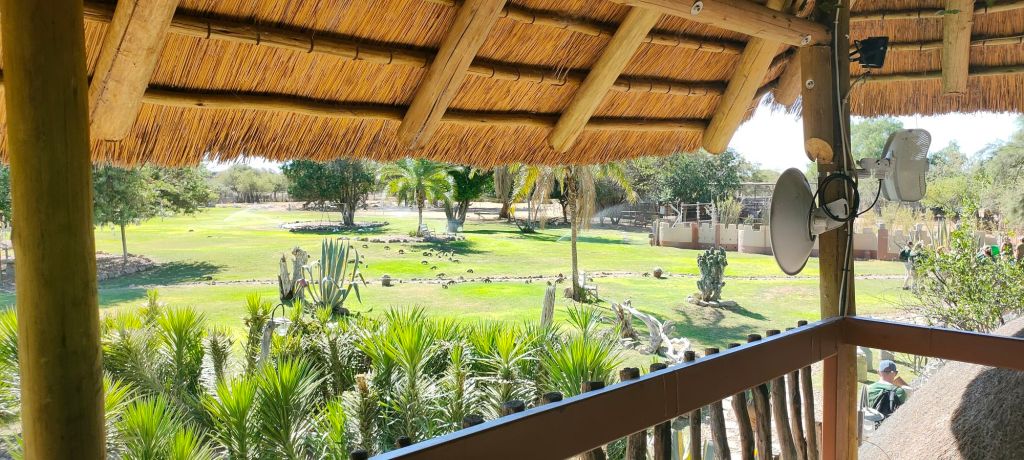
Looking out at Harnas from the morning briefing area.

Two baby crocs have done a runner from their enclosure and an escapee baboon is lurking on the roof at breakfast eyeing up the croissants. No-one seems especially worried about the crocs but a man with a slingshot turns up 10 seconds behind the baboon. The newbies except us are excited to see the baboon; the old timers, mostly Germans, are terrified.

“They are NOT friendly” Nicole shouts “they are HORRIBLE”.

A quite menacing looking morning visitor.

Harnas History

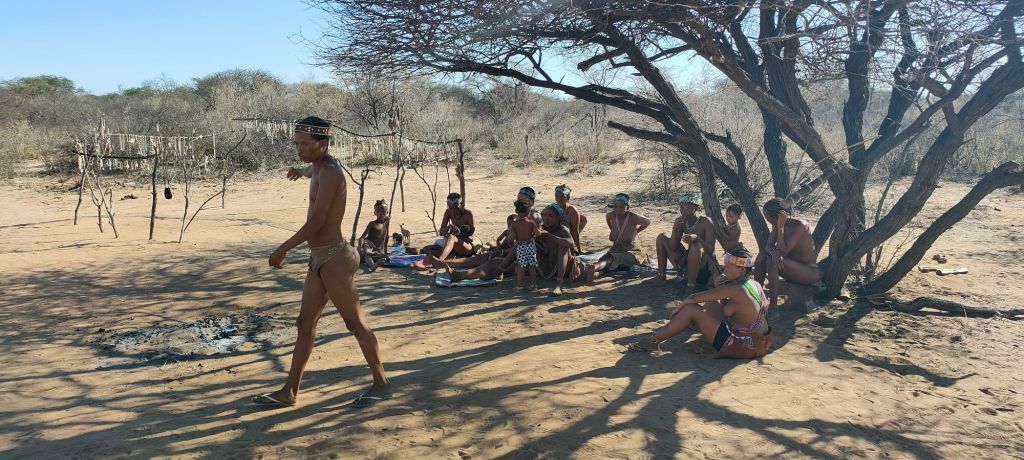
Harnas wildlife Foundation started with an abused vervet monkey rescued by the Van Der Merge family 46 years ago. Over the years it has expanded to play a major role in conservation. A large focus of the work achieved at Harnas is preserving the San culture, one of the most ancient in the world.

Survival tactics.

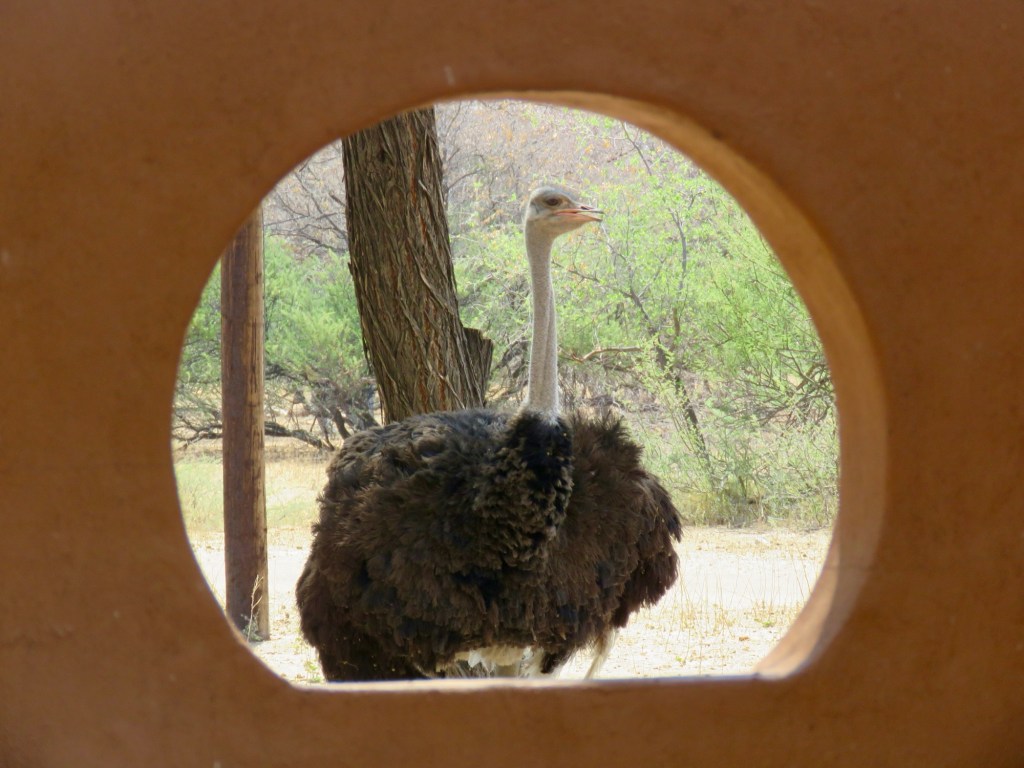
We have learnt to stand stock still when threatened by an agressive goose, and to run for your life if a baboon or ostrich attacks you. Or make like an ostrich by putting one arm up in the air and flapping your hand. I am not kidding.  However the ostriches seem pretty chilled, and love a spray down with the hose from our garden. Threatened vervet monkies apparently distract you with lots of false feints while one makes for your jugular. When feeding the crocs you keep your back to the wall and all sphincters on high alert.

In the absence of climbable trees, we are told to run away from a charging rhino in a zig-zag as rhinos don’t turn quickly. Neither do I, frankly.

The leopards miaow and purr like cats – who knew this about cats?!! They are leopards in disguise, but less likely to eat your face off when you get too close.

There is a particularly perilous narrow corridor where you have to walk between the mean, grasping arms of the vervets on one side and the garden sprayer on the other; the water is semi-treated sewage water I think, although when you ask any of the staff they become very vague. It certainly adds an extra layer of jeopardy in getting from A to B.

The perilous pathway.

Silly things humans do.

At the induction yesterday, Maria, our San tribe leader, regales us with tales of the hapless things volunteers have done in the past. Reaching into the lions’ den to take a better picture, trying to get a selfie with the rhinos, stroking a mongoose and losing a finger, carrying a baby giant tortoise the wrong way round and everyone watching in amazement as he suddenly threw the tortoise up in the air after it bit his penis.

We are also told to hide from poachers, as they will kill us aswell as the rhino. If caught they will be in prison for life, so have nothing to lose.

The Volunteers.

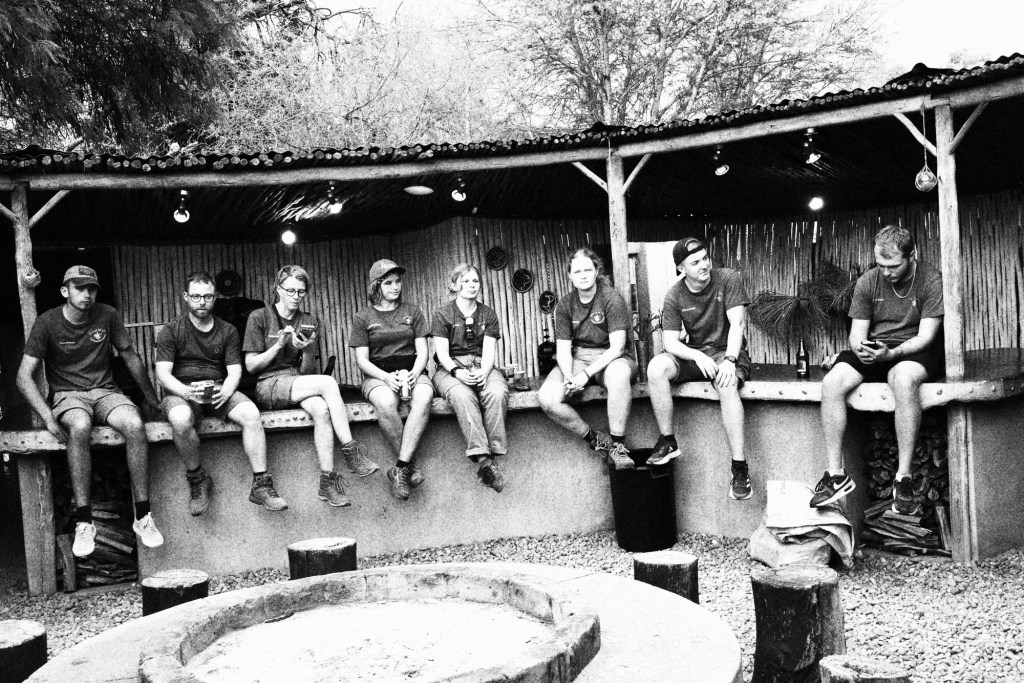
They are a sociable and friendly group, mostly 18-30 ish but with a few young at heart outliers like us, Christine (50) and Simon (78). There are very few Americans, one in fact, a Mexican lad who when he goes accidentally leaves behind a litre and a half of tequila, much to the unbridled joy of Toby, Philip and James sharing his bunk room.

Rhino tracking.

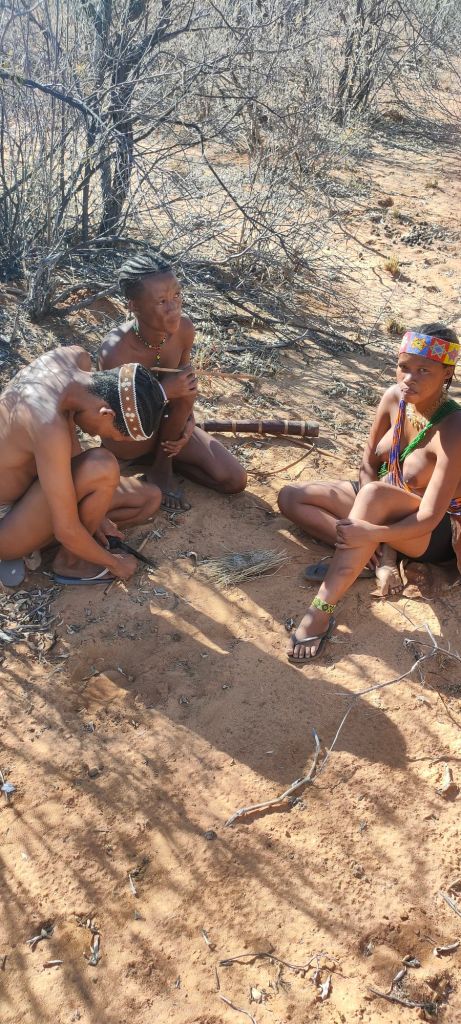
The 6 rhinos on the reserve have to be accounted for daily in case of poaching. Poachers can be in and out of the reserve in 10 minutes. The poachers put bottles in the electric fence to see if they’re still there the next day as if they are, it means no one is patrolling. The two San tribe trackers start at the watering hole and fan out from there.

They follow their tracks, which are both footprints and troughs where they have dragged their feet to mark their territory. They also leave enormous piles of poo which I thought would be a composters dream but it is apparently very dry and mostly grass. I thought their skill in finding these creatures incredible.

The Worst Jobs.

Farm work.

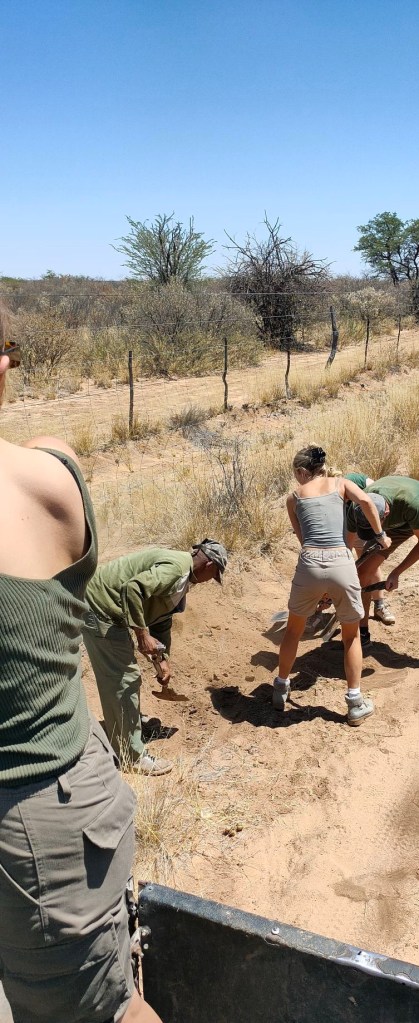
Filling holes.

There is no upper age limit on how much fun it is standing up in the back of a truck that’s rattling along dirt tracks, wind in your face, wild grin spreading ear to ear, sand between your wind blasted teeth. Our job was to hop on and off the truck to shovel sand back into holes that various hopeful animals from the outside – cheetahs, aardvarks, porcupines – have dug under the fence in a bid to reach Harnas’s watering holes and delectable selection of impala, springbok, dikdik and goats.

Wooding.

It’s another morning and we are sent to collect wood. I began with great girl guide level enthusiasm, hauling huge logs out of the bush and hurling them onto the lorry, she-woman style. But by the second collection, shallow breathing the hot air, huge sweat droplets stinging my eyes, I lurked in the shadows, hoping no-one would notice my reduction in productivity, and wandered what symptoms preceed keeling over from heat exhaustion. When I told this tale to Tanya, the research manager, she laughed and said “now you know why you see 5 people at work in Namibia and only one of them is working while 4 are resting”.

The Best Jobs.

Lion feeding.

This is definitely a fun activity. There are at least 10 lions, five cheetahs, and two leopards, in various massive enclosures. Some are there because their mothers have been hunting farm animals and have been shot by farmers, who then ring Harnas to collect the cubs. They often don’t know the full story, as they don’t want to discourage people from asking them for help. There is an 8 year old leopard that used to be called Ingwe, an African name for Leopard. Bottle-fed and hand-reared alongside the many dogs at Harnas at the time, his feral instinct kicked in a little earlier than at the expected 2 years old. At 16 months he blotted his copybook overnight by eating all the dogs. The volunteers renamed him Hellboy.
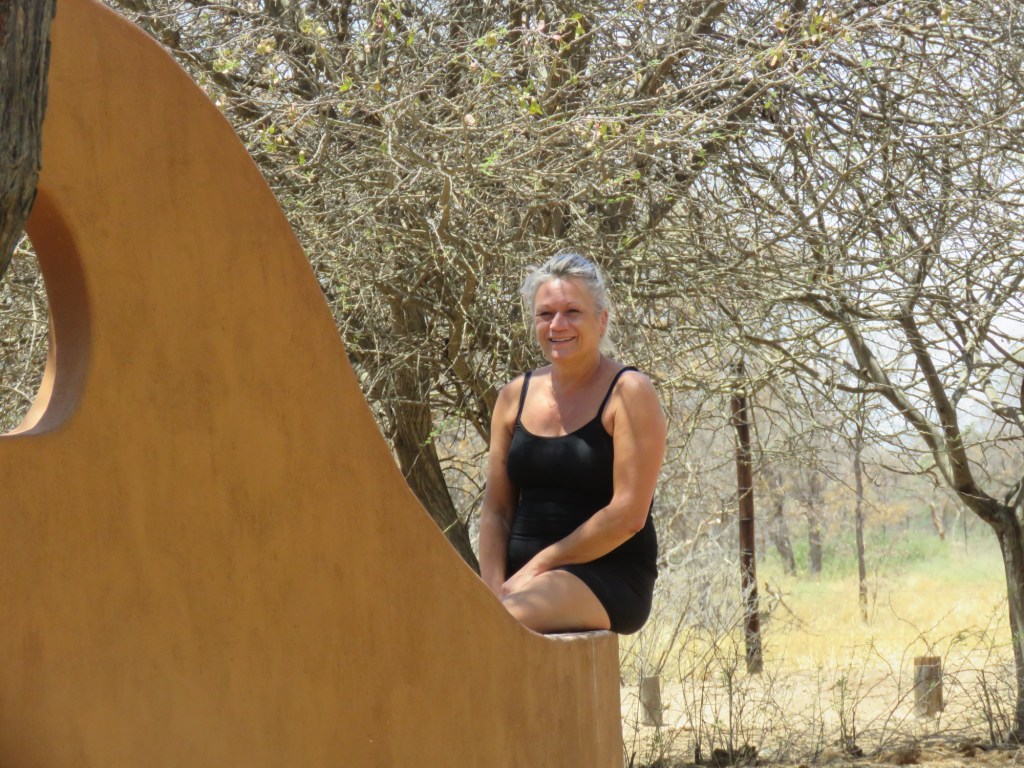
Hellboy.

In another enclosure there are five lion brothers all reared in Marietta’s kitchen – the lady who started Harnas 25 years ago. Flown across the border by a mysterious man, they were destined to be cuddly fluff balls on a Botswana game reserve and then shot for sport in an area no bigger than Trafalgar Square. But their Botswana heritage means the Namibian Governemt will not help rehome them. So there they are, five muscle bound testosterone fuelled beasts all vying for territory they shouldn’t be sharing. To reduce the fighting potential, at feeding time we have to strat them at one end of the enclosure and then race in the truck to the other send, the lions giving chase, so that each one is fed as they arrive.

Making the brothers work for their supper.
Letting Old Lady, an ancient vervet moneky, pick out my feas.
Olivia, who lost a foot (?hoof) in a trap. She is still a baby at 7 months old.

I have yet to regale you with tales of the school and the medical clinic but think I’ll post this as we are going up to a wifi free zone for 4 days – Etosha.