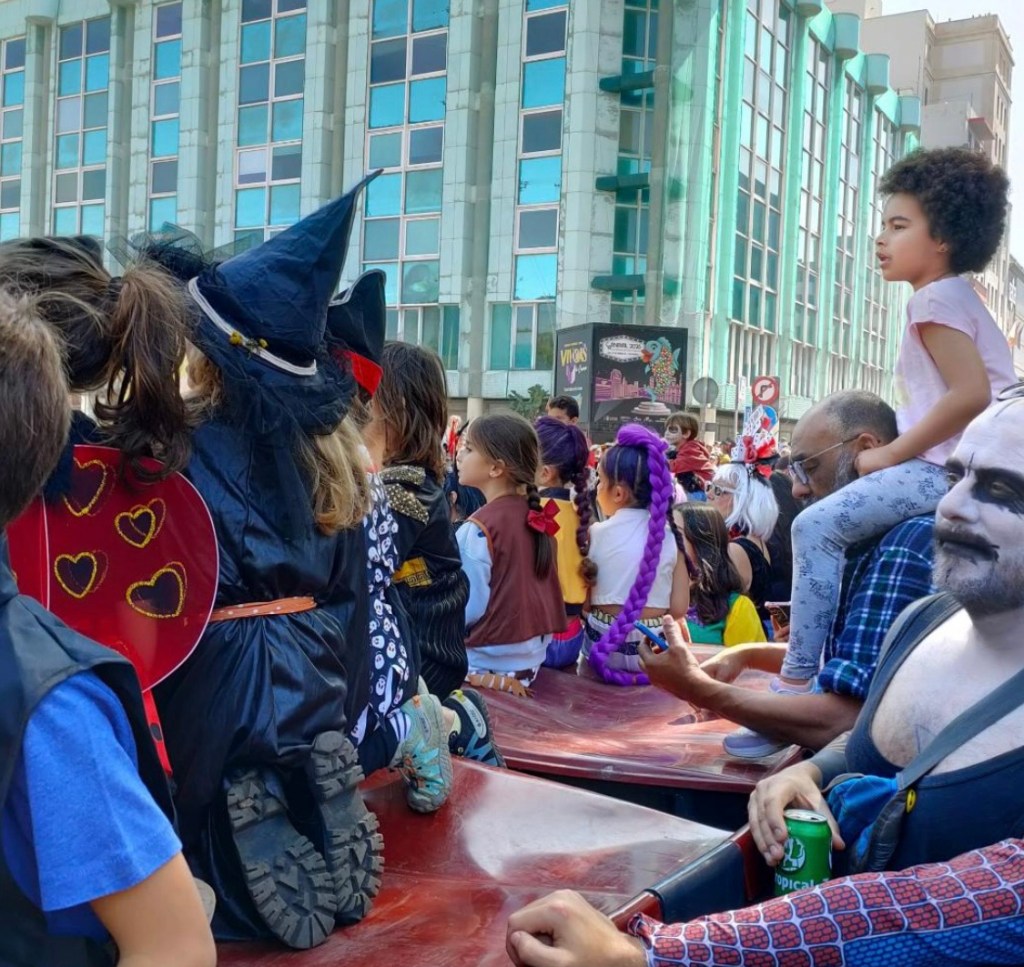
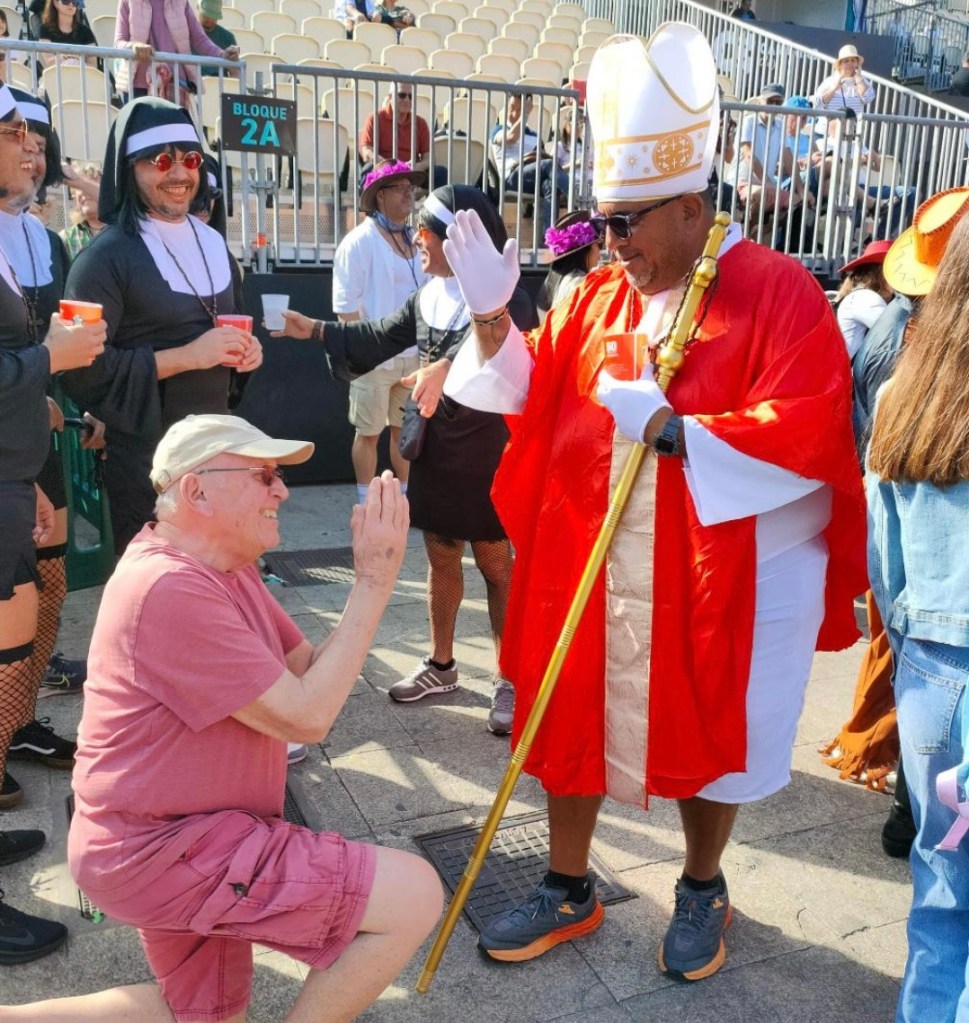
Children perched on the bins watching a parade. Roger hams it up.
We leave tomorrow, in winds that have blown a heavy cupboard across our terrace overnight and made the sea boil. It feels like a rehearsal for home.
We leave with several unsolved mysteries.
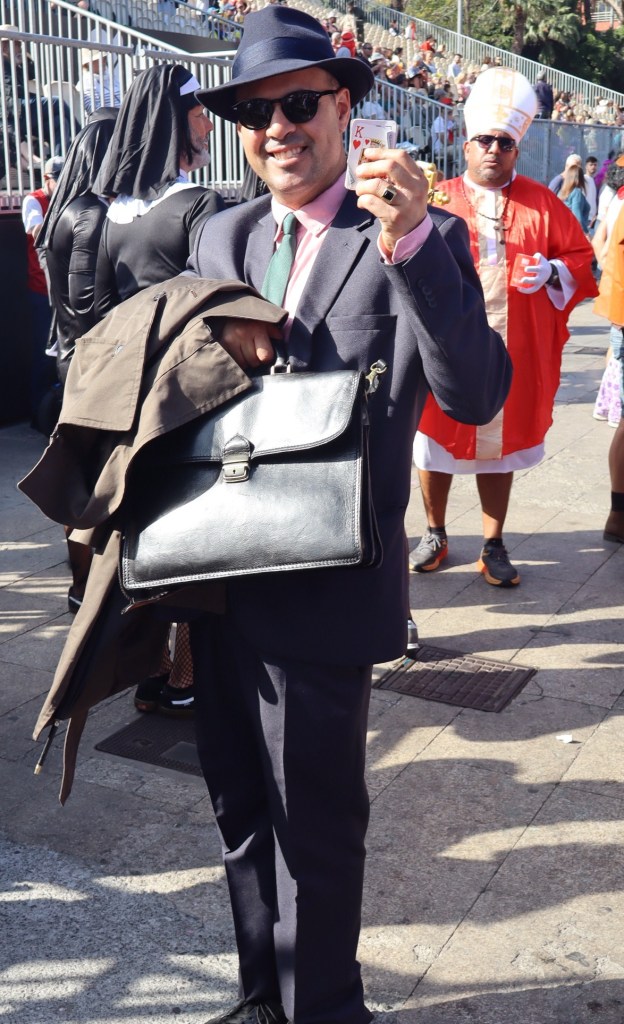
First: The Man With the King of Hearts.
We saw him first at the dog show. Immaculate raincoat, proper suit, brimmed hat, briefcase balanced on his knees. He wasn’t busking. He wasn’t selling anything. He just sat in the stalls, in the burning sun, staring ahead.
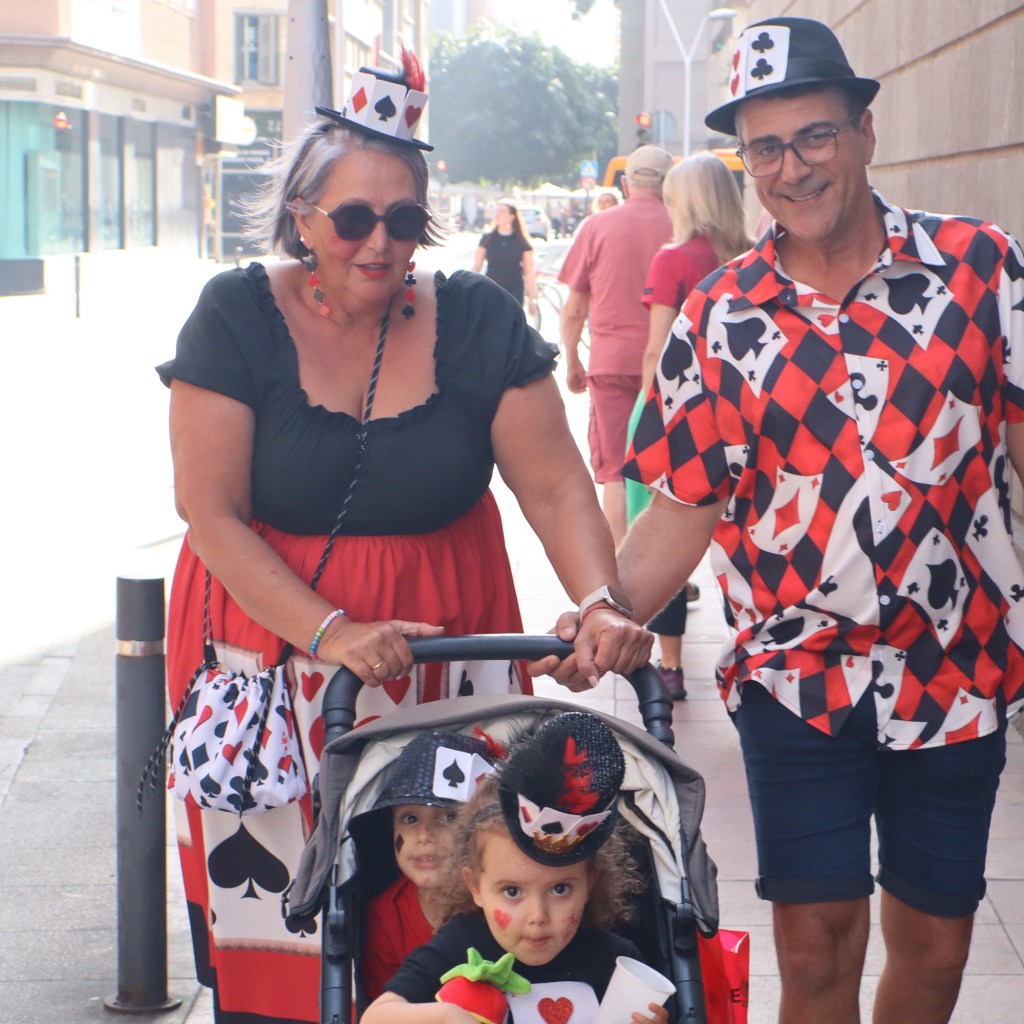
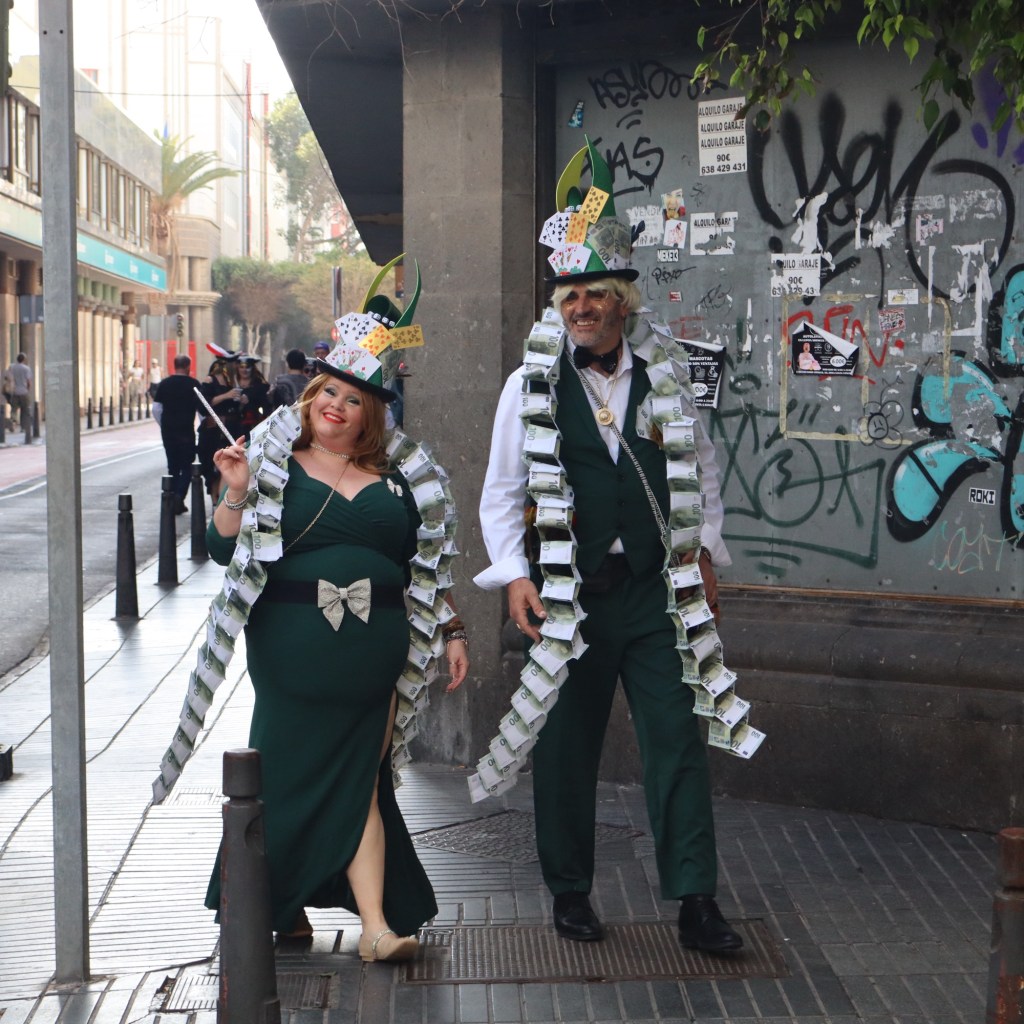
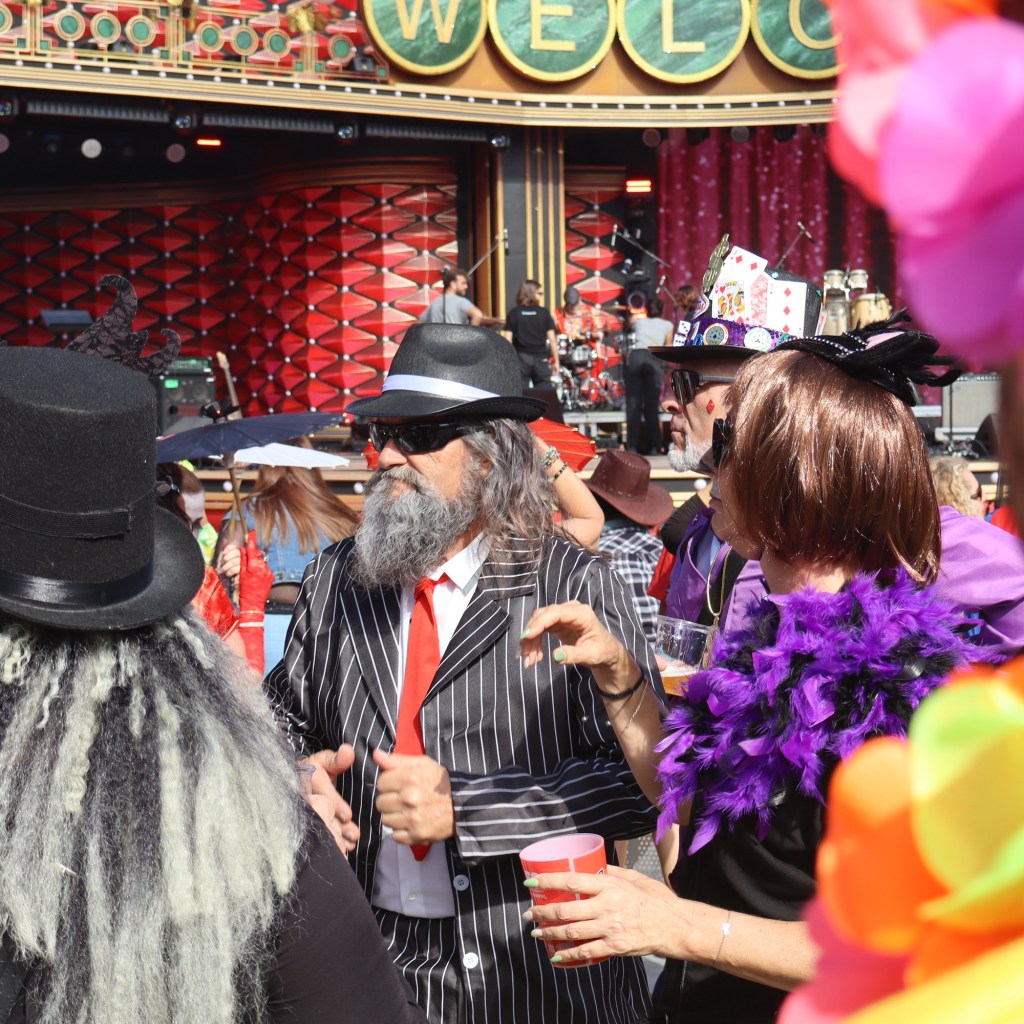
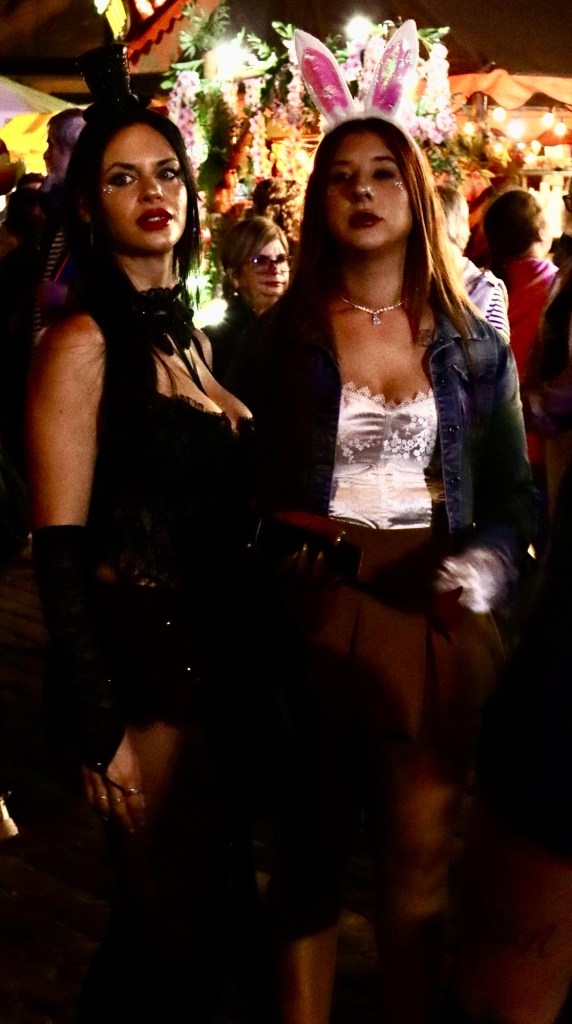
Then another, dressed exactly the same, in our local Spar. And then again, a different man, same outfit, at a show, where I managed to get a photograph. He showed me the king of hearts playing card. They do seem to be quite obsessed with Alice In Wonderland here, lots of people dressed as playing cards, Alice, the white rabbit, teapots. I wondered whether there was a password I was supposed to know. Something I could say that would trigger him to open his bag and shower me with euros. But no. We have no idea what this is about.
The Drag Queen Gala.
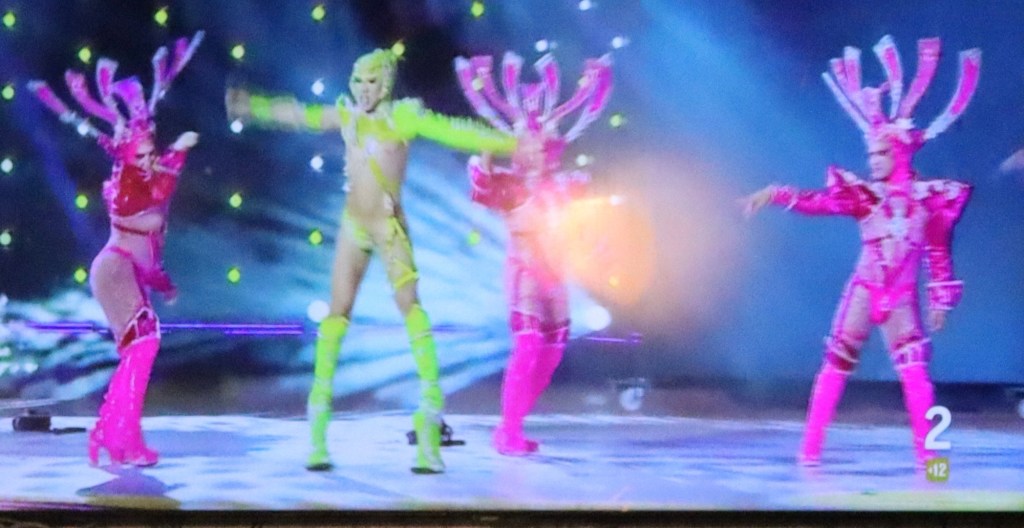
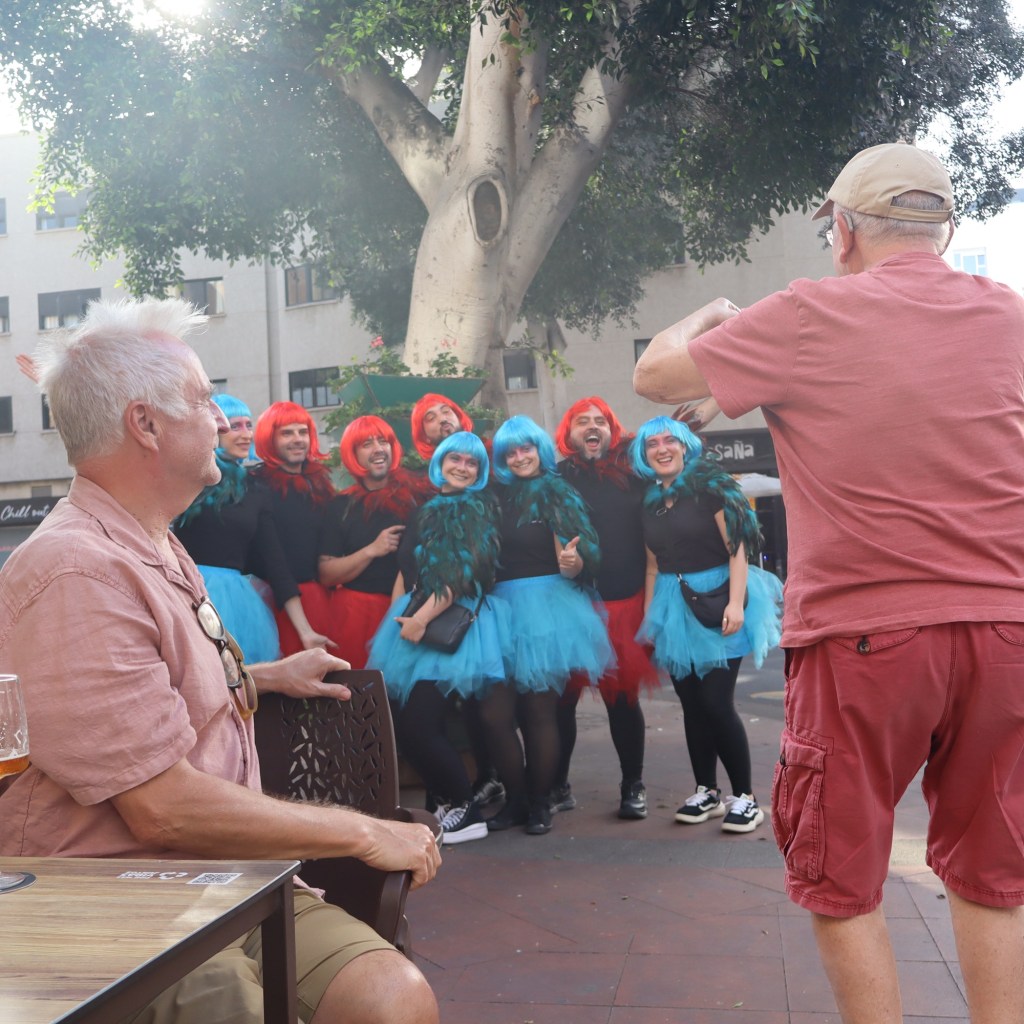
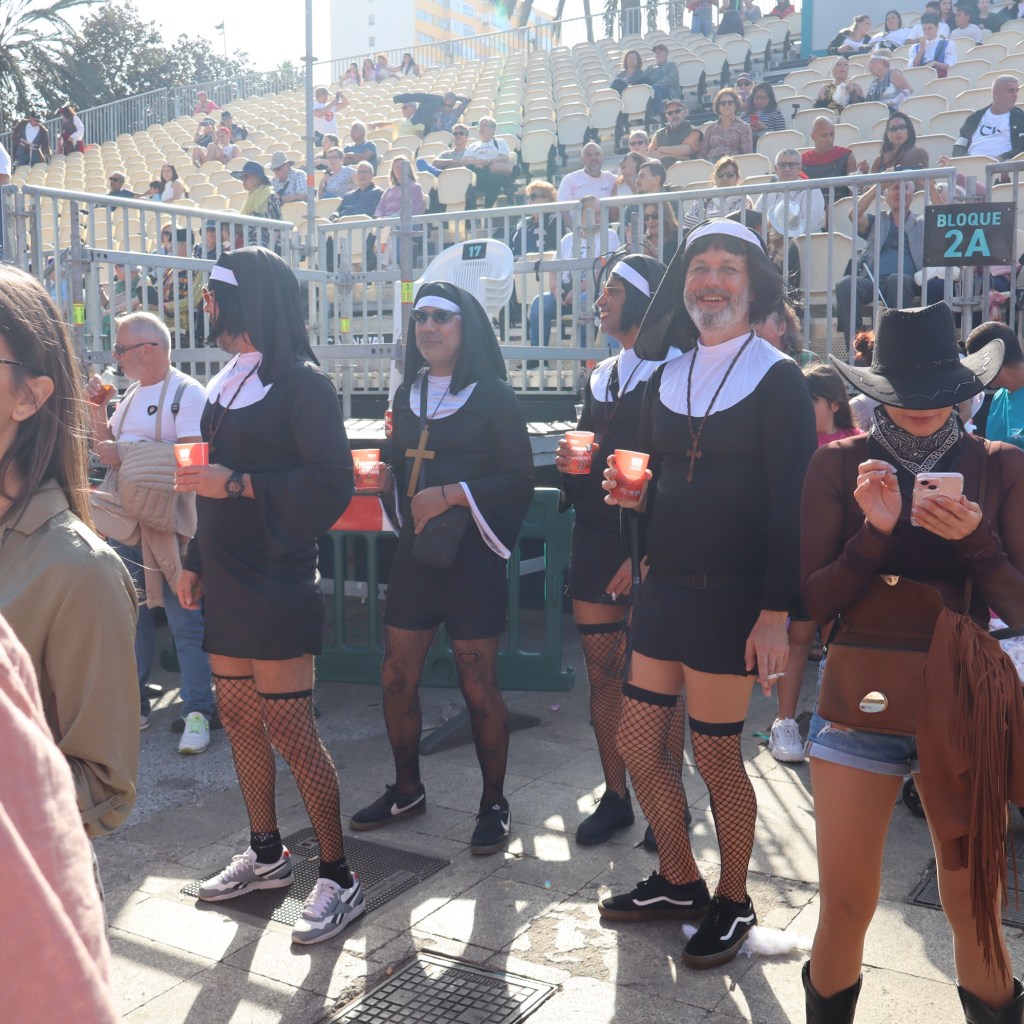
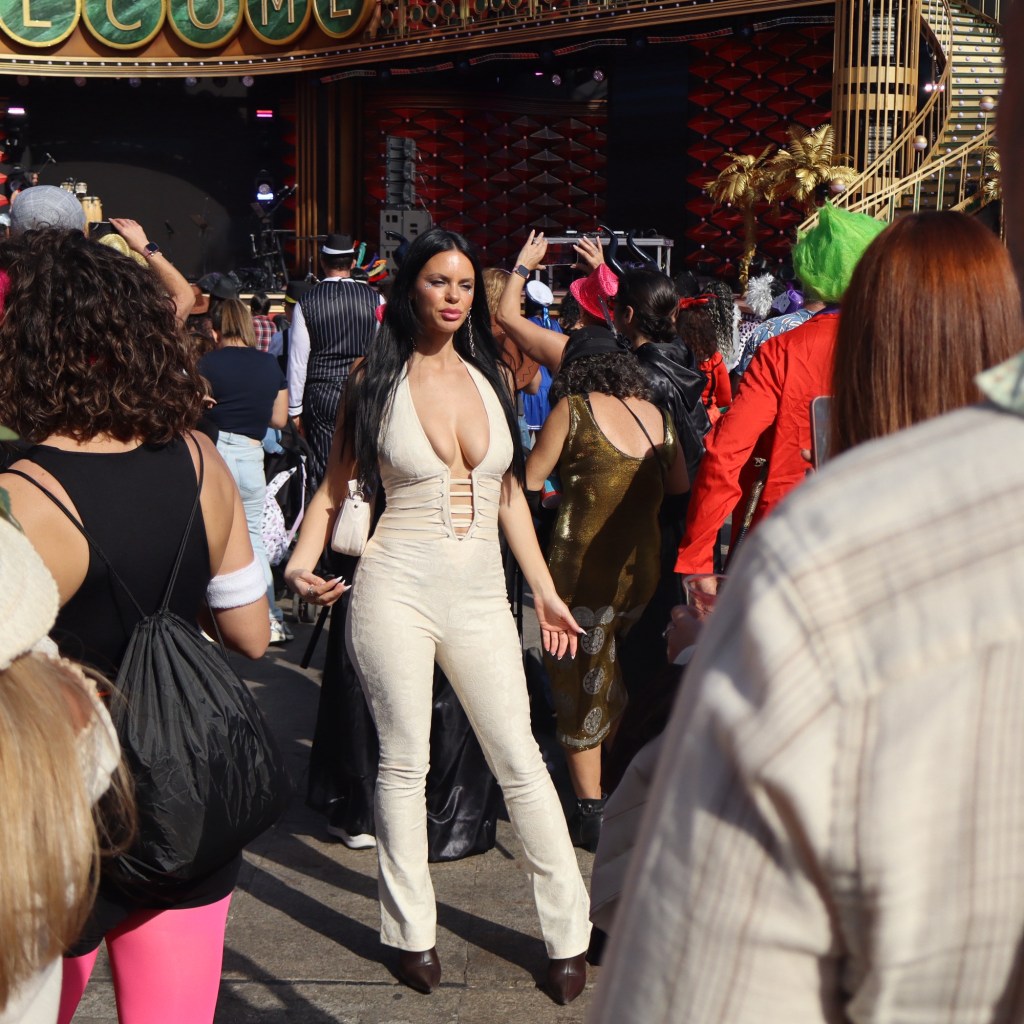
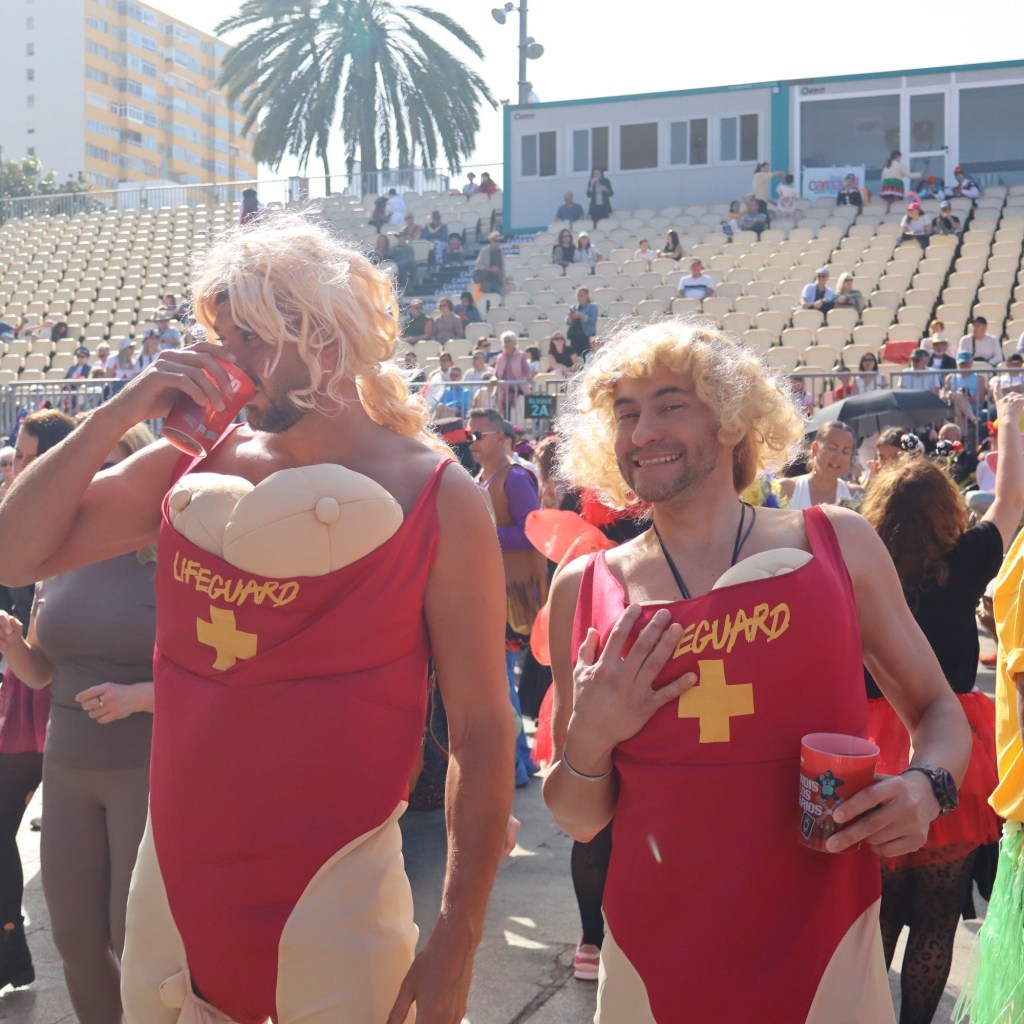
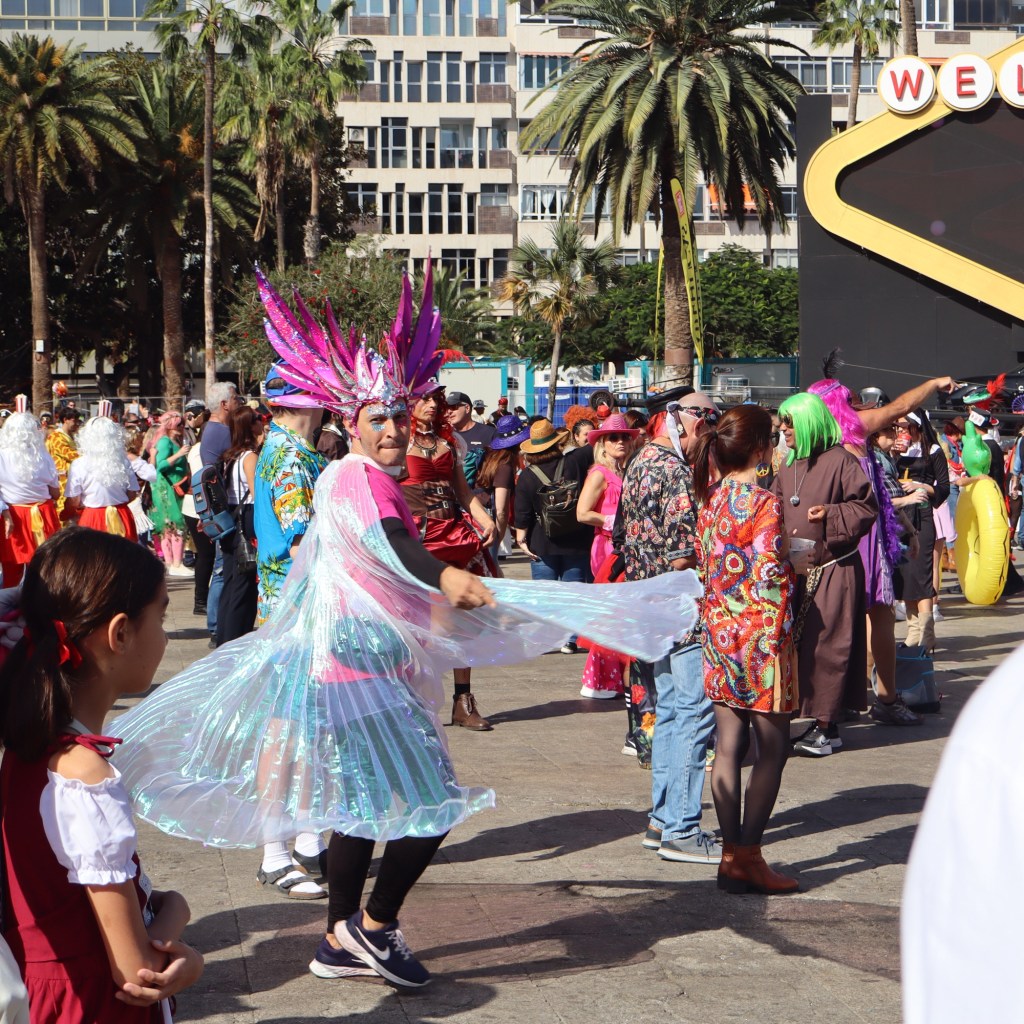
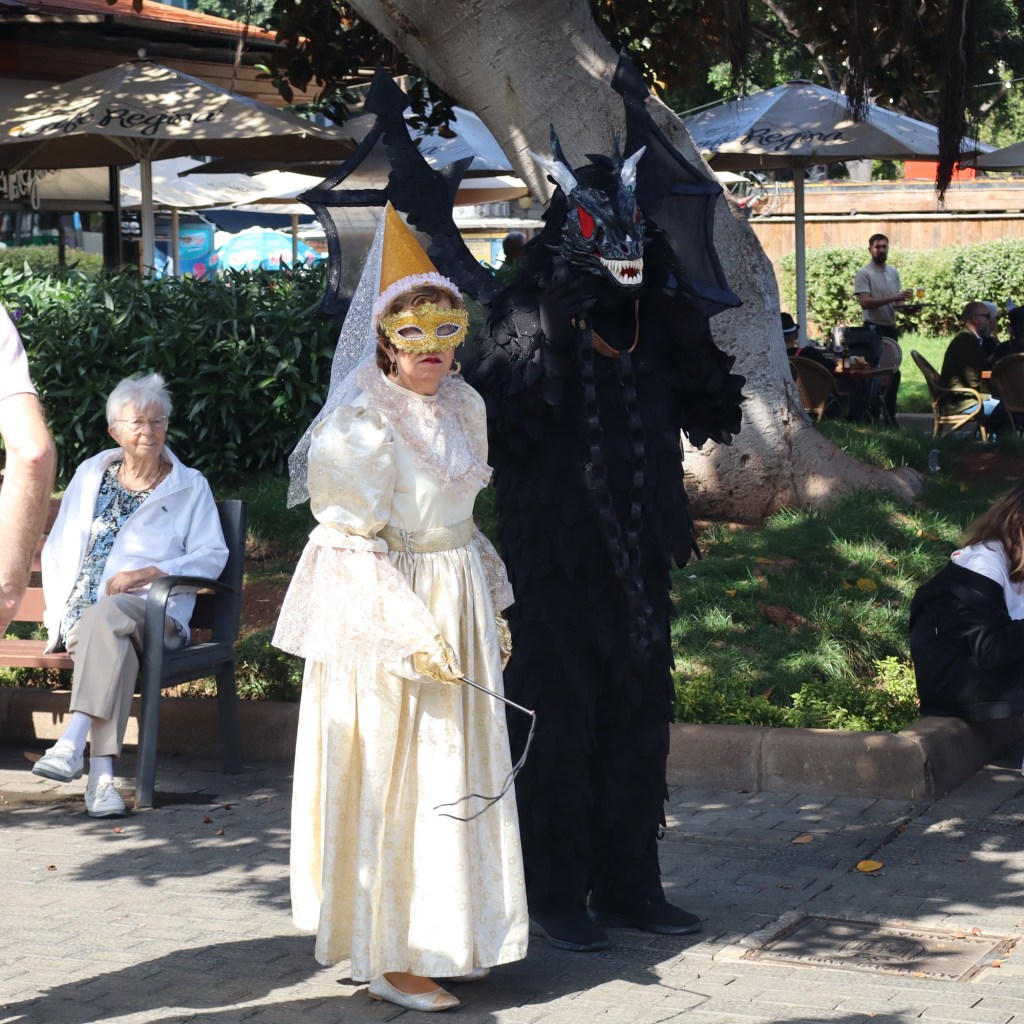
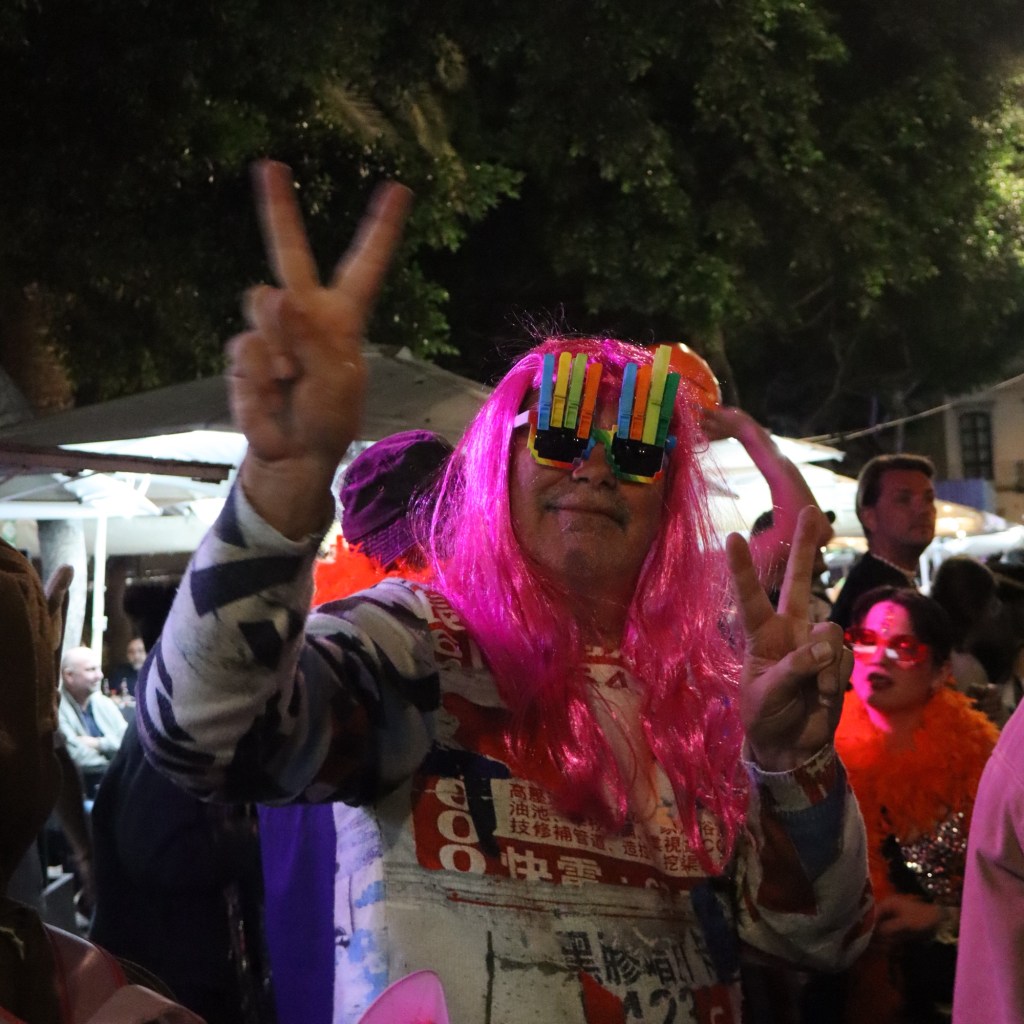
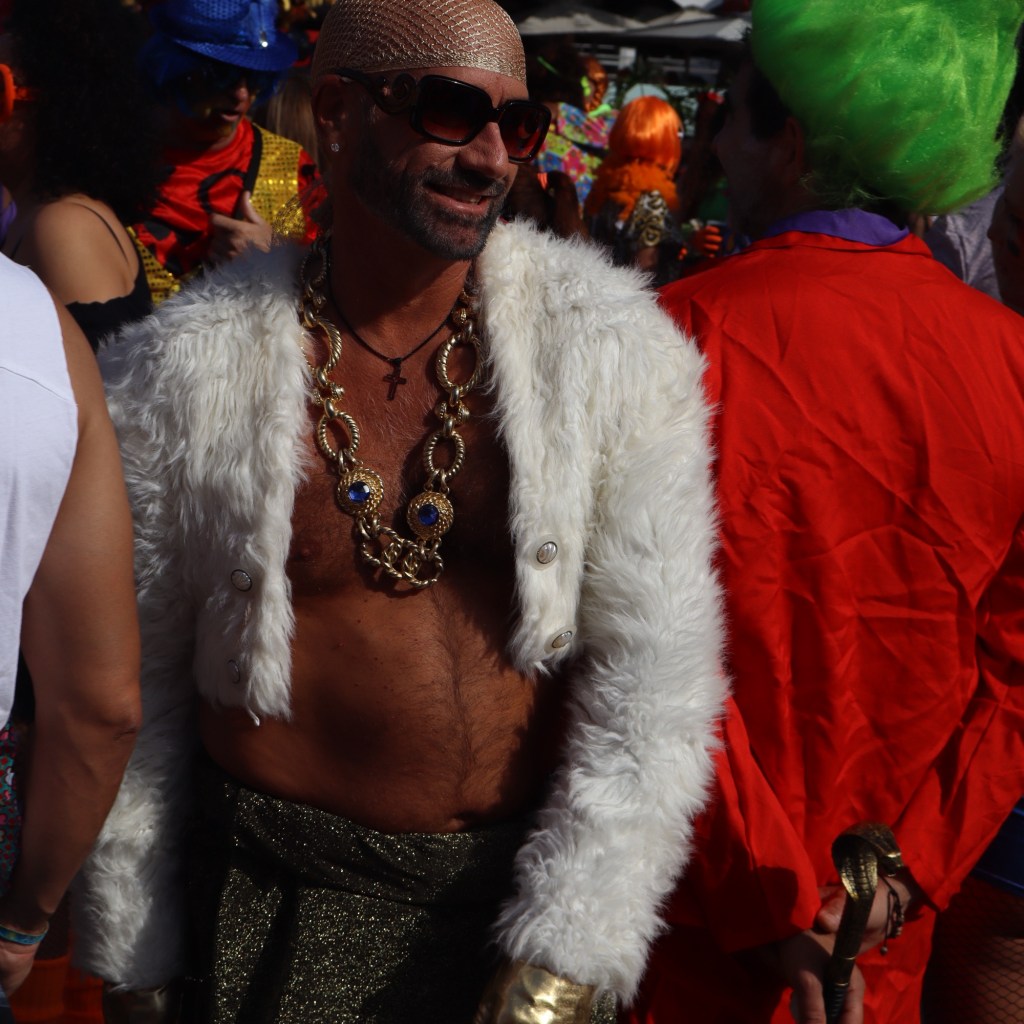
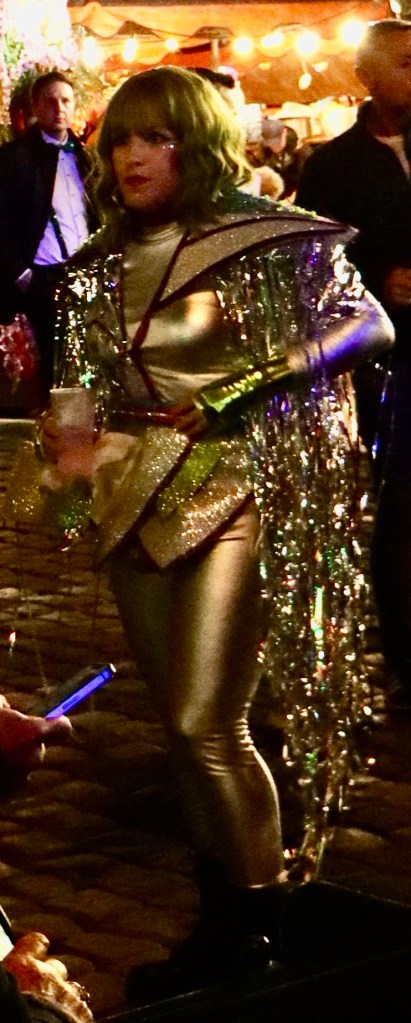
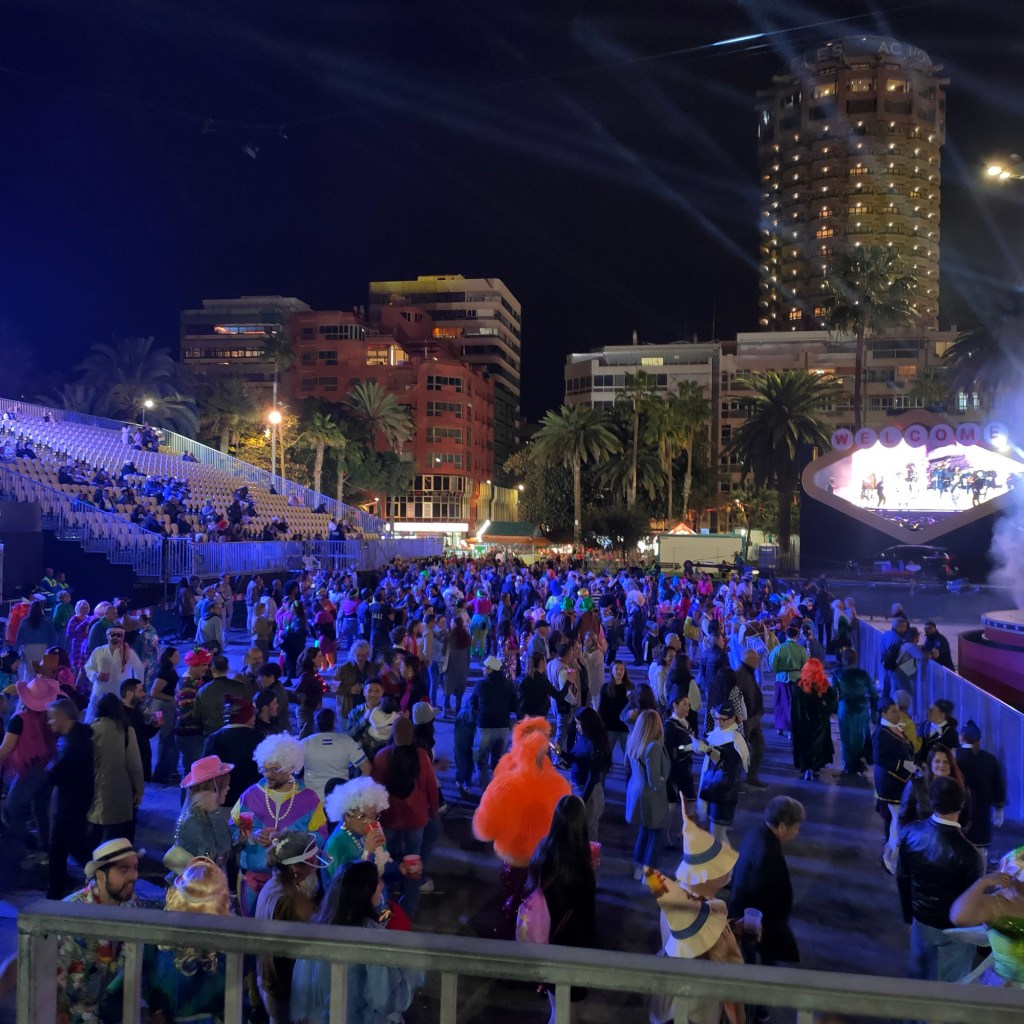
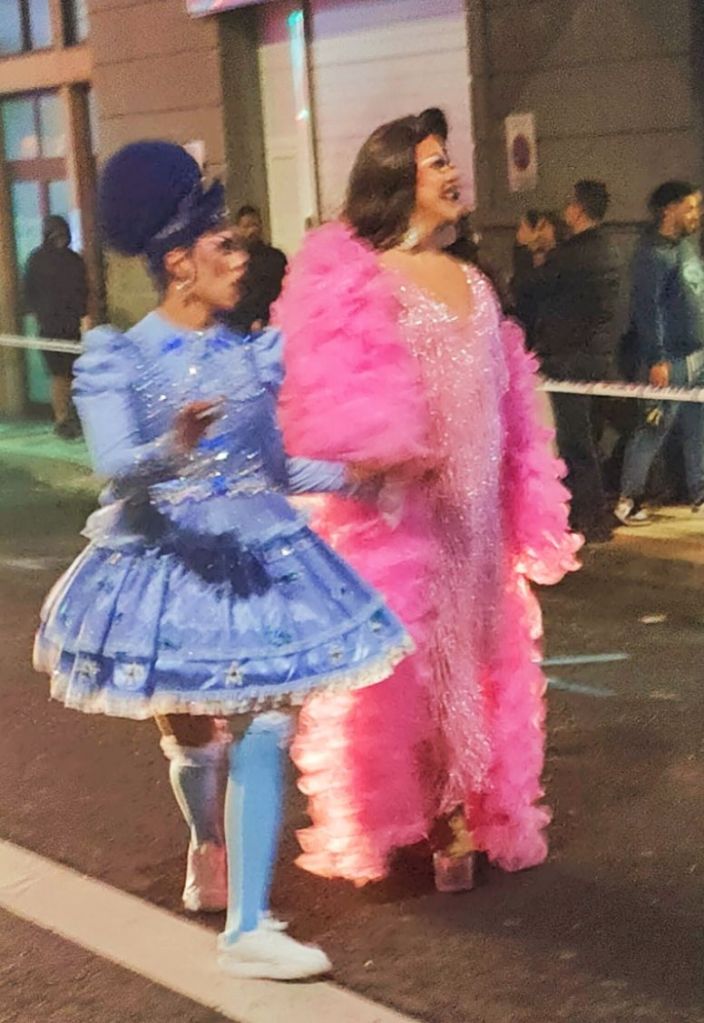
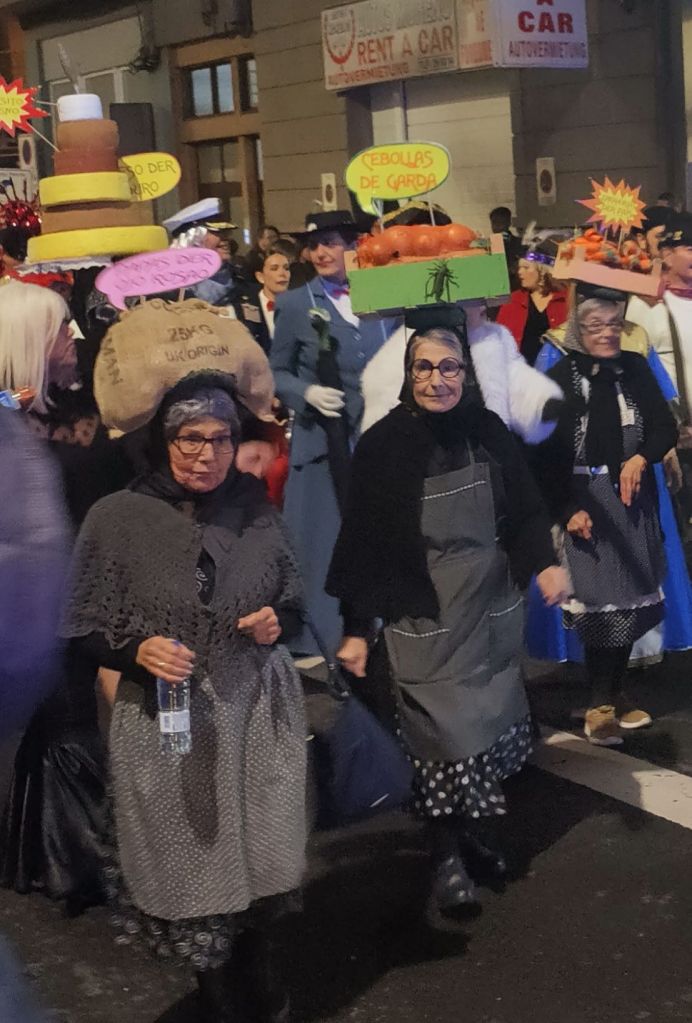
The drag-queen competition sells out in minutes every January. We assumed the streets would be heaving with drag queens, teetering past in lashes and sequins. There are families in matching themes, whole clans dressed as pirates, astronauts, flamingos. Grandparents in wigs. Toddlers in capes. Chickens, cowboys, wolves. But no drag queens. As Angie and I strain to catch site of the show through a wire fence while perching on the bins, we can start to see why. These are not the cleverly made-up tongue-in-cheek performers I am used to watching on tv at home.
They are other-wordly, intergalactic, aliens.
In Roger’s classic words:
“In my day it was different. You knew where you were with Danny La Rue.”
But here you often don’t know where you are — and that seems to be the point.
The toilet brushes arrive.
Into the mountains.
On our way from Tejeda to Artenara.
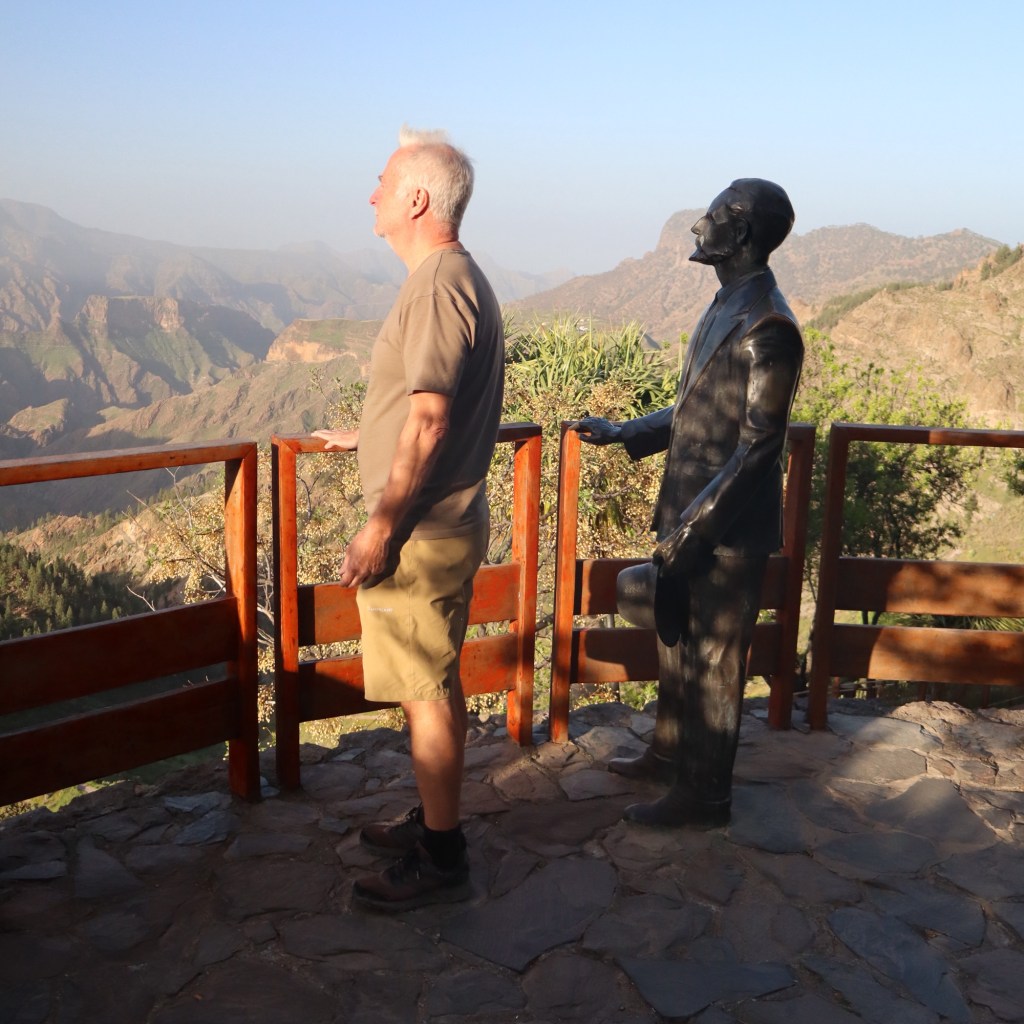
We had booked a night in Artenara, the highest village in GC at 1270 metres. We walked up from Tejeda, my poorly gripping Skechers making the trip feel unnecessarily hazardous. On the way we ate a huge baccadillo we’d bought at the bus station, and then discovered that everything and everywhere in Artenara shuts at 4.30pm. So we ate a plate piled with pork and chips to stave off later starvation.
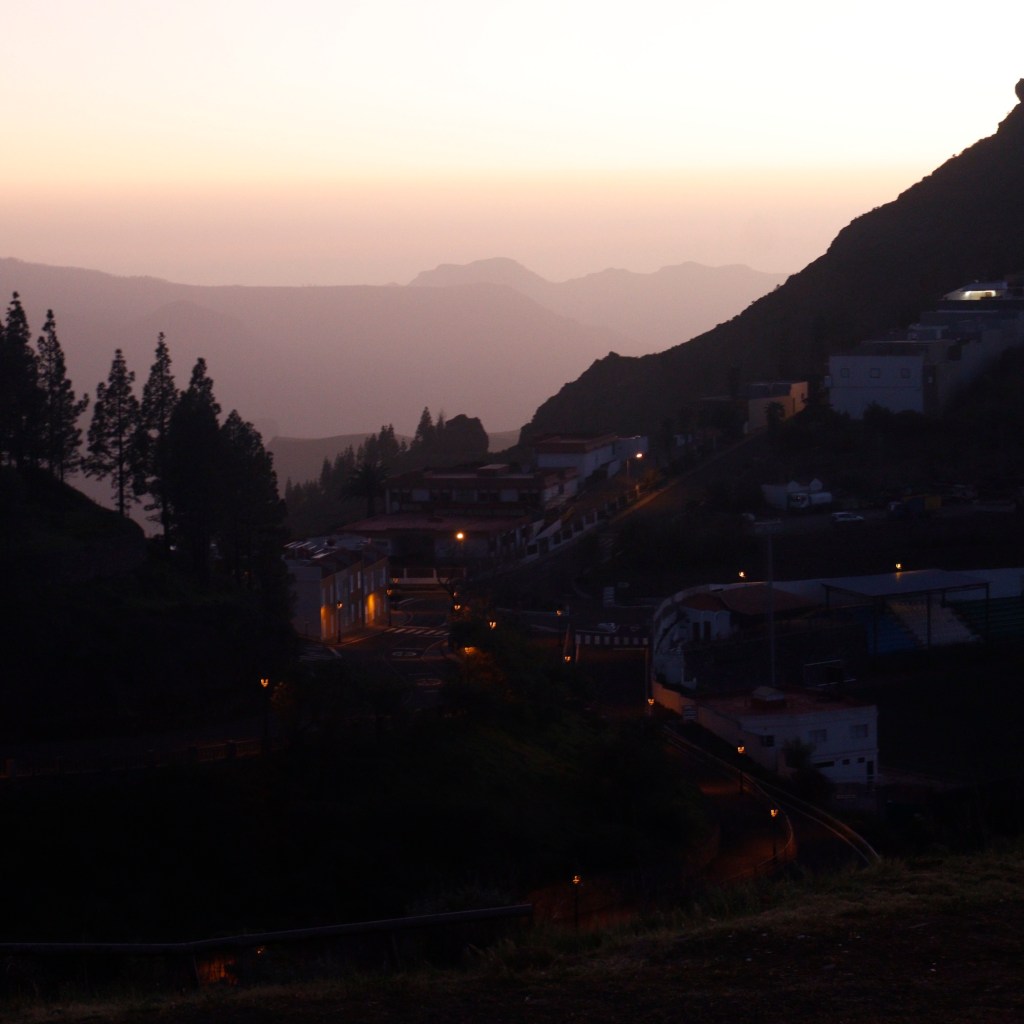
The village is spotless. A three-man team carefully watering a handful of municipal plants. A brand-new playground, but not a child in sight. I assumed the reason we’d struggled to find a hotel room had been everywhere was full, but in fact most tourists return to Las Palmas on the 6 o’clock bus. I’m glad we stayed, as the night sky was phenomenal.
But the mystery remains – where is everyone?
Artenara. This is Galdár. Old town, Las P.
Perhaps that’s the thread running through it all.
Gran Canaria never quite performs on cue. The drag is on stage, the pirates are in the street, the magician shows you one card and no more, the mountain village closes just as you arrive.
And yet everywhere, absolutely everywhere, there is playfulness. Drums thrumming in the distance, families committing wholeheartedly to silliness, fireworks going off in the square at midnight. On a Wednesday.
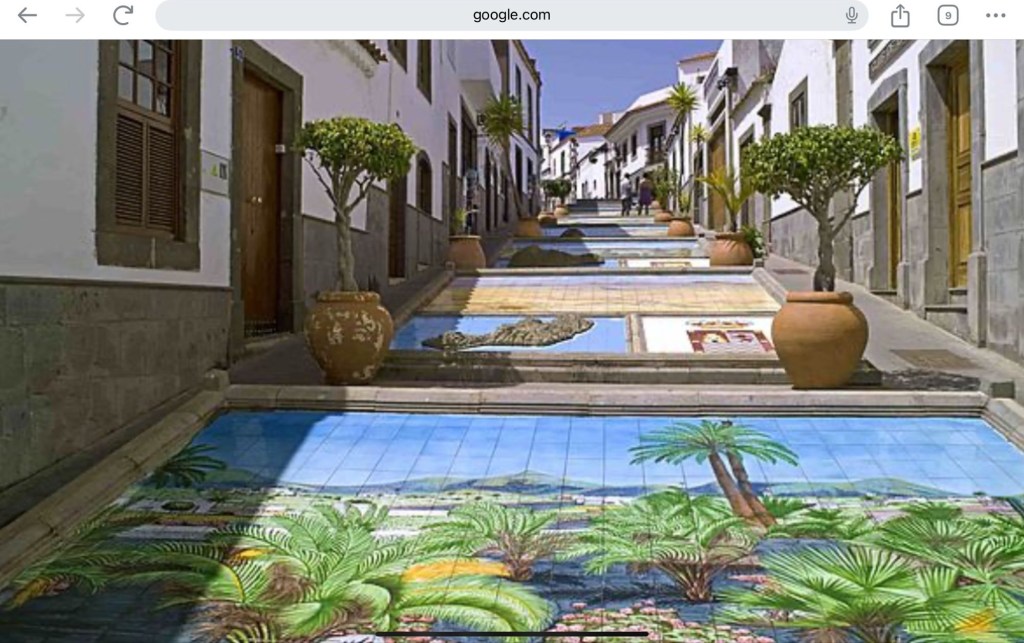
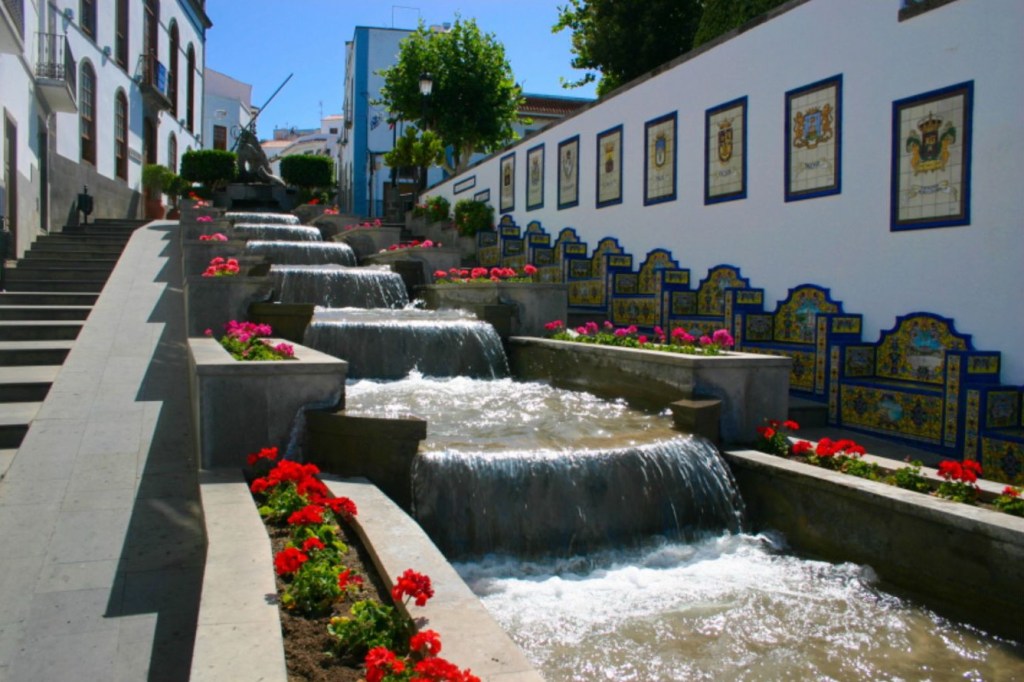
Firgas, a pretty little town 500m up in the hills above Las Palmas.
Silence, then Salsa.
It is true that the alltrails app did call this walk “Hard”. It is also true that I didn’t tell Clive this. Apparently the next stage after Hard is Strenuous. Given that the Barranco de Azuaje ravine walk near Firgas involved descending into a ravine, scrambling through narrow rock faces, abseiling down and up cliffs, and wobbling across rivers, in retrospect this makes sense. I just thought it looked really pretty. And Clive can read.
We took off into the hills above Las Palmas on a 2 euro bus to Firgas, a pretty little village in the hills. We had a litre of water with us, bought from the local shop as an afterthought. We were, in every respect, a mountain rescue team’s favourite category, “unprepared in every conceivable way”. Even down to my white Skechers which had very little grip, except around my broken toe.
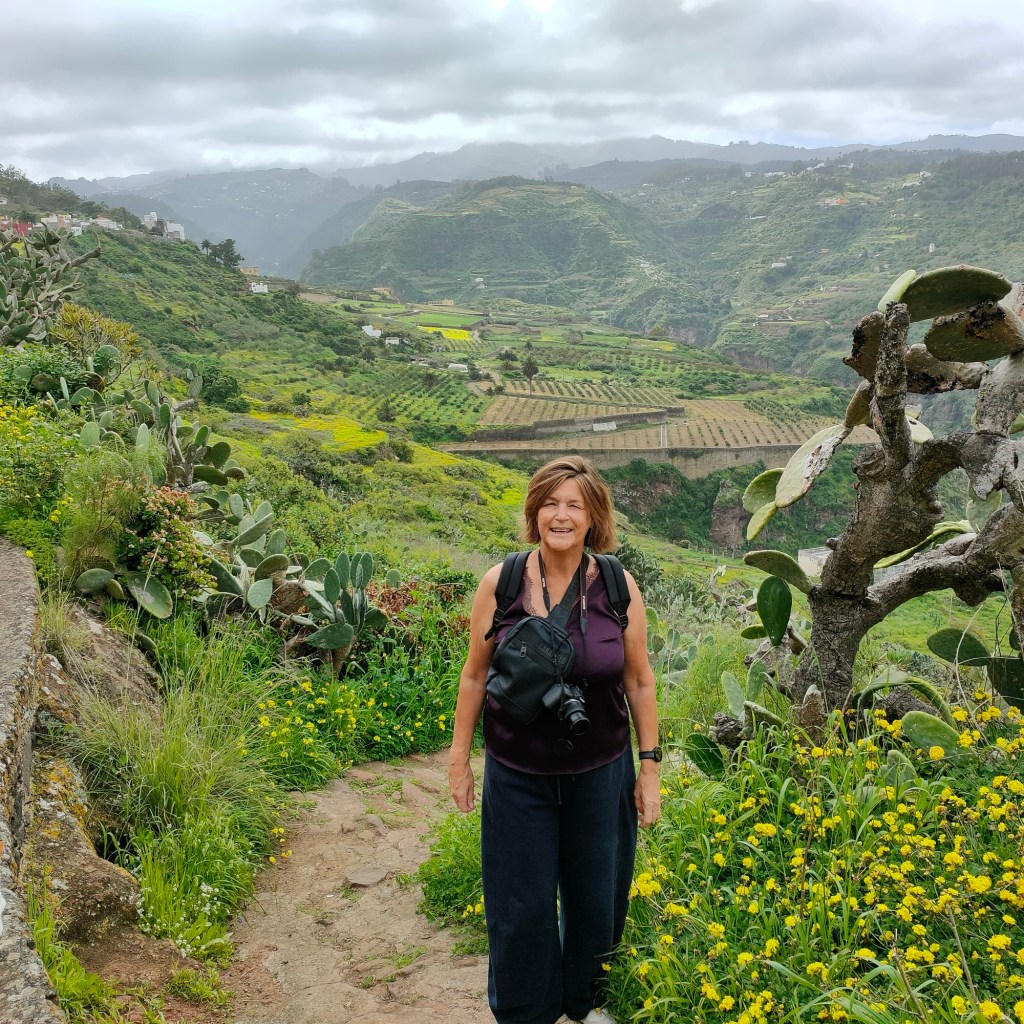
Bucolic. Start of the walk. Shorts went on soon after.
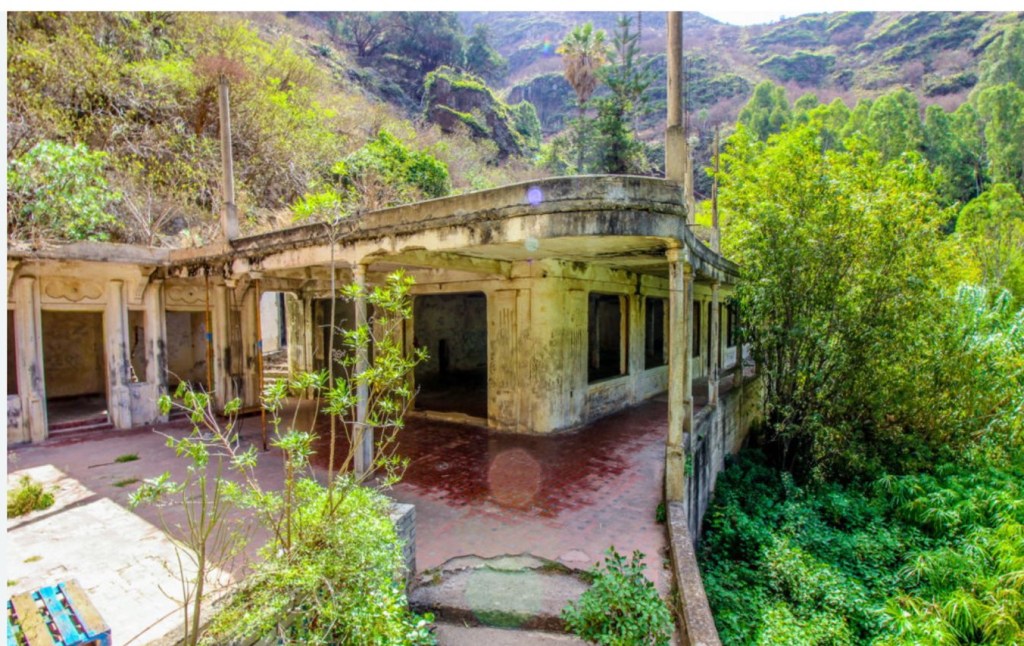
First impressions here were silence. Resounding, all-encompassing quiet. We wound our way down, down, down, into a valley that grew darker as we descended, and louder as the sound of a river became clearer. Past a creepy derelict hotel, once a posh spa, then along the ravine bed.
Creepy old Spa from the 19th Century.
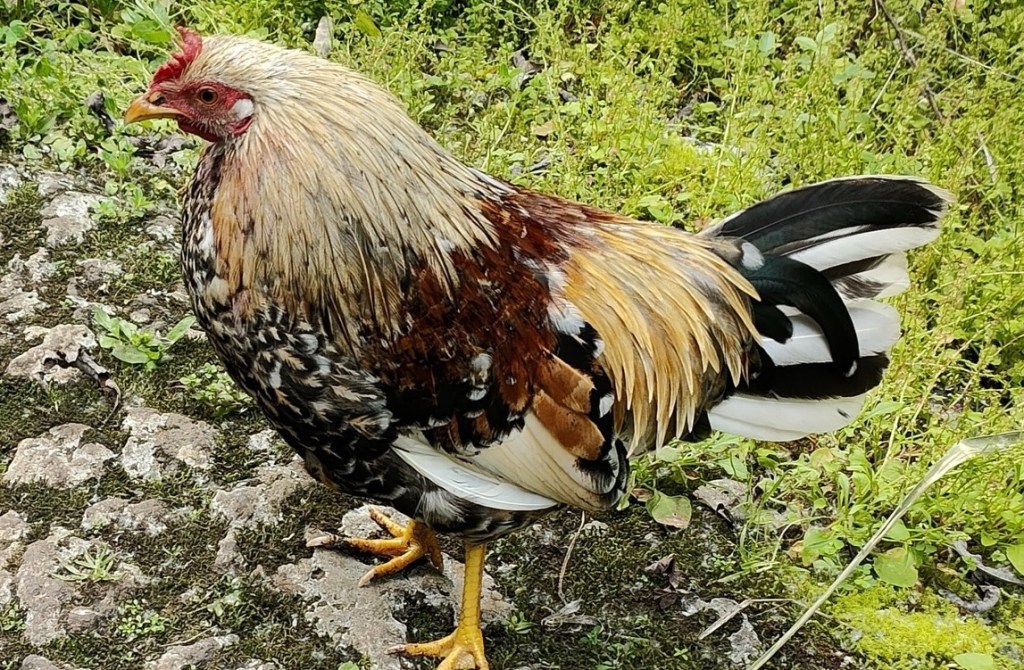
The alltrails blurb mentioned that the ravine had a jungly vibe, which is true, but with chickens. I have no doubt they had escaped from somewhere higher up and their owners couldn’t be arsed to retrieve them down here. Or maybe they were on an adventure, like us.
Chicken on a day trip.
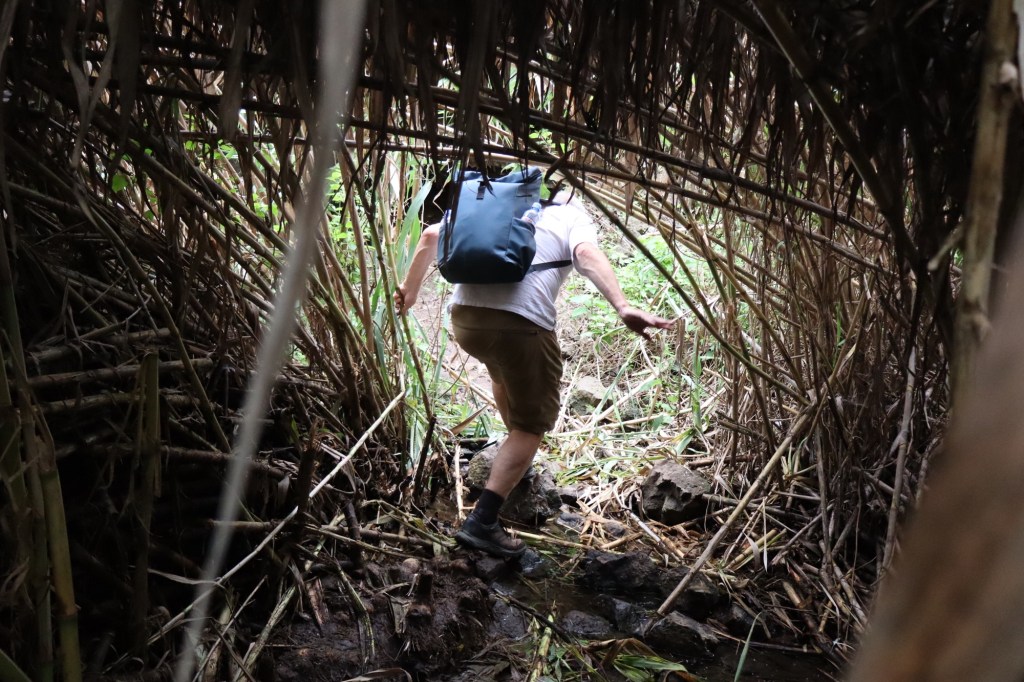
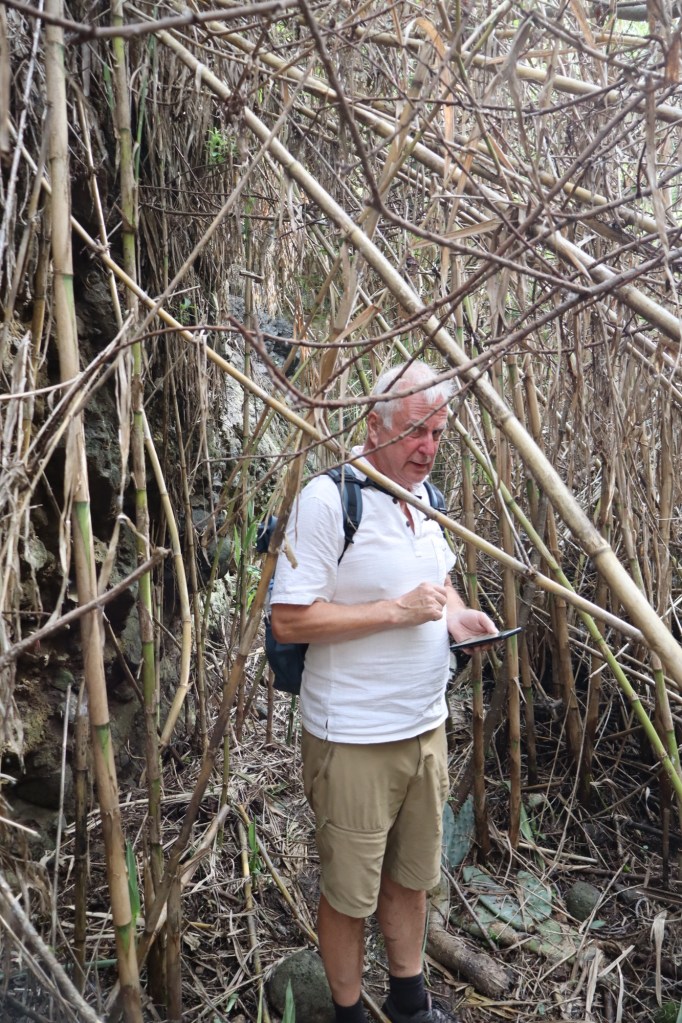
Because we were too mean to pay for the Alltrailsapp, we didn’t have much to go by in terms of navigation. The walk summary had warned that there weren’t any signs and that it could get slippery, muddy, and rather perilous. In classic “middle-aged couple blithely entering a potentially dangerous situation while mainly thinking about the best place to eat their sandwiches” fashion, we ambled along until ambling became crouching, crouching became crawling, crawling became climbing, the white shoes became black and filled with sludge, and we began to feel the faintest twinge of alarm that we might be lost.
Bamboo tunnel. Love Clive’s expression here. The penny drops. We are off track. We have to turn back, or be lost in the jungle until a dog walker finds our corpses.
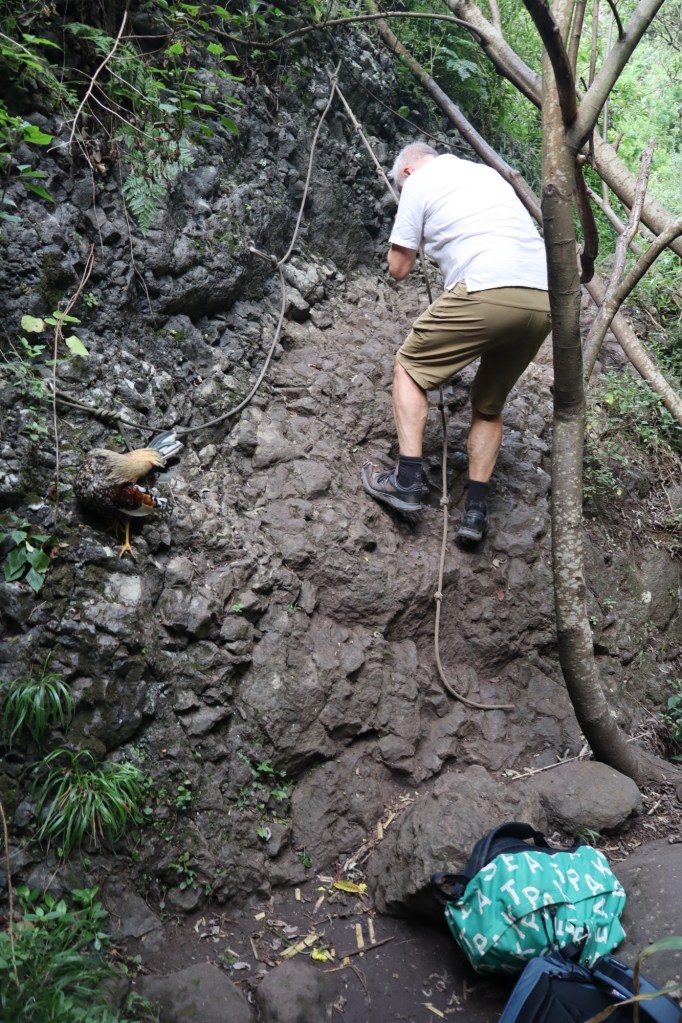
Safety briefing delivered by hen.
We had both read the book called ‘Why People Die On Walks” and it is almost always because they won’t turn around and go back the way they came. Having abseiled down a rock, fought our way though a bamboo tunnel and come face to face with a long stretch of water that seemed too deep to paddle through, we realised we were way off the route and needed to go back.
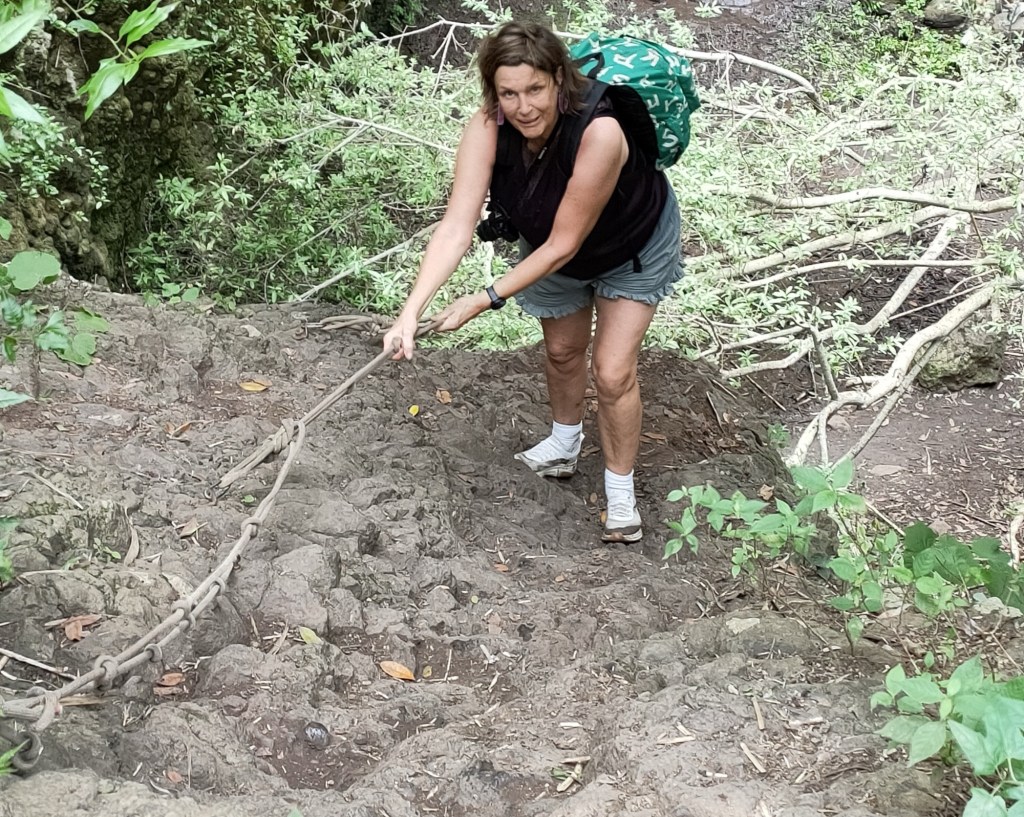
In my youth, I’d have sprinted up this like a mountain goat. Hey, even mountain goats get old.
Valliant.
This decision saved our bacon and we eventually found the long, steep clearly marked path out of the ravine.
Never has a lemonade tasted so good.
One of the many things I love about Gran Canaria is that you can you be lost in the hills and an hour later be salsa dancing in Santa Catalina Square alongside two men dressed as chickens.
The strangest thing, though, was the woman jauntily boarding the bus in Firgas with her shopping trolley, heading down to Las Palmas for a spot of shopping. At 7pm.
Dancing in Santa Cataline Square. Crowds are waiting. We are not sure what for.
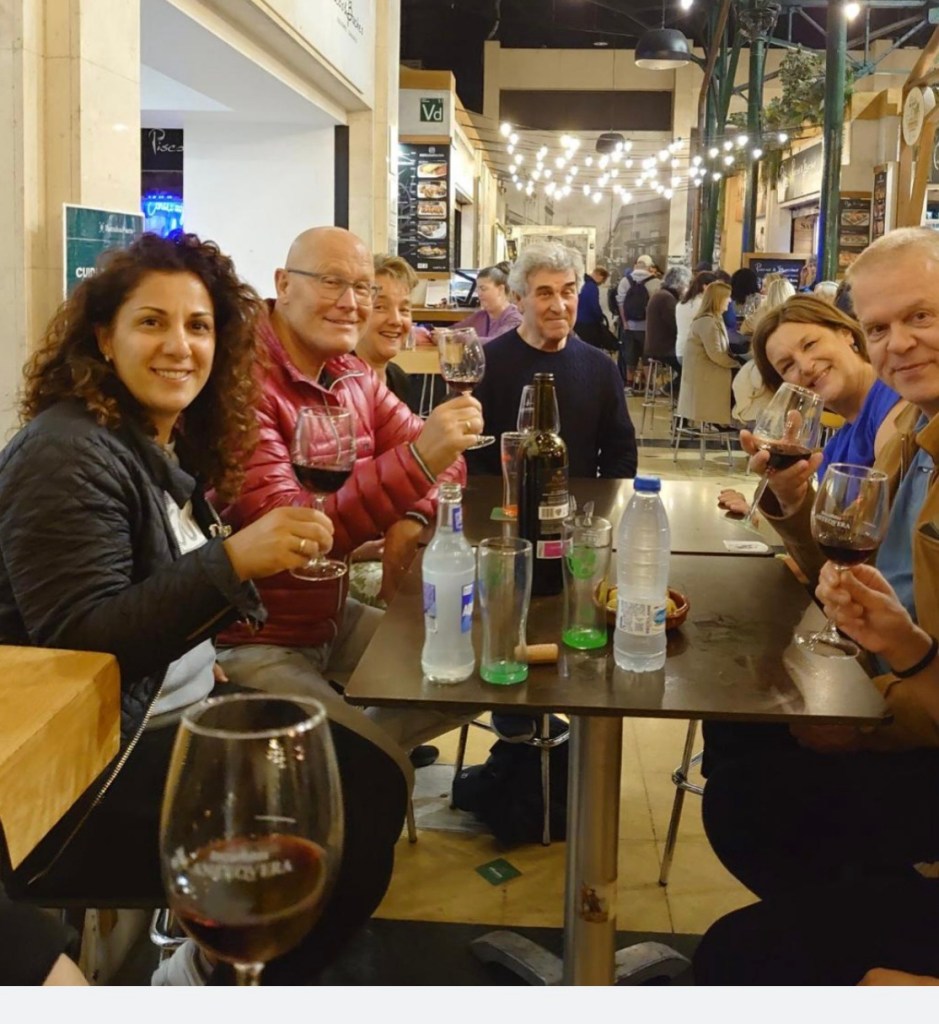
Some of our Spanish school with random friendly strangers we met in the Marcado while drinking and eating tapas.
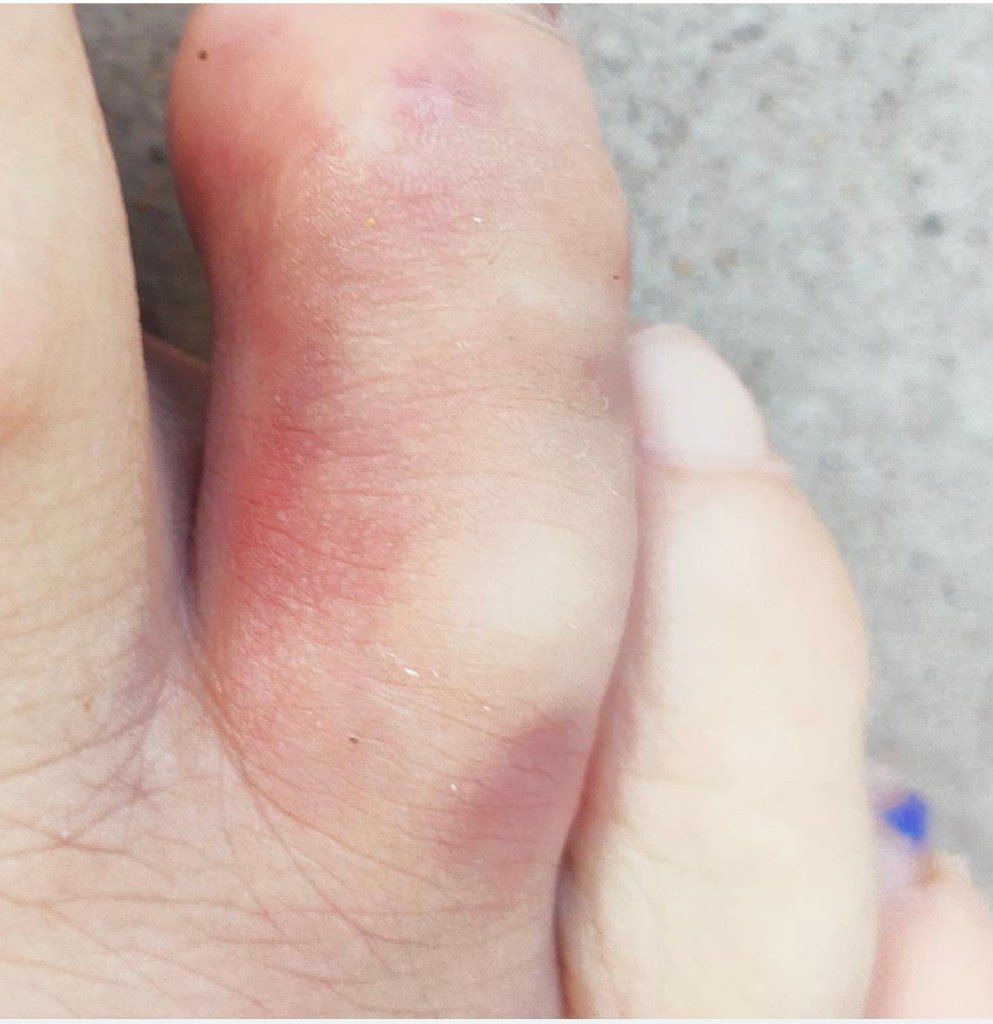
These are the stories I will never tell. Like a stand-up comedian destined to stay forever in the wings. Hiding from two German friends to avoid joining them in what seemed to be a fiendishly difficult salsa class in the square. Breaking my toe on the bedpost, and while it was still numb, getting Clive to pull it straight and buddy-strap it, as it stuck out at an alarming angle. Yesterday. On my birthday. Having my legs and bikini line waxed in faulty Spanish. All I’ll say is that Spanish women are a lot less prudish than the average English woman.
My broken toe. Sorry, I don’t have a lot of photos this week.
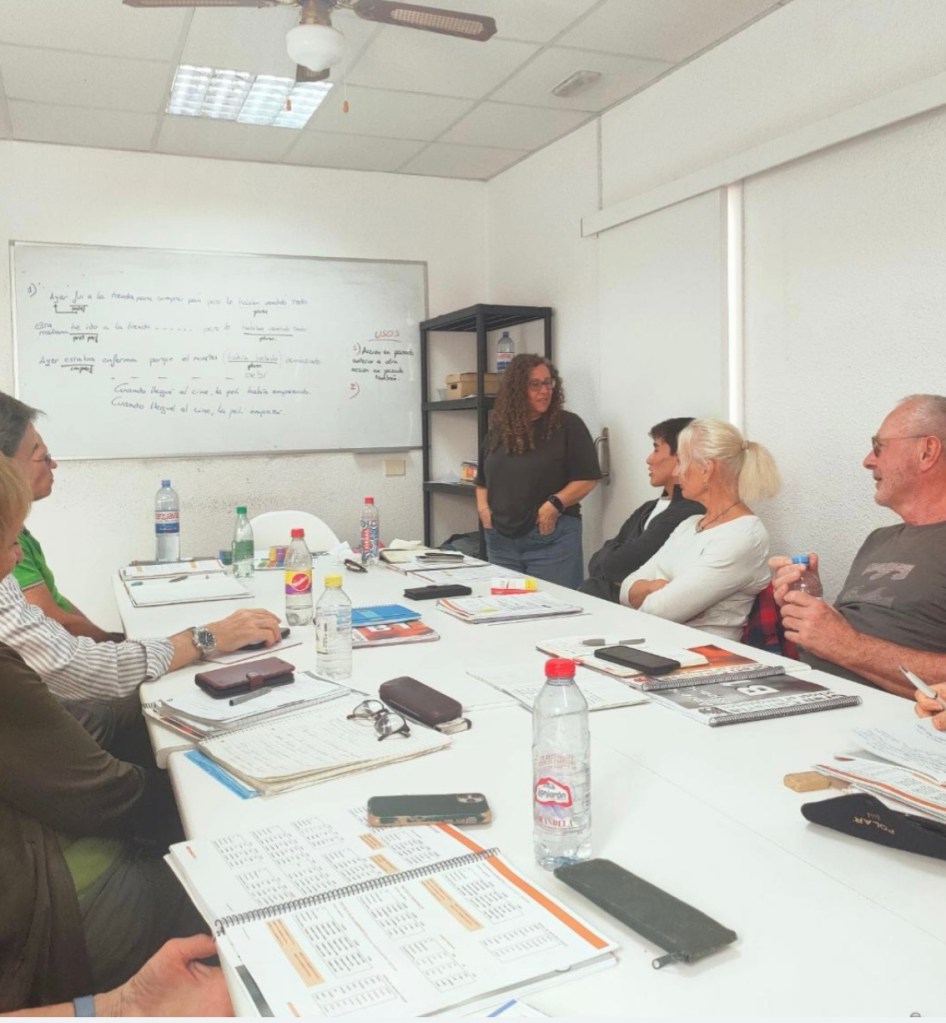
This week I’m in a class of twelve, and the vibe is very different to the previous weeks when there were five to eight people in each class. So our teacher never asks me what I did yesterday, although I studiously prepare it each morning, just in case. The adult me knows this is just how it goes. I’m at the back, hidden behind a row of people; I planned to move after the first day but the class is mostly German and when I arrived a little early the next day to execute my plan they were already sitting in the exact same seats they had put their towels on from the day before.
The schoolgirl in me is in a right old strop about being ignored. Or perhaps it’s the middle child.
“Look at me!”
I’m shouting in my head, while studiously staring at the table trying not to catch the teacher’s eye. Old habits die hard, even when they’re doing the exact opposite of what I long for.
There’s a bit of relief there too, as no matter how much we plan our responses, we are level B1’s, so our speeches usually cause expressions of puzzlement to appear on everyone’s face except the teacher’s.
“He’s doing something three times a day, but I don’t know what. Everyone seems very impressed. What could it be?” is an example of my thoughts.
“He’s sailing with the assistant in the bakery opposite?” No, actually, he’s dancing. But often the conversation moves on and I never find out. I still have no idea what he did three times a day.
Some of the twelve people in my class this week. Natalia, our teacher, is standing at the front.
An Italian student who has never done any Spanish before, rattles off paragraphs of speech that the teacher totally understands. She gently corrects about one word in thirty. He works in a hotel in Italy and and is doing the course to get better tips.
Italian and Spanish are called Romance languages, and are based on Latin. So he understands about 70% of Spanish already. When I am casting around for a Spanish word, the English ones that work tend to be Latinate or French-derived. For want of another word, these are usually posh words, brought to us by William the Conquerer, originally used mainly by the upper echelons. The Anglo-Saxon words never disappeared, because the majority peasant class carried on using them. The posh words often cluster around law, medicine and government. So in law there are an awful lot of phrases that basically are two words, one based on French, one Anglo-Saxon, meaning the same thing. Law and order, cease and desist, null and void, terms and conditions – everyone needed to know what these meant, not just the poshos.
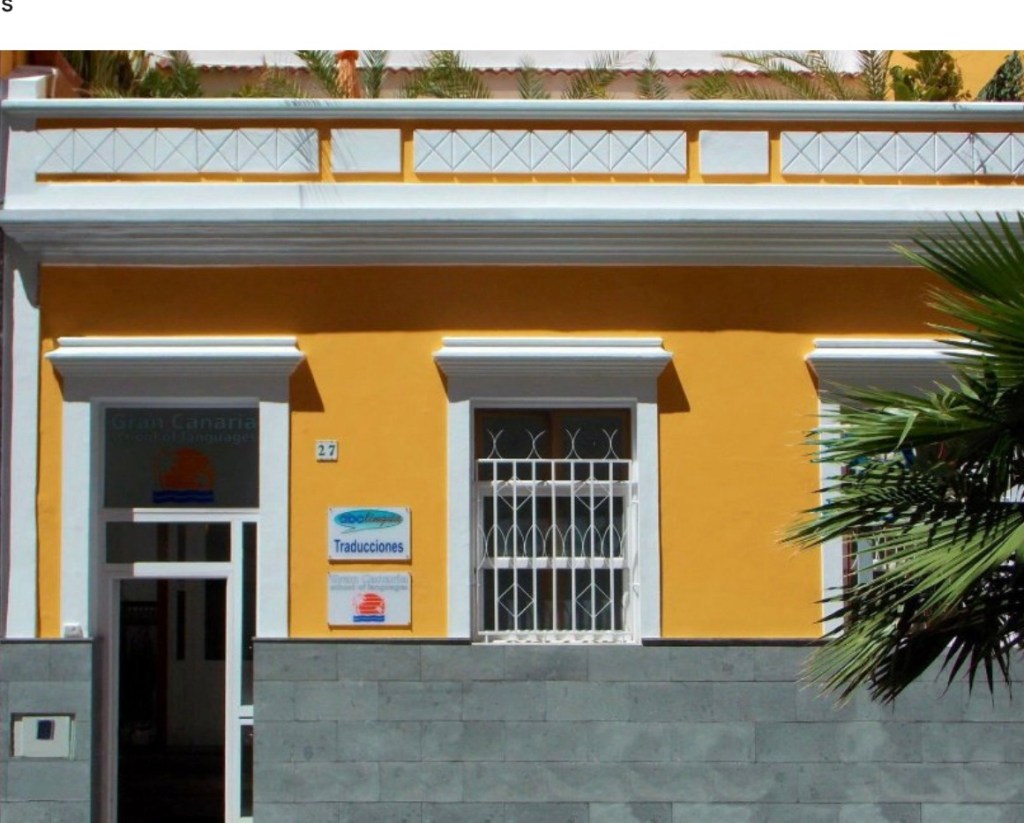
The Canarian School of Languages.
In order to level the playing field, when we socialise with people from other countries, we all try and speak in Spanish. Most people from other European countries can speak English, but attempting to speak Spanish for the last four weeks has made me realise how exhausting that must be for them. The only trouble is we are beginners, and so most of the time after a glass of wine or two, we haven’t the faintest idea what they are saying, and vice versa.
Tomorrow is my last day at school. I must say I’m glad. I now have a rickety scaffolding of tenses and vocabulary that I need to start using. If I learn much more, like Homer in The Simpsons, it’ll push the old stuff out of my brain.
We now have three weeks to properly explore the island, host friends, and have a go at practising what we’ve learned.
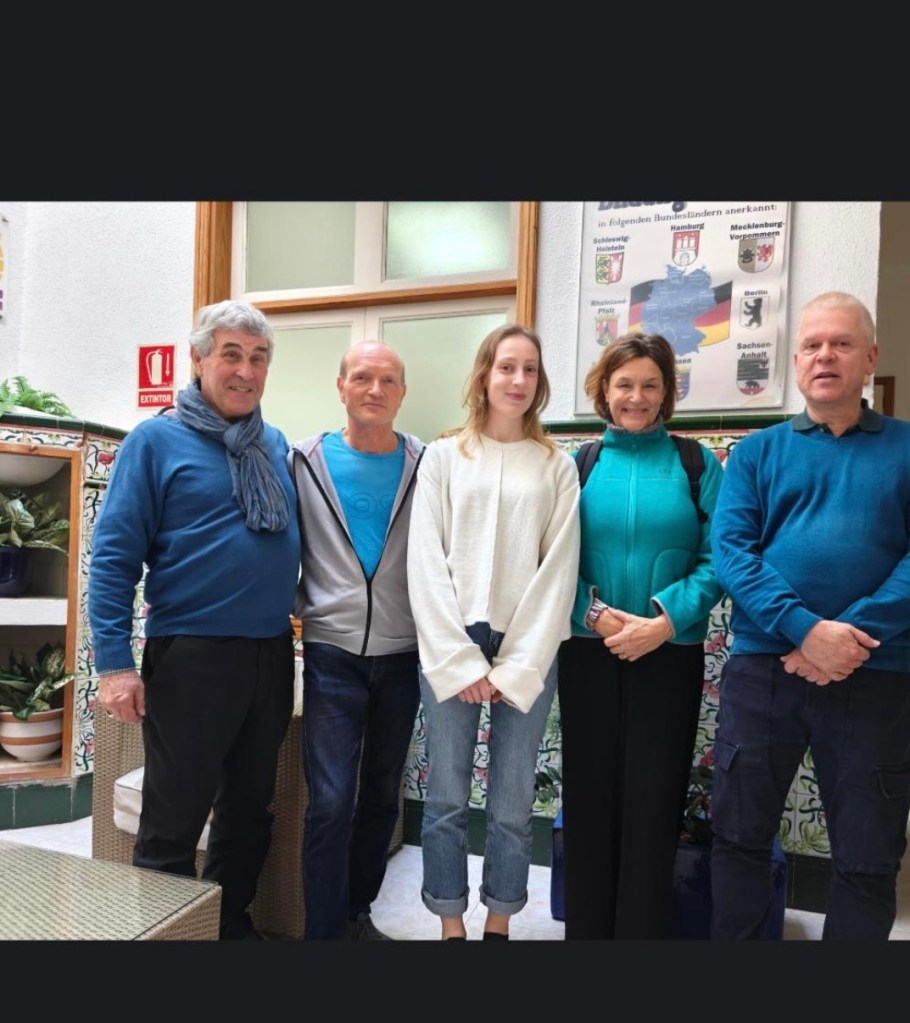
Probably my favourite class, the second week, on left Trevor, an amazing Welsh linguist/author, my mate Norb, who hypnotises people presurgery so that they heal fast and don’t bleed, Michelle, a sweet and very young German person, me, and Uwe, a German journalist.
If I hadn’t restarted learning Spanish around 18 months ago, this trip to Las Palmas simply wouldn’t have happened. Last year we both needed surgery, so it felt sensible not to plan anything too ambitious in case one or both of us ended up incapacitated. We aren’t. Well, no more than usual. Fingers crossed.
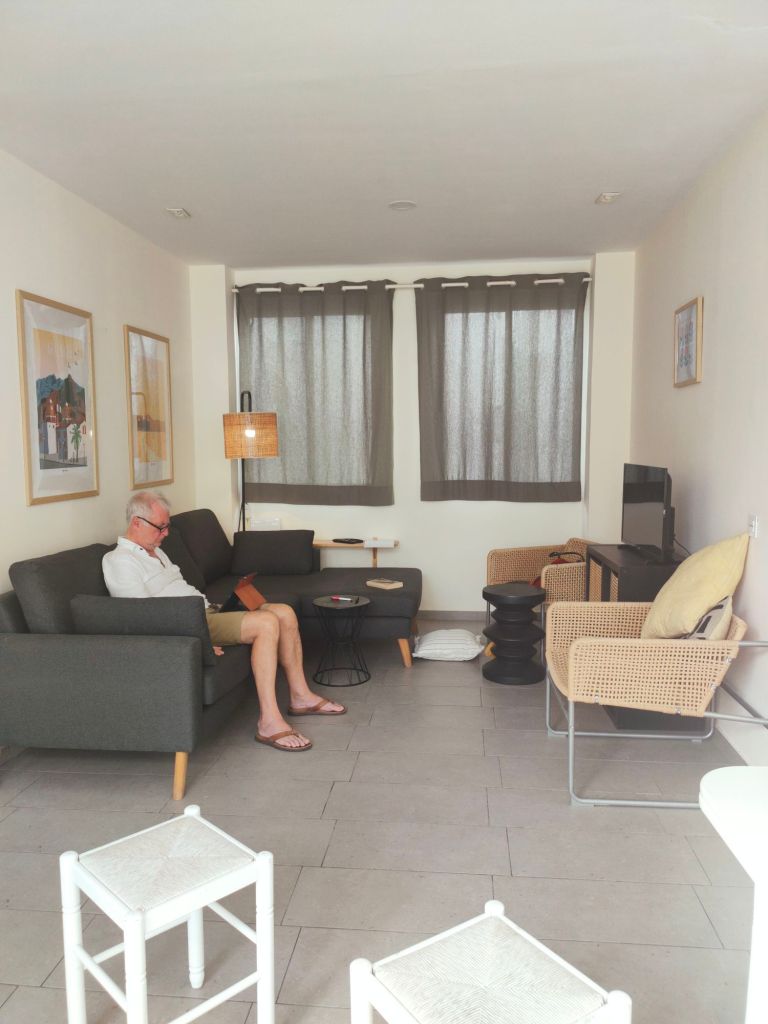
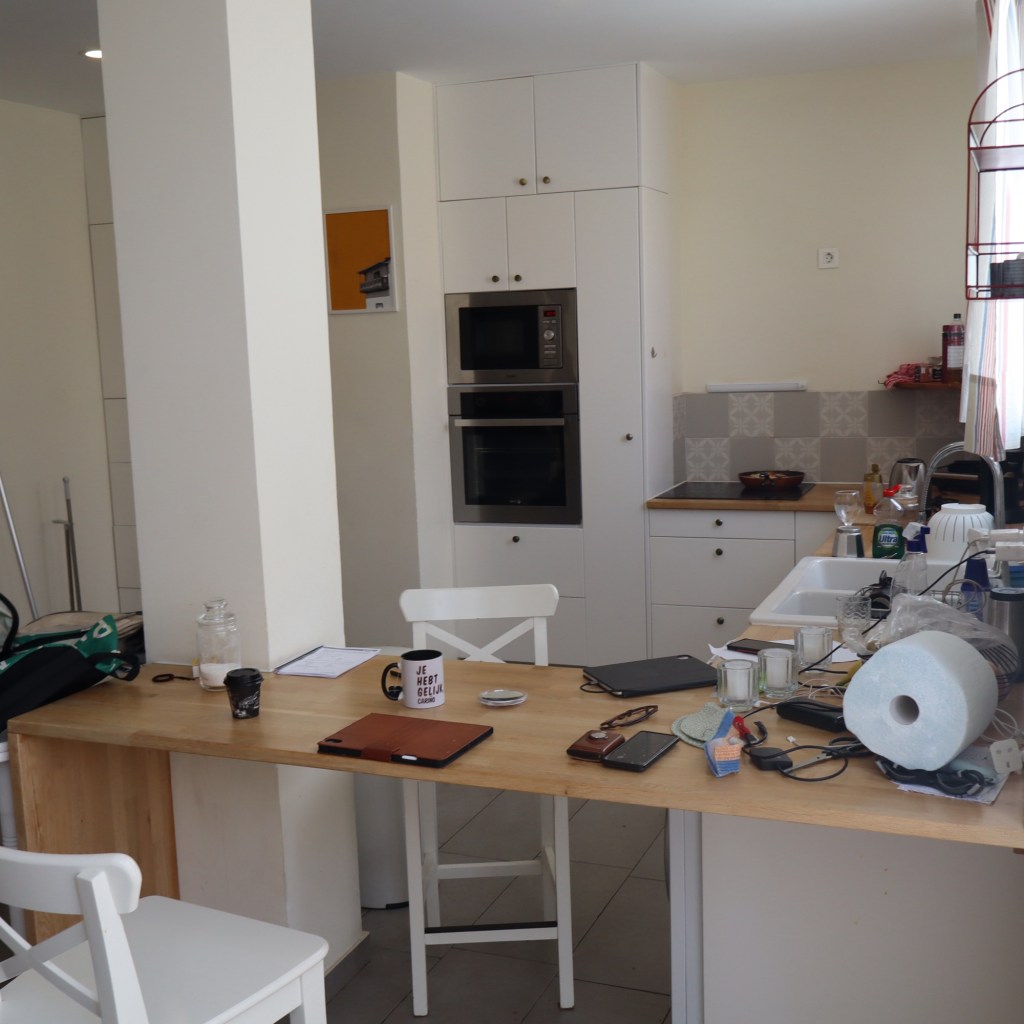
Terrace. Living room area. Untidy kitchen.
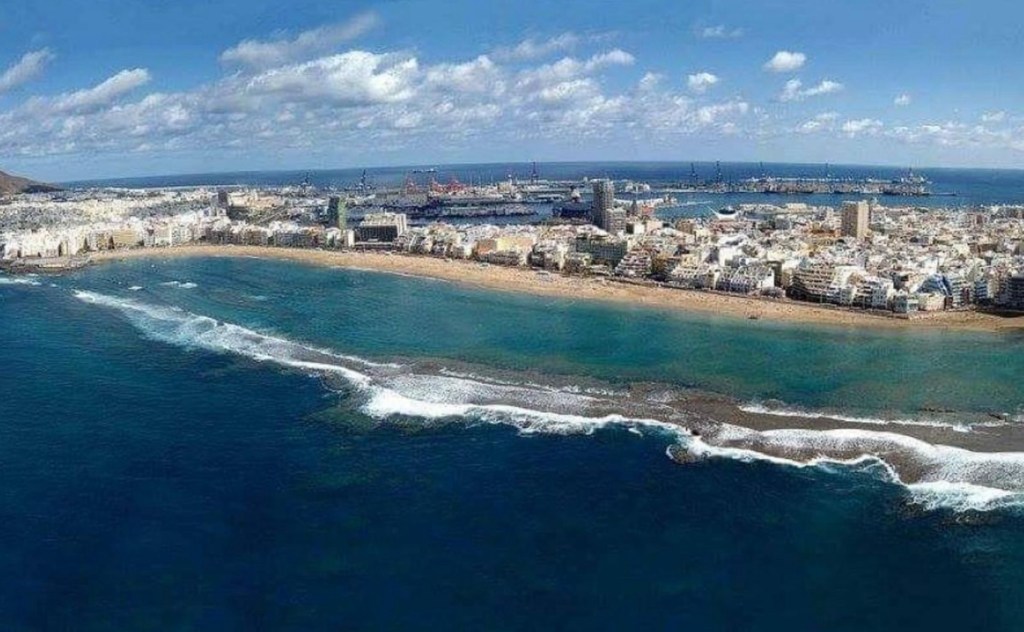
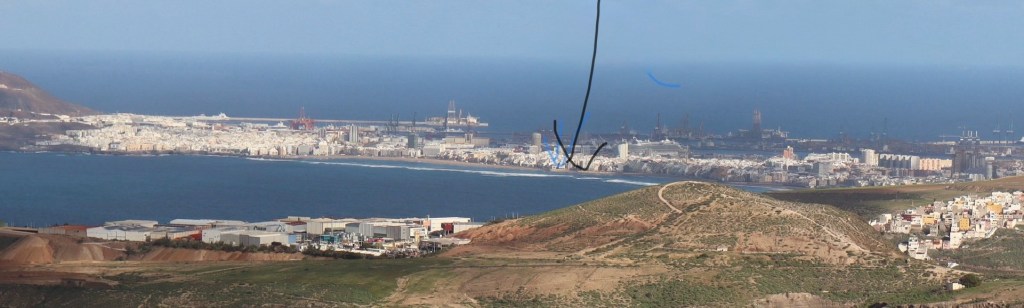
We settled into our airbnb flat 2 weeks ago. It’s on the top floor of a six story building, by Las Canteras – a 3km beach which is around three blocks west of us.
It is bright, with two bedrooms and an open plan kitchen and a sunny terrace. It’s been quite wet, although it’s warming up now, This is apparently unusual weather for The Canaries, which is supposed to be year round sub-tropical. Around 80% of the clothes I brought are useless, unless I wear them all at once. The shops are doing a roaring trade in jumpers. I’d kill for my slippers.
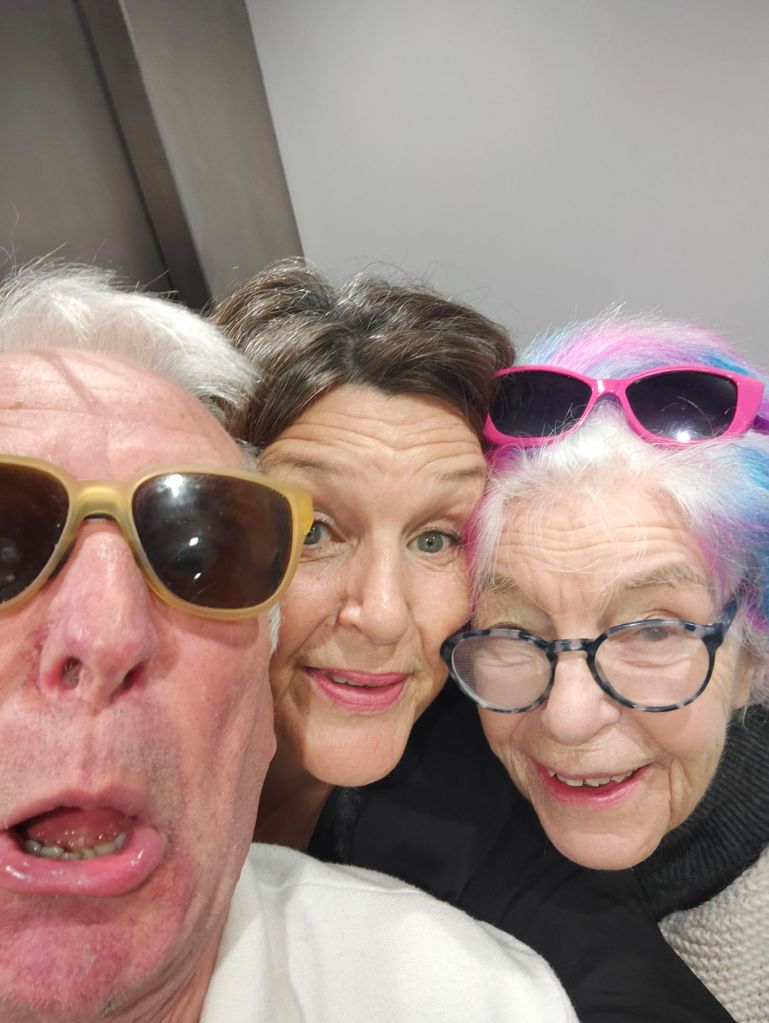
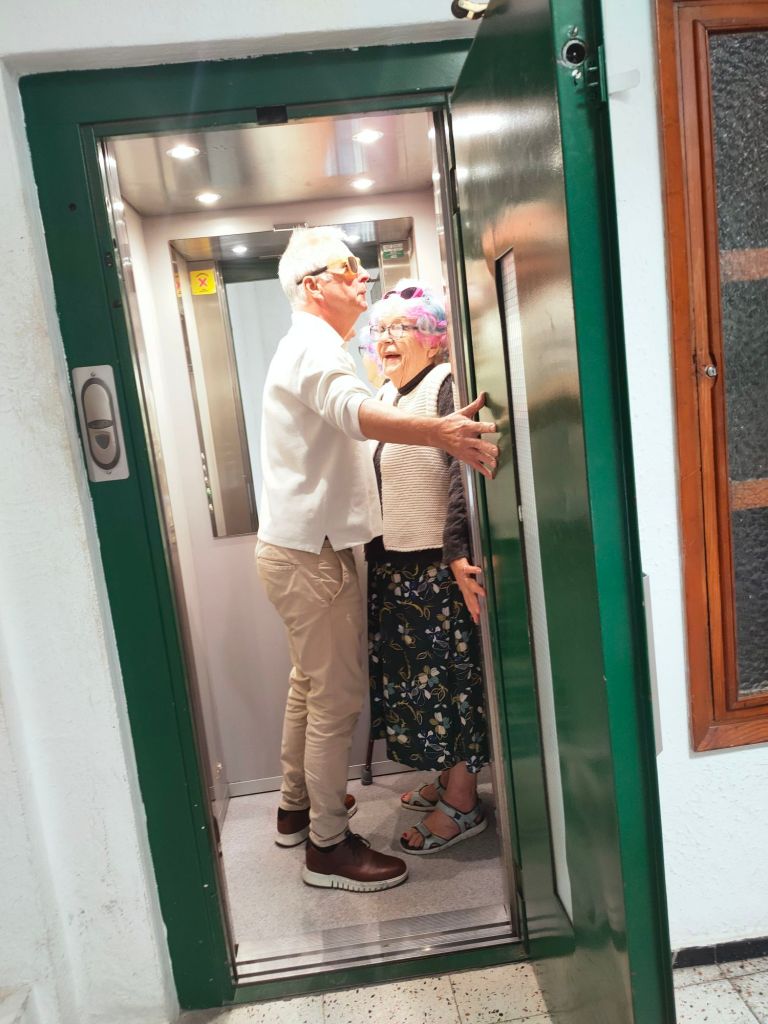
There’s a small lift, shared by everyone in the building. On several occasions I’ve ascended with a tiny Spanish old lady’s chin nestled into my cleavage, or been wedged nose-to-nose with a friendly local, a toddler nibbling my knees. Nobody cares. There are too many stairs to walk up, so we all squash in regardless.
Selfie in a lift.The lift space is limited.
The flat is intermittently noisy: odd buzzing sounds, a dog barking, drilling, traffic honking, laughter drifting up from cafés below, and always, the roar of the sea in the distance. The noises come and go, and we’ve grown used to them. Bookshops, beach, cafes, supermarkets, bars that open improbably late, (Bochinche, which means chaos, is one of them), the school, all on our doorstep. It makes us feel alive.
When we’re not nose-to-the-grindstone learning Spanish, the beach is good for snorkelling and safe for swimming — no violent undertow, only the risk of being gently shredded on the reef. Last week, it all suddenly took on an air of Clacton-on-sea, as the wind picked up, the sea boiled, and we stayed home wrapped in duvets.
At the southern end the reef disappears and the surfers lurk further out. Without my glasses they look like hundreds of bobbing seals. Further along there’s a posse of extraordinarily skilled frisbee players, apparently immune to both wind and gravity.
At the week-ends, however hard we try to channel our inner night owl, we’re usually tucked up in bed at midnight, while outside small kids play football in the pedestrianised street below our terrace while their parents sit drinking at the bar opposite. I’m tempted to stake out the scene one night with binoculars to see how they manage it. The adults never seem drunk, yet they sit there for hours.
One end of the beach.
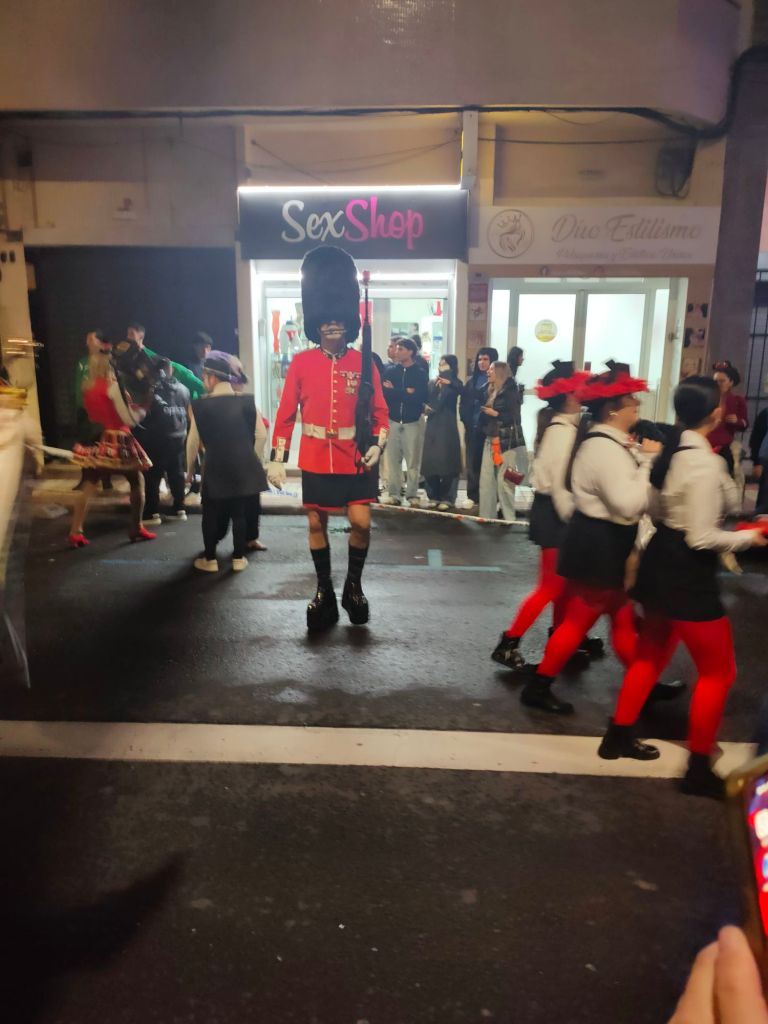
My mum’s come to see us for a few days. We went to the opening parade of a month-long festival that apparently ends in March with a giant papier-mâché fish being thrown into the sea. Who knows why? Another thing to ask our teachers’ about. They are very useful sources of local information, like how does everyone function on so little sleep? Apparently the children don’t, and fall asleep at their desks at school. With less people working in the city able to take a siesta, they function on less sleep than anywhere else in Europe. My teacher Anna isn’t one of them, as she is a “Madrugadora”; an early bird, usually in bed by 10pm.
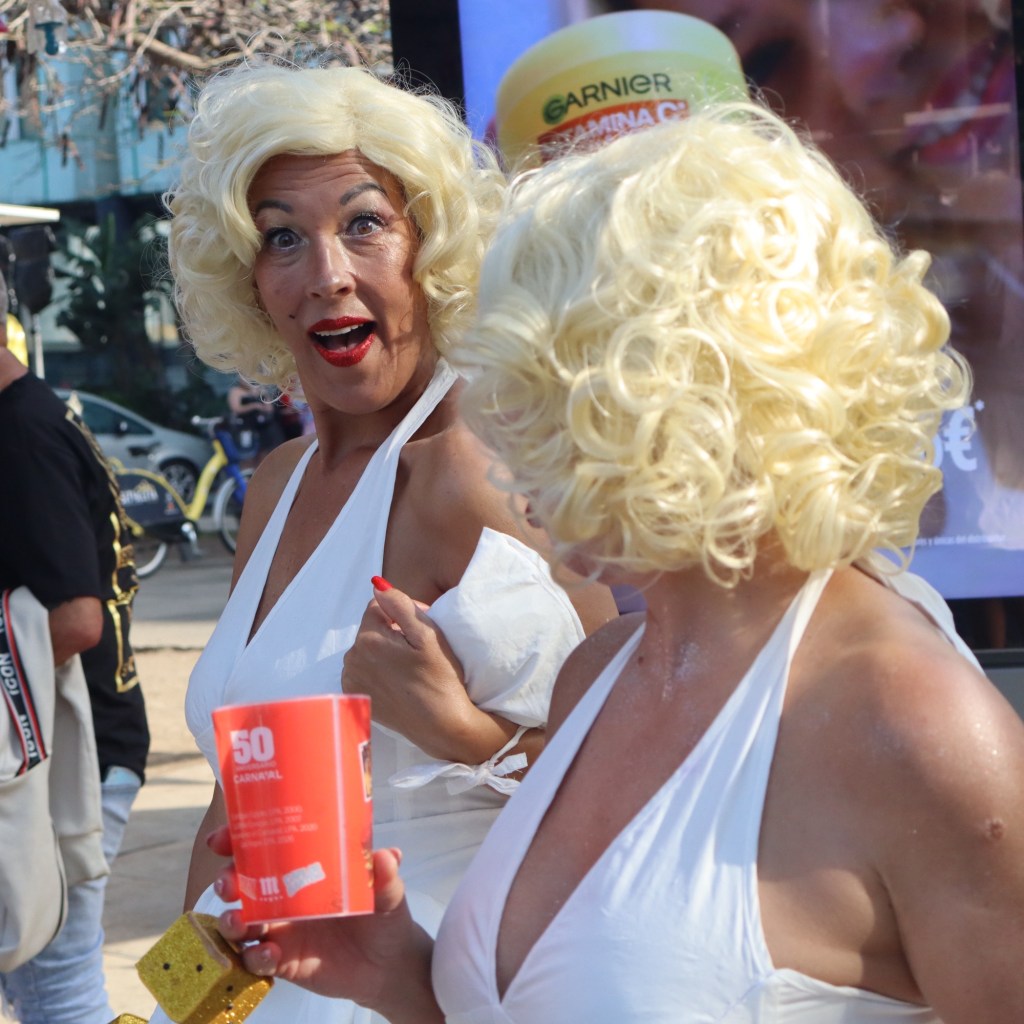
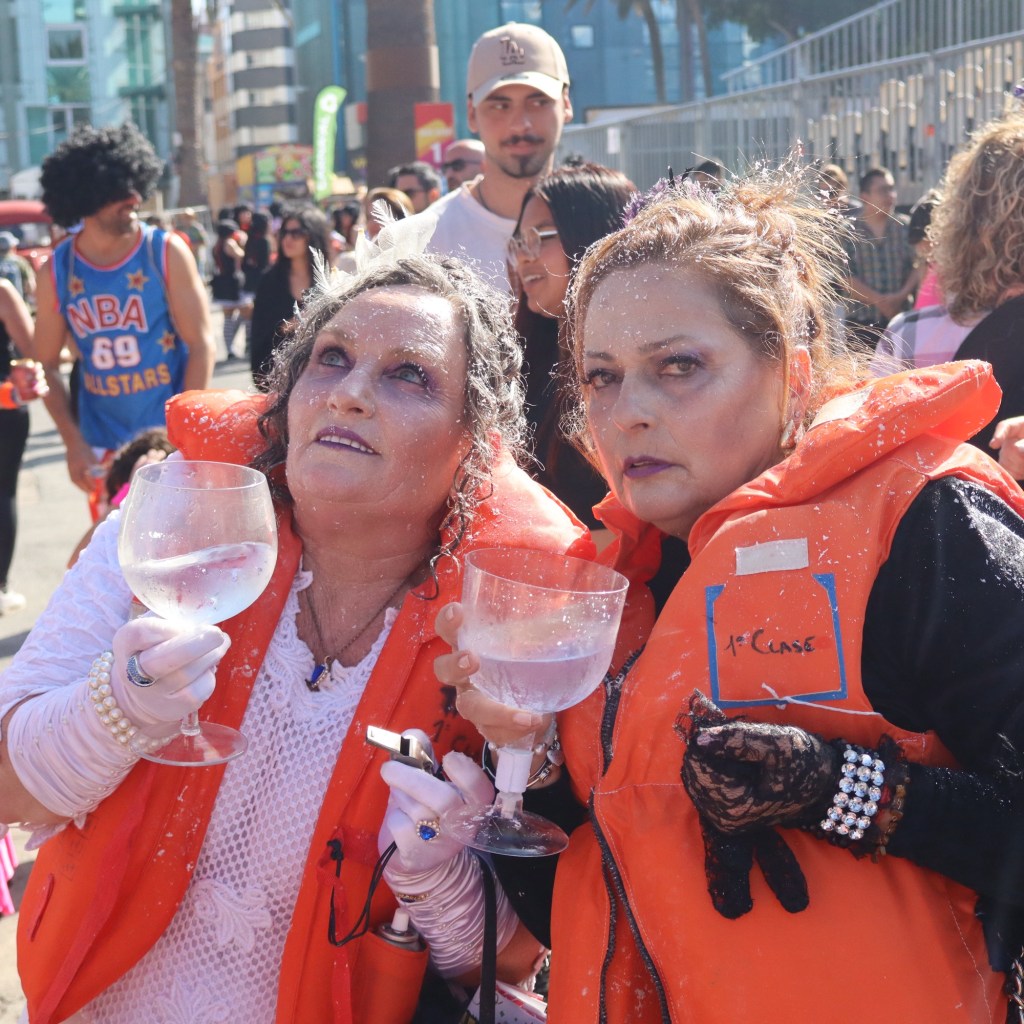
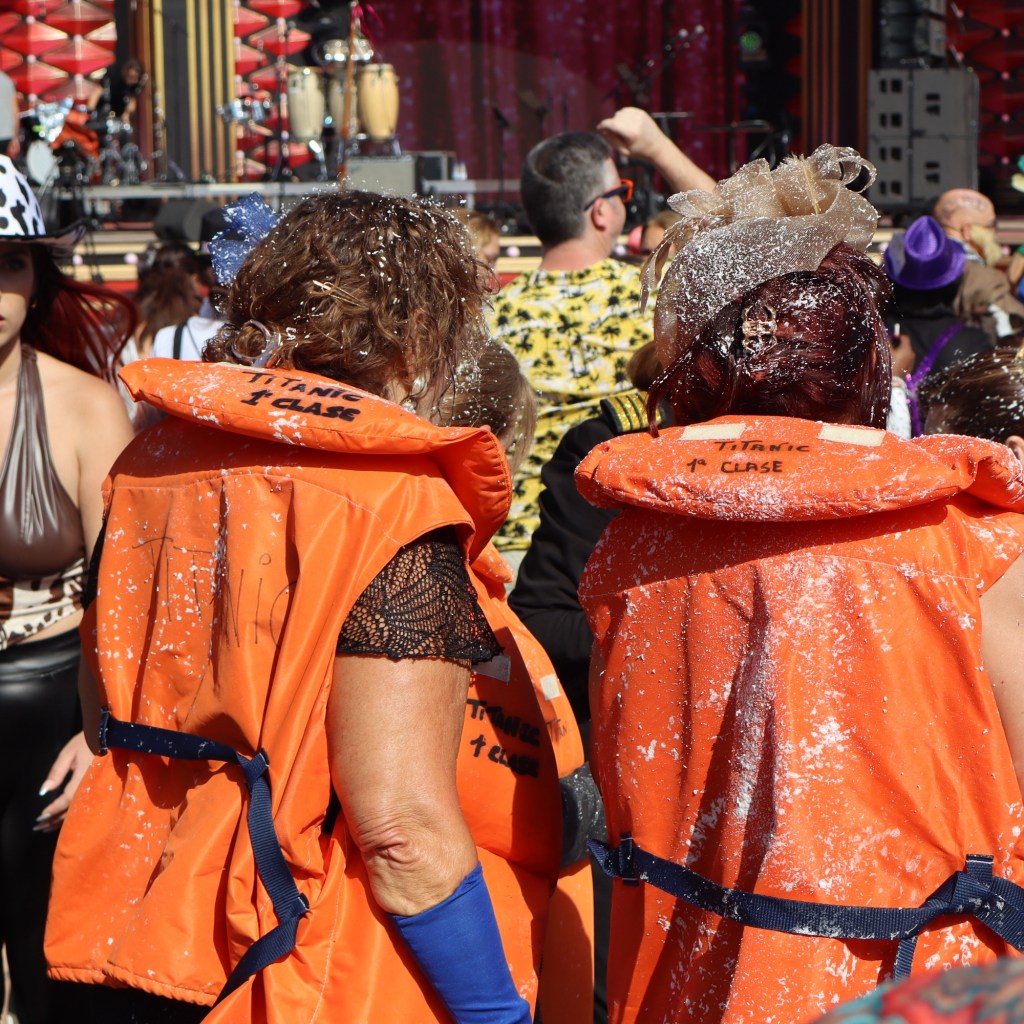
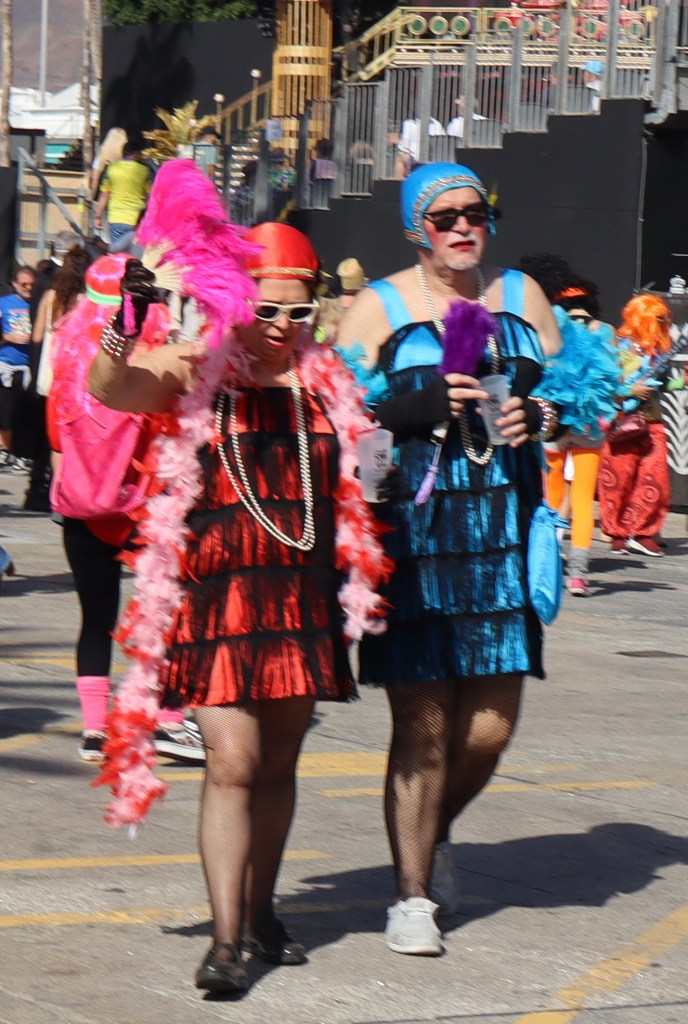
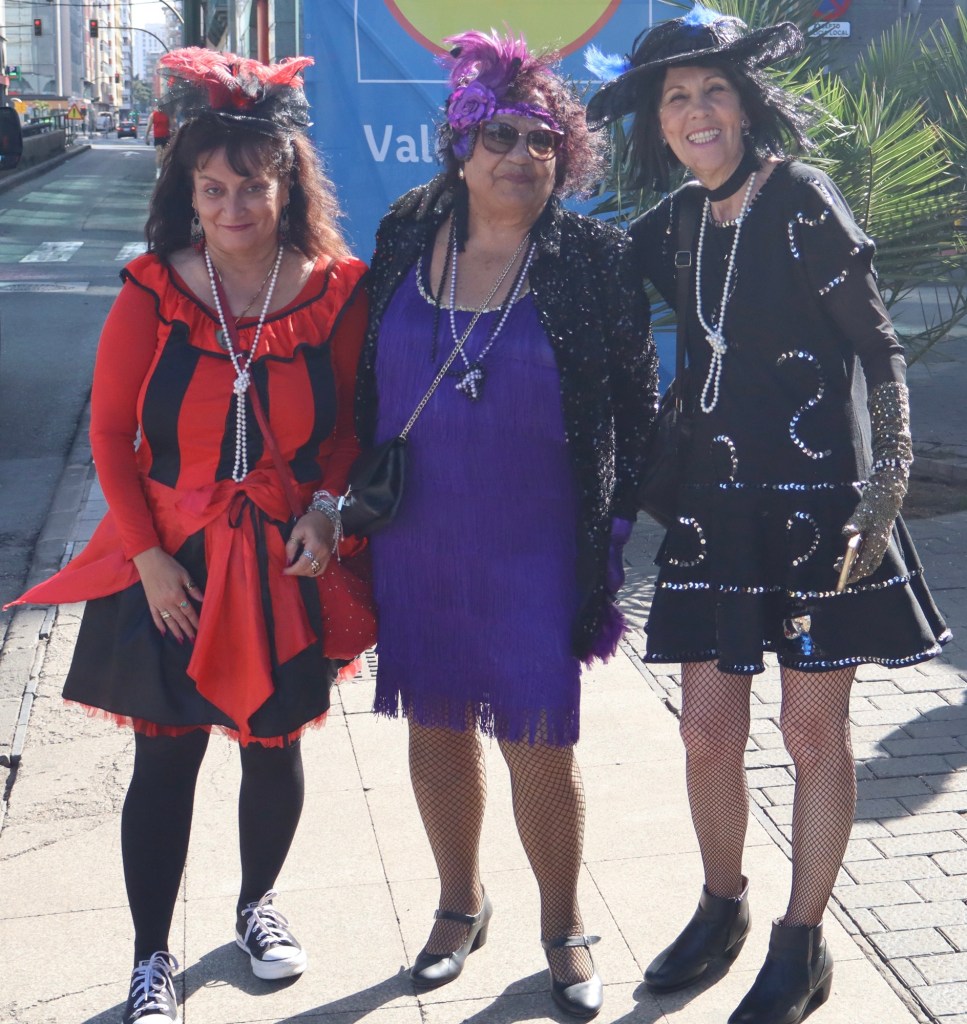
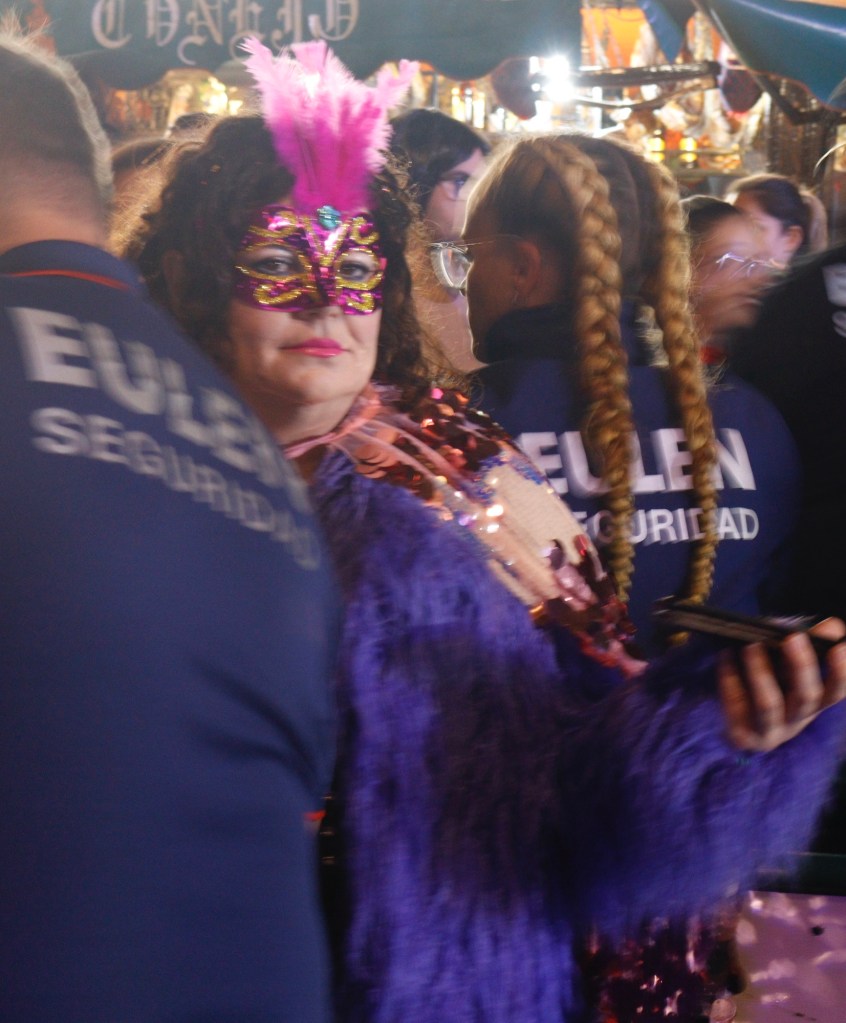
On 20th of Feb, there’s going to be a drag queen parade. I didn’t realise the background until after I’d taken the photo. These ladies were right at the front of the parade.
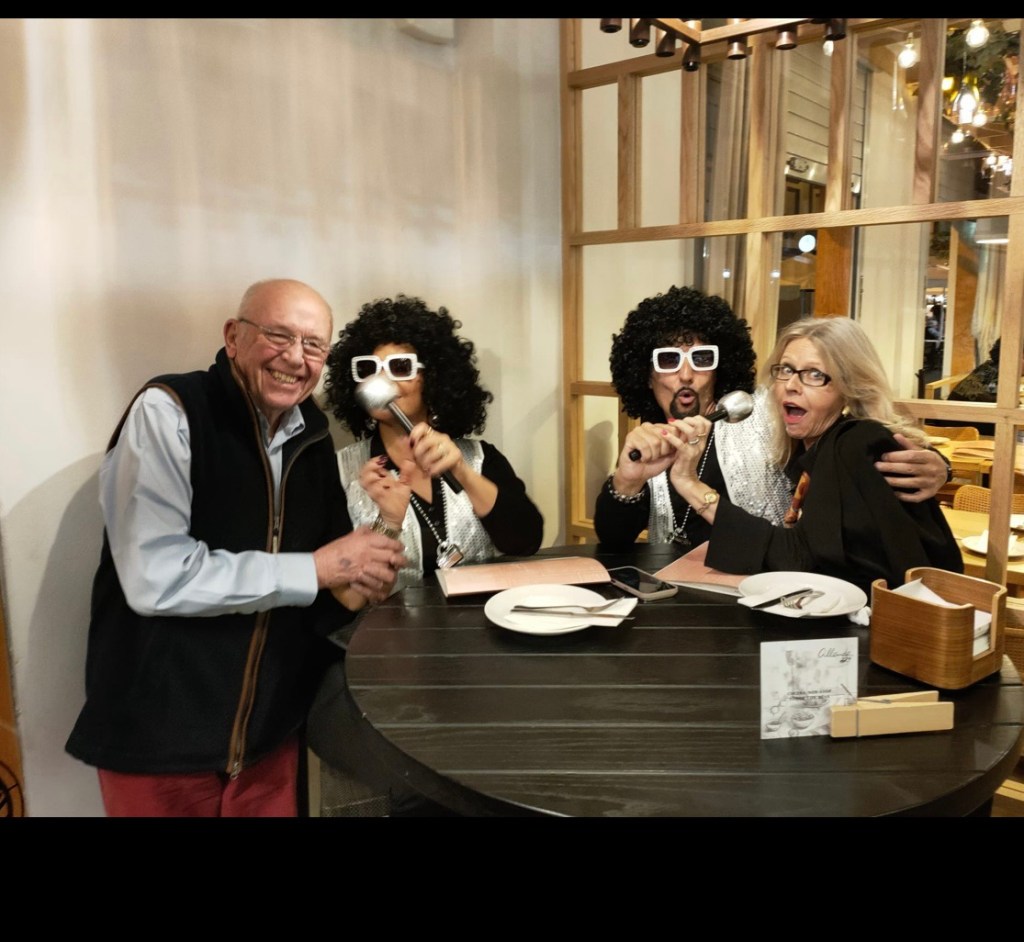
I’m ridiculously thrilled with the four bored Elvis Presleys.
I love how everyone dances and sings along behind the bus.
Following the parade bus.
Next week we’re going on a trip with the school into the mountains. I’ll keep you posted.
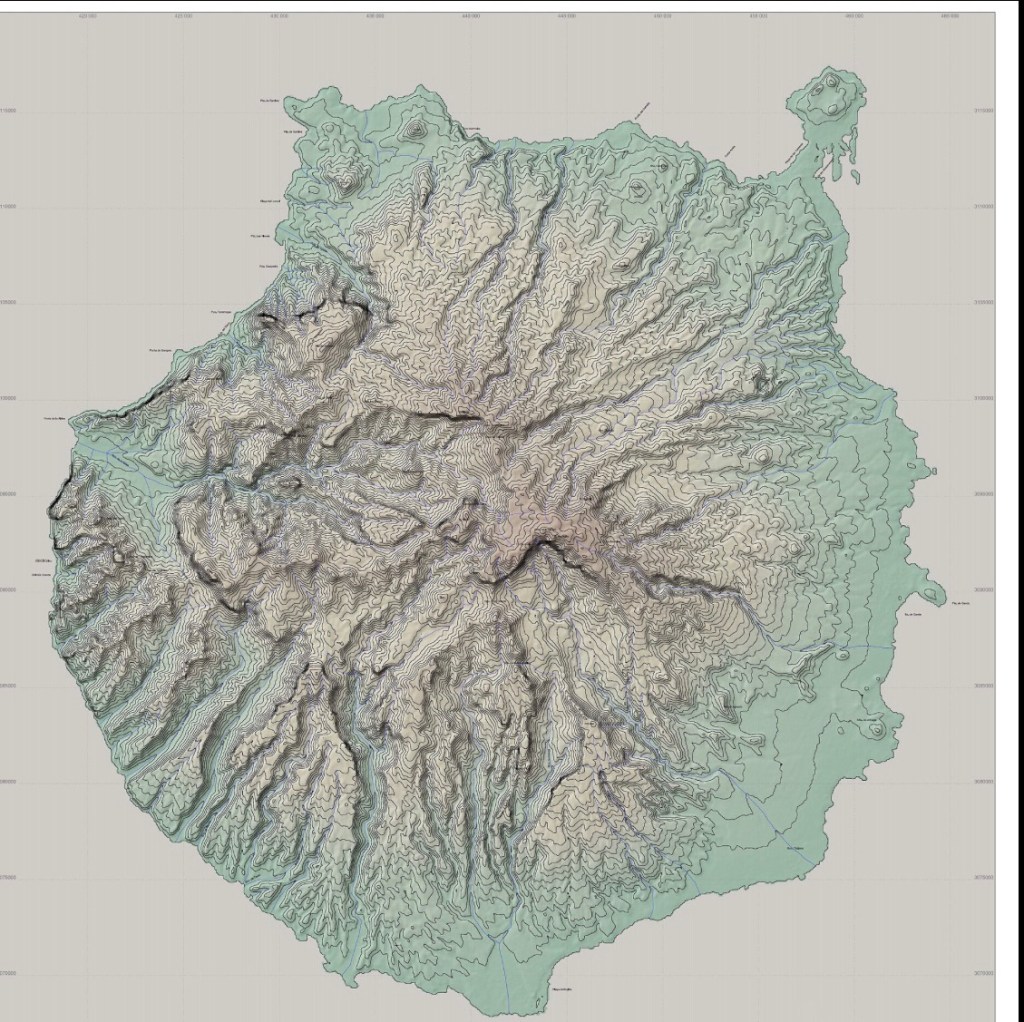
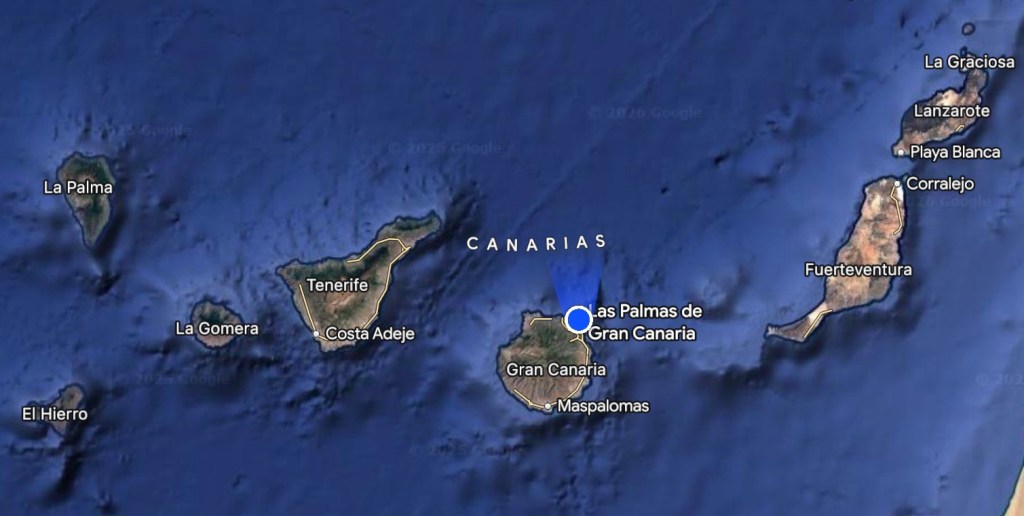
Gran Canaria – a volcanic island known as a “miniature continent” due to its diverse climates and landscapes, ranging from the Maspalomas sand dunes to northern pine forests. Gran Canaria lies (93 miles off the North-West coast of Africa.
We leave on the first properly cold day of a UK winter; the train speeding us to Gatwick through trees gleaming frostily through the fog. When we are “travelling”, moving from place to place every few days, I’m pretty good at packing the bare minmum, aware that we’ll be in and out of cities, on and off buses, trains and planes and a surfeit of stuff is just a pain to haul around. But being settled in one place for 2 months plus my new gigantic Argos suitcase inspires me to take not only the black and white capsule wardrobe ChatGPT and I have planned but all sorts of floaty stuff I’ve bought from Boohoo and not even tried on yet and pretty much most of my summer clothes stored up in the attic, all of which of course require different shoes. Pretty much the opposite of a capsule anything. You’d think I’m going to be attending parties galore, perhaps taking up my job as ambassador, not reverting to scruffy student wear when I will basically be shuffling about in flip flops, t-shirt and shorts. My bag weighs so much I can barely lift it and is way over the limit for our flight. After some ruthless culling I manage to reach an acceptable weight, then Clive fills it with all the things he couldn’t fit into his suitcase.
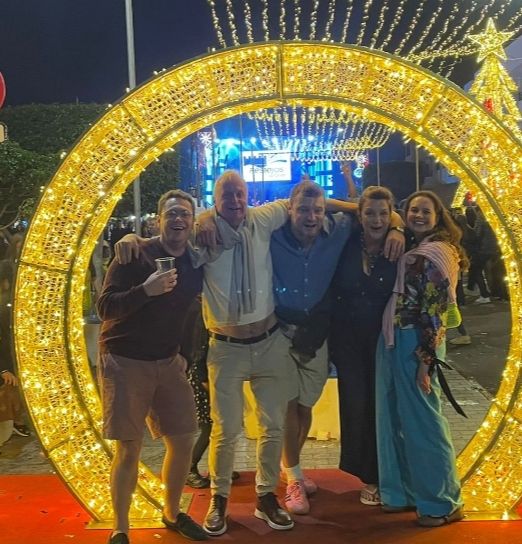
New Year’s Eve 2025. I should NOT have had that Negroni.
Of course, I start to feel a bit grotty on the plane and by the second day of our week with the kids in Fuertaventura I am in the voiceless phase of what I suspect is Covid that variously feels like swallowing razor blades, headache, neckache, throbbing sinuses, palpitations, popping ears, a feeling like water shooting up my nose even though I have only blinked, and, the most troublesome symptom for the rest of our rental house, wounded-rhino decibel level snoring. Eventually I realise the solution and book myself into a hotel up the road. It has a gigantic Emperor-sized bed, satin sheets and a hot running shower all to myself. I tell them all I am in a youth hostel. I think Katy suspects.
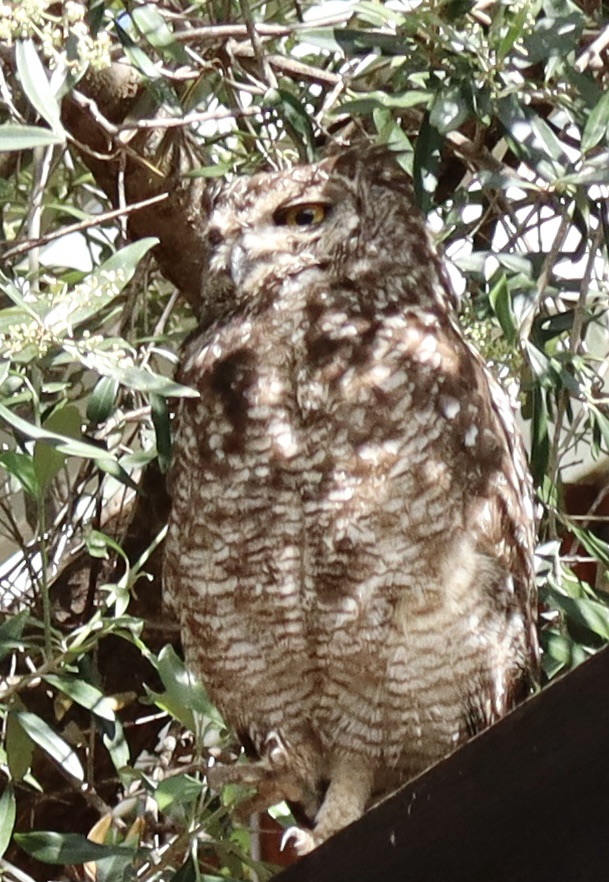
A wild spotted eagle owl seen in Cape Town Botanical Gardens.
We arrived home at 5am to a house that had been unheated for 2 months. The heating ap informed us we were in 85% humidity. My plants have thrived. It basically felt warmer and drier outside. And it was raining. But the village lights are gleaming and the pub has a roaring fire, where we stumble in, mud covered, (I slipped in my wellies), and soaking. We bump into an old friend and gossip by the pub fire drinking pints of real ale. As we walk home in the dark, there’s only two street lights between us and home; we pass a near neighbour in the gloaming with a head torch on, putting his outdoor christmas lights on. When we ask him why he says “Because I am so excited” in a deadpan way. We are home.
Anyway I’m only here as Clive wants a record of our holiday and I haven’t done the last two weeks. I didn’t expect to want to. South Africa, Garden Route. An afterthought really.
Oh My God. What a beautiful, wild, weird, dangerous place it is.
So I thought I’d try doing a photo montage rather than much in the way of writing. But you know me. Can’t help myself. So if I ramble on, ignore me and just look at the photos.
Route 62 to Little Karoo.
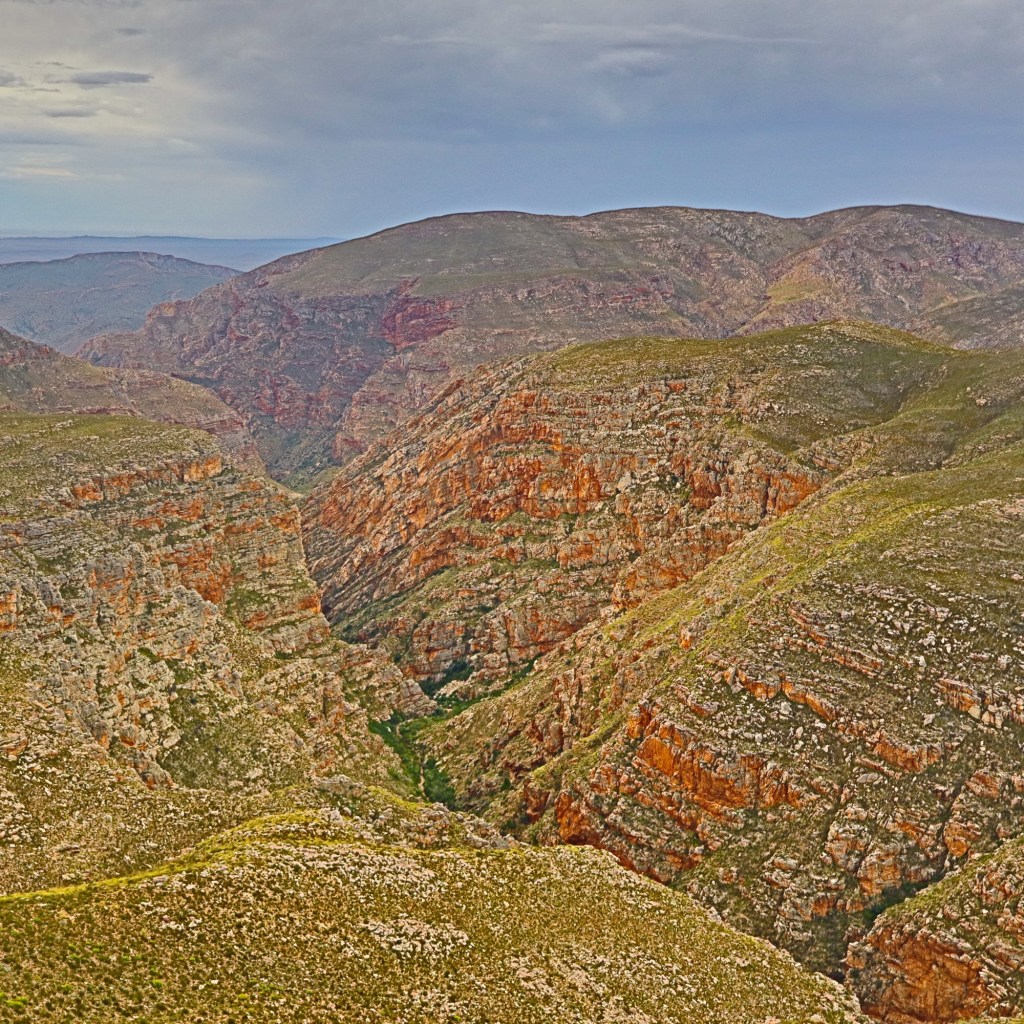
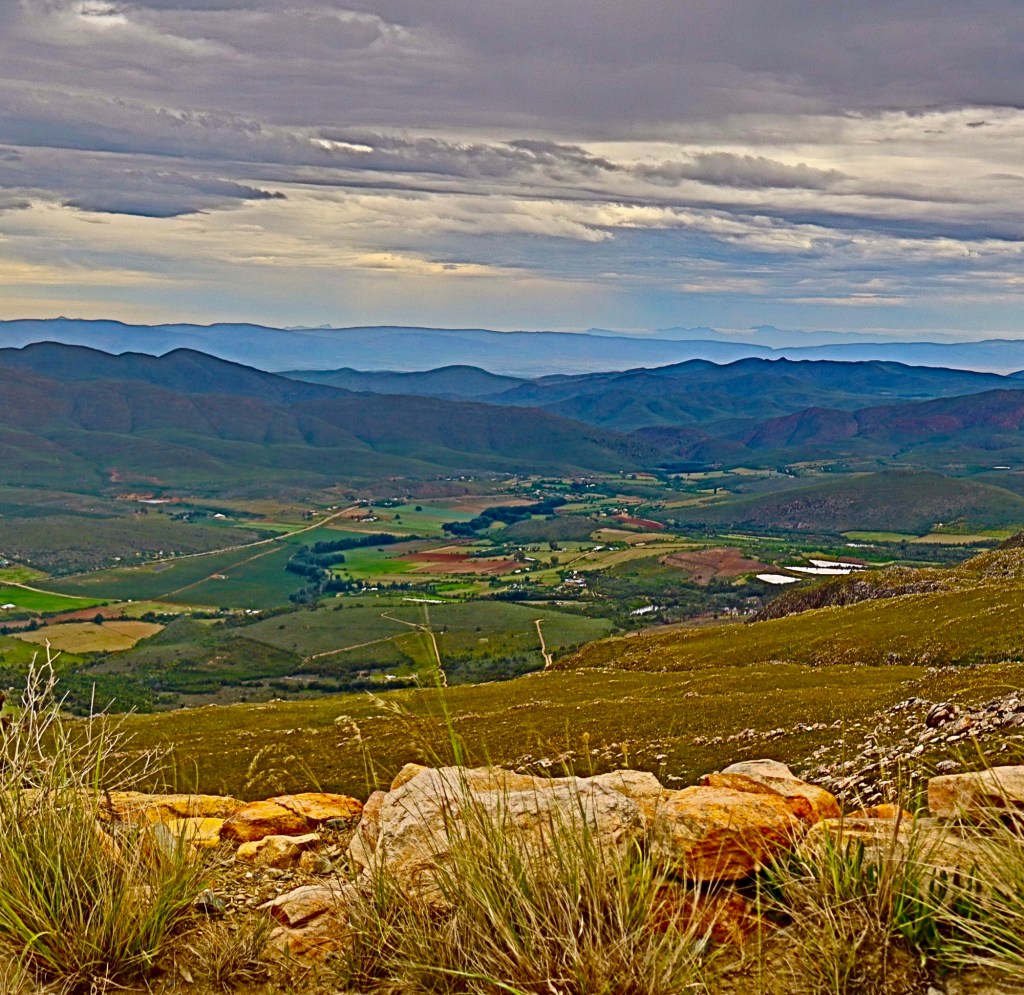
We didn’t start on the Garden Route, we started further north, on the Route 62, to the Little Karoo. I mean that’s a song, right there. To reach Prince Albert we decided to go across the Swartberg pass. The first but not the last time we realised that we should have hired a 4 by 4.
Swartberg passViews from pass as we ascended.
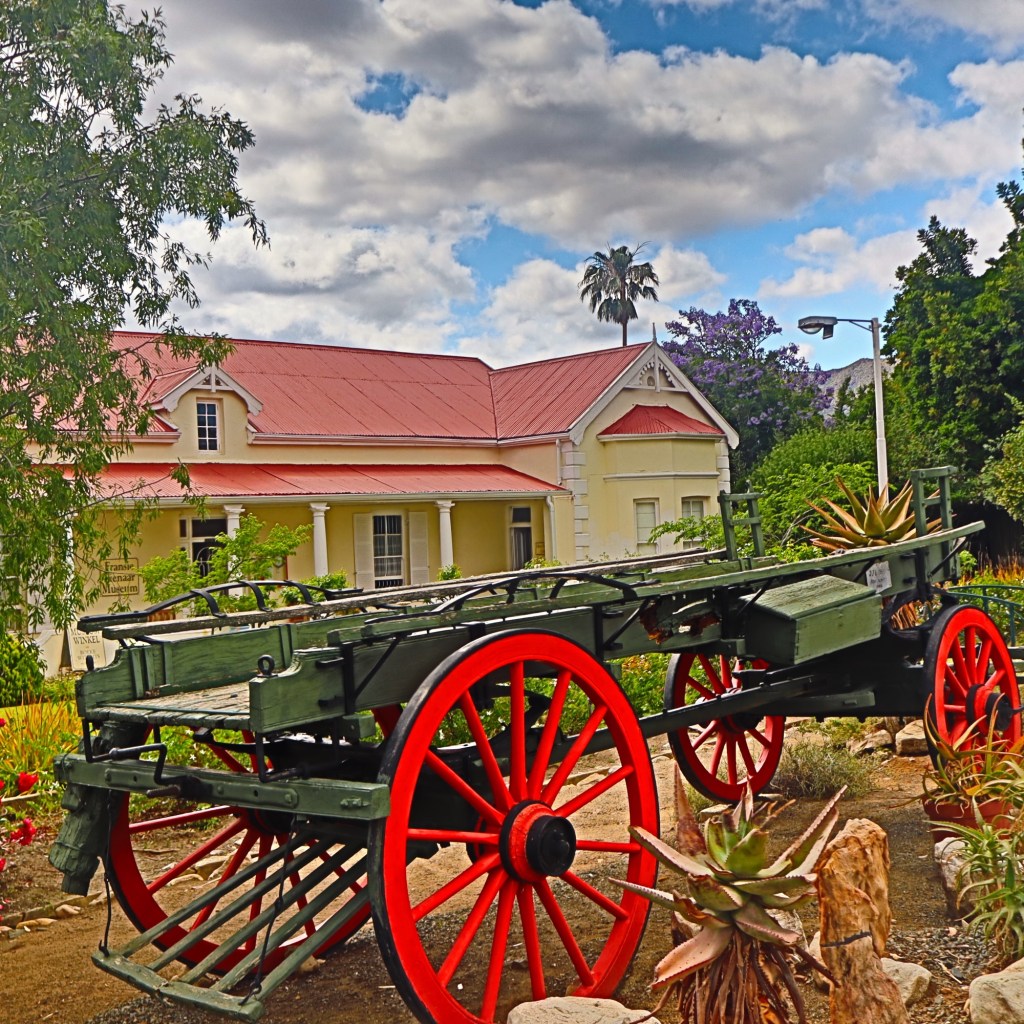
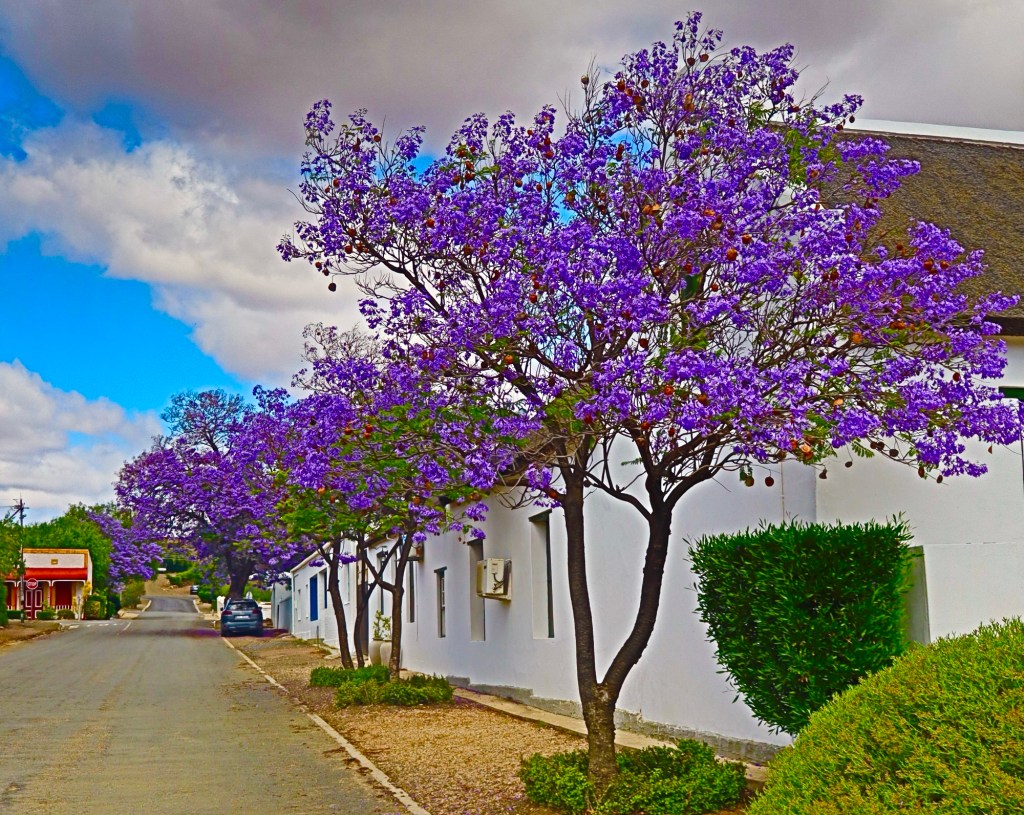
We only stayed in Prince Albert for a night. Beautiful place, very chilled, people all ages and colours cycling up and down the main and only road on clanky old bikes, often laden with gardening tools, shopping, or dogs, sometimes all three. It rained thunderously in the evening as we sat under our storm porch. No wonder everywhere is so green. It has been a very wet winter, and the summers are cooler. This makes very good wine, apparently.
Most of the buildings in Prince Albert are Victorian.
The Valley Of Ferns.
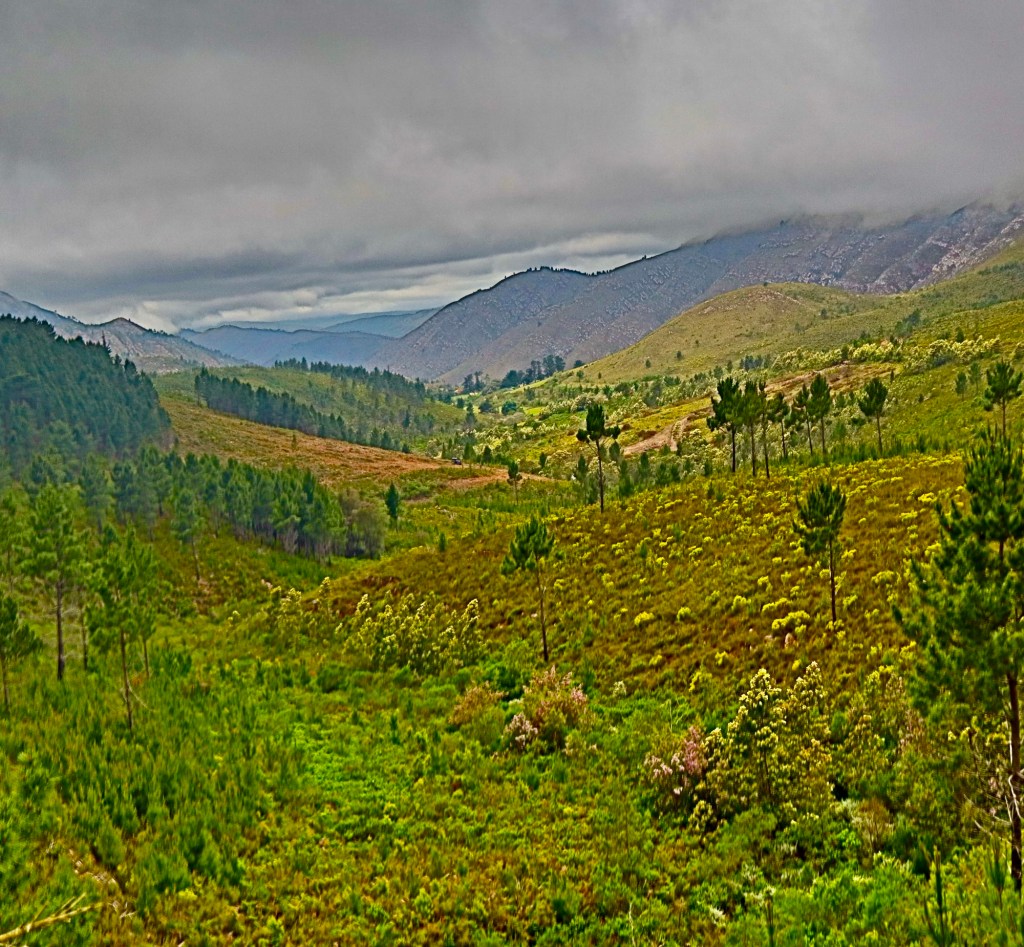
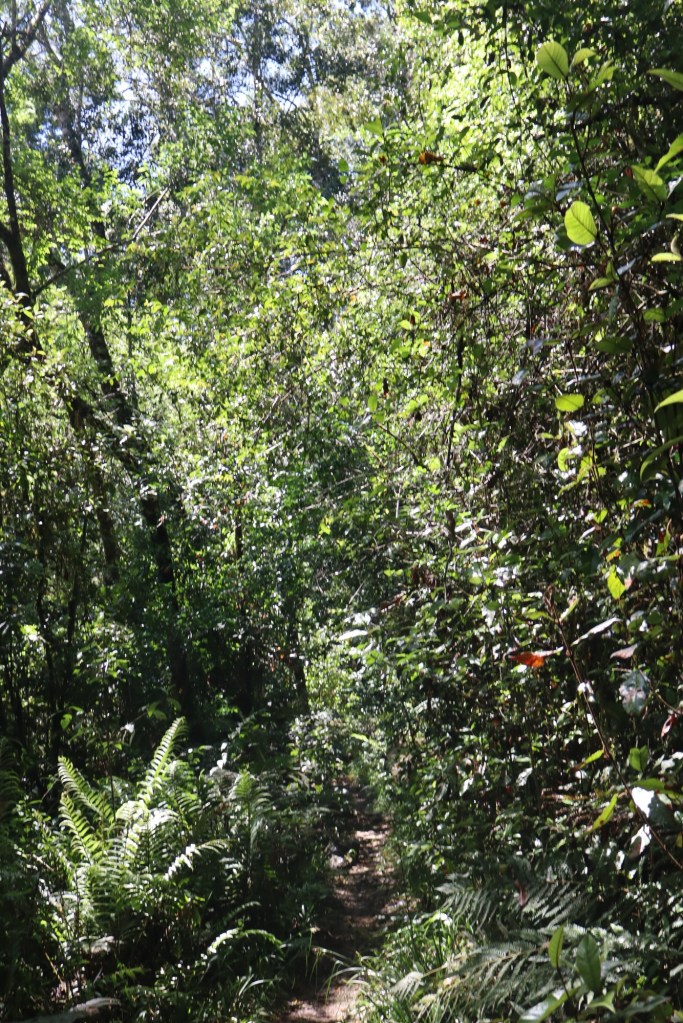
From here we headed to Knysna, without the K, pronounced Neyesna. Possibly. Again, we went the mountain pass route, this time through Prince Alfred pass, sold in our guide as not as gnarly as the Swartberg. Wrong. It’s a single dirt track about 65 km long. We drove so slowly it took us all day and views were few and far between as it rained.
Prince Alfred Pass The sound of the valley of ferns, heard on the way through the pass. Worth doing just for this.
Knysna
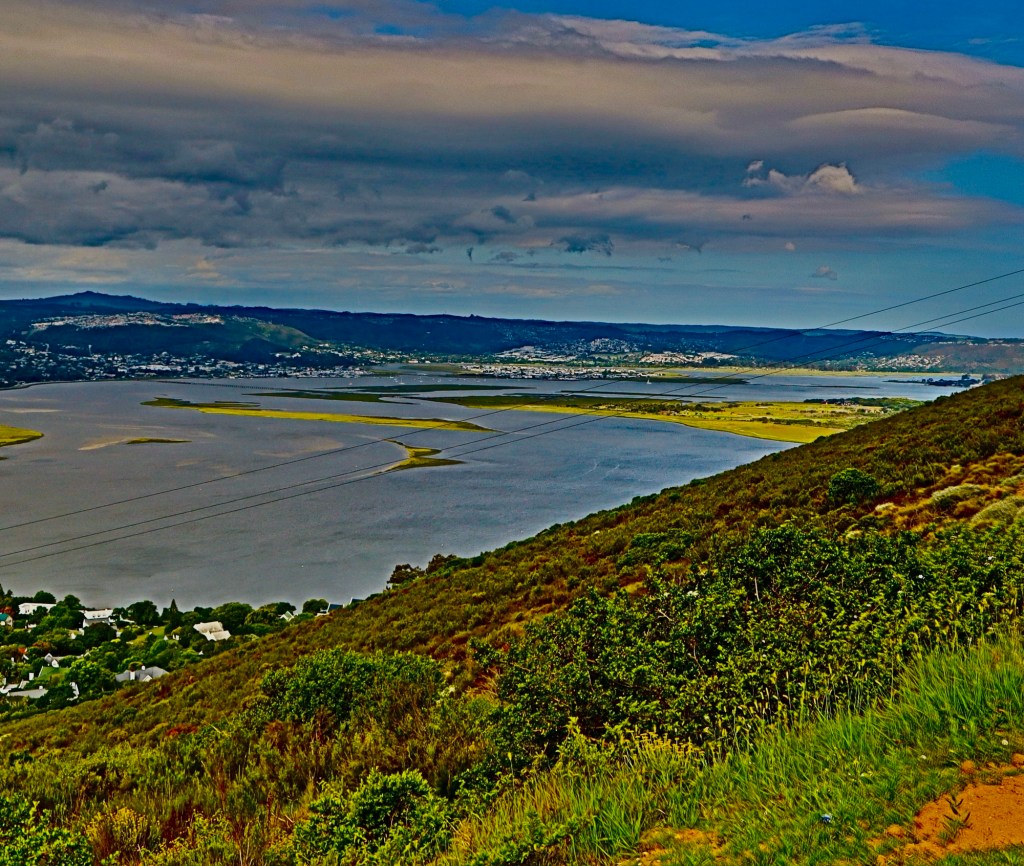
View of the estuary at Knysna.
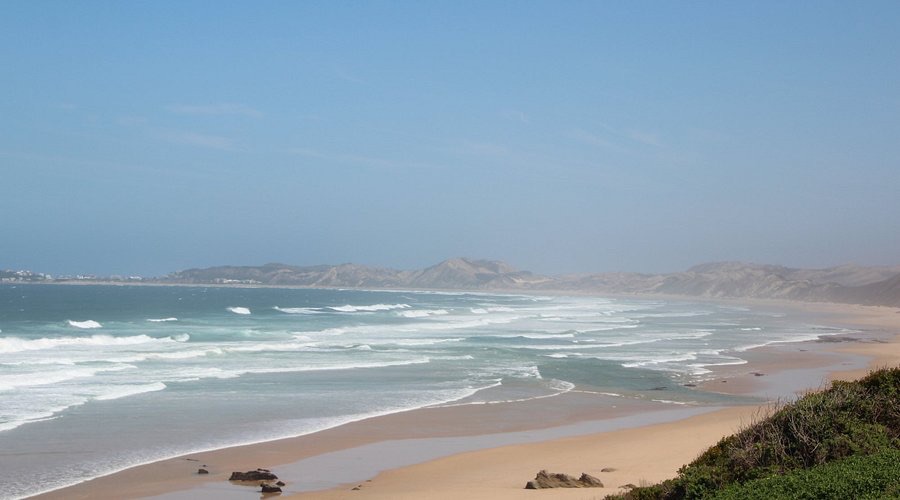
From Knysna we went on a day trip to see the end of the Garden Route at Storms River. Do not bother. It is rammed with coaches, tour groups, and people people people. I realised the way to travel is to check the Itinery of a country – everywhere is an Itinery now – and then not go to those places. Might work. A beach near our bnb called Brenton -on -sea stretched sandily to infinity. We ate sushi, which is really cheap and delicious here, drank chilled white wine, sun-bathed and paddled – the currents here are so dangerous, and cold, despite the sea being the Indian Ocean, few people are ever seen swimming. I can’t remember if I have said this bt the food and drink here is crazily good value, and delicious.
Brenton-on-sea.
Perilous pathway.
At a beautiful place just up the road from Storms River called Nature’s Valley, we took a circular walk up from the beach to a salt river. Then we ignored the sign saying that the coastal path has fallen away and this is extremely dangerous. It was.
Almost becoming one of those annoying couples who have to be rescued by the SA version of the RNLI as they are on cliffs in a rising tide. If they have an RLNI SA version.
To Tides River.
Taking the ferry – oops.
Ignoring advice is our speciality.
Despite our Airbnb host warning us not to use the ferry as it is often not working, we rocked up on the wrong side of the river; luckily the ferry was having a good day, as the detour would probably have been around 100km, on dirt tracks.
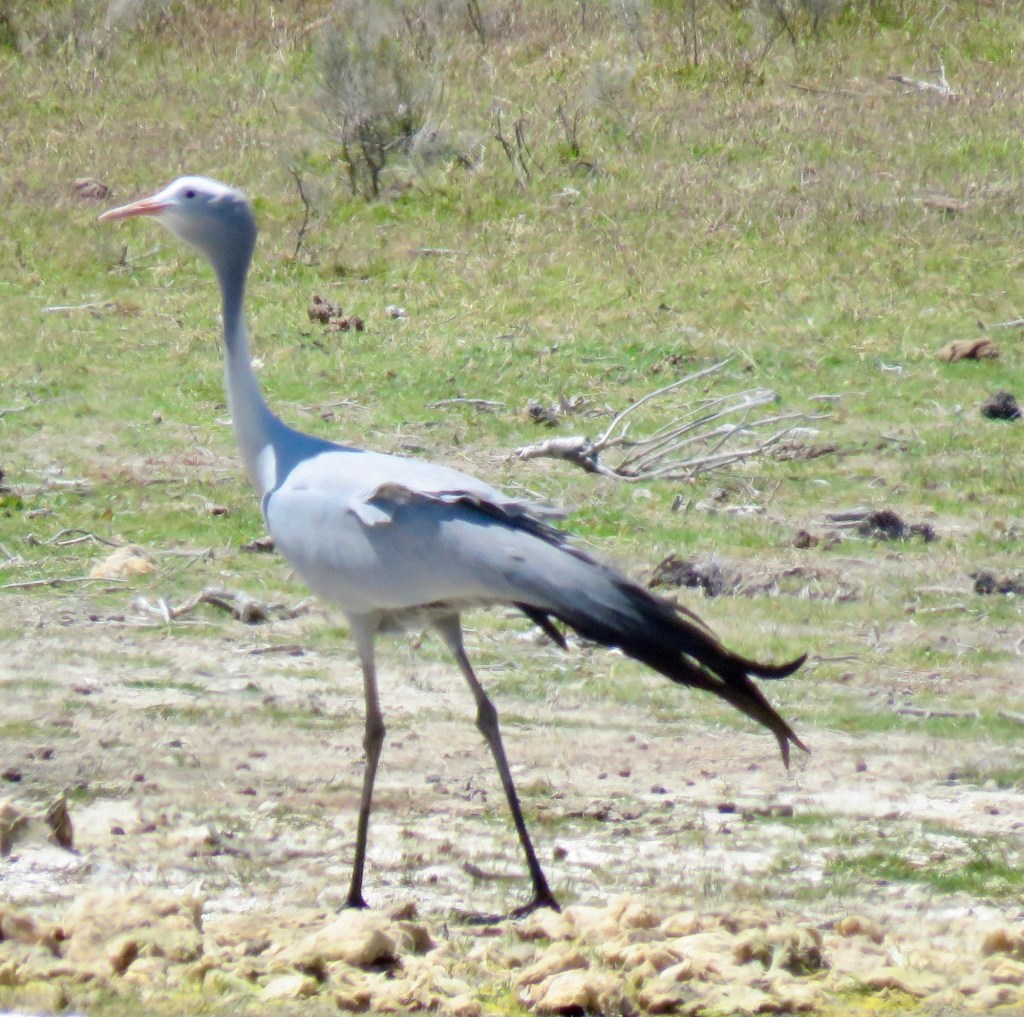
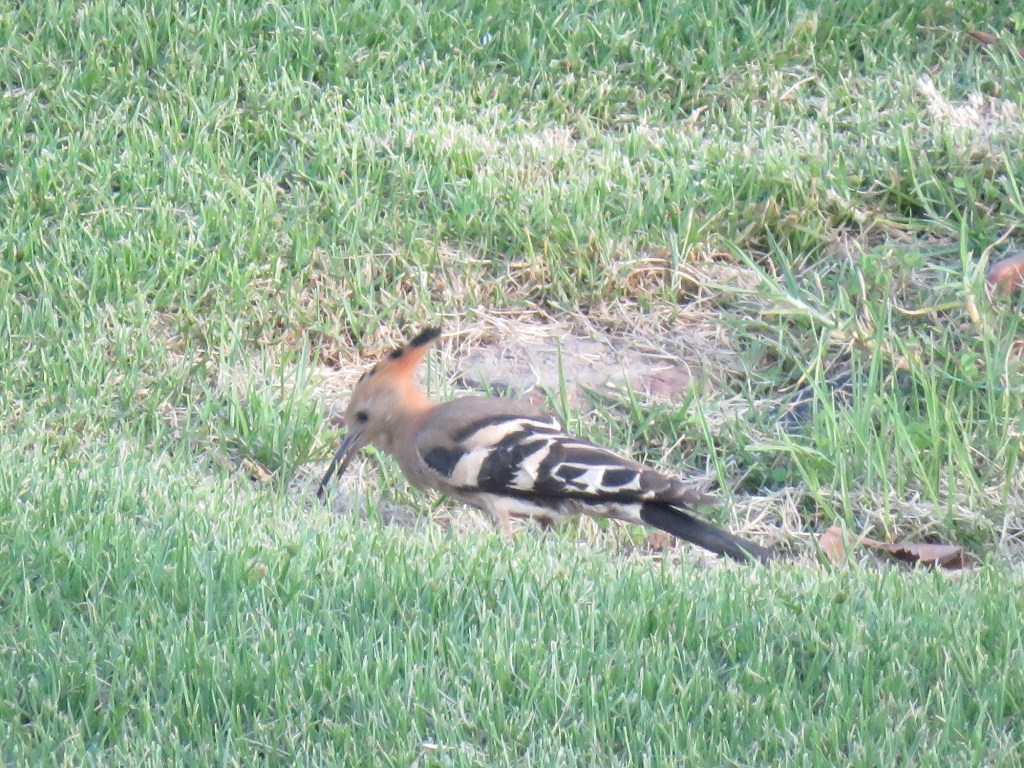
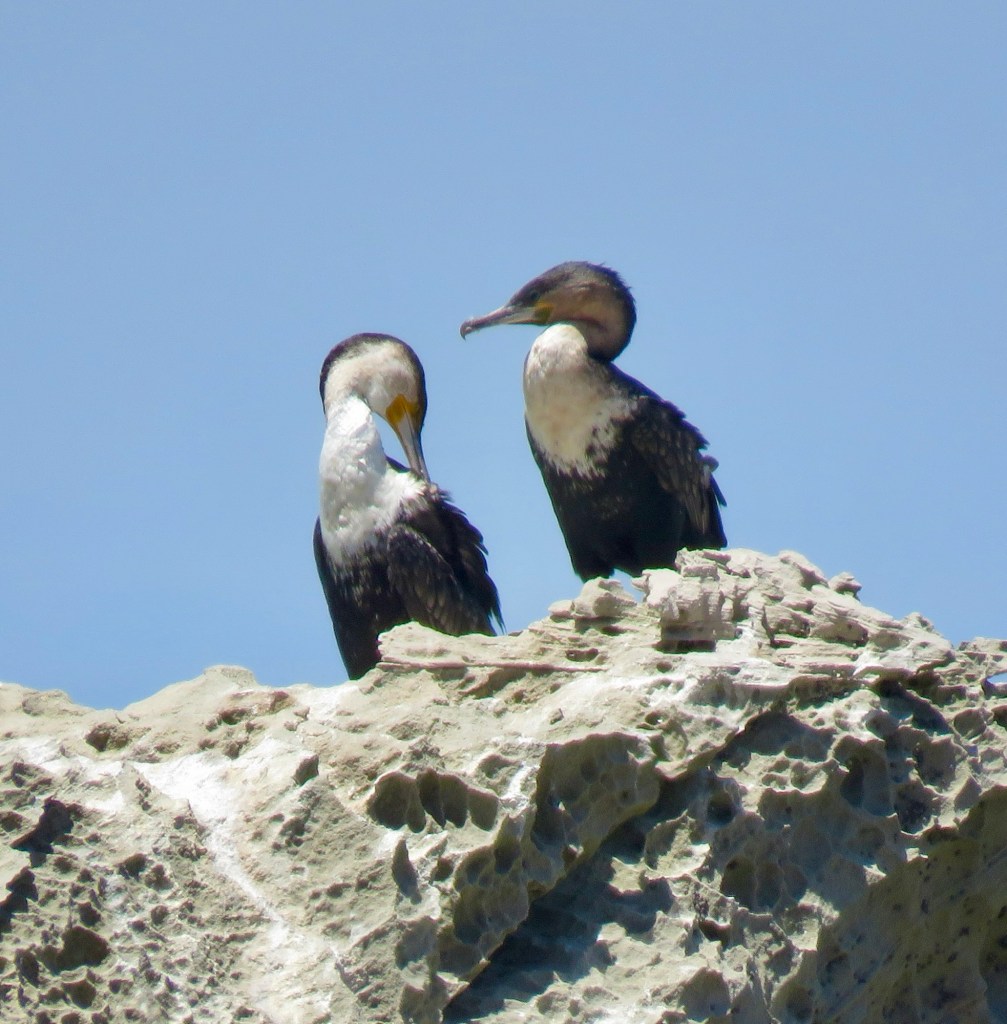
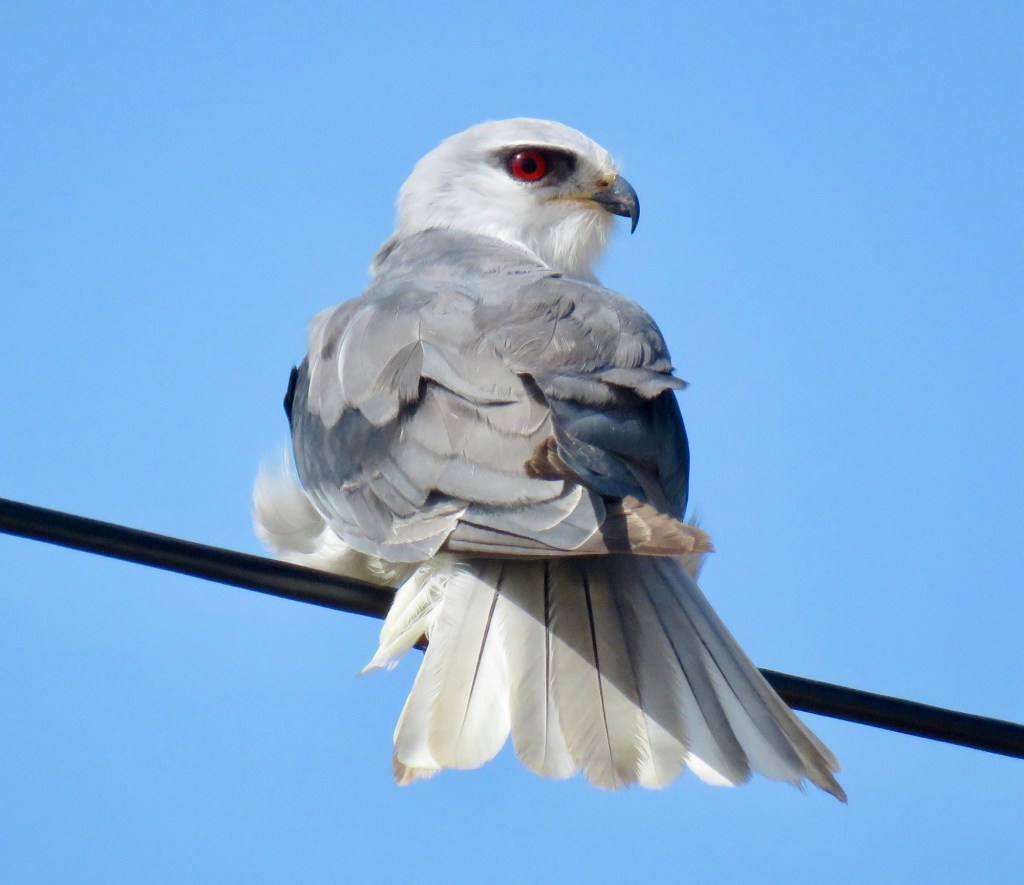
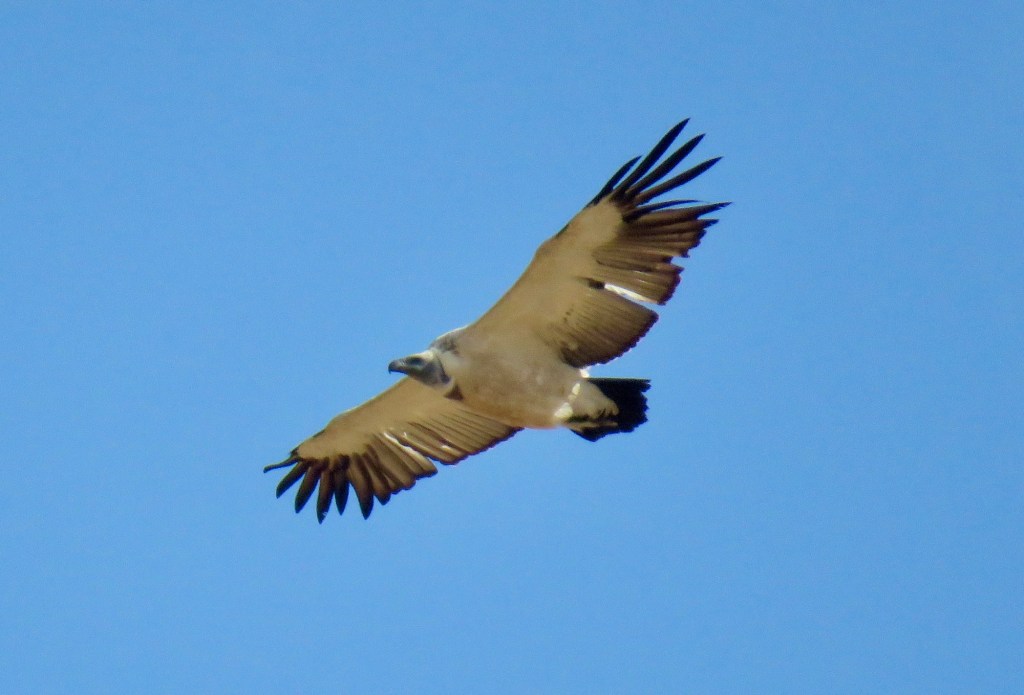
We came here to see De Hoop, a vast nature reserve. It took us hours to drive anywhere as we kept stopping to photograph the birds we’d never seen before.
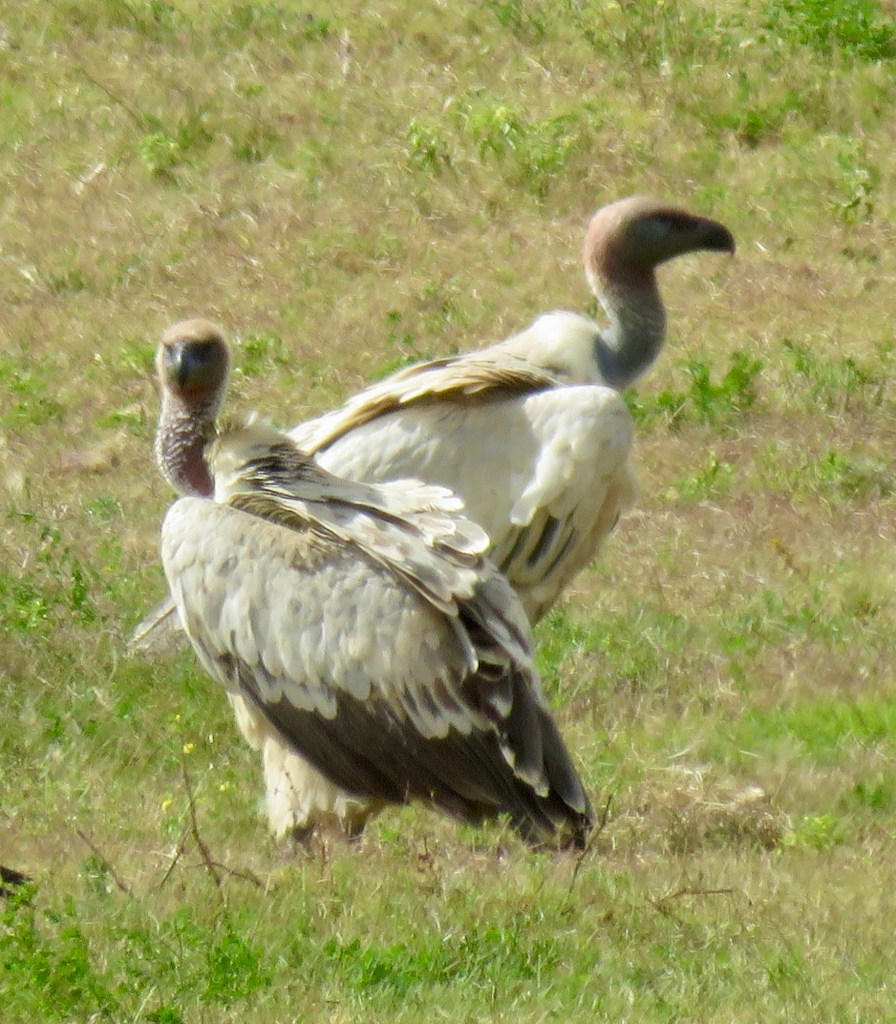
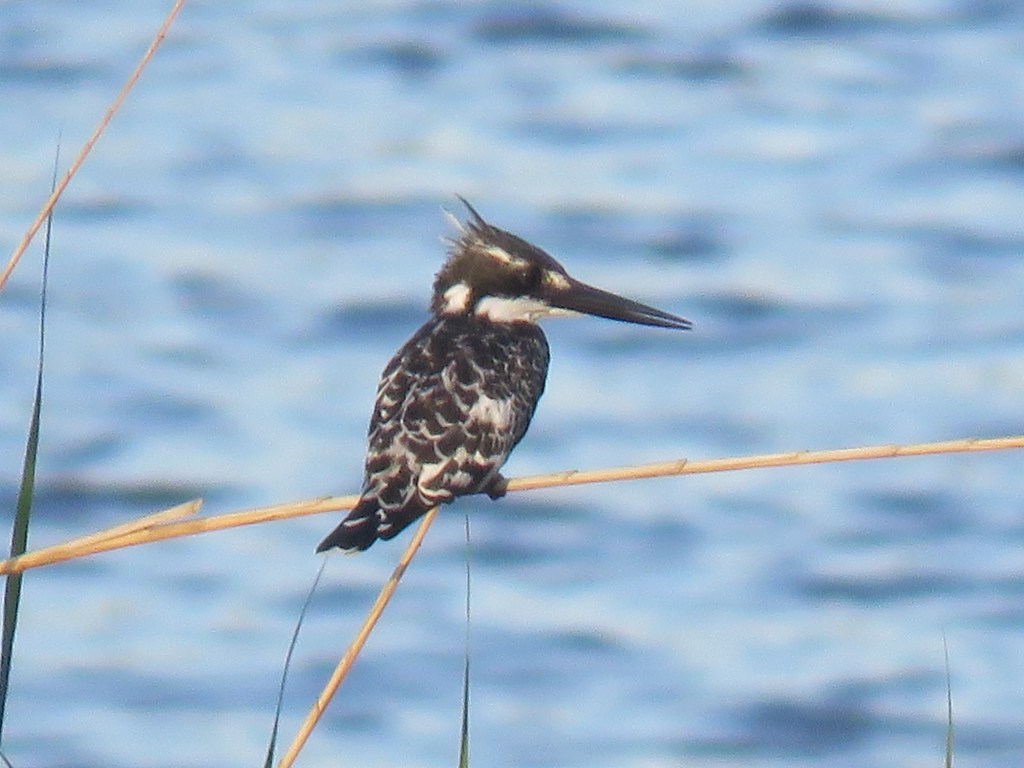
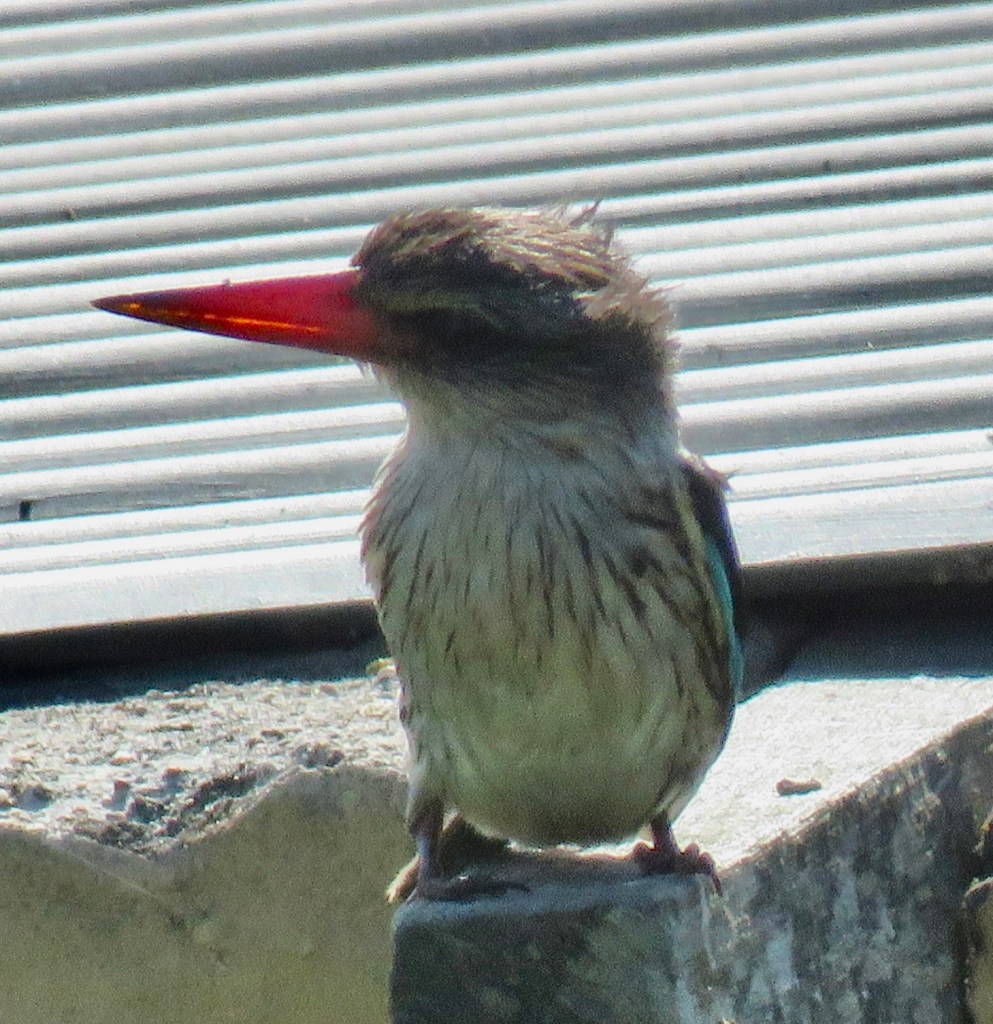
A blue crane, the national bird of South African. African HoopoeGreat Cormorant. Black-winged KiteCape Griffon.Cape BulbulCape GriffonAfrican sacred IbisPied KingfisherBrown African KingfisherBlack-winged Stilt.All bird photos thanks to Clive.
The sound of the wind whistling through the trees and across the water at Tides River will be one that I hope to remember on my death bed; so lulling, so soporific, I am falling asleep just remembering it. We wondered why there were no boats. Then when we swam in it we realised – it is so shallow you can walk across to the other side at low tide.
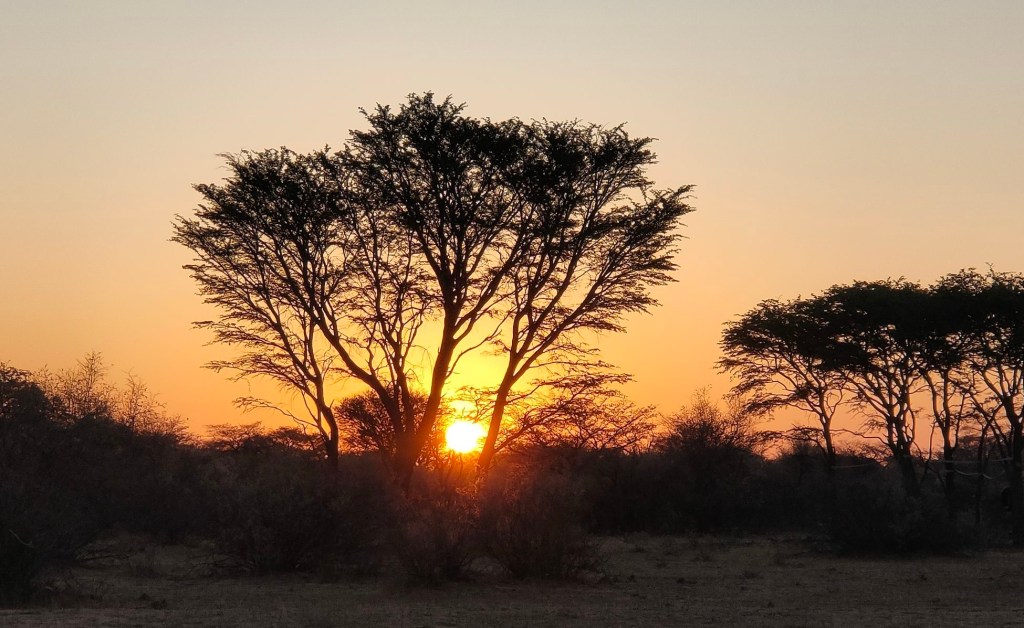
Tides RiverSun setting over Tide River.
Cape Agulhas.
Here is the geographic southernmost tip of Africa where the Indian and Atlantic ocean’s meet. A place of gigantic 100 foot high waves. Also briefly of a very excited Clive on the look out for a yellow mongoose. Which he spotted running across the road and then being sadly squished by a car. So no photos – although the inaturalist ap does have a section for dead animal photos. Macabre.
Cape Agulhas.
The last few days in Hermanus.
Hermanus is an hour and a half from Cape Town. It is a place you can stand on the cliff tops and see whales and dolphins, often as many if not more than on a boat trip. Even at the end of November when we were there the second time, and the whales have mostly left for the Antarctic, we saw a mum and baby right whale, and a pod of dolphins, on our last morning.
Happy Christmas everyone.
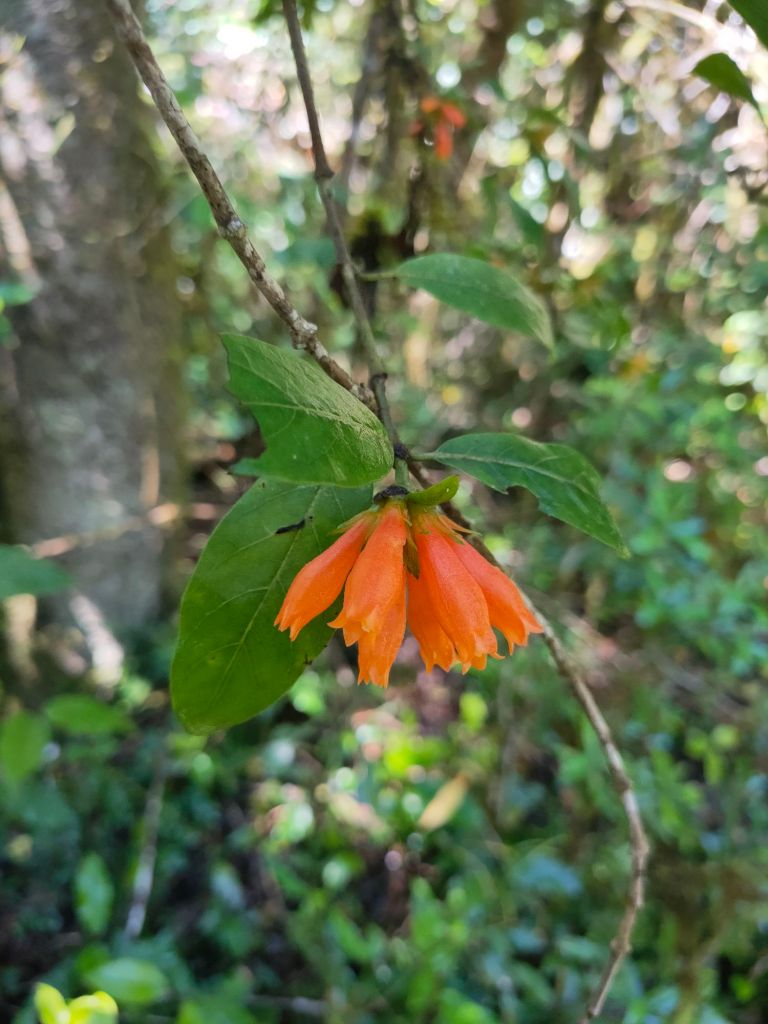
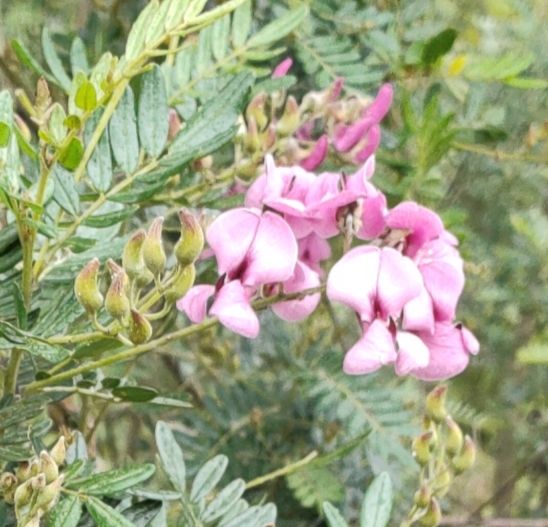
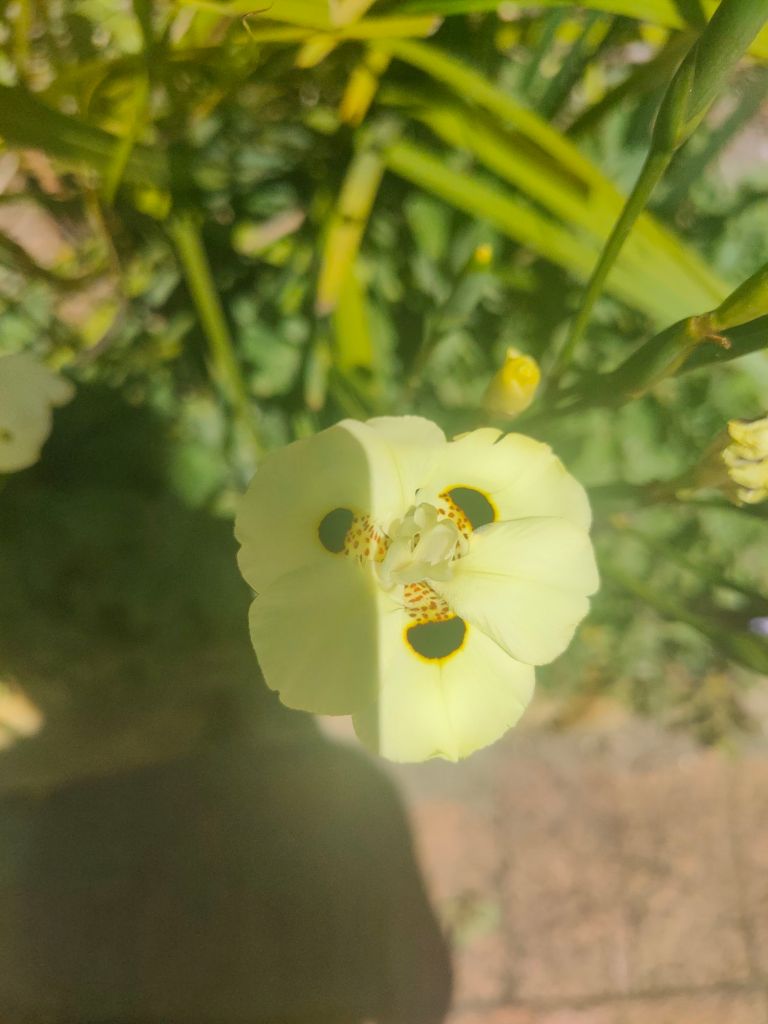
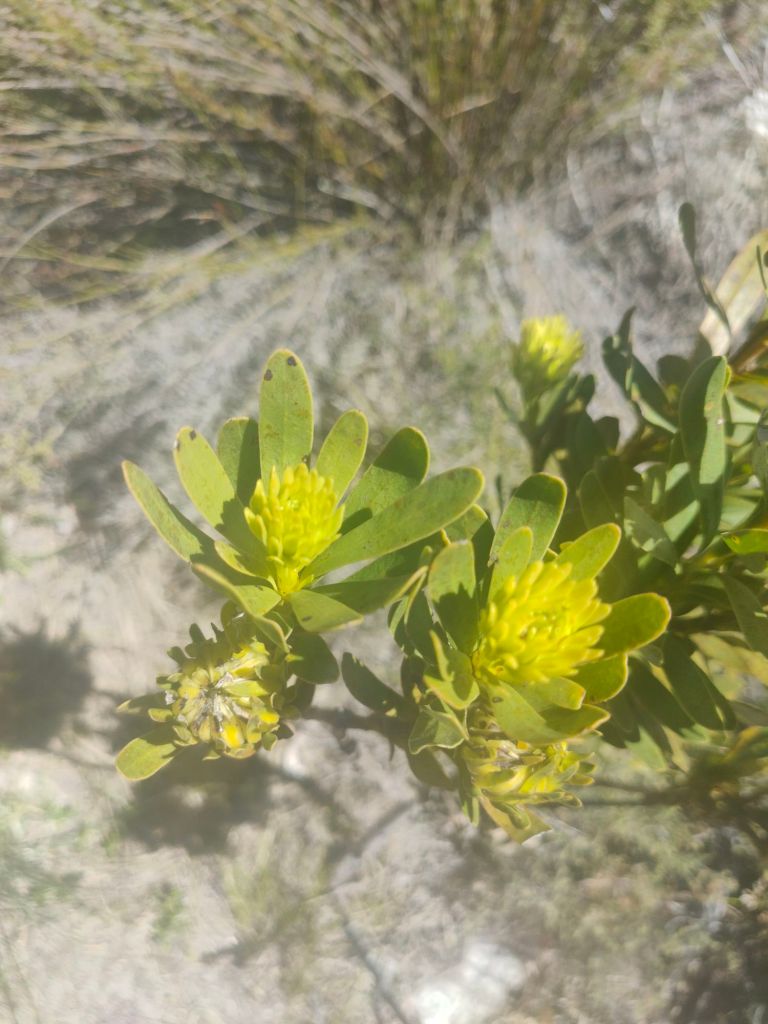
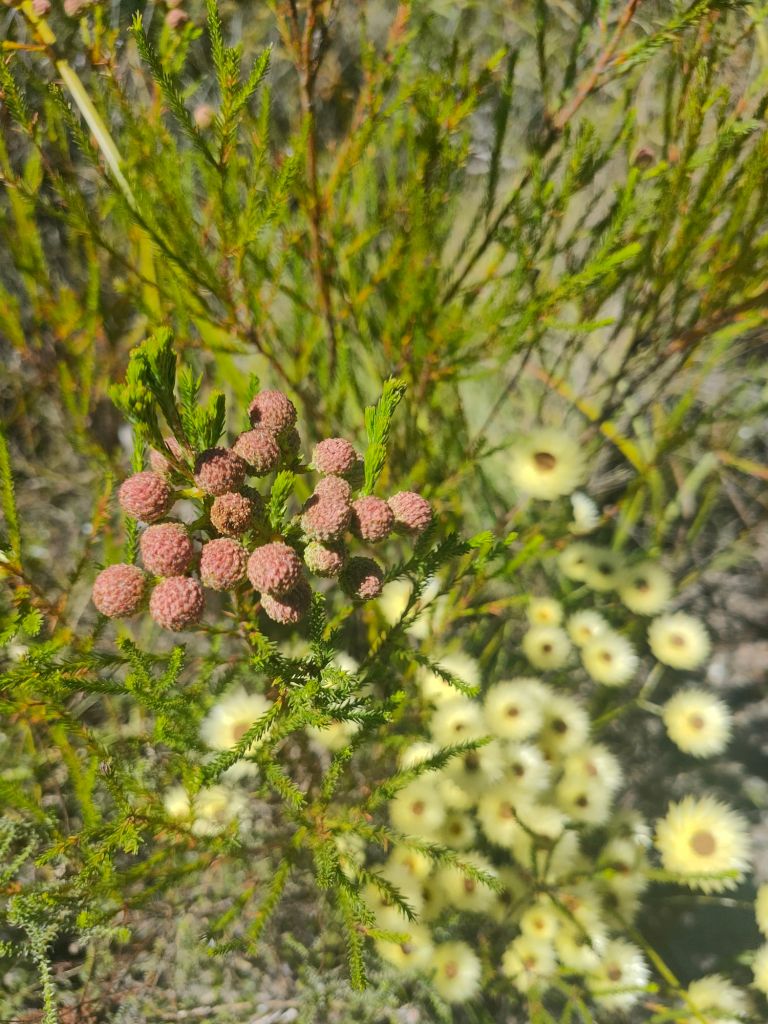
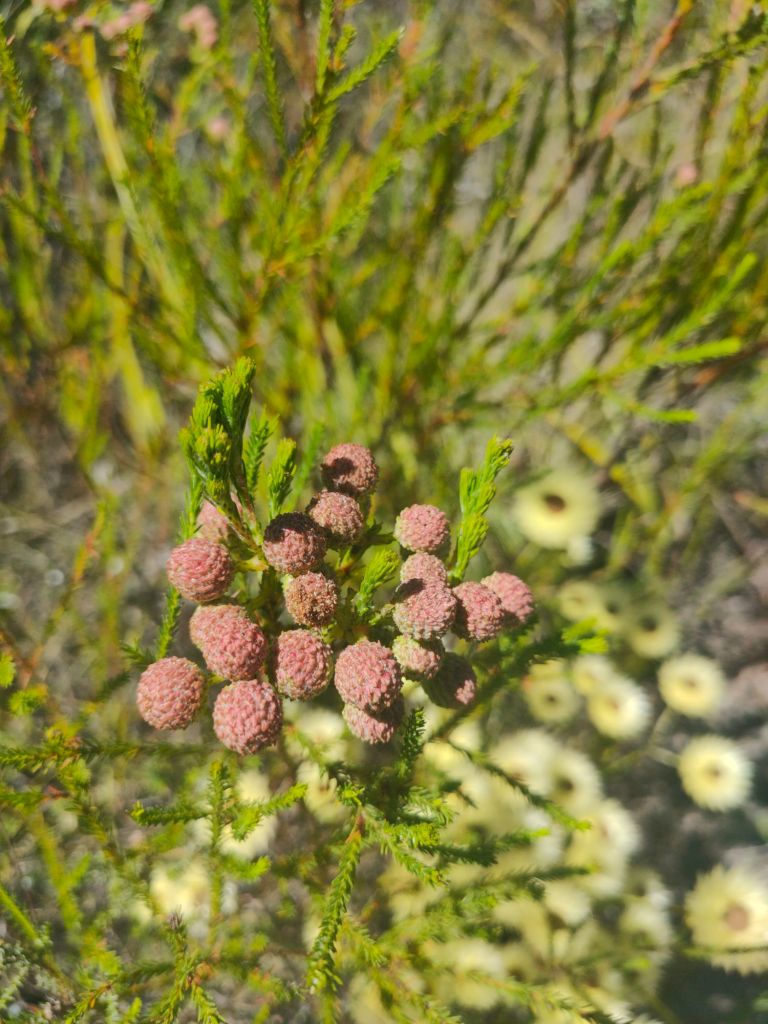
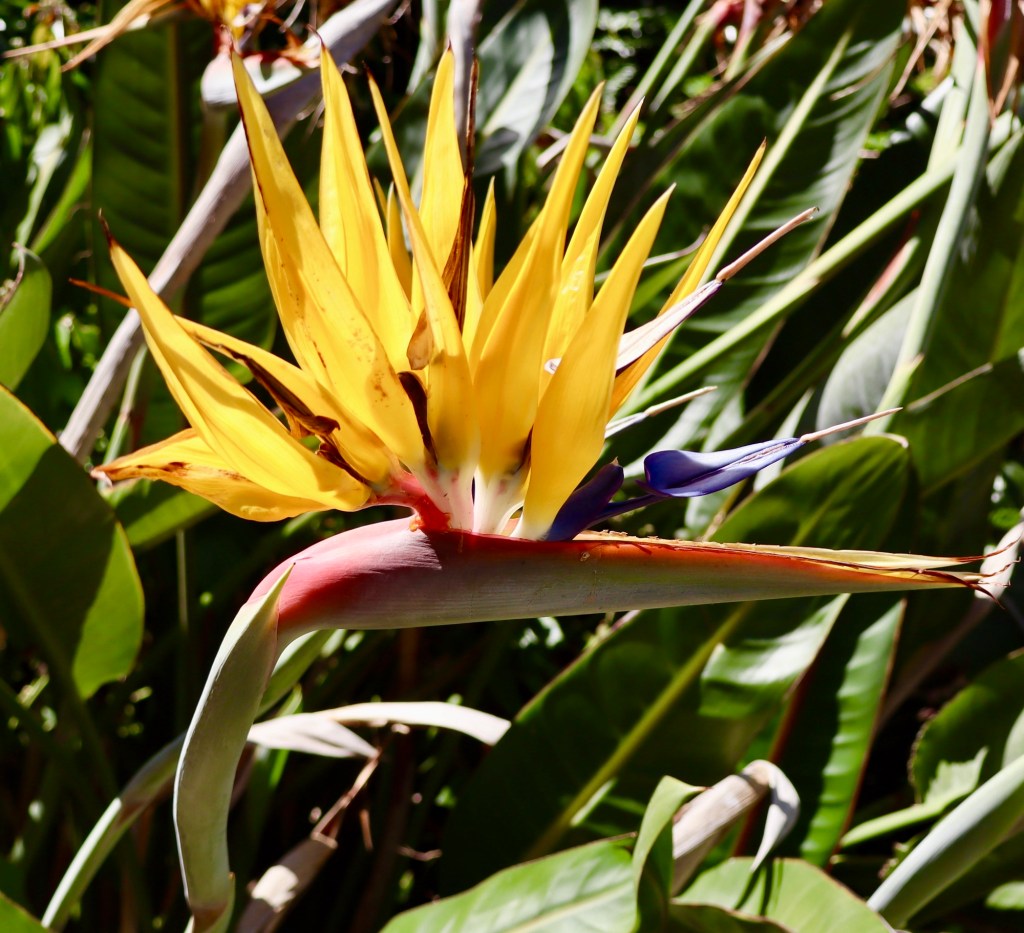
The first time I have heard any Christmas music this year so far. Honeysuckleoplus_32oplus_32oplus_32oplus_32Might be a bamboo seed pod. Asteroplus_32Asteroplus_32oplus_32All of the ones I don’t know are going on inaturalist , suggestions welcome. Continue reading Home. Meh.→
I have a confession to make. We didn’t camp quite as much as we’d hoped. It started well in Waterberg, although the shewee’s one outing ended in failure. I’ll just say it needs a wide legged stance not suited to standing on a camping ladder, to avoid leg sprayage. Also some snuffly animal appeared outside the tent just after I’d been and zipped myself back in and thereafter I never got up. The thought of having to put on shoes, not flip flops due to snakes and scorpions, descend the ladder, fend off jackalls that unlike the feared lions do circle your camp in the hope of nabbing a lamb chop and who knows, a nice juicy ladder-descending buttock, kept me pinned to my matress until dawn broke. However we had our own private bathroom along a little path, a bbq, a shaded table and chair area, and delightful little pools surrounded by the shade of bird-crammed trees where we could drowse and cool down during the midday heat.
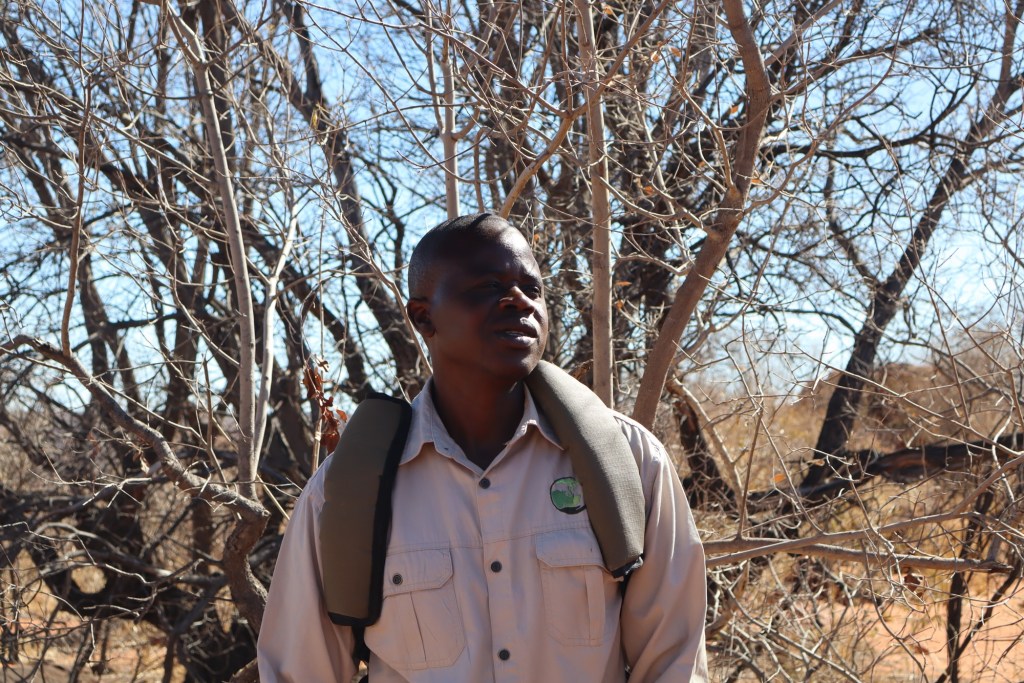
Our Waterberg guide, Noah. Site of a rhino poo war.Waterberg, historically famous as the site of a 1904 battle between Germany and local Herero warriors. Ultimately, 60,000 Herero’s died.
We’d taken a walk up to the plateau where our guide showed us the shocking site of a white rhino’s poop on top of a back rhino’s. This meant war, he told us. The white rhino is saying “I see you, black rhino.” Did this mean a fight to the death will ensue soon, someone asked? “Oh no,” he replied, scornfully, “They are not that stupid, they want to live. It stops with the shit.” If only the human world had as much common sense. Stinky, but bloodless.
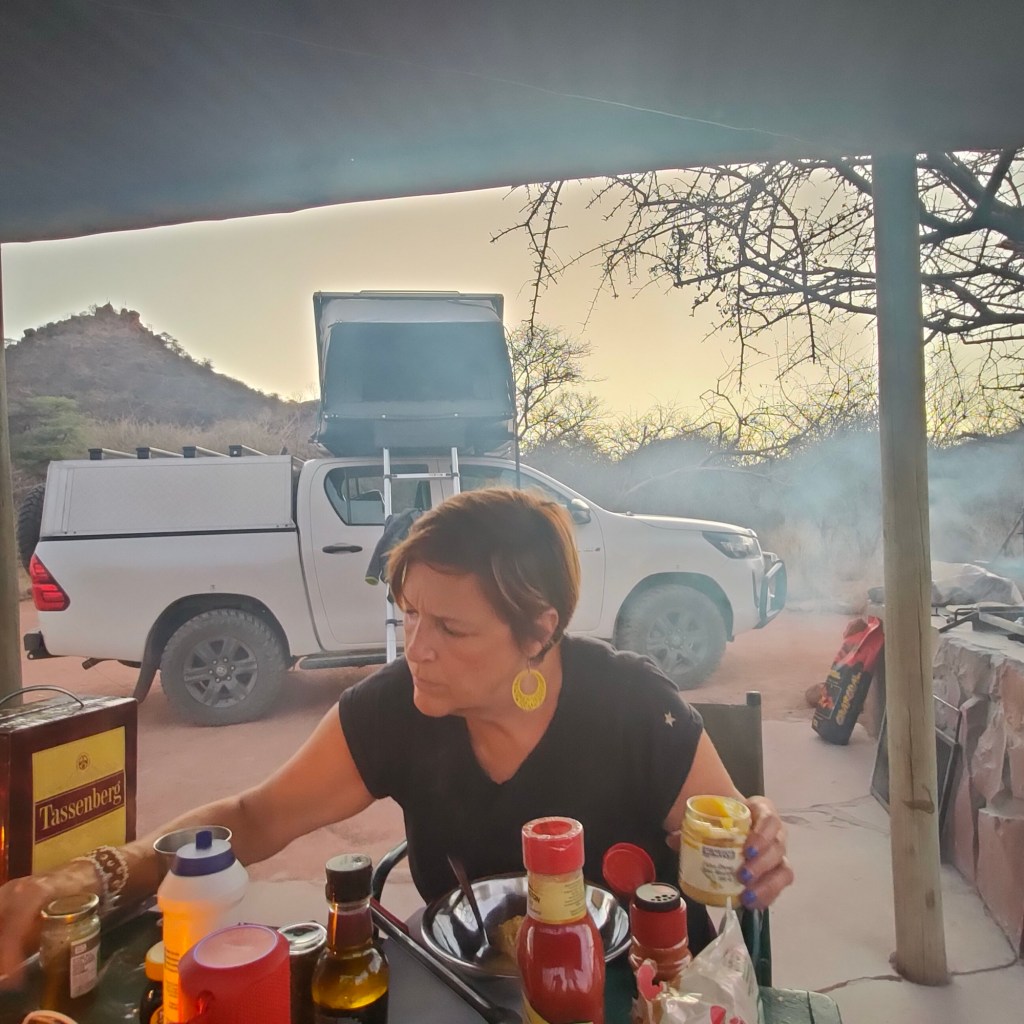
At this point I decided that this is the life for me. The tent on the roof took less than 4 minutes to set up. Once the sun went down, sitting in the balmy warmth with burring ciccadas and moaning lions our audio-backdrop, I decided we’d sell the house and buy a gigantic camper van and travel the world! Yeehaa!
First night making complicated BBQ sauce. You can take the girl out of the kitchen but….
But….
The sun rises at 5.30am and sets at 7.30pm, during which it is mostly above 35 degrees. We moved on from Waterberg to the state run camps in Etosha. We’d decided on these rather than the usually nicer privately run ones outside the park as you can only do night and dawn game drives when you are inside the gates. Facilities became shared, and more basic, with little shade. They had an amazing waterhole where we sat and watched lions, elephants, zebras and all the familar animals we’d met for the first time at Harnas – ostriches, springbok, Eland, Oryx (forever childishly in my head called “Olivias”), who came and drank, because at this time of year, there’s no water anywhere else.
Waterhole at Halili Camp, Etosha. The zebras are leaving, it’s the impalas’ turn. Western cattle egrets in the foreground.
It also felt extraordinary to be driving ourselves across the bush and come across giraffes, zebras and wildebeest.
Driing across Etosha with a giraffe.
On a night drive (not driven by us) we came across a freshly caught zebra, still struggling as the entire pride, babies and all, piled in. Literally a little too close to the bone, we then had an added frisson of excitement as a tyre burst. But the driver seemed supremely confident that the lions were too engorged with zebra to be interested in his skinny bod, and he was right.
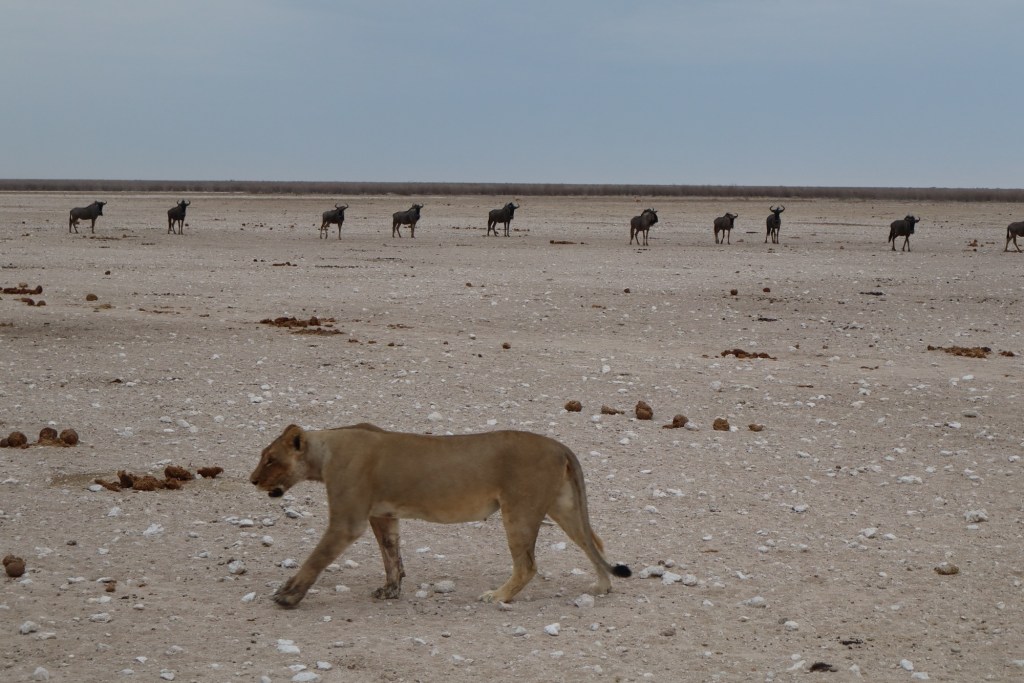
Poor old zebraI love how all the wildebeest have stopped and are watching the lion passby.
A zebra feeds 9 lions.
We worked around the heat by booking camping for one night inside parks and then fleeing in the mornings to lodges with air con and shade. One day we spent most of the day in a swimming pool, lolling like hippos under the water. Some of the lodges had vast amounts of food available and indecently green lawns.
On our way out of Etosha to see rock carvings and paintings, people were waving us down with empty water bottles asking for food. The bore holes have dried up, and there is no water now in the North. Had you been spying on us in the mornings at lodges, you’d have seen us making huge piles of cheese and ham sandwiches, some bacon and egg ones (messy), piling extra plates with large amounts of fruit, piles of dried seeds, bananas and nuts, all shovelled into my rucksack when I thought no-one was looking and then redistributed on our travels along the roadsides, together with lots of water we bought from supermarkets. We were searched for poached meat on leaving game parks. You can’t blame people for poaching oryx, which is plentiful, and delicious – sorry Olivia!
Clive sipping G and T in the lodge we pillaged.
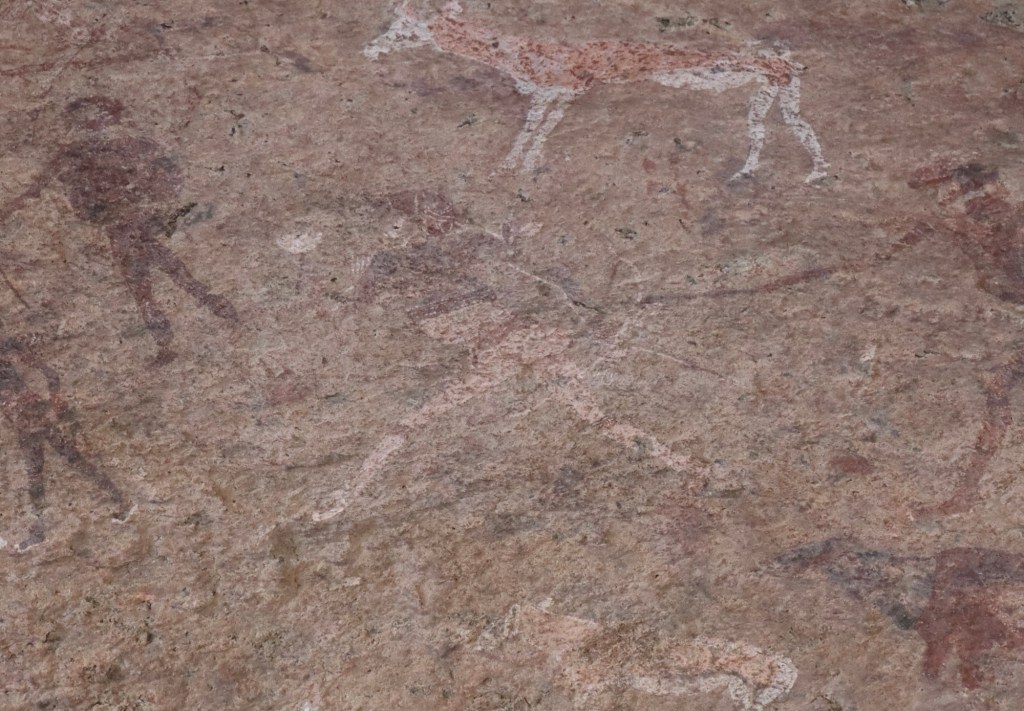
Ancient rock art.
Seeing the 10,000 year old Koisan art on the rocks, together with the drought made me wonder. The San were the first people of the earth. Would they also be the last?
In Brandberg, the site of “The White Lady”, who is actually a male shaman, we stayed in our first lodge after several days camping. It felt like a different holiday, one where me and my clothes weren’t in a constant state of sweaty sandiness striding like adventurers through the wilderness. To have our own shower! A bed! Clive immediately blocked the sink after washing his socks and pants as the plug didn’t work, leaving an embarassingly grey pool of water we had to fess up to the owner about like guilty school kids.
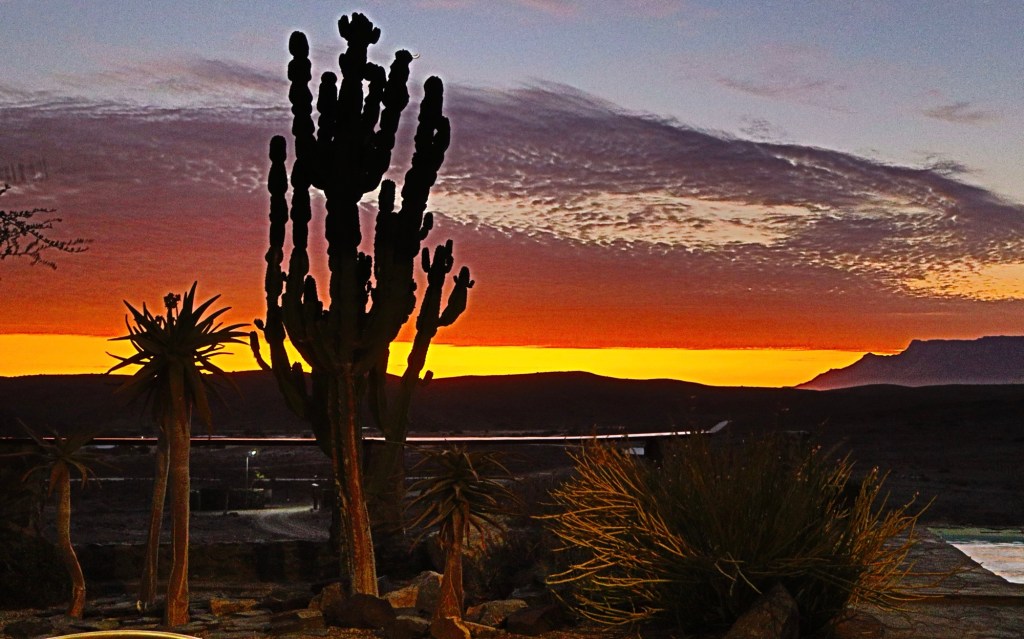
Brandberg sunset. Clive camping, first thing in the morning. Rock engravingsRock paintingsClive descending the ladder for an early morning game drive. The White Lady.
A trip to the coast, and to the darkest depths of despair.
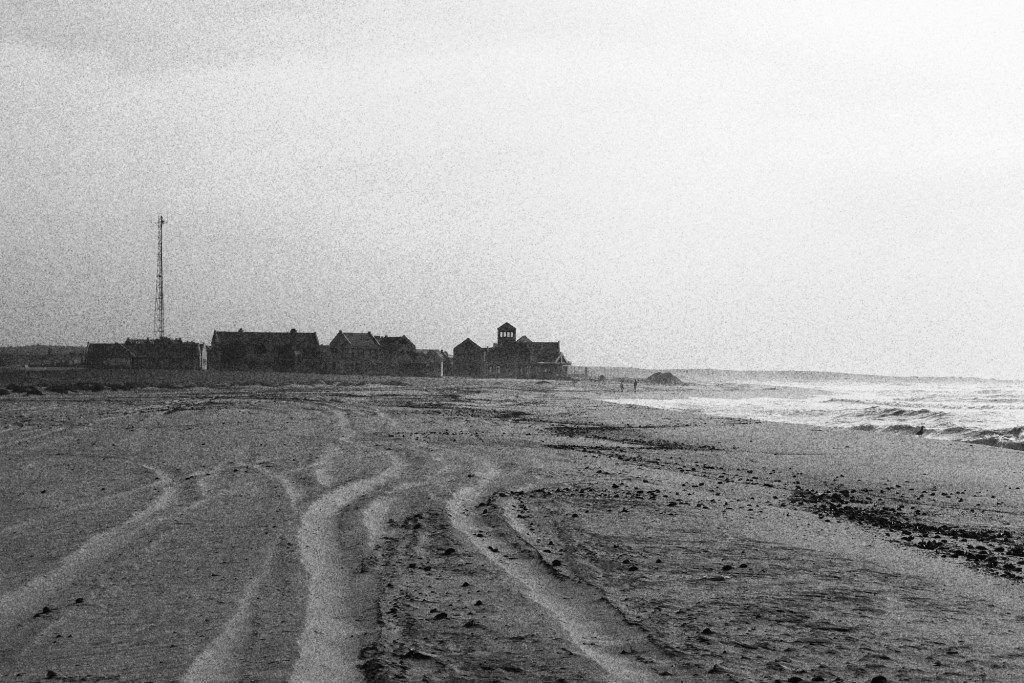
From here we headed west to the coast. I fondly imagined sea air, empty golden beaches, gambolling seals. How wrong I was. Never have I encountered such dreary, depressing, bleak scenery. Mile after mile of chilly grey nothingness, steeped in sea fog, the coast line occassionally dotted with ship wrecks. There used to be millions of whale bones washed up along the beaches from the whaling industry, hence it’s name, The Skeleton Coast.
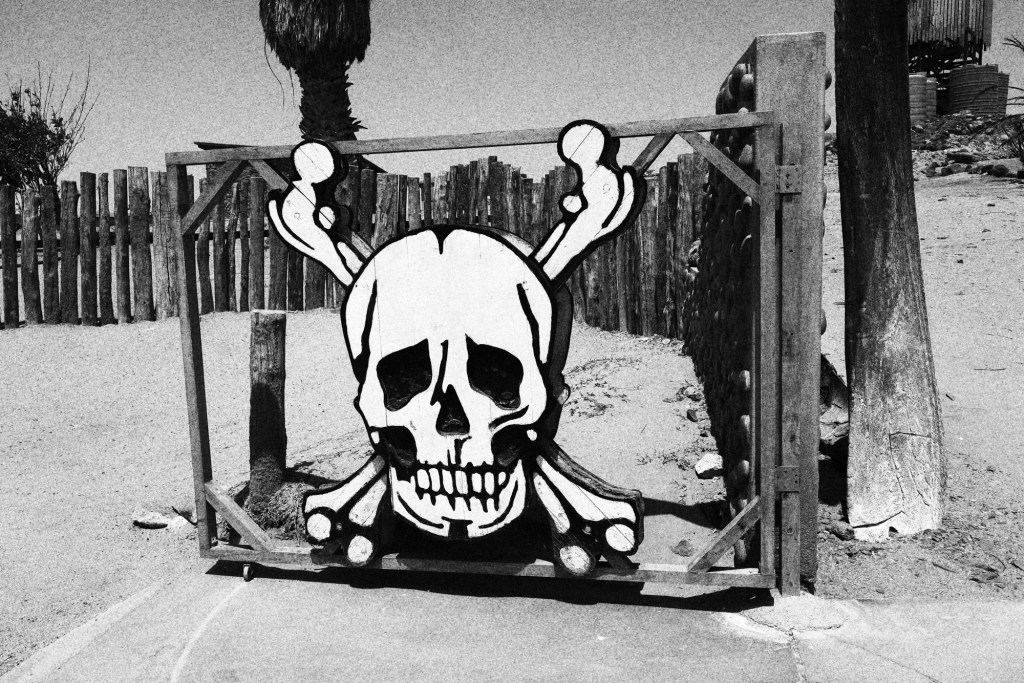
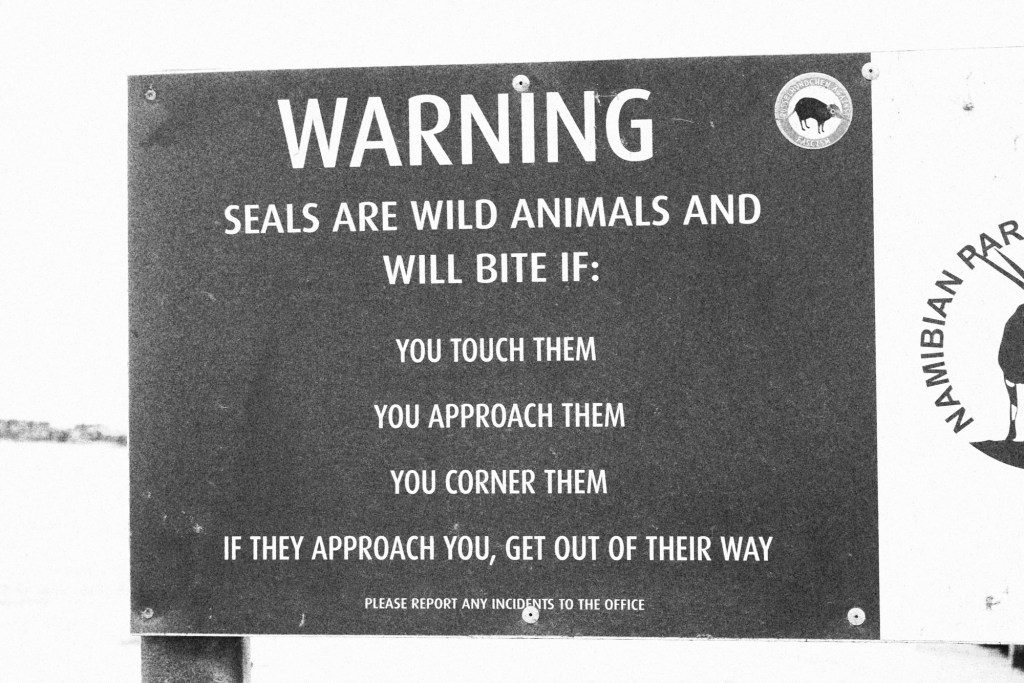
The start of the skeleton coast. The cheeriest site we saw all day – yup, that bad. Sign at Cape Cross. Rock penguin.Rock seal. Clearly the San had been to the coast, thought blimey we’re not staying in this godforsaken place, and gone back west.
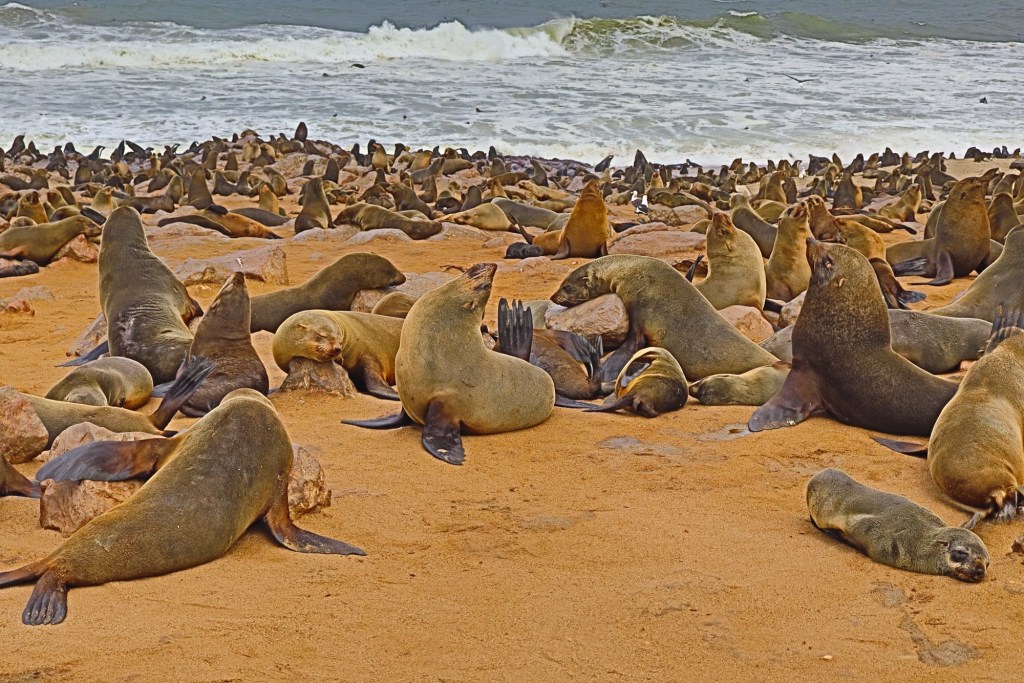
As each mile passed, I felt tendrils of despair creep around my soul until by the time we reached the cheerily named ”Saint Nowhere”, the campsite we were supposed to stay at, I refused point blank to get out of the car, and kept driving in the hope we’d find somewhere less suited to mass suicide. Which we did, a delightful refuge with a roaring fire and squishy sofas where we played backgammon, drank copious amounts of red wine to assuage the guilt felt that we hadn’t camped again, and slept on a deliciously soft matress to the sound of crashing waves and the wiffy pong of the largest seal colony in Namibia along the bay at Cape Cross.
The largest grey fur seal colony in the world.Cape Cross.More seals.
Lost baby seal
Cape Cross, so called as Diogo Cǎo “discovered” it in the 1400’s and planted a cross here. Actually the San had been here 11,400 years earler.
Searching for the Small Five.
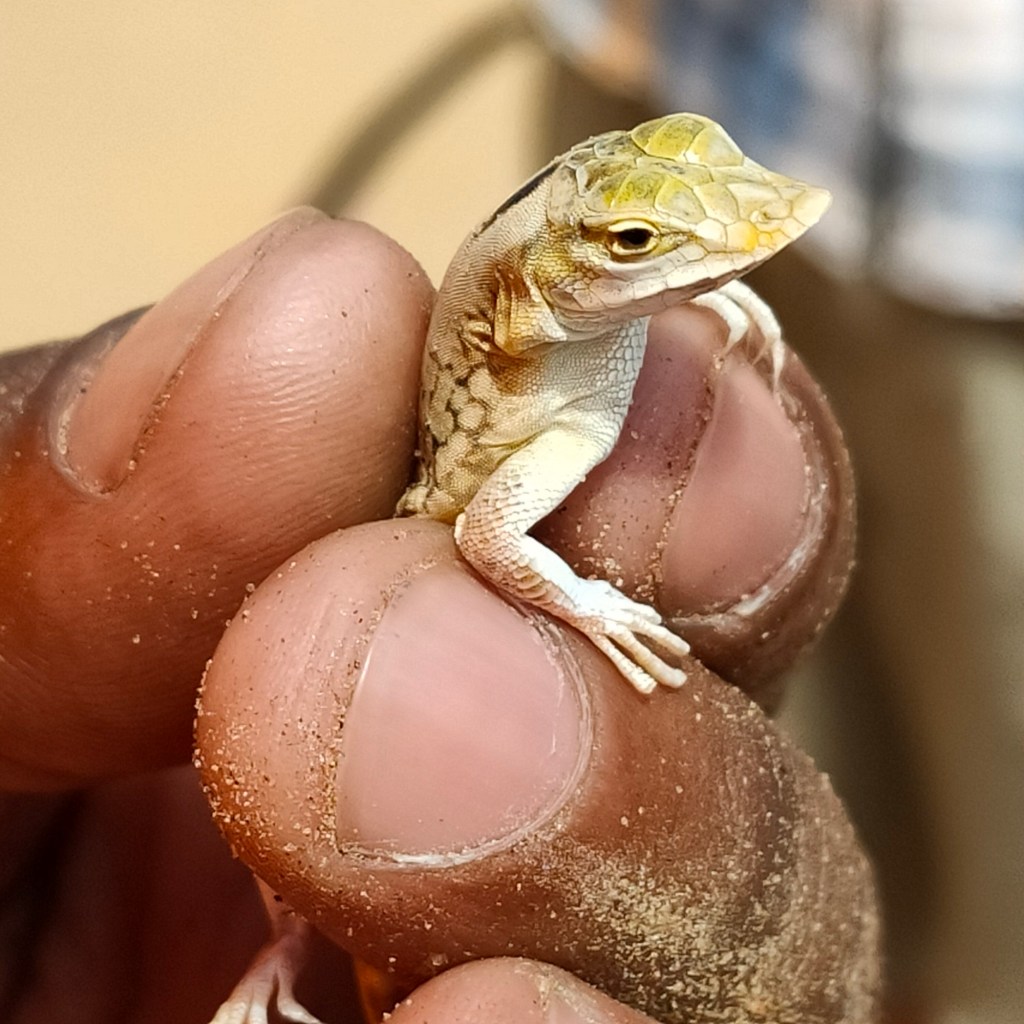
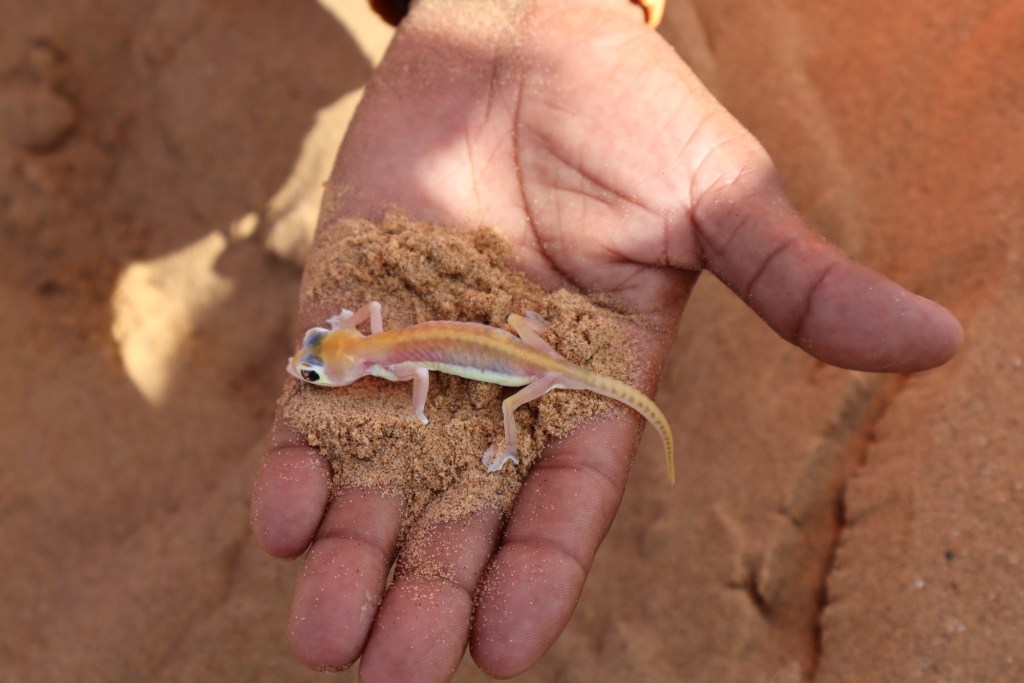
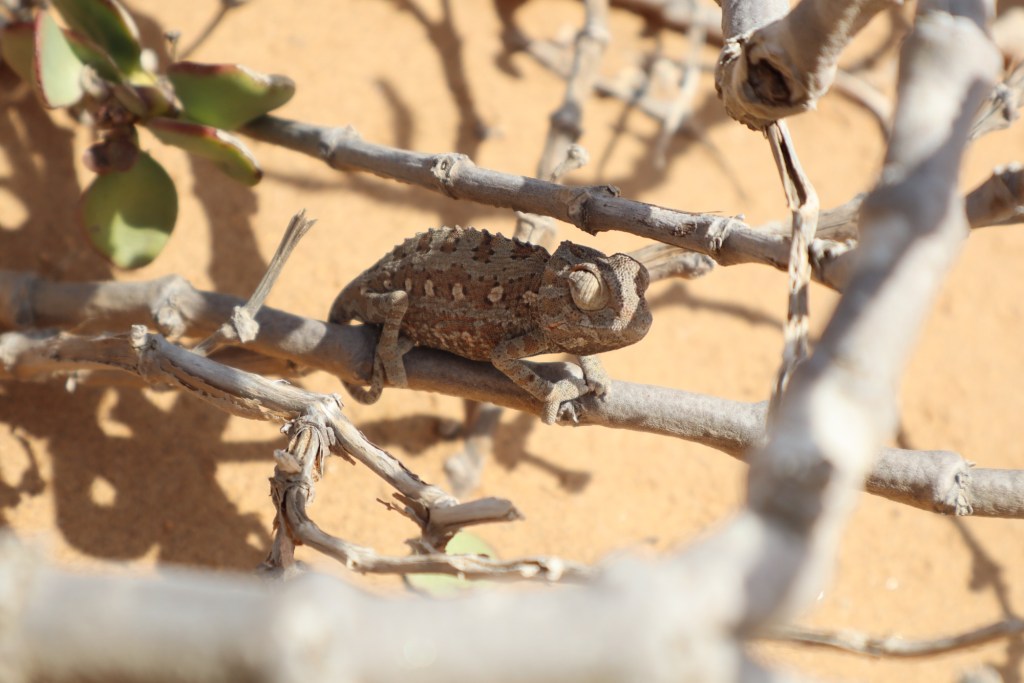
We have a blissful three night rest up in Swakopmund, strangely like a mini-Germanic Bournemouth supplanted onto the Namibian coast, again, ahem, not camping. There is a lot on offer here, from sky-diving to dune surfing, and we go for a morning on quad bikes, looking for the “Small Five” – a side-winding puff-adder, a Namaqua Chameleon, a shovel-snouted lizard, the transparent Palmato Gecko, and the white spider. Our guides find 4/5, as the spider had gone on walk-about.
Puff adderShovel-snouted lizard.Transparent Palmatto Gecko. A Namaqua ChameleonQuite excited humans. Our first proper site of desert.
Big Daddy Hides in Sea Mist
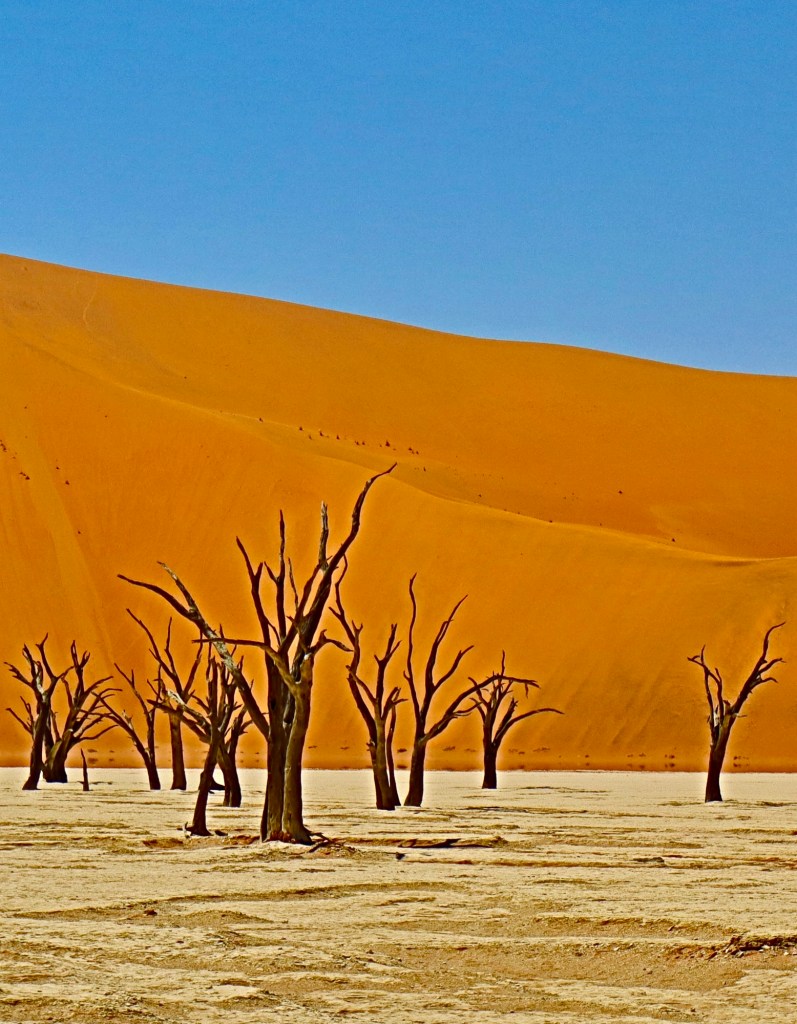
Then we made for Big Daddy and Deadvlei, a giant sandune and a small 1000 year old dead forest. Like lemmings, having read that sunrise is the best way to see this, we were up at 5am as the gates opened and followed in convoy all the other campers doing the same as us. It is a real palaver to get to them, as after 60km you have to drop your tyre pressure for the last 4 km as it is a pure sand road. Cars often get stuck, and one did when we were there. Feeling like we were in some kind of race we triumphantly reached the final carpark to find the famous sand dunes swathed in sea fog, the imagined perfect photo of a dead tree against a blue sky and orange sand dune was not going to happen. By the time we got back to the car park and reinflated our tyres, the fog had burnt off and so we returned to do the whole thing again via shuttle this time. Comically the dune all the early risers had sat along at the top wasn’t the top at all. Once the mist burnt off, we could see it unconquered quite a bit higher than the one we had all scambled up.
Just about to go and do it all again Dunes and DeadvleiBig Daddy in the backgroundDeadvlei
A ghost town.
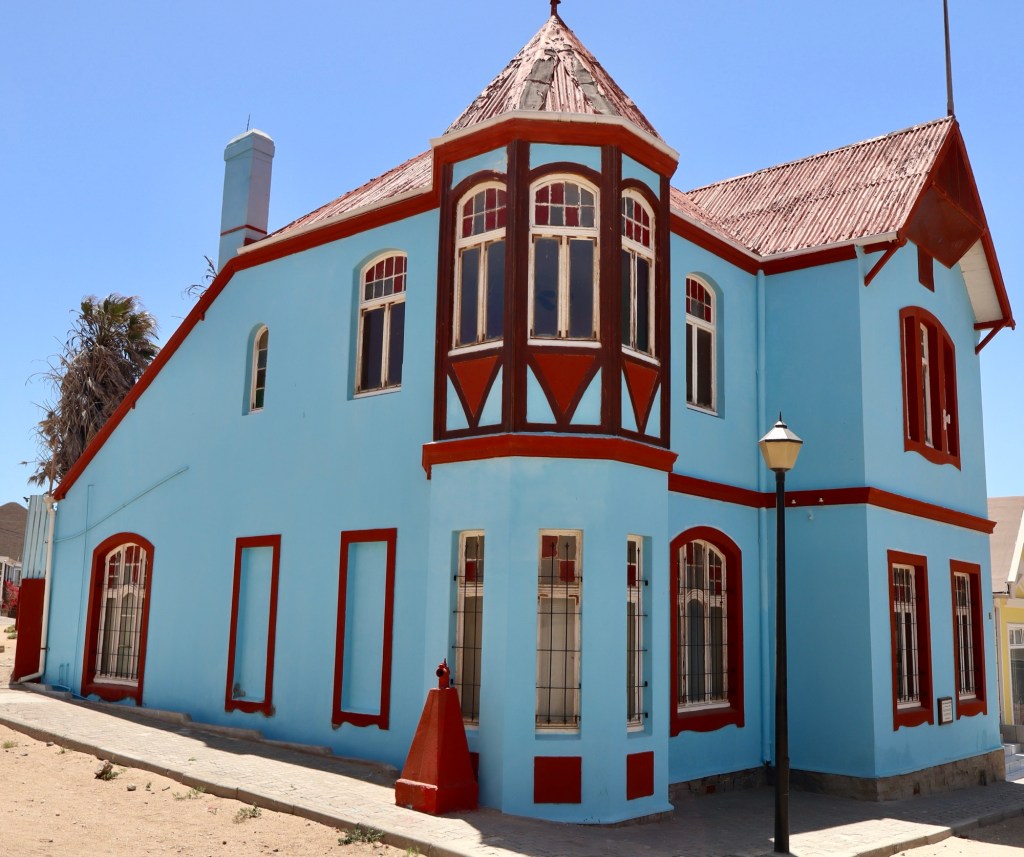
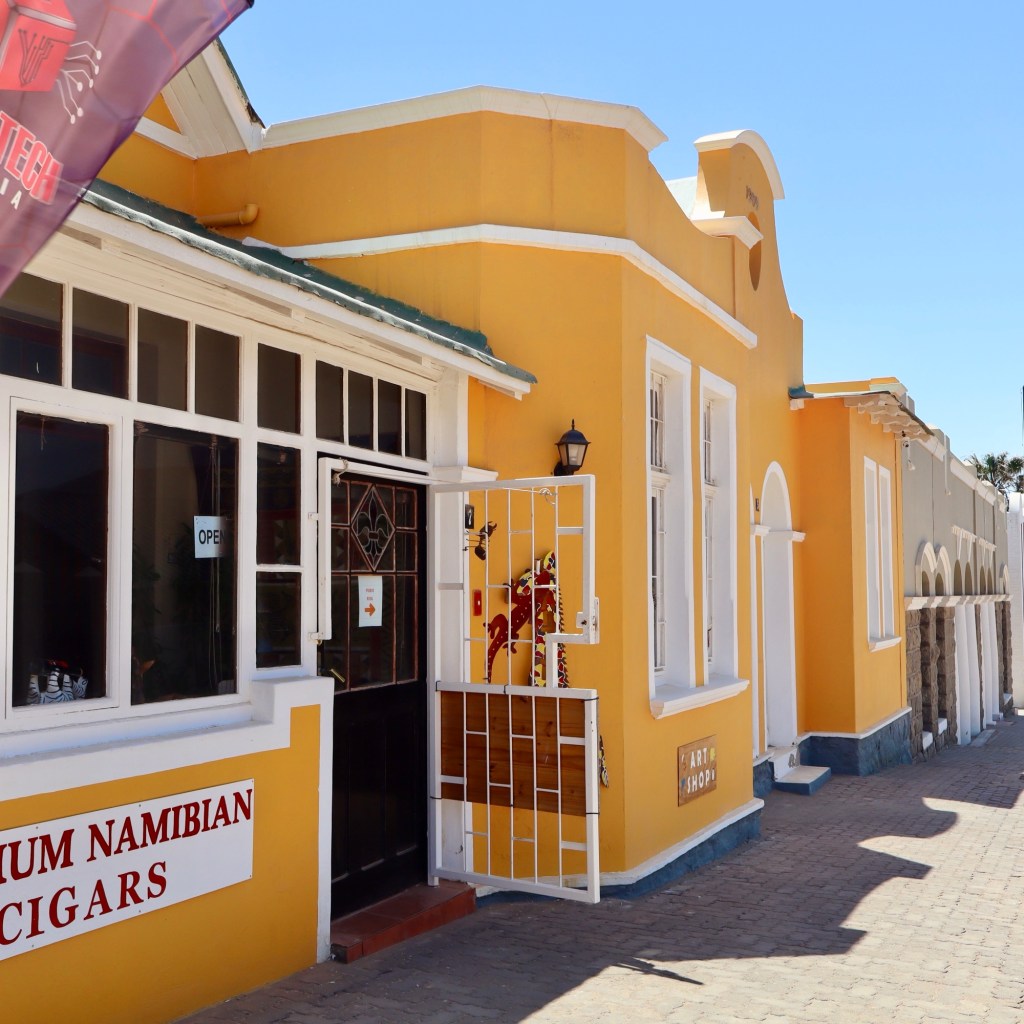
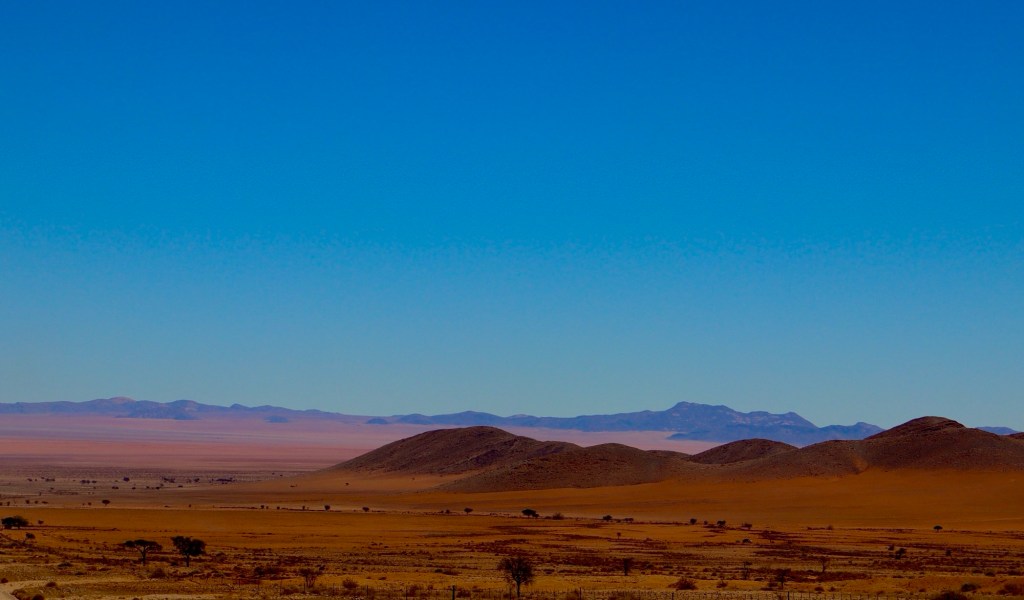
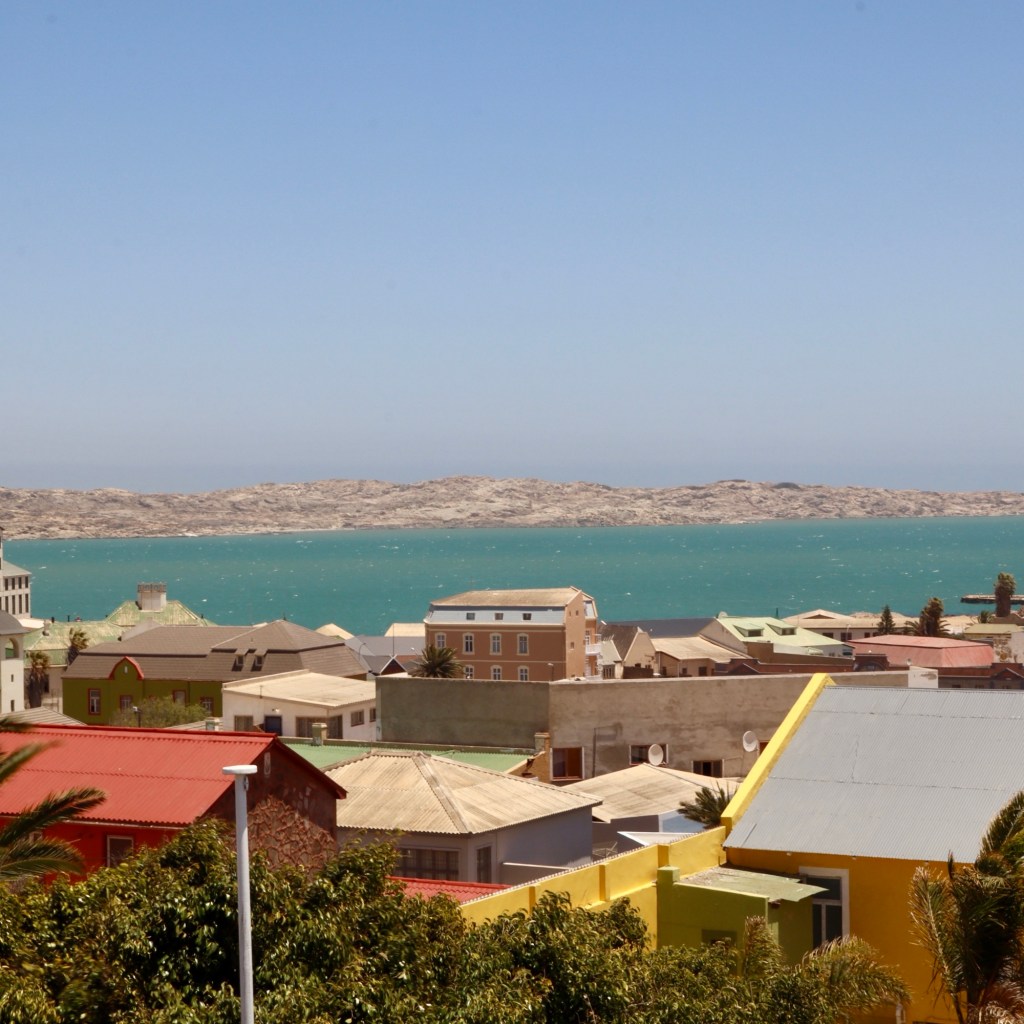
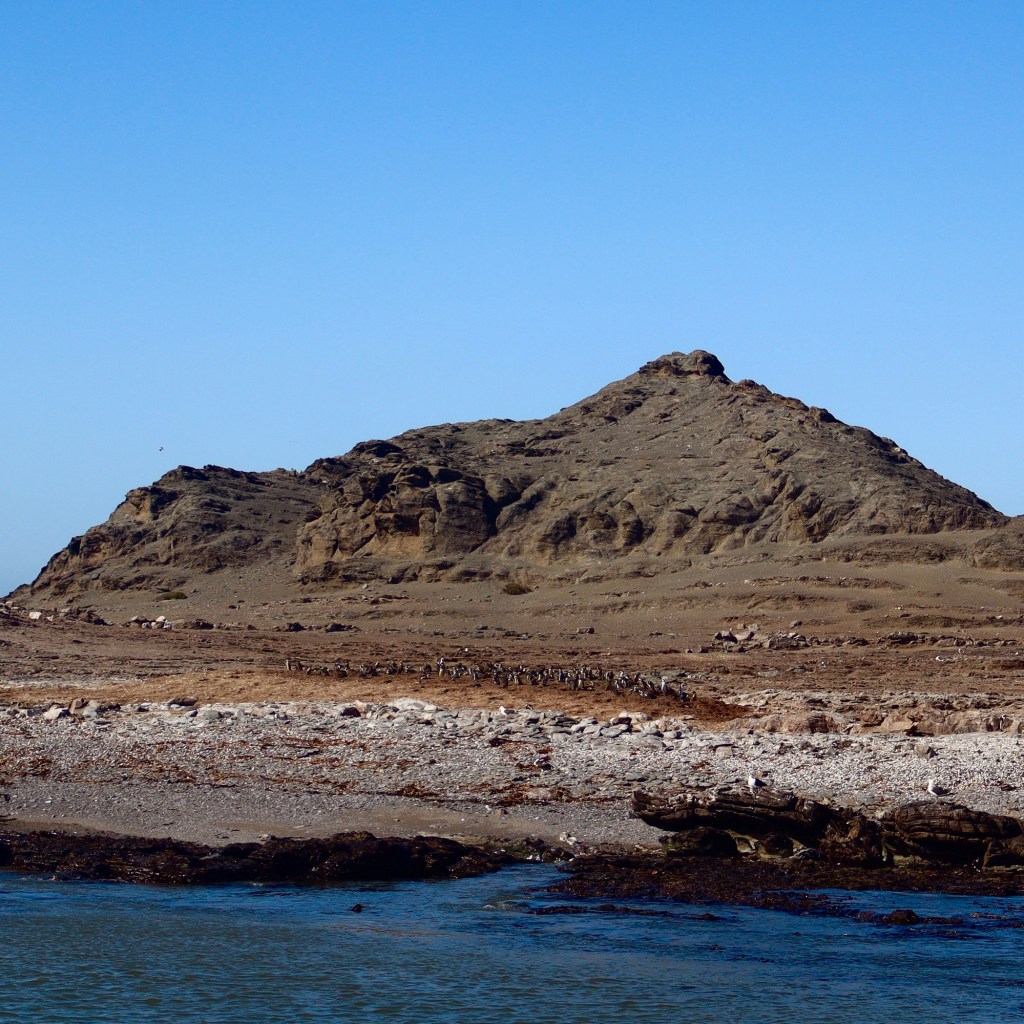
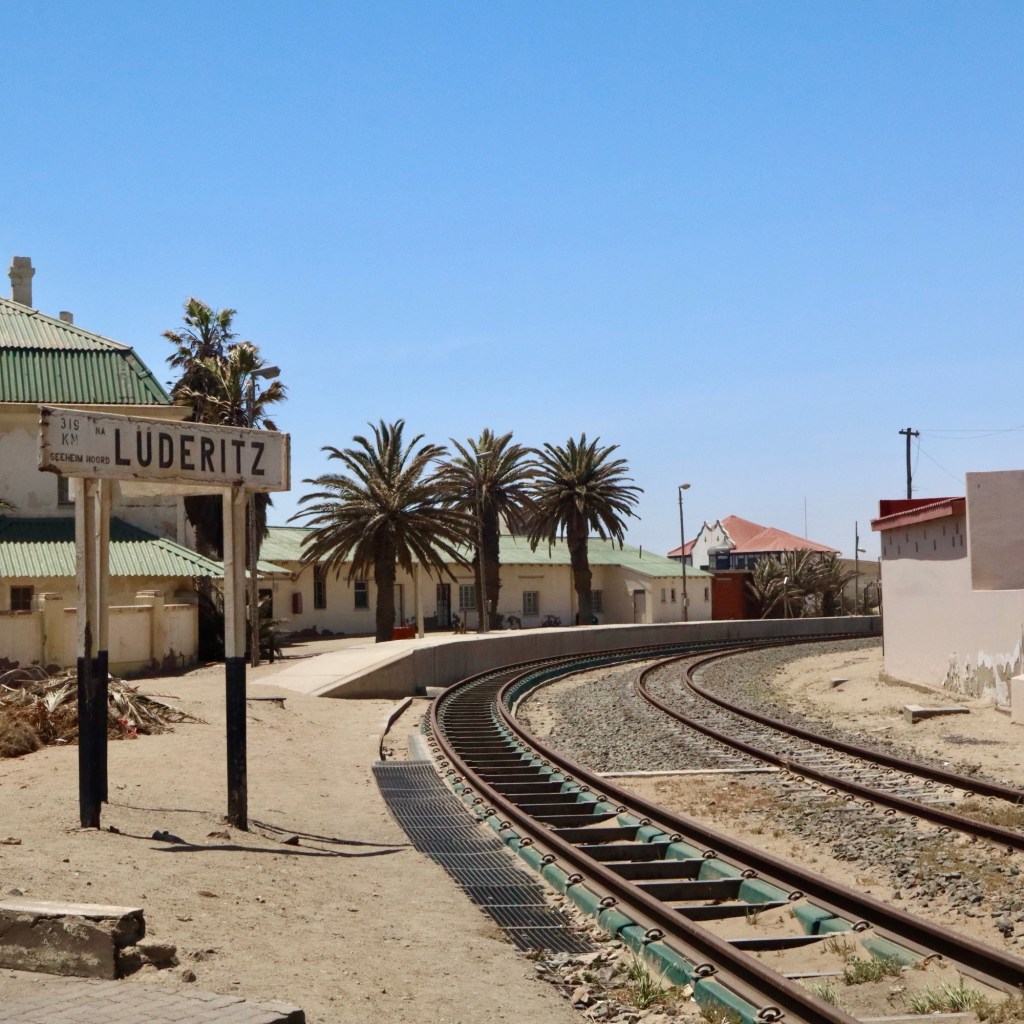
House circa 1900 Luderitz. Luderitz streetOn the way to LuderitzTypical 20th C house LuderitzA slice of LuderitzAfrican penguins near LuderitzThe Station.
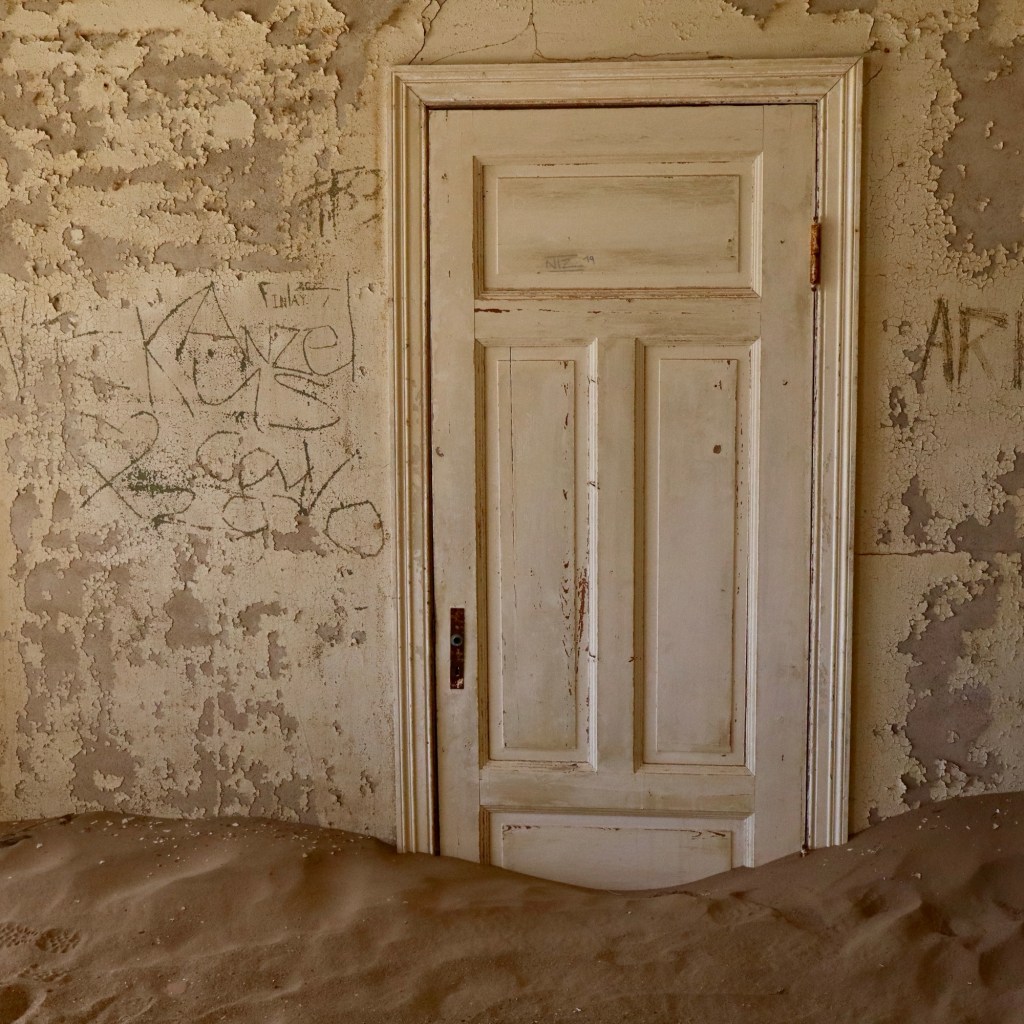
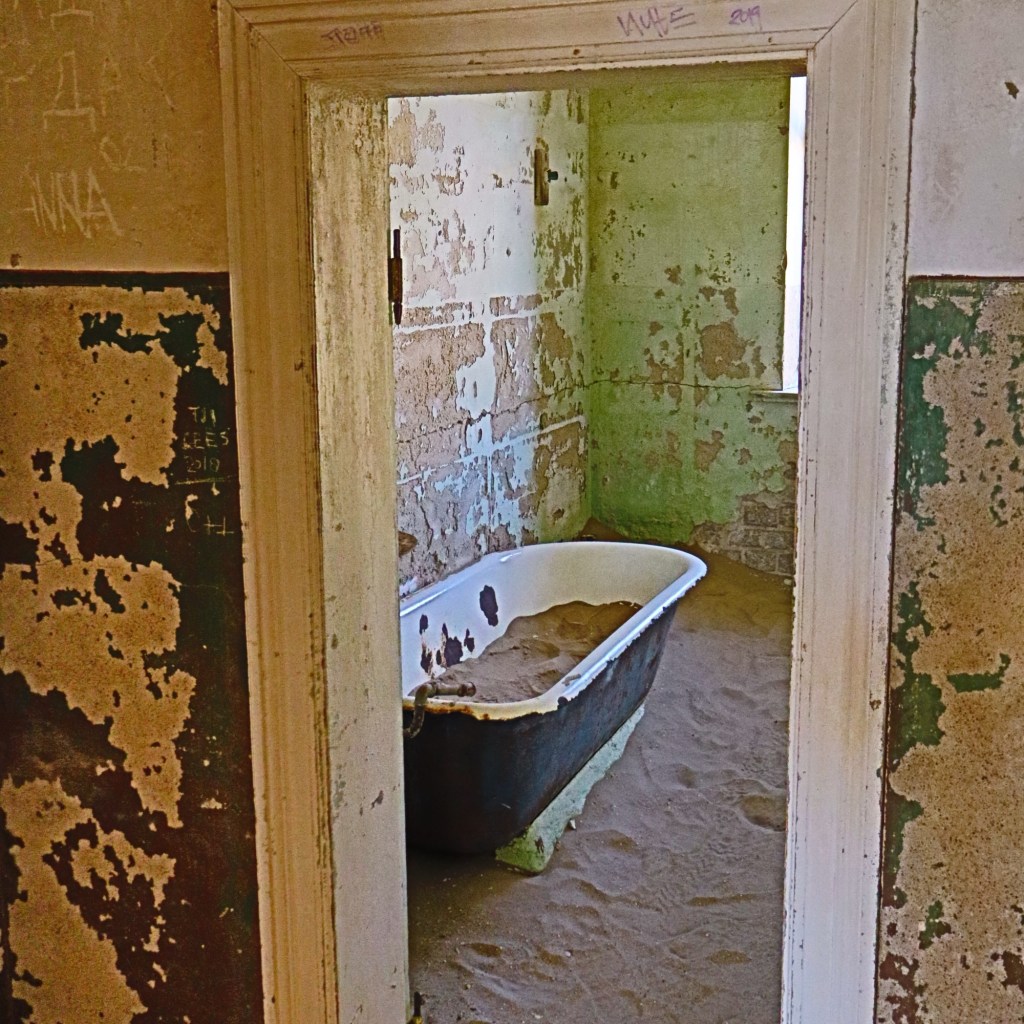
Sat in a sunlight filled loft apartment in Luderitz, the regular afternoon wind was building but not yet at the levels when we arrived the day before when we drove through a sandstorm, hitting a small innocuous looking sand dune across the main road into Luderitz which nearly blew a tyre. Originally built as a diamond mining town, it is like a cross between Shetland and the Wild West, somehow managing to be cosy yet industrial. There are less tourists here because it is in the back of beyond and a 6 hour drive from anywhere. There’s an abandoned diamond mining town nearby called Kolmanskop where we stop by as we leave.
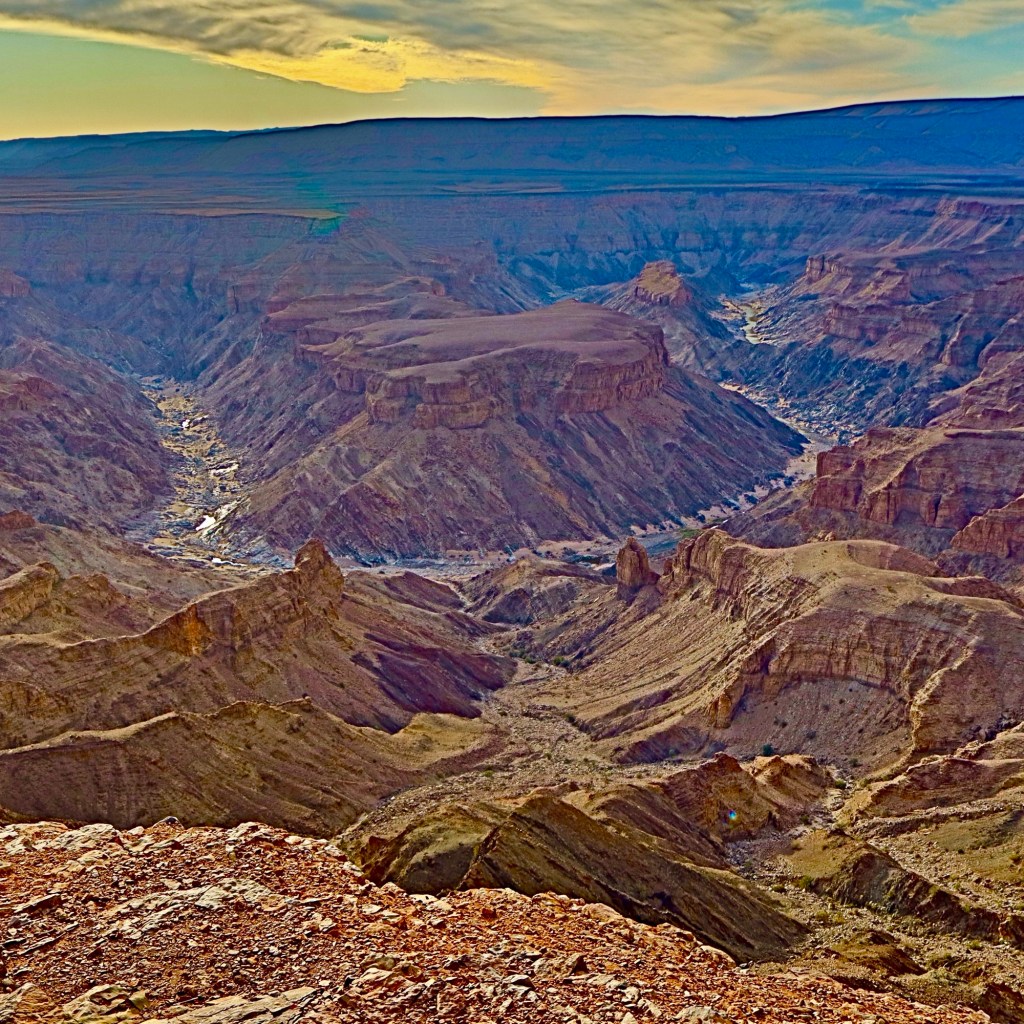
Fish River Canyon.
At our last stop before heading 8 hours drive back up to Windhoek we are in Fish River Canyon gawping with everyone else at the view.
A view of the canyon.Another view.
Twelve German friends on a luxury tour offer us two of their G and T’s with copious ice. They clearly think we are insane to camp; I suspect most of the men have prostate issues and would be up and down that ladder most of the night. Would I swap our camping trip with their luxury one? Yes I bloody would. But back in Windhoek I see several pristine white 4 by 4’s parked-up waiting to set off on their trips. Rather like the shifty-eyed reassurance given to a very pregnant woman asking if labour is painful, would I lie if they asked us how our experience went? I’d tell them they need the bladder of a camel, to stay away from baboons especially if they’re female, and take plenty of small change to tip the many desperate people they will meet on their travels. But in the same way labour is indescribably hard yet you find yourself doing it again, we’re already planning another camping trip.
A quiver tree, so called as the San made arrows from the branches. A Hartmann or Mountain zebra – pretty rare, it ran across the road as we made our way back from watching the sunset over the canyon, making Clive a very happy man.
They were Russian, not Italian. Excuse my swearing.
James’s experience of School. His choice of vet medicine as a career is probably wise.
School – but not as we know it.
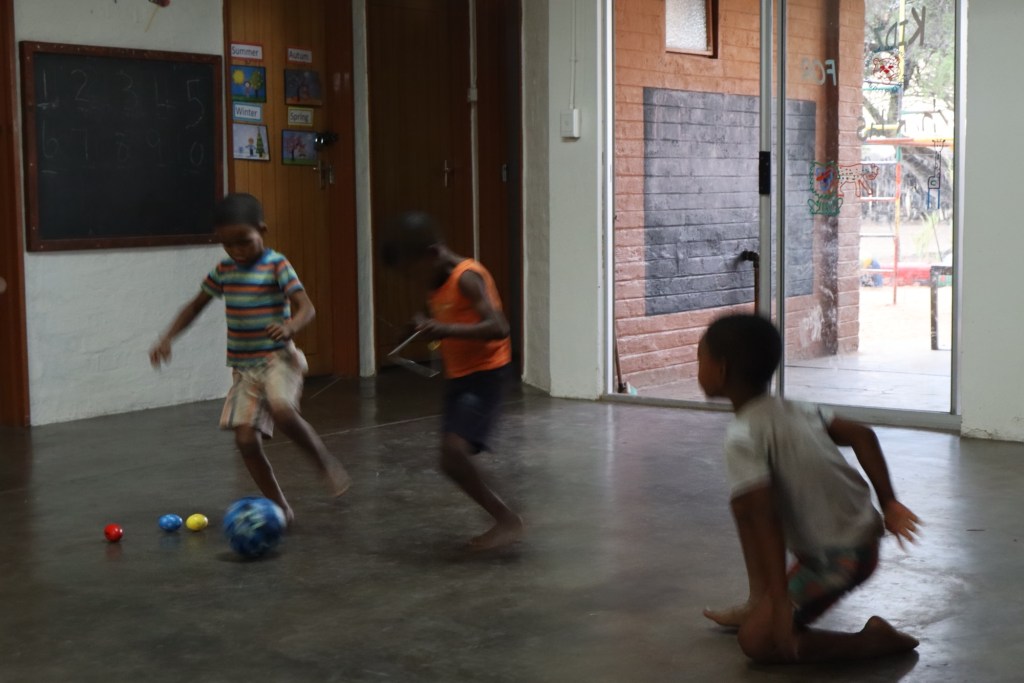
Hearing Maria call out the dreaded words “Cheetahs are in school this afternoon” struck fear into our hearts. We’d seen the exhausted Crocs as they staggered back the night before, heading straight to the bar. We’d seen Simon’s point blank refusal to ever do it again; (he seemed to have a golden ticket to do whatever he fancied, I suspect his frequent assertion that he is leaving all of his money to animal charities might have something to do with that. And being 78, so no longer giving a fig.) We’d seen James’s video of a few of the 5 year olds massacring a white doll. Make of that what you will. The crocs had stayed until 6pm, thowing down a gauntlet. The instruments sent to me by Sue Bullimore, an old school friend, helped enormously. For around 10 minutes. Then we played a version of “It” that was perhaps unwise in 40 degrees. Clive managed to then muster enough energy to play football with the balls we’d brought, but the rest of us could only lie on the floor in a pool of our sweat while the children bounced on our heads. The quiet stillness of their teacher, a quizzical smile on her face as she sat behind her desk watching us slowly dehydrate from grapes to raisins, showed the way it should be done. We sidled off at 4.45pm, on our hands and knees, muttering “never again,” and in my case “Mother, I salute you.” (she taught primary school children for 40 years).
One of the Cheetah team pushes a child on a tyre swing.Having a go on Sue’s instruments.Another Cheetah gets thoroghly hammered at footie.
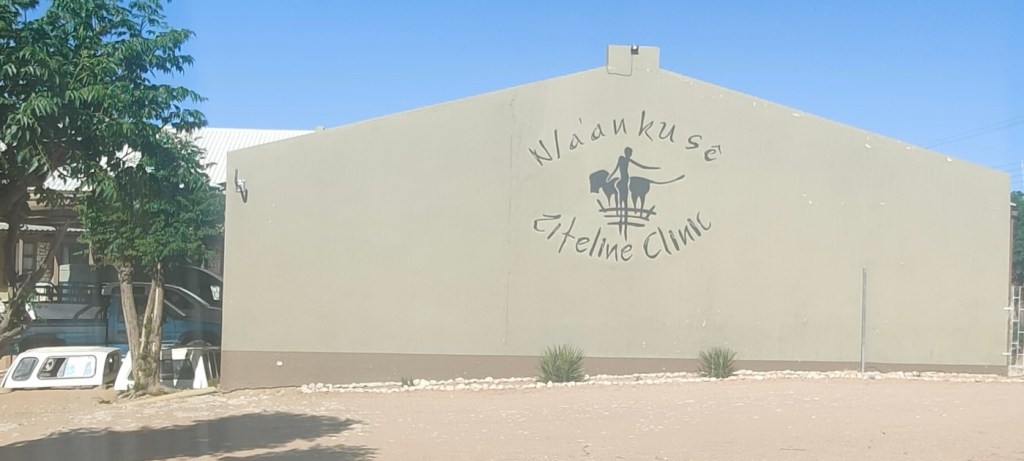
The Lifeline clinic.
The Naankuse Life line Clinic in Omawewozonyanda.
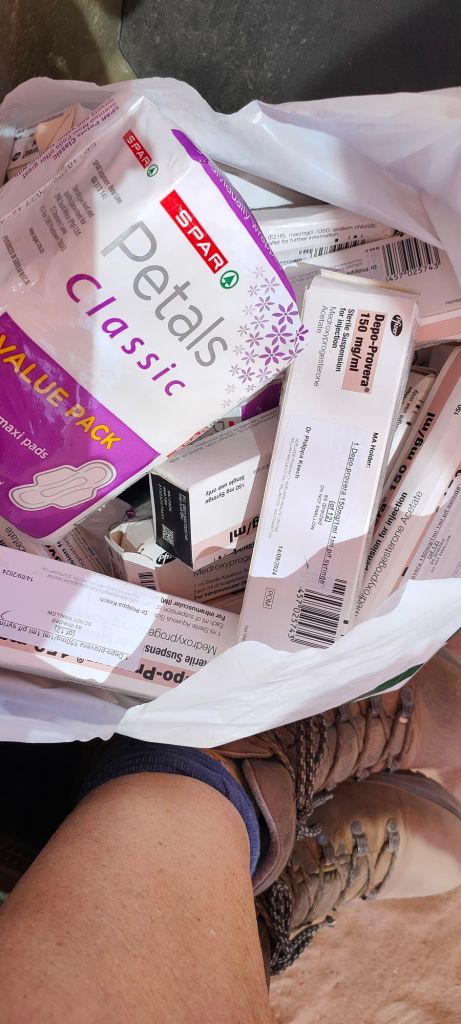
The clinic is around an hour’s drive away and a source of great interest to many of the volunteers. Helen Bennett, a nurse from Clive’s art group in Minstead had given us a defibrillator as well as a spanking new digital thermometer and 10+ sats monitors. We also had 12 contraceptive injections and bags of sanitary towels. Theo, the clinic’s manager and chief nurse, had put the defib at the top of a wishlist sent to us in the UK. He received it with such joy and enthusiasm, the battery having expired 18 months ago on their previous one. Due to an admin snafu they have had no doctor for the last two years.
Theo with the new defib donated by Helen Bennett from Minstead.
We had come with 6 “special guests”, Austrians staying at Harnas for two weeks like us but only doing “fun” jobs like cleaning the lion’s den, which is fair enough, I am sure they paid a lot for this. But they showed very little interest in the Clinic, spending most of their time smoking in the shade of a bbq area. A shame as so many of the, shall we call them “bog standard” volunteers, wanted to come and see it and even a short time in this place might have influenced their choices in life. The clinic itself covers a vast area, Theo sometimes driving 100 km to deliver babies as the ambulance service is busy elsewhere. There is a massive problem with malnutrition, fulled by a drought that means they can’t grown their own food, and are dependent on imported South African food which means inflation is stratospheric. Unemployment is also a real problem. They deal with a lot of drug addiction, depression and homeless children left because their parents have committed suicide. There were only two volunteers working there, Maria a medical student from Brazil and Jessica a nurse from Romania.
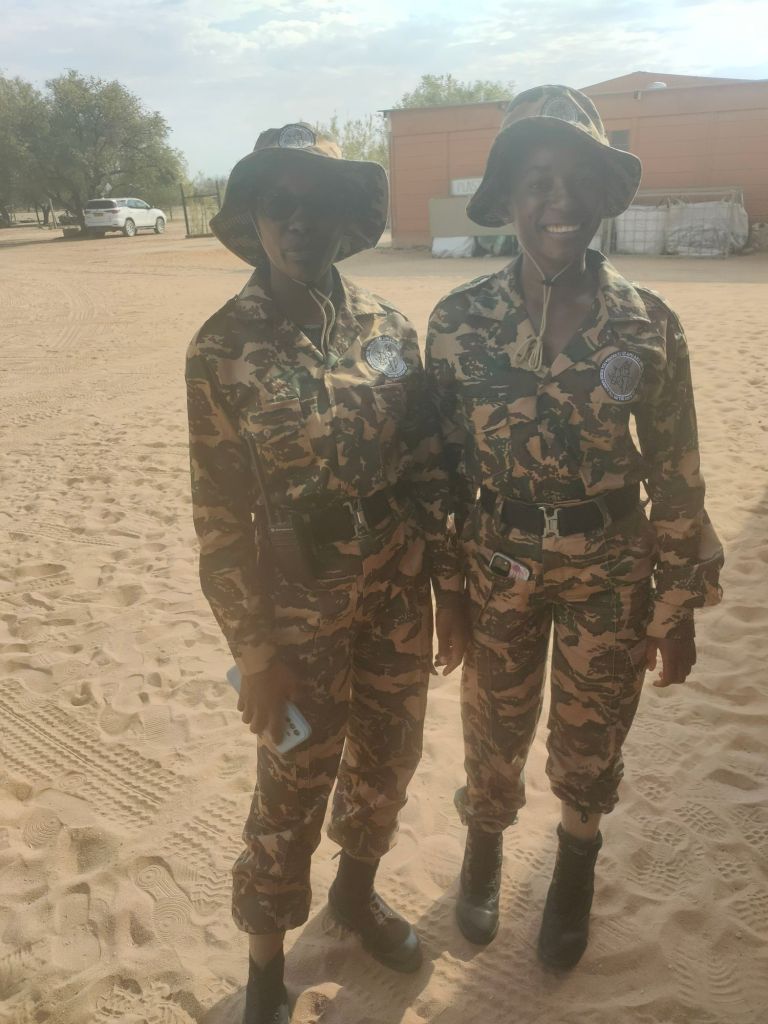
Jess on left , Maria on right.
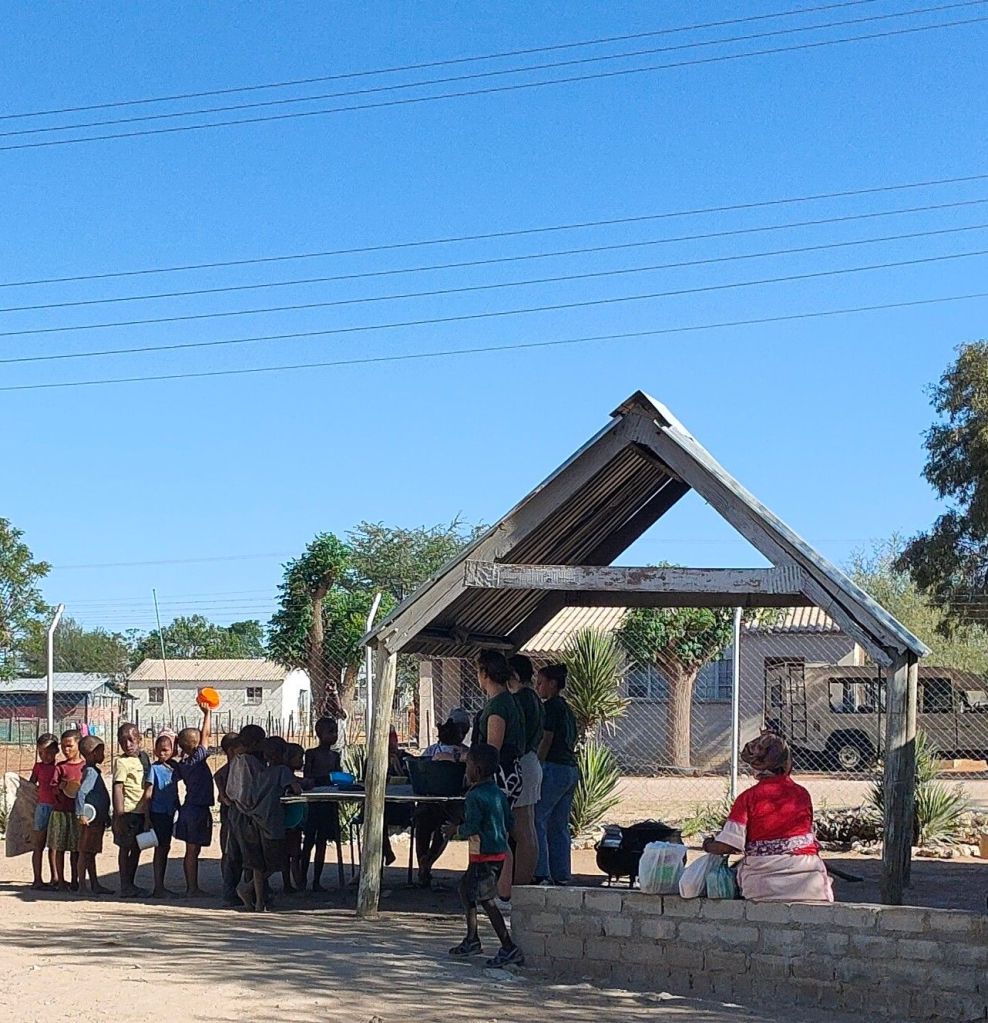
They cooked a huge vat of mainly vegetables and pasta every morning and then doled it out every lunchtime, to all comers. They came to Harnas at weekends, and found the sheer amount of food given to the animals quite shocking compared to what they had to give to the people in village. It is true that the Harnas meerkats get better quality meat than the Naankuse clinic kids,, each meercat getting a succulent piece of horse meat twice a day, while there is a small piece of meat cooked more to add flavour than calories to the village pot.
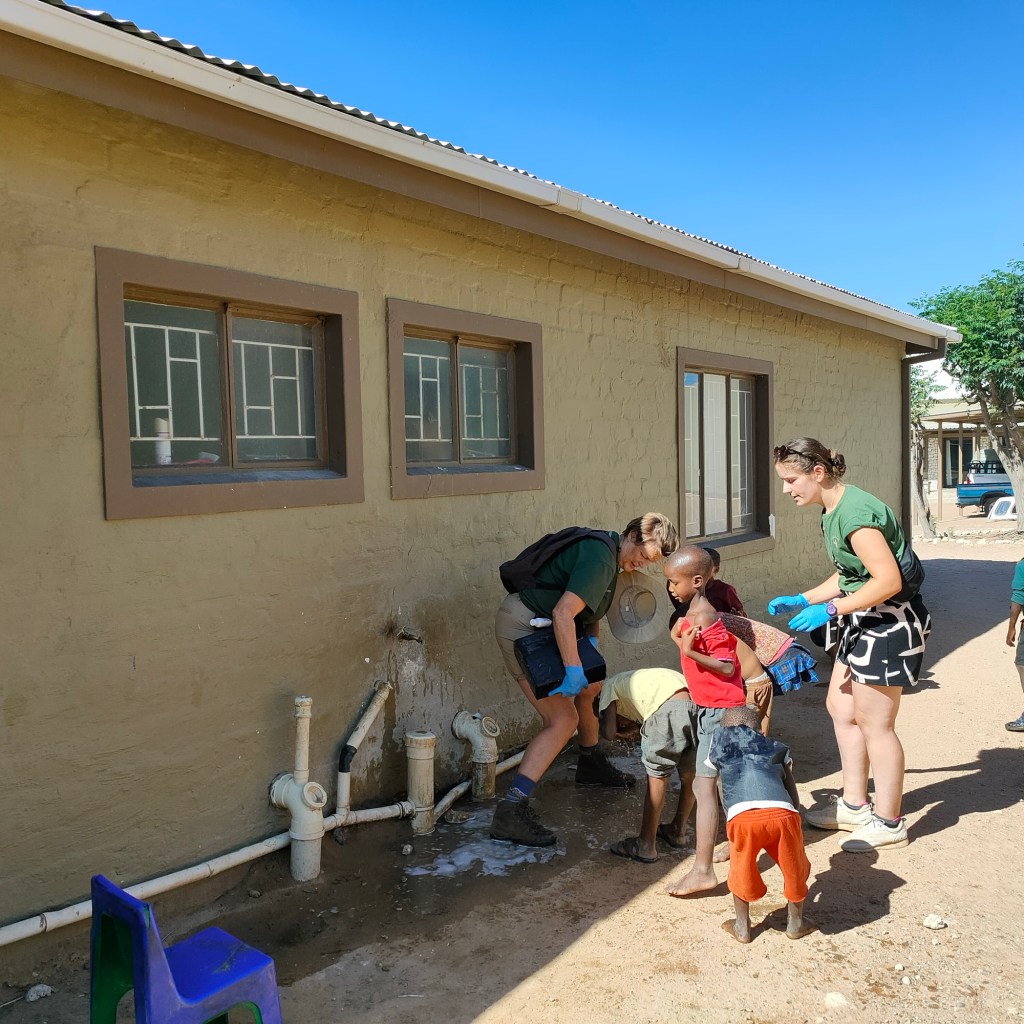
Kids queueing for lunch.Sitting in the shae waiting for lunchChatting over lunch.Meat for the lions in HarnasTreating tinea capitis. Brows. Bag full of contraceptive injections and ST’s.
One of the special guests, whom I will call “Brows”, kicked off about having to wait to drive back to Harnas so that one of the local women could have her depo injection. She had been seen throwing her teddy out of the pram on several occassions while waiting at the bar. It’s fair to say this ran on “Africa time.” A favourite saying I heard a few times – “I will do it now-now,” means sometime, maybe soon, maybe not, depending. They were also extremely busy, and had to cope with frequent power cuts, which I loved, as the silence washed over us, the only sounds the lions moaning in the distance, birds clamouring in the trees, the parrots kicking off as soon as anyone raised their voice, Olivia the three hoofed Oryx’s snuffling breath as she snuggled up to your ear, gas lanterns throwing light across the happy faces of our fellow volunteers as we drank together at the end of our own busy days.
Cecilia, our go to for most things.Katya, the Big Chief of all things. Nicholas, a manager and father figure who corrected anyone saying what not pardon me. JuliaMarge and Olive.
We now head up country, to pick up the camper van and head off for more adventures.
Sunsetting oer Harnas Our last night in HarnasBecca, Toby and Philip at the end of a long day. Like vampires, we stole some of their youthful blood and felt young again.
James, three sheets to the wind, dancing with Maria. Bush bird sounds.
Looking out at Harnas from the morning briefing area.
Two baby crocs have done a runner from their enclosure and an escapee baboon is lurking on the roof at breakfast eyeing up the croissants. No-one seems especially worried about the crocs but a man with a slingshot turns up 10 seconds behind the baboon. The newbies except us are excited to see the baboon; the old timers, mostly Germans, are terrified.
“They are NOT friendly” Nicole shouts “they are HORRIBLE”.
A quite menacing looking morning visitor.
Harnas History
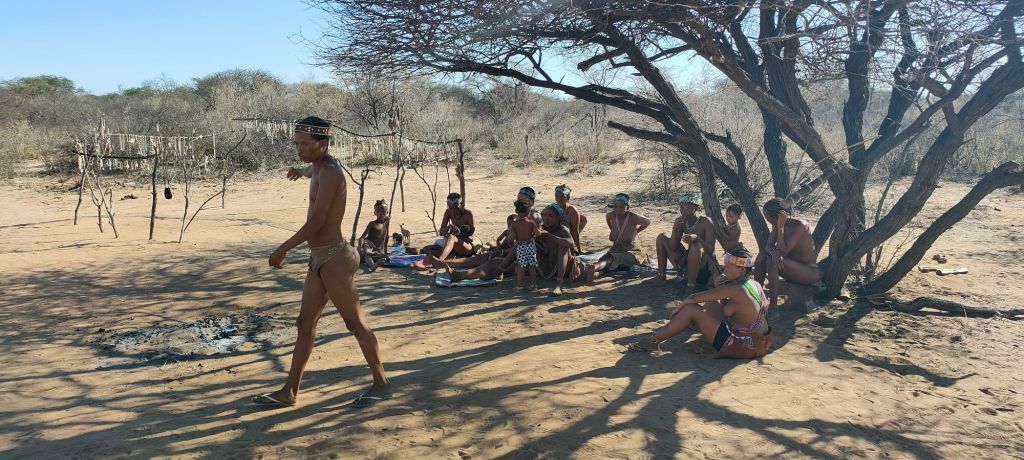
Harnas wildlife Foundation started with an abused vervet monkey rescued by the Van Der Merge family 46 years ago. Over the years it has expanded to play a major role in conservation. A large focus of the work achieved at Harnas is preserving the San culture, one of the most ancient in the world.
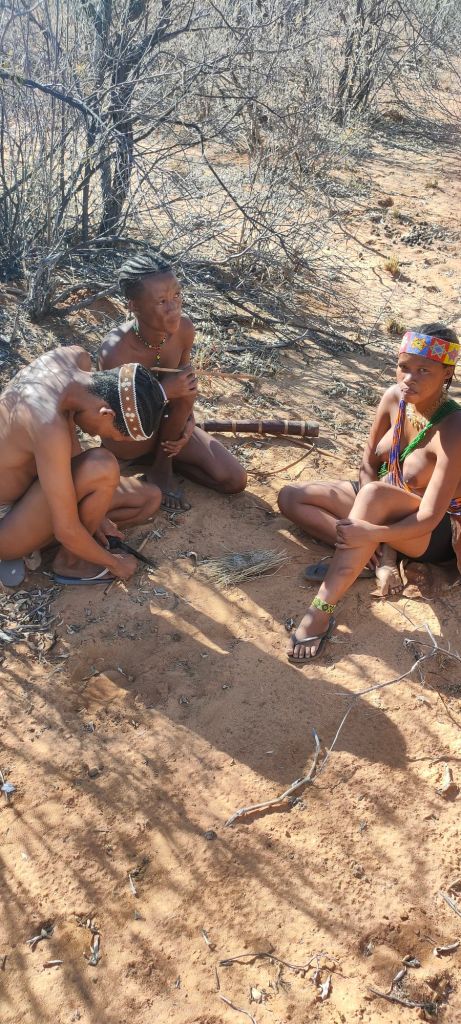
The San people – digging up roots for water, medicine and food.
Survival tactics.
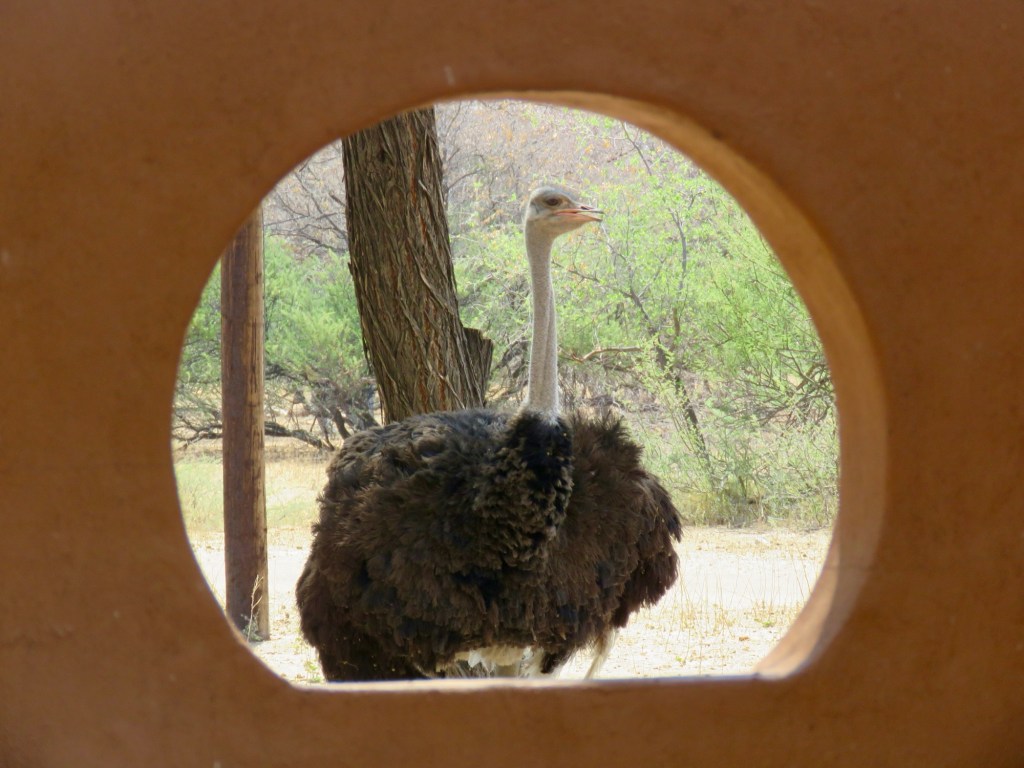
We have learnt to stand stock still when threatened by an agressive goose, and to run for your life if a baboon or ostrich attacks you. Or make like an ostrich by putting one arm up in the air and flapping your hand. I am not kidding. However the ostriches seem pretty chilled, and love a spray down with the hose from our garden. Threatened vervet monkies apparently distract you with lots of false feints while one makes for your jugular. When feeding the crocs you keep your back to the wall and all sphincters on high alert.
In the absence of climbable trees, we are told to run away from a charging rhino in a zig-zag as rhinos don’t turn quickly. Neither do I, frankly.
The leopards miaow and purr like cats – who knew this about cats?!! They are leopards in disguise, but less likely to eat your face off when you get too close.
There is a particularly perilous narrow corridor where you have to walk between the mean, grasping arms of the vervets on one side and the garden sprayer on the other; the water is semi-treated sewage water I think, although when you ask any of the staff they become very vague. It certainly adds an extra layer of jeopardy in getting from A to B.
The perilous pathway.Our igloo – we stayed here for two weeks. Most of the volunteers stayed in the volunteer camp with single sex dorms, two toilets, and some particularly annoying imbecilic lads. Like two ancient dogs, we are too old to be seperated.Introductions. The group facing us were the cowering newbies a week ago. Now look at them being the cool old timers.When Brad and Jolena came to visit Clive just loves dogs. In the heat of the afternoons, after lunch, we sit catatonically in the shade by the pool, which is a strange shade of cream that Christine thinks might be duck sperm.Ostriches often come and sit in the shade by our igloo in the afternoons.Our ostriches neighbours.Christine, our neighbour. Originally from Germany, an alternative physio whose lived all over Europe and speaks fluent French, English and Spanish. And German, obviously.
Silly things humans do.
At the induction yesterday, Maria, our San tribe leader, regales us with tales of the hapless things volunteers have done in the past. Reaching into the lions’ den to take a better picture, trying to get a selfie with the rhinos, stroking a mongoose and losing a finger, carrying a baby giant tortoise the wrong way round and everyone watching in amazement as he suddenly threw the tortoise up in the air after it bit his penis.
We are also told to hide from poachers, as they will kill us aswell as the rhino. If caught they will be in prison for life, so have nothing to lose.
The Volunteers.
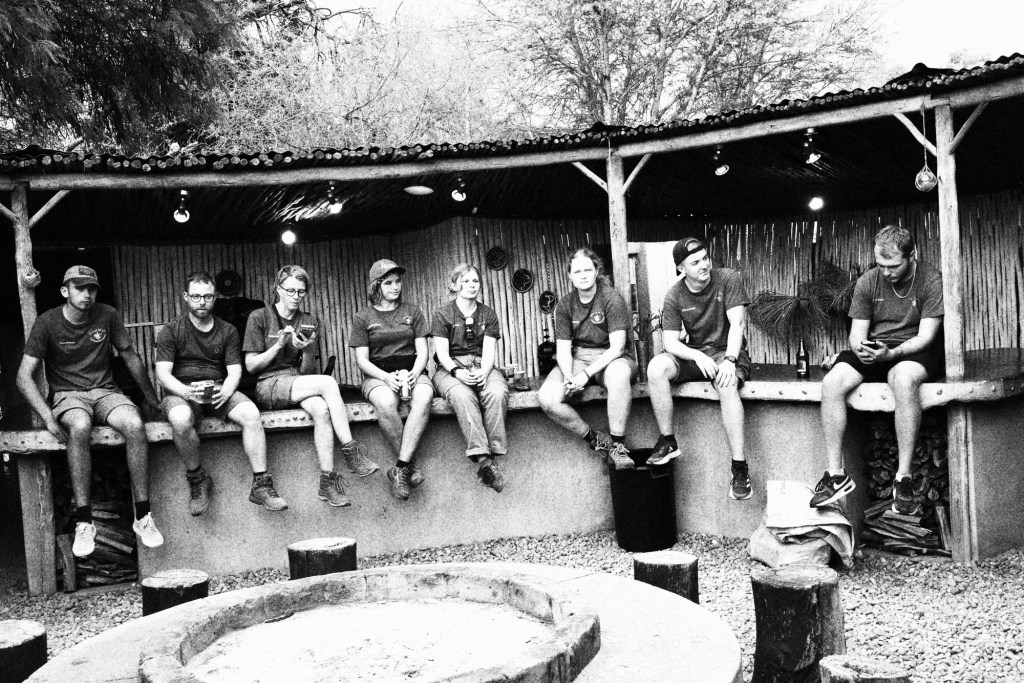
They are a sociable and friendly group, mostly 18-30 ish but with a few young at heart outliers like us, Christine (50) and Simon (78). There are very few Americans, one in fact, a Mexican lad who when he goes accidentally leaves behind a litre and a half of tequila, much to the unbridled joy of Toby, Philip and James sharing his bunk room.
Rhino tracking.
The 6 rhinos on the reserve have to be accounted for daily in case of poaching. Poachers can be in and out of the reserve in 10 minutes. The poachers put bottles in the electric fence to see if they’re still there the next day as if they are, it means no one is patrolling. The two San tribe trackers start at the watering hole and fan out from there.
Our San trackers took 2 hours to find these rhinoa. Part of the anti-poaching unit. Mother and baby.
They follow their tracks, which are both footprints and troughs where they have dragged their feet to mark their territory. They also leave enormous piles of poo which I thought would be a composters dream but it is apparently very dry and mostly grass. I thought their skill in finding these creatures incredible.
The Worst Jobs.
Farm work.
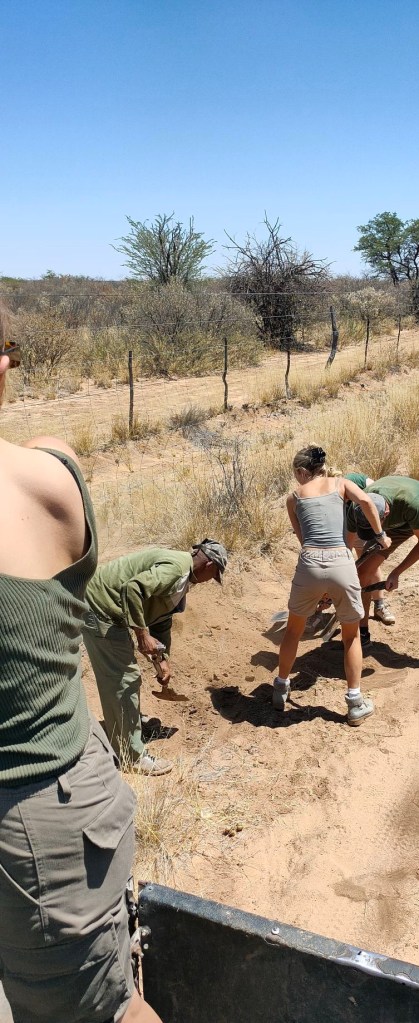
Filling holes.
There is no upper age limit on how much fun it is standing up in the back of a truck that’s rattling along dirt tracks, wind in your face, wild grin spreading ear to ear, sand between your wind blasted teeth. Our job was to hop on and off the truck to shovel sand back into holes that various hopeful animals from the outside – cheetahs, aardvarks, porcupines – have dug under the fence in a bid to reach Harnas’s watering holes and delectable selection of impala, springbok, dikdik and goats.
Wooding.
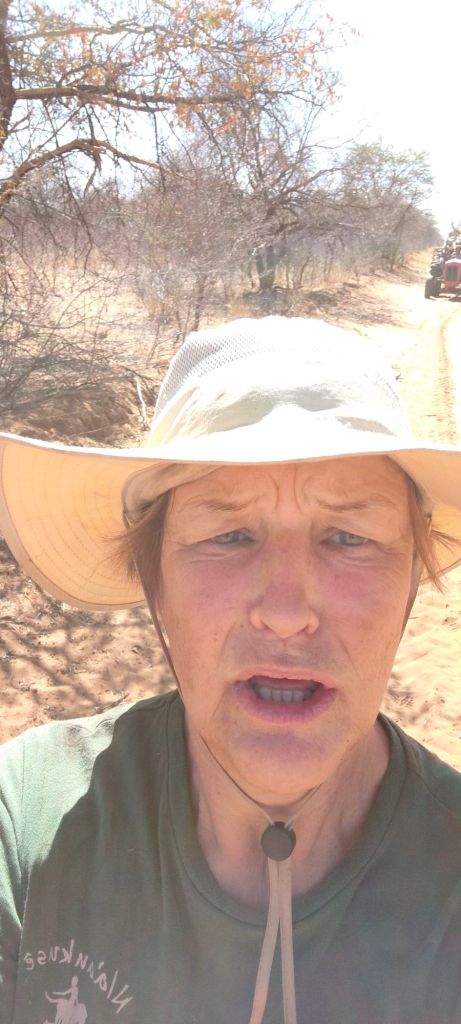
It’s another morning and we are sent to collect wood. I began with great girl guide level enthusiasm, hauling huge logs out of the bush and hurling them onto the lorry, she-woman style. But by the second collection, shallow breathing the hot air, huge sweat droplets stinging my eyes, I lurked in the shadows, hoping no-one would notice my reduction in productivity, and wandered what symptoms preceed keeling over from heat exhaustion. When I told this tale to Tanya, the research manager, she laughed and said “now you know why you see 5 people at work in Namibia and only one of them is working while 4 are resting”.
Before heat exhaustion.Heat exhaustion imminent
The Best Jobs.
Lion feeding.
This is definitely a fun activity. There are at least 10 lions, five cheetahs, and two leopards, in various massive enclosures. Some are there because their mothers have been hunting farm animals and have been shot by farmers, who then ring Harnas to collect the cubs. They often don’t know the full story, as they don’t want to discourage people from asking them for help. There is an 8 year old leopard that used to be called Ingwe, an African name for Leopard. Bottle-fed and hand-reared alongside the many dogs at Harnas at the time, his feral instinct kicked in a little earlier than at the expected 2 years old. At 16 months he blotted his copybook overnight by eating all the dogs. The volunteers renamed him Hellboy.
Hellboy.
In another enclosure there are five lion brothers all reared in Marietta’s kitchen – the lady who started Harnas 25 years ago. Flown across the border by a mysterious man, they were destined to be cuddly fluff balls on a Botswana game reserve and then shot for sport in an area no bigger than Trafalgar Square. But their Botswana heritage means the Namibian Governemt will not help rehome them. So there they are, five muscle bound testosterone fuelled beasts all vying for territory they shouldn’t be sharing. To reduce the fighting potential, at feeding time we have to strat them at one end of the enclosure and then race in the truck to the other send, the lions giving chase, so that each one is fed as they arrive.
Making the brothers work for their supper. A Go-Away bird Becca – a lovely British physio living in New Zealand and a hive of tall tales. Ostriches making it a bit tricky to get to our lunch. Rina, Cory and Mingzho relaxing after a strenuous afternoon in school. Possibly the only picture I have of Toby, our resident bob viveur and mischief maker. James the vet to be chilling.
Letting Old Lady, an ancient vervet moneky, pick out my feas.
Olivia, who lost a foot (?hoof) in a trap. She is still a baby at 7 months old.
I have yet to regale you with tales of the school and the medical clinic but think I’ll post this as we are going up to a wifi free zone for 4 days – Etosha.
Bouncing about in a cage in a force 5 with sharks skimming past a few centimetres from my nose was way less scary than I expected.
Inside the shark cage.
Visibility in the cage is very poor. The best place to see the sharks that appear once they throw the baited ropes into the sea is on the top deck of our boat. Best to avoid the front of the boat with the pukers, easily spotted with their green/grey complexion and sick bags glued to their faces.
I thought it strange that the sharks didn’t just wolf down the bait straight away but Clive thinks they like to have a nibble first to see if they like the taste. They are copper sharks, aka bronze whalers.
There are no Great Whites about as the Orcas have been eating them, in particular their livers, so they’ve all buggered off down the coast to Mossel Bay. Why it’s safer there, I don’t know.
Clive’s in his happy placeShark having a nibble. A rather frustrating experience for the shark.Another sharkSharks galore
The on/off wine tram in Franschhoek.
The wine tram is kind of a scam, as it’s really a very short track of train and mostly buses, but no-one cares as we are all trollied and can barely remember our names let alone write a Trip Adviser review.
We arrived at our first vineyard at 11.30 am as three separate small groups, but when we reboard the bus an hour later we are a decidedly tipsy unit.
A happy band of 7.
By the third vineyard the Zulu/ Leeds contingent are singing three part harmonies to a goat and the Dutch couple we have been chatting to are losing not only their English language skills but their Dutch too.
This place sells painting by Pigcasso. You can see him doing this to the sound of our group talking bollocks.
The Franshoek vines were originally planted by 300 French Huguenots who fled France in 1688 after King Louis XIV banned Protestantism. Shout out to the Holmes family on Clive’s side of the family, as they were Huguenots but fled to England.
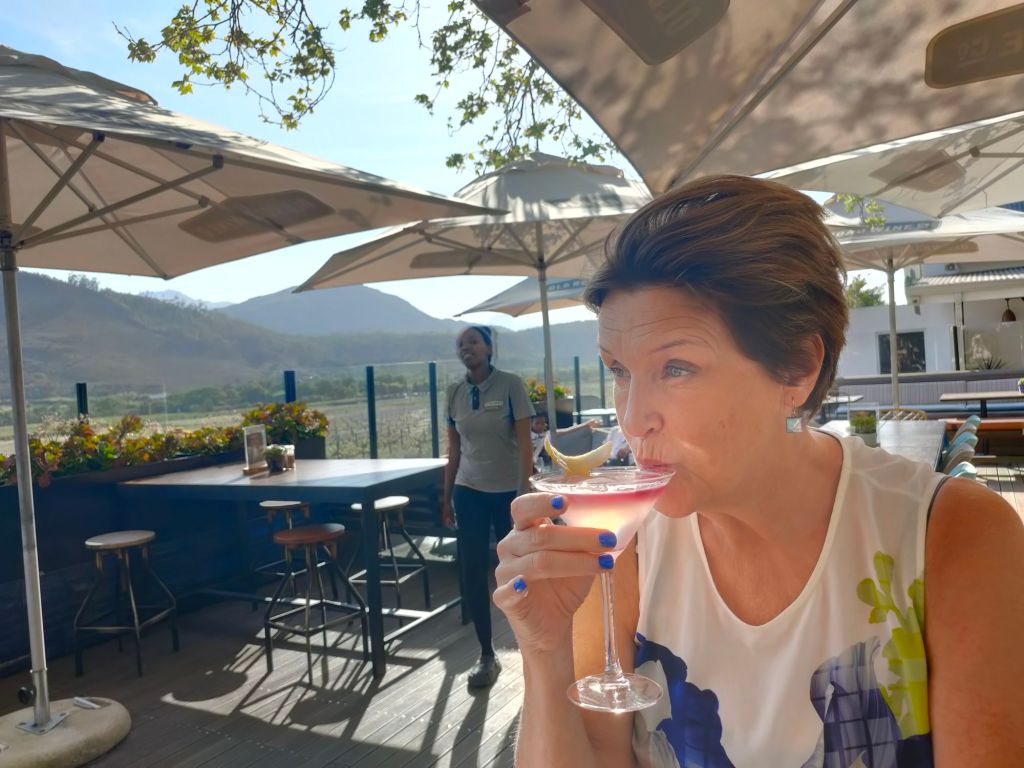
The vines bake on North facing hillsides producing delicious wine varieties, although I couldn’t tell you which wine to buy as by the third vineyard they all tasted the same. But as a fall from grace after 9 months of sobriety it took some beating.
The hop on/off wine tram.Franschhoek.My first alcoholic cocktail in 9 months. Sooooooo good. The carnage
Visiting a township.
Cape Town is a city of two halves. Part polished and beautified, with fantastic food and wine, sandy beaches, a freezing sea, and Table mountain looming above it all. It has its share of historic buildings, many of which have troubled histories. The court house, where if they really couldn’t decide if you were coloured or white they stuck a comb in your hair.
The Court House
If it stayed in, you were coloured. Fell out, white.
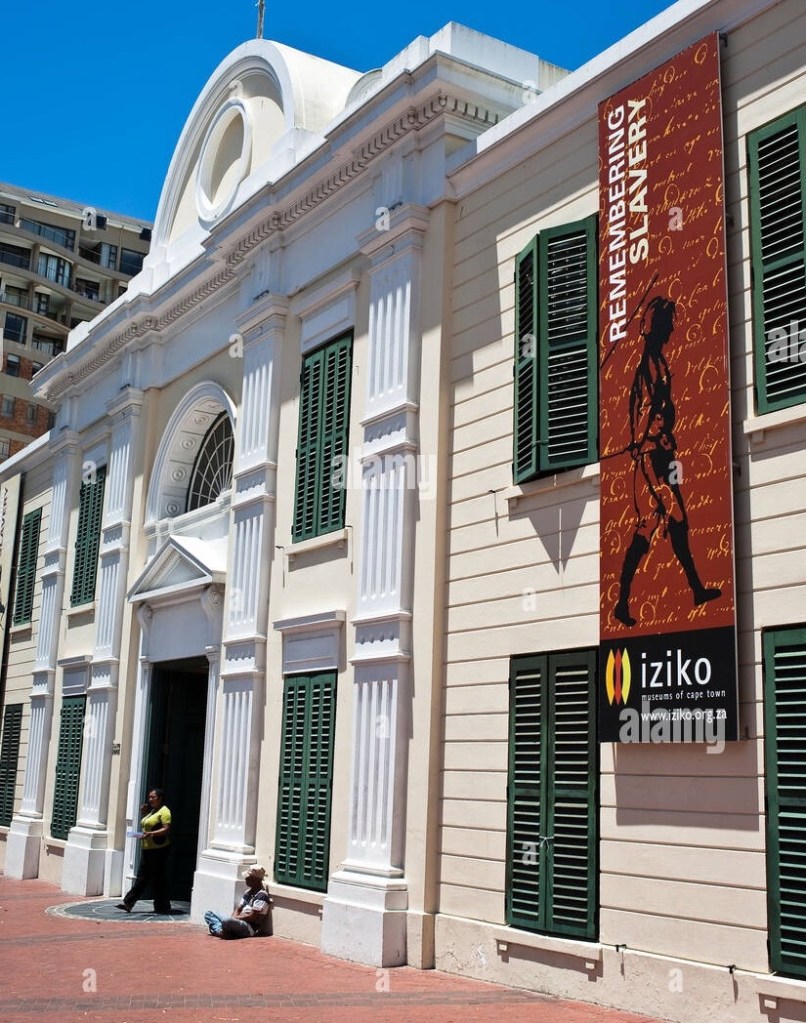
Nearby is The Slave Lodge, which is still called “The biggest 19th century brothel in Cape Town” in some aricles online, with no mention that the women were slaves.
The Slave Lodge, now a museum.
Most visitors don’t see the other half of Cape Town because it can be dangerous to visit. A British surgeon was shot while driving back from whale-watching in Hermanus. His wife, mother and 2 year old child were also in the car and survived. The main freeway to Cape Town being shut due to a strike, his GPS had directed him through a township adjacent to Langa.
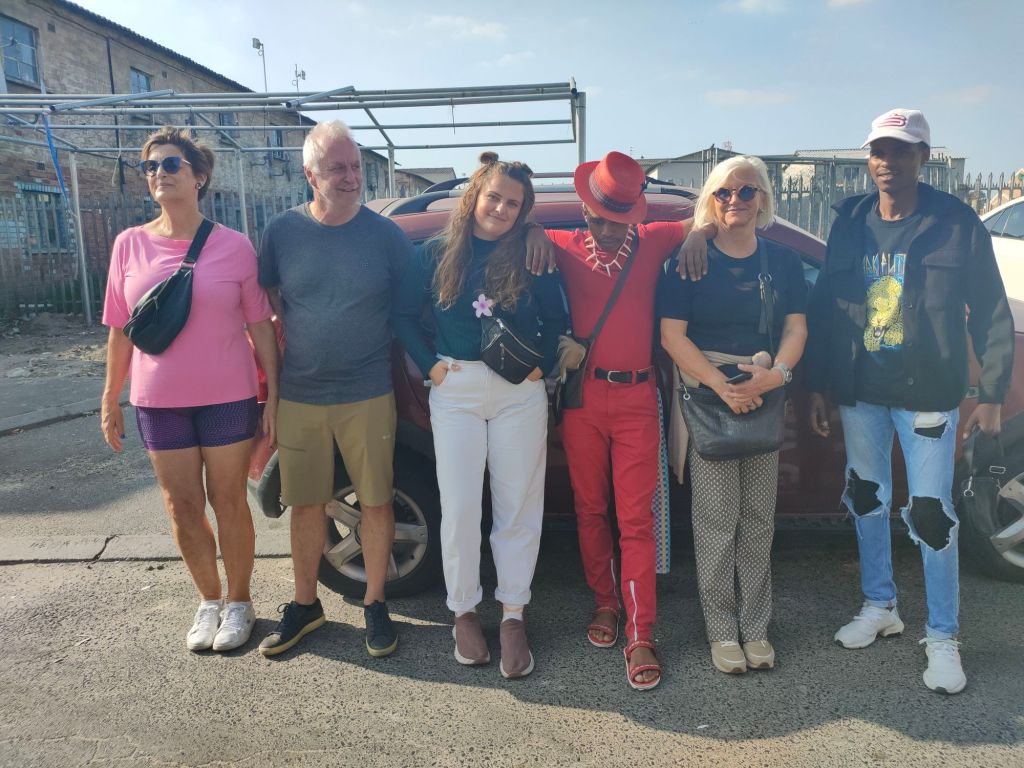
We visited Langa with Louis, a local tourist guide, who had spent 2 years during Covid living under a tarp being fed by kindly neighbours. The first Township, Langa was built in 1923 to segregate the black African community from urban areas and served as a labour resevoir. It still does. Visiting a Township felt like a difficult call, but I wanted to see for myself where the majority of coloured people still live.
Our guide told us that they want tourists to come, and that his job showing us around had been a revelation to him, meeting white non- South Africans who unlike the local whites were interested and cared about their situation (his words). He told us that the Township is bigger than ever, as squatting laws mean if you build a hut i.e a 1 meter square corregated iron box, and remain there for 48 hours, you have the right to remain there.
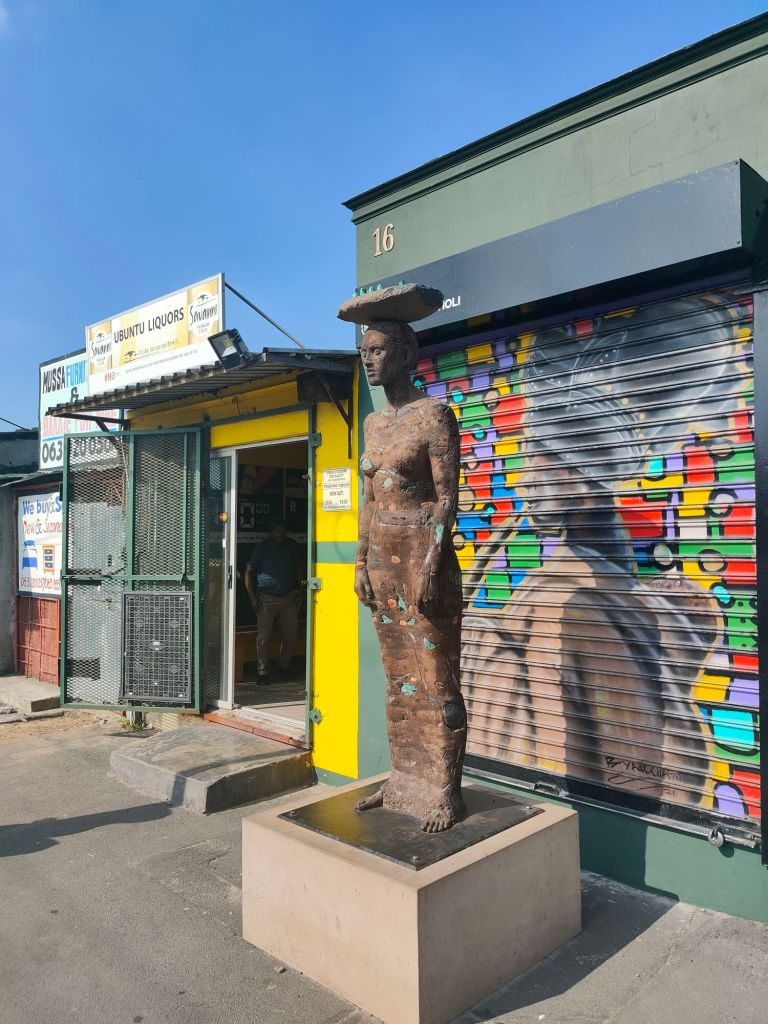
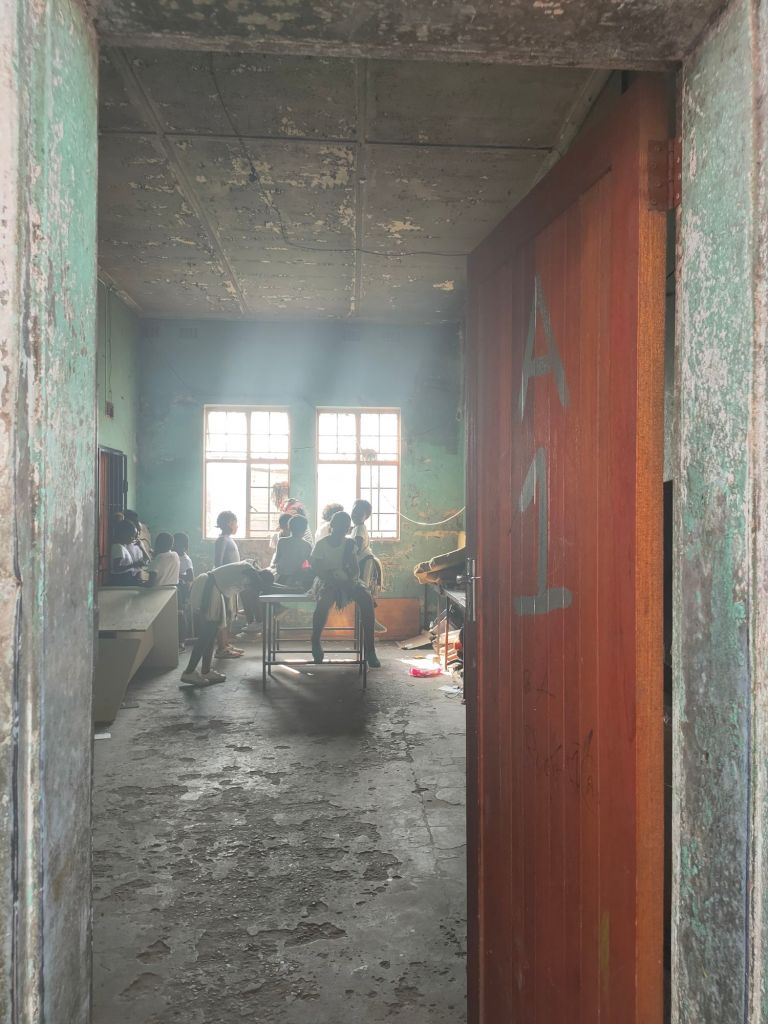
Louis our guideA throughway in LangaOur group posing with some locals. An area that regularly floodsStatue on mainstreet langaLanga barberSome graffitiA small building where 10 people inhabit each room.
Watching a group of children dancing and singing to a crowd of local people chilling in Langa on a Saturday afternoon I felt simultaneously interested to see African music performed for African people and hugely conspicuous in our nosy whiteness.
Poverty Porn is the idea that by writing about it I am objectifying it. But by not writing about it I’d be sweeping it under the carpet. But watching a performance by local artists who have not been wheeled out for us, the tourists, to gawk at did feel different. The main streets have surveillance cameras overlooking them, but Louis took us deep into the heart of the Town, to show us the streets that regularly flood, the water pump serving hundreds on a street corner, the portaloos. It is difficult to imagine how people get to work in places like the waterfront in central Cape Town looking spic and span when they live in these conditions. But they do.
Langa’s Saturday afternoon dancing and singing in the square.
We’re now in Harnas, a wildlife sanctuary in Namibia. We are properly busy, exhausted, and the wifi is crap!































































 Travellinglight