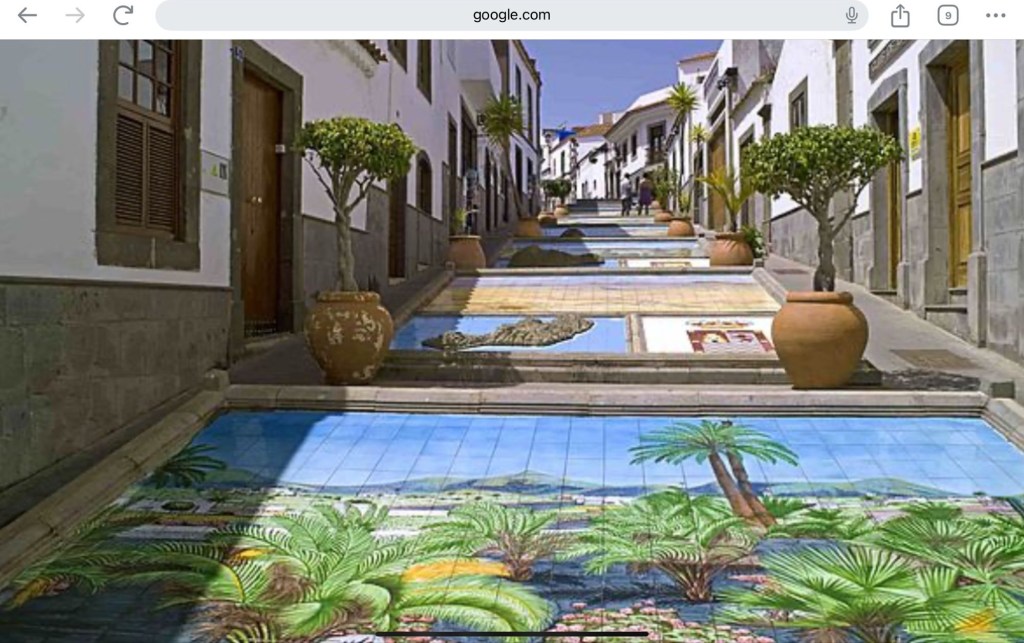

From the mountains to the sea.

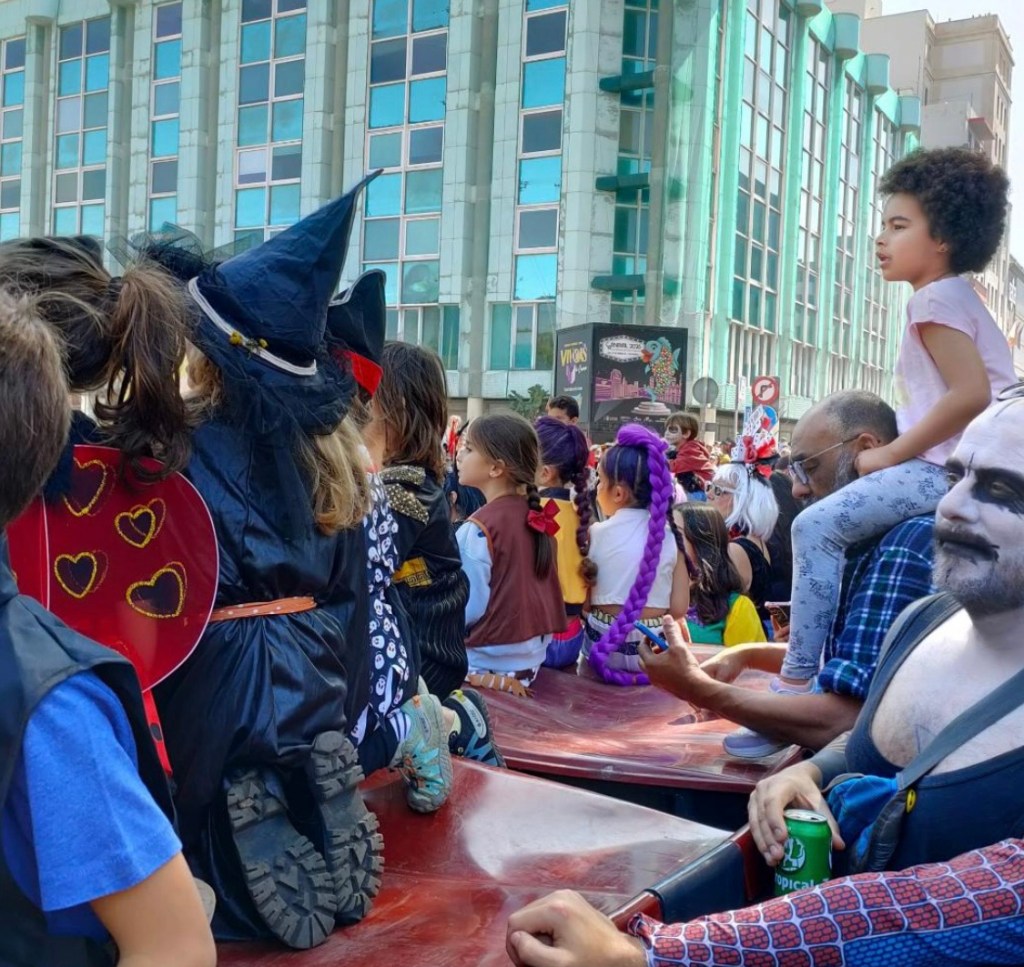
Children perched on the bins watching a parade.
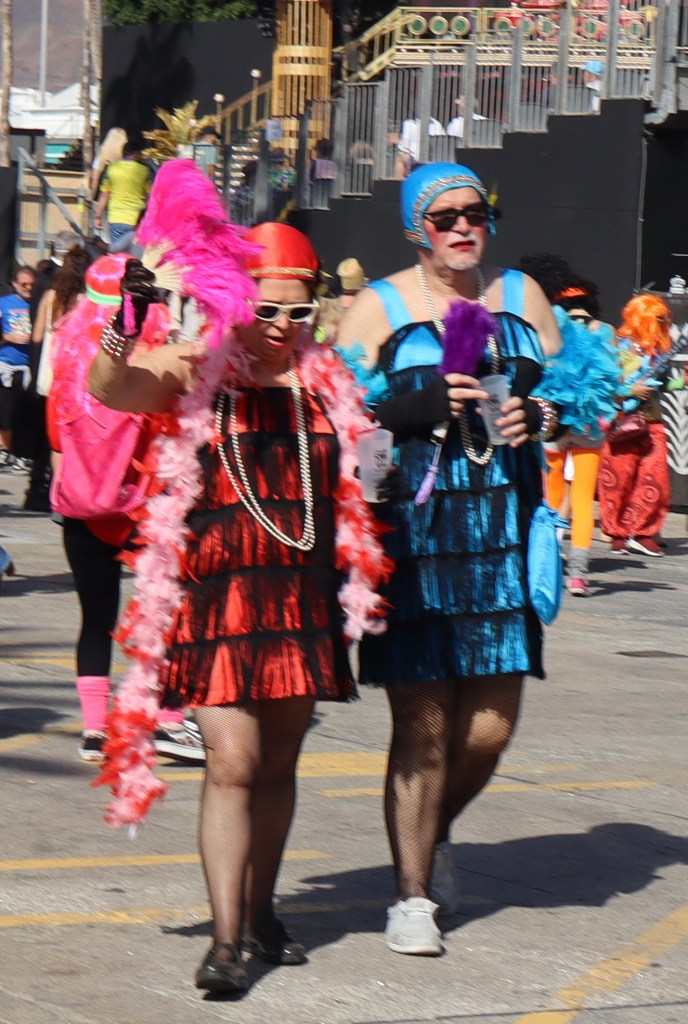
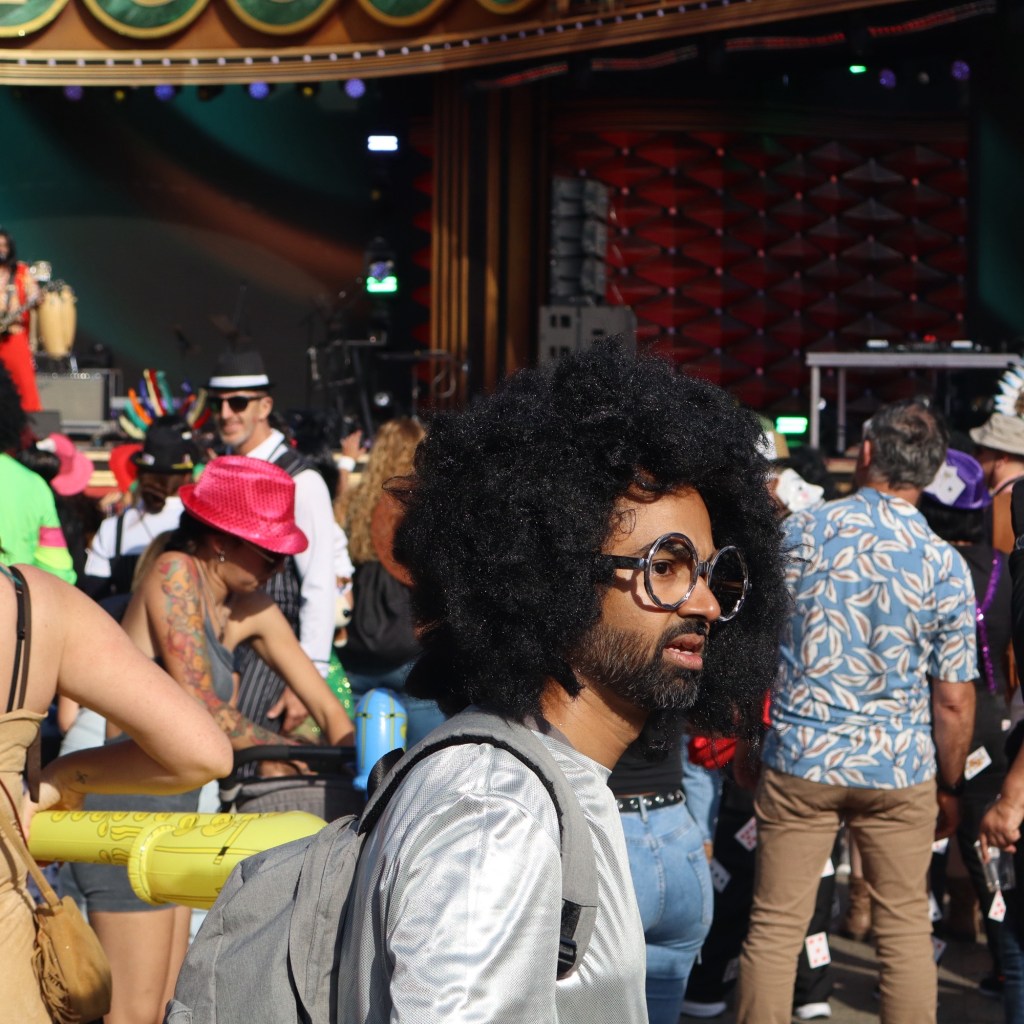
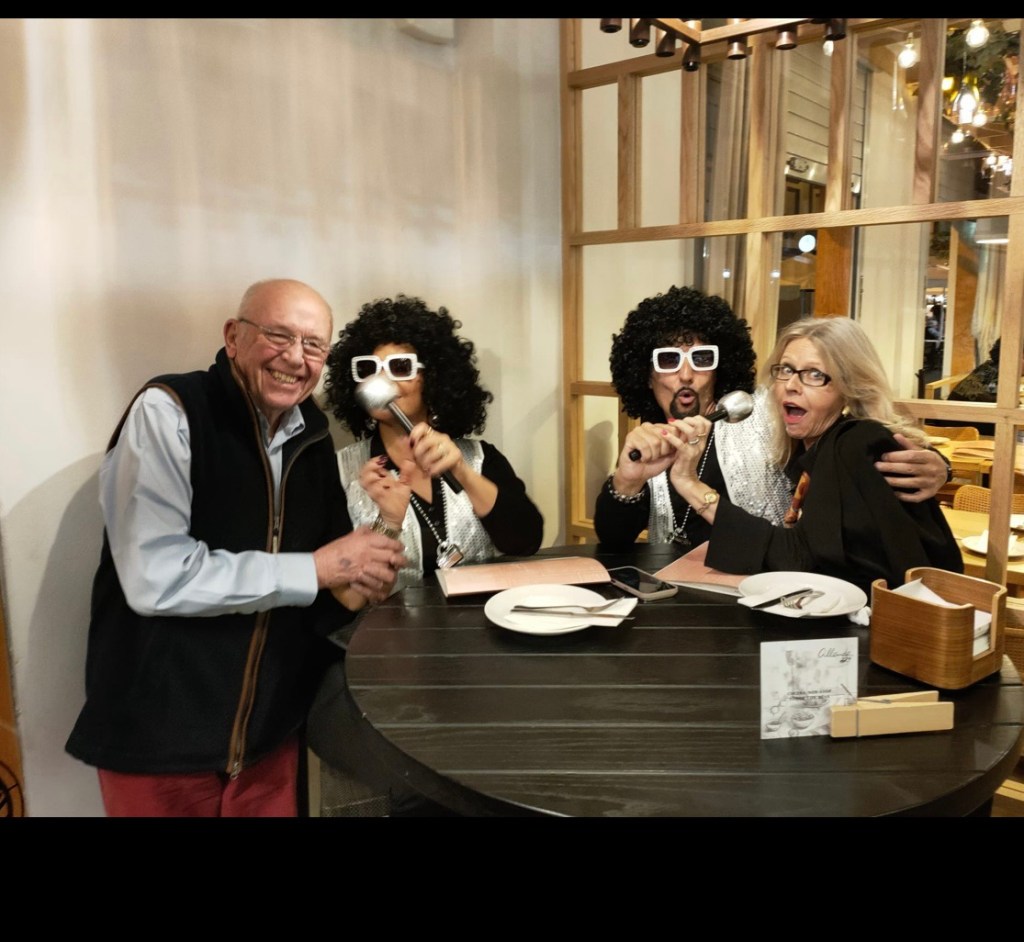
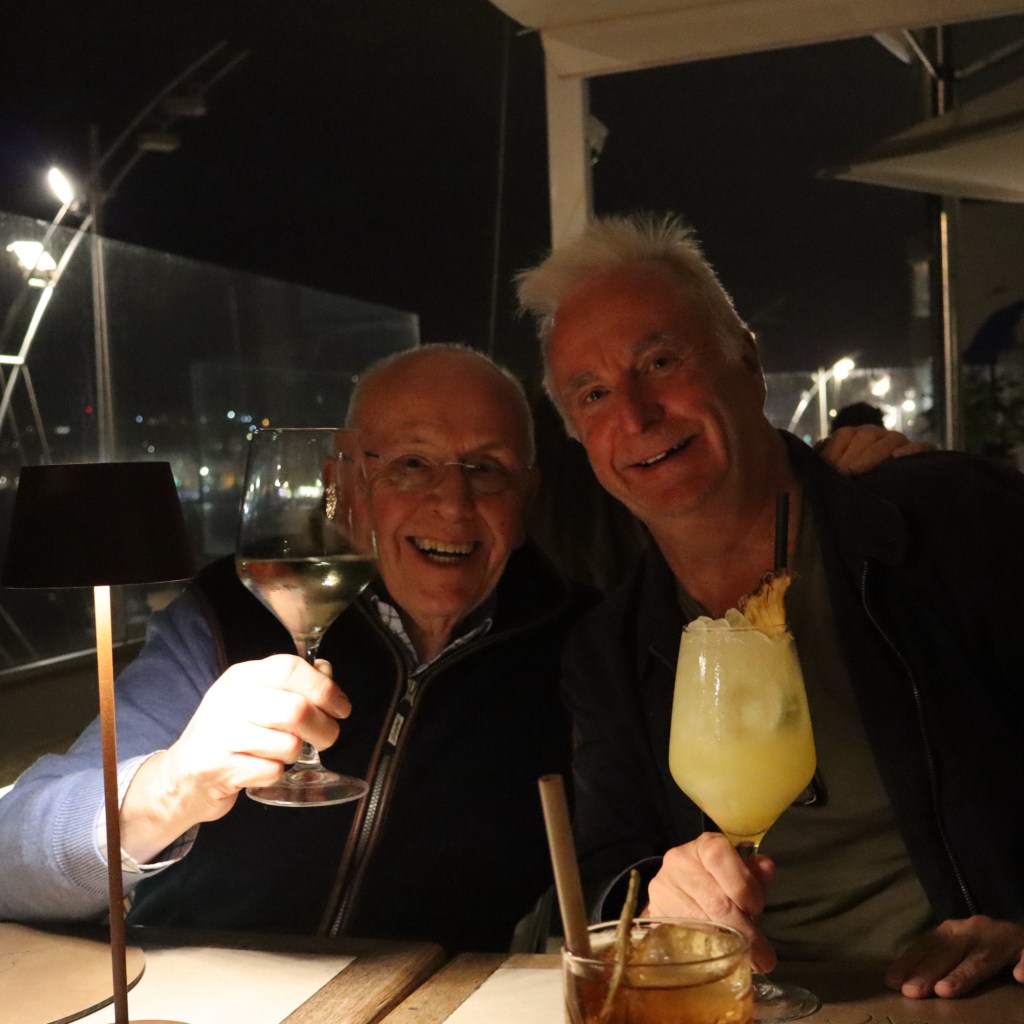
Roger hams it up.

We leave tomorrow, in winds that have blown a heavy cupboard across our terrace overnight and made the sea boil. It feels like a rehearsal for home.

We leave with several unsolved mysteries.
First: The Man With the King of Hearts.

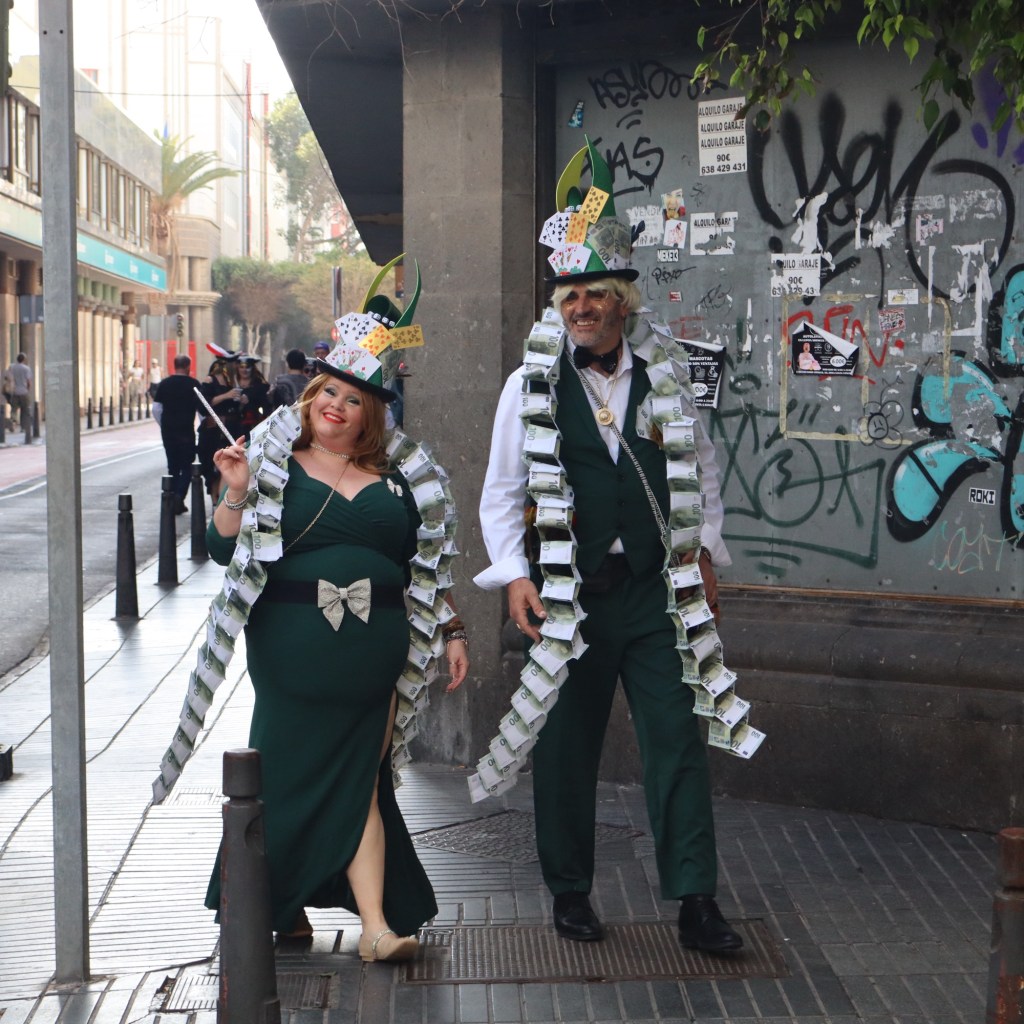
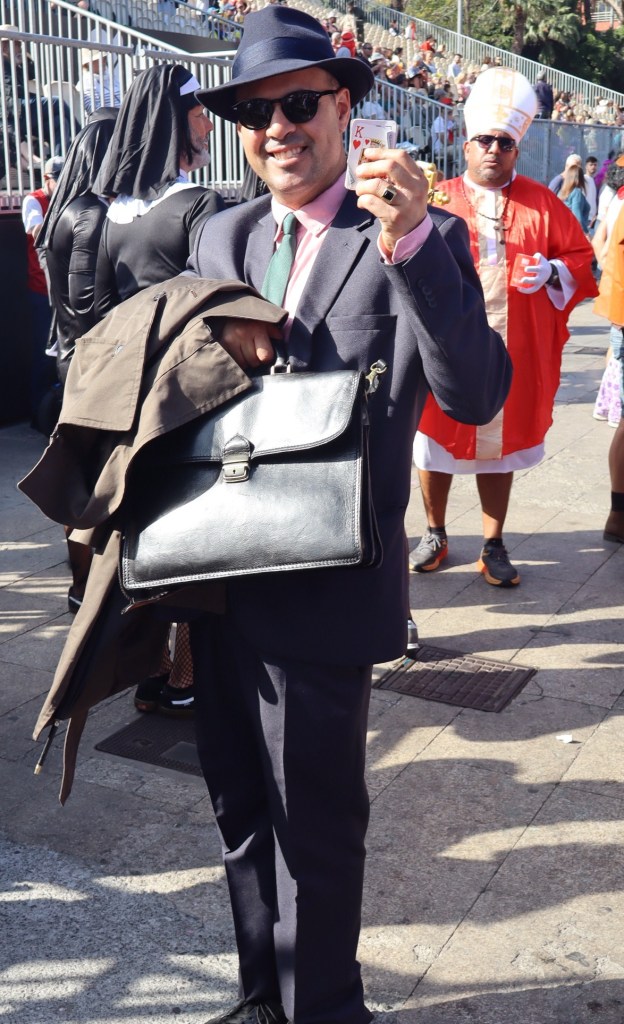
We saw him first at the dog show. Immaculate raincoat, proper suit, brimmed hat, briefcase balanced on his knees. He wasn’t busking. He wasn’t selling anything. He just sat in the stalls, in the burning sun, staring ahead.

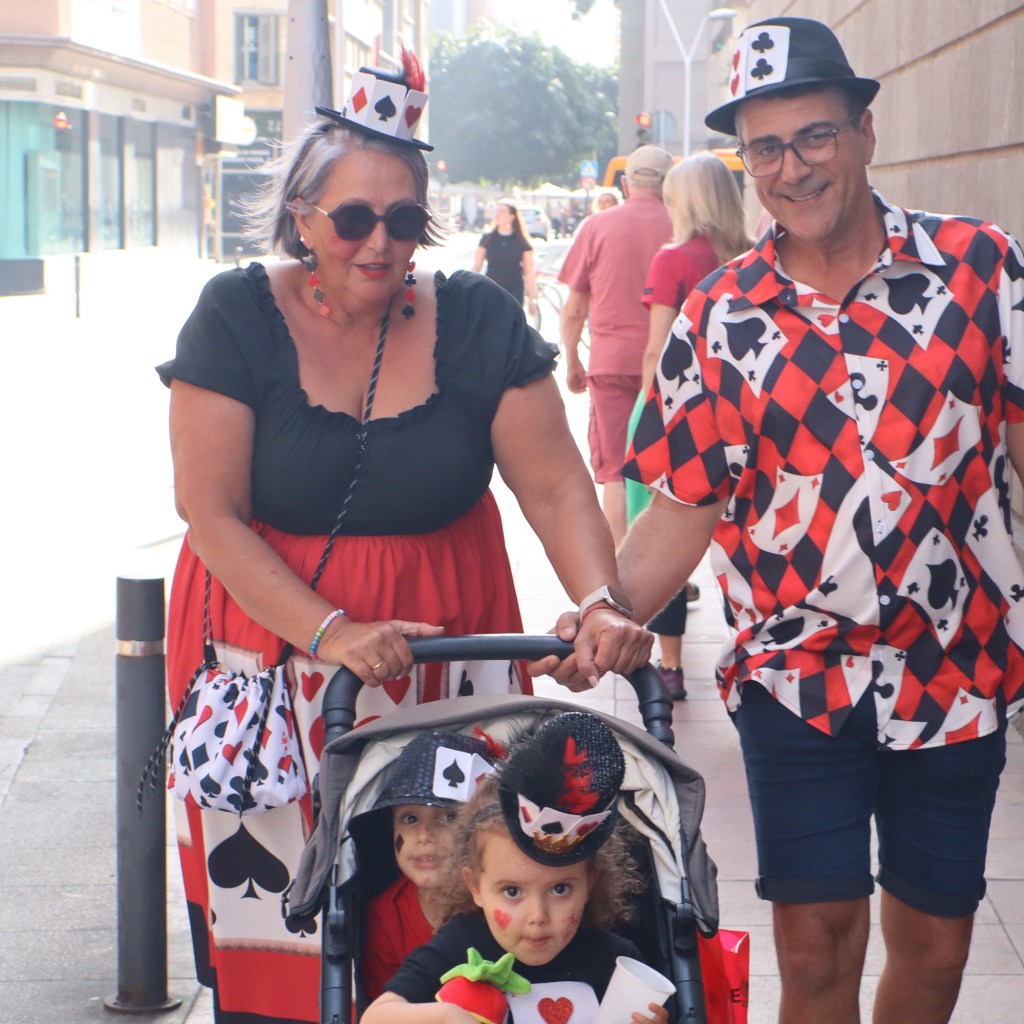
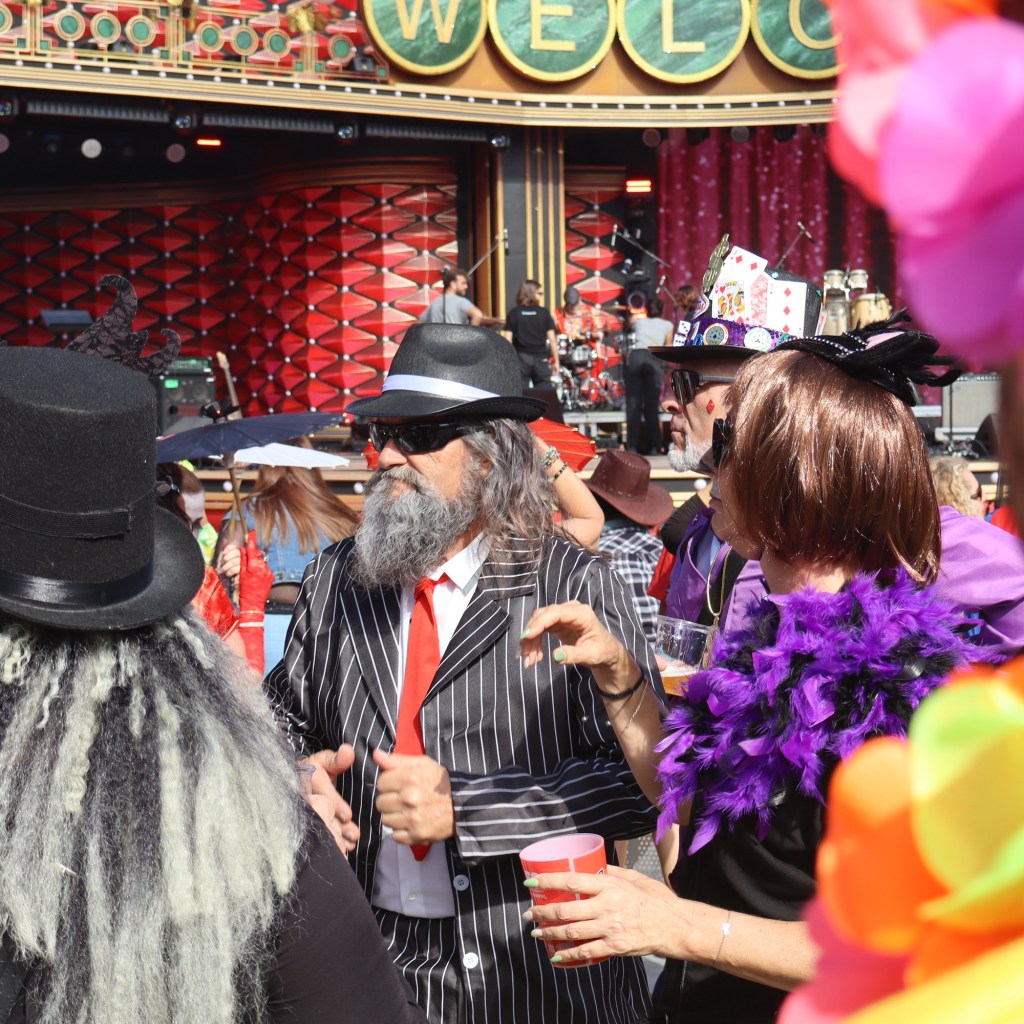
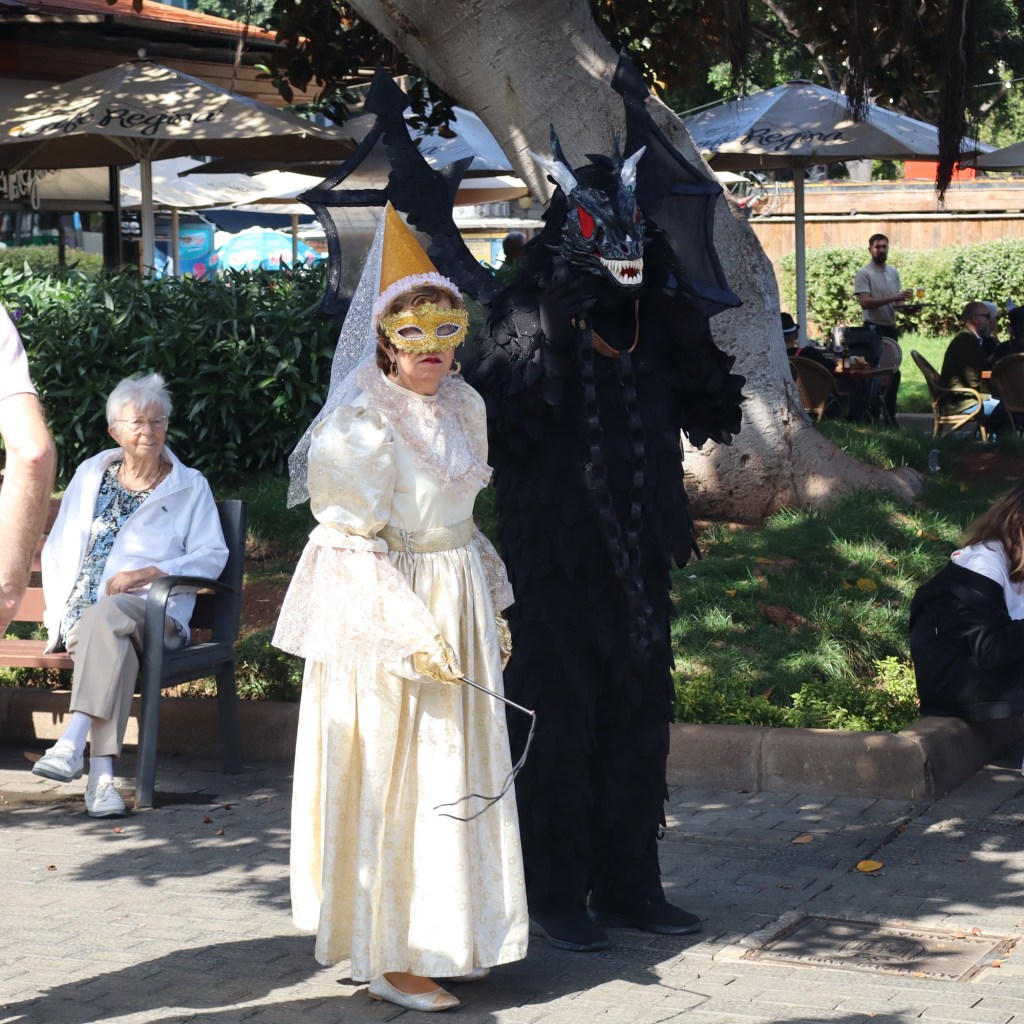
   Then another, dressed exactly the same, in our local Spar. And then again, a different man, same outfit, at a show, where I managed to get a photograph. He showed me the king of hearts playing card. They do seem to be quite obsessed with Alice In Wonderland here, lots of people dressed as playing cards, Alice, the white rabbit, teapots. I wondered whether there was a password I was supposed to know. Something I could say that would trigger him to open his bag and shower me with euros. But no. We have no idea what this is about. 

The Drag Queen Gala.

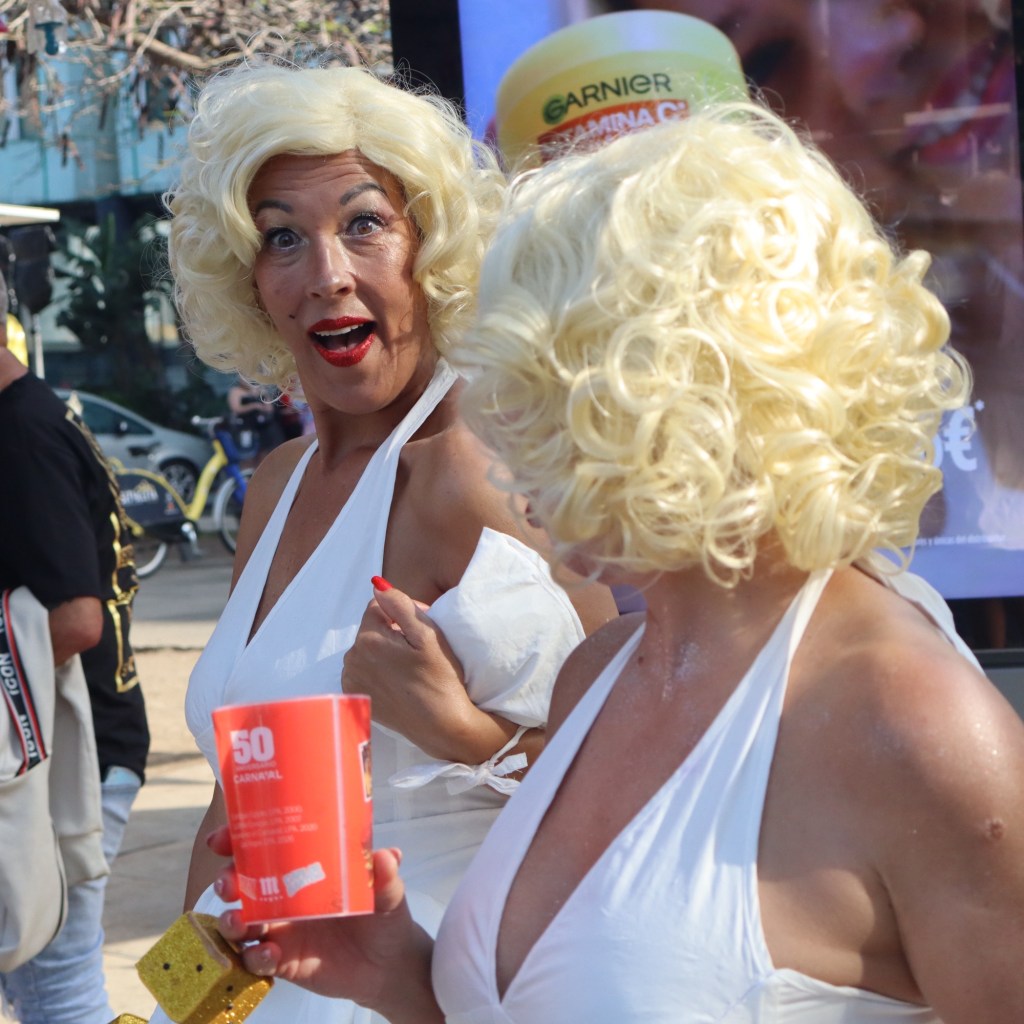
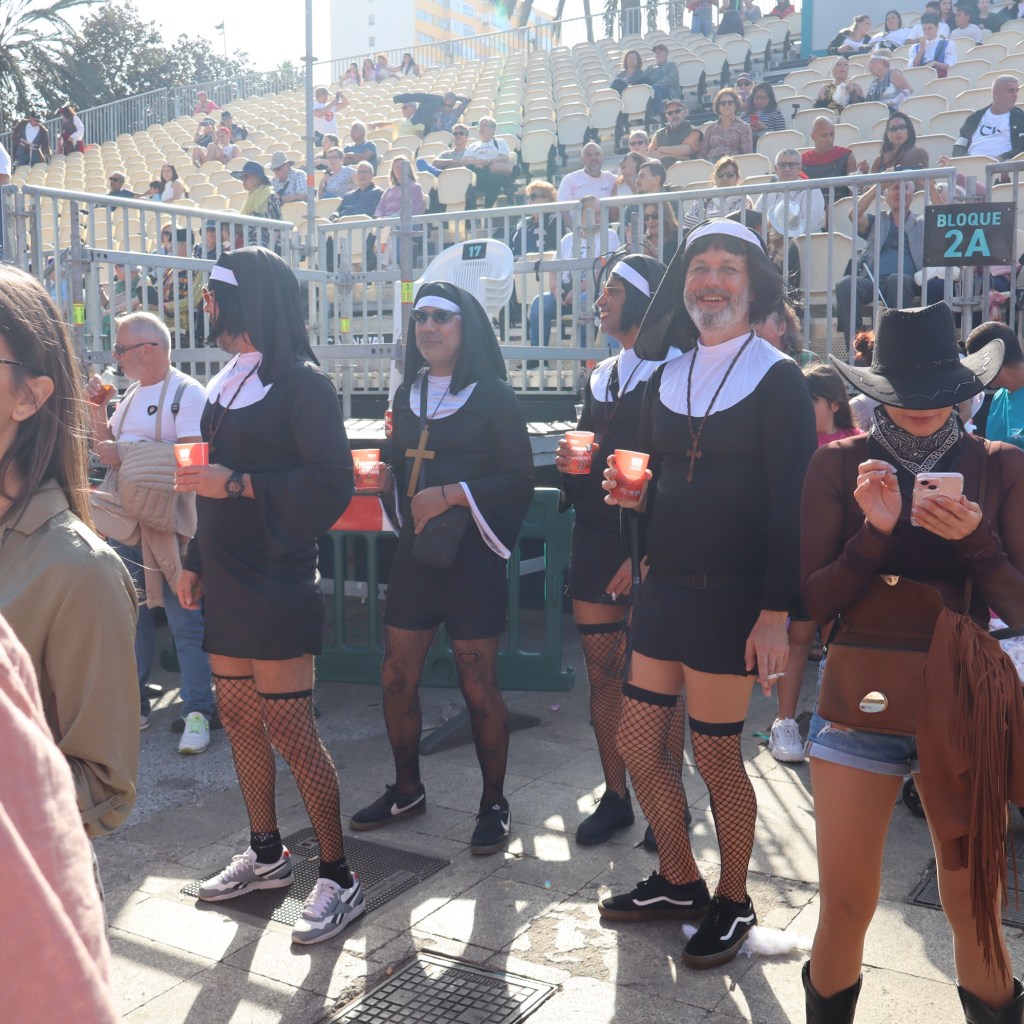
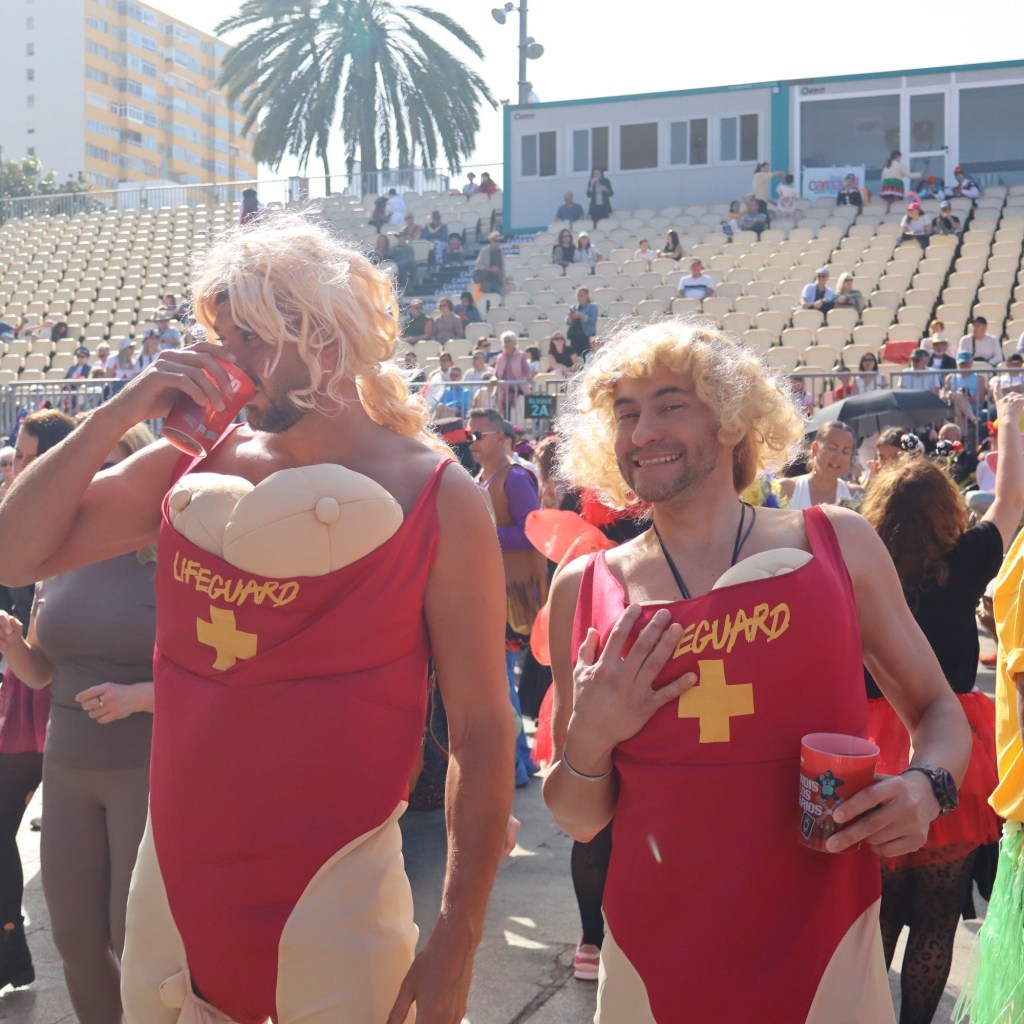
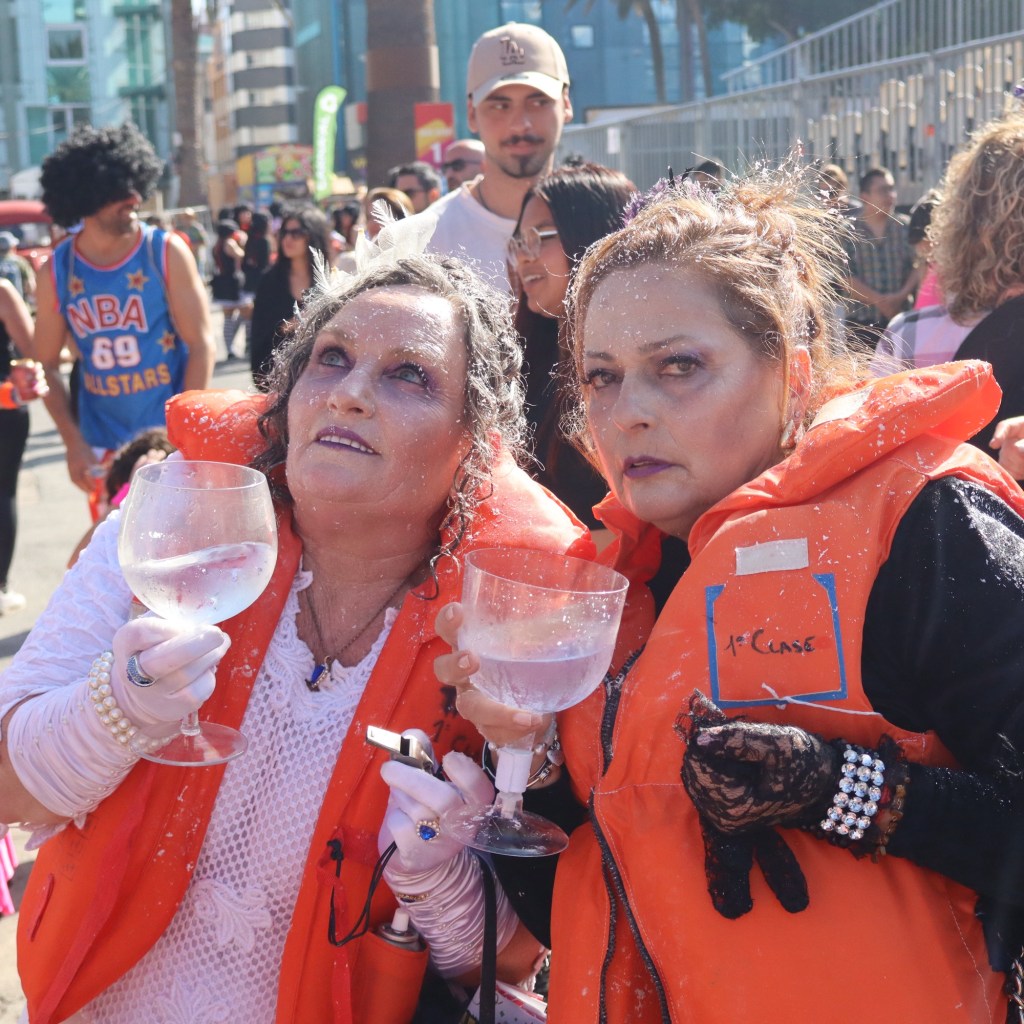
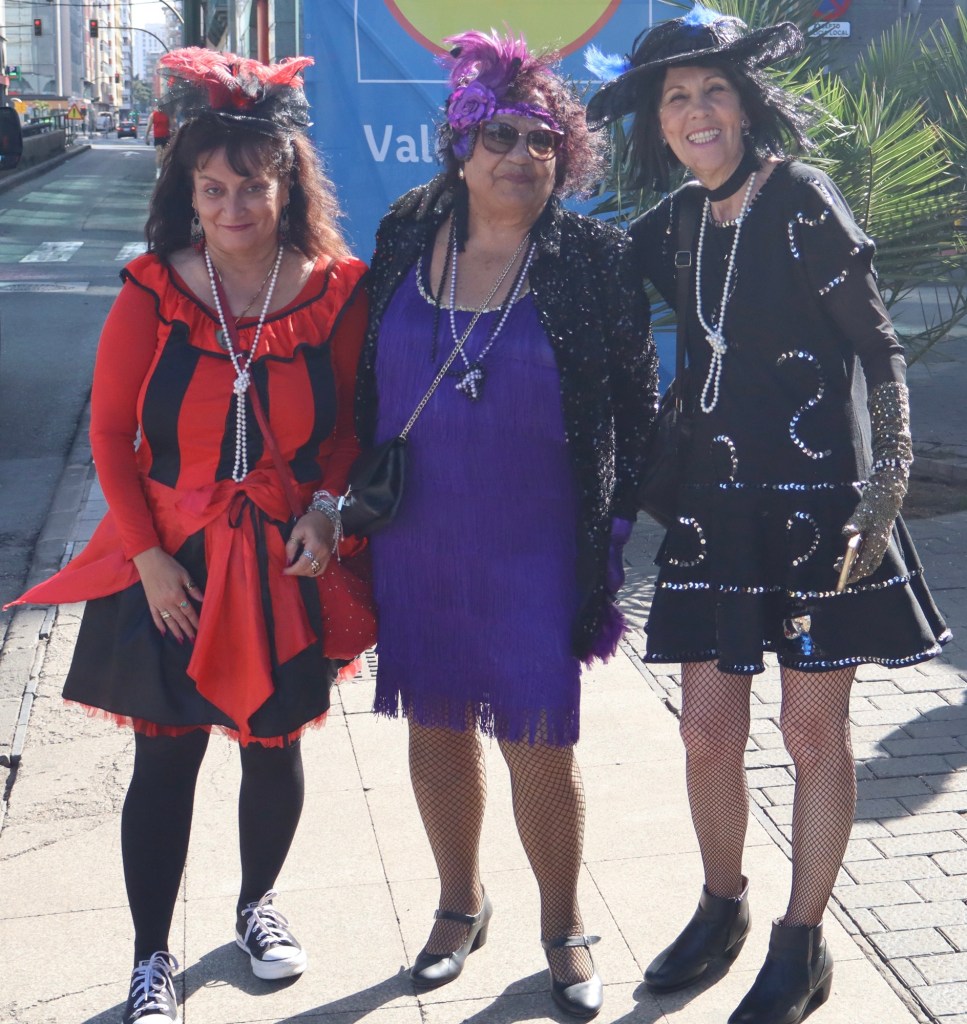
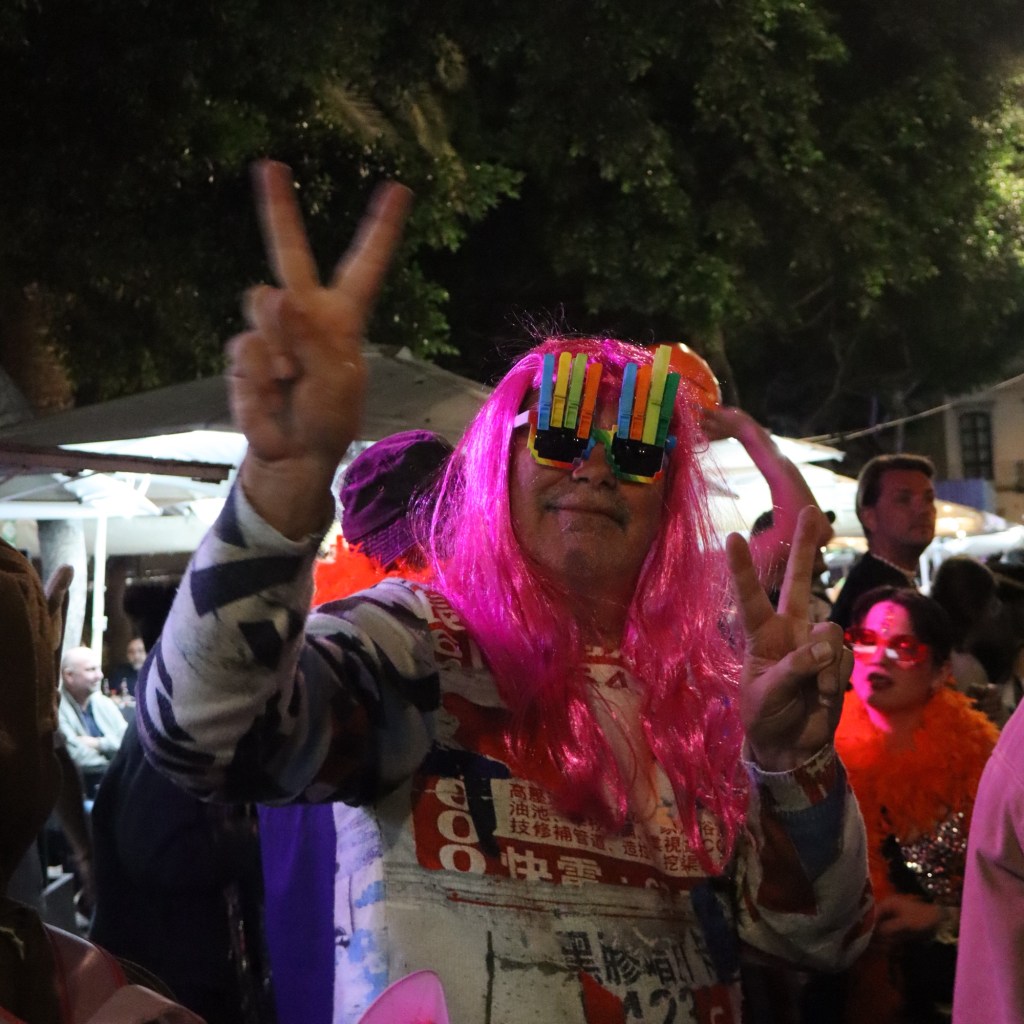
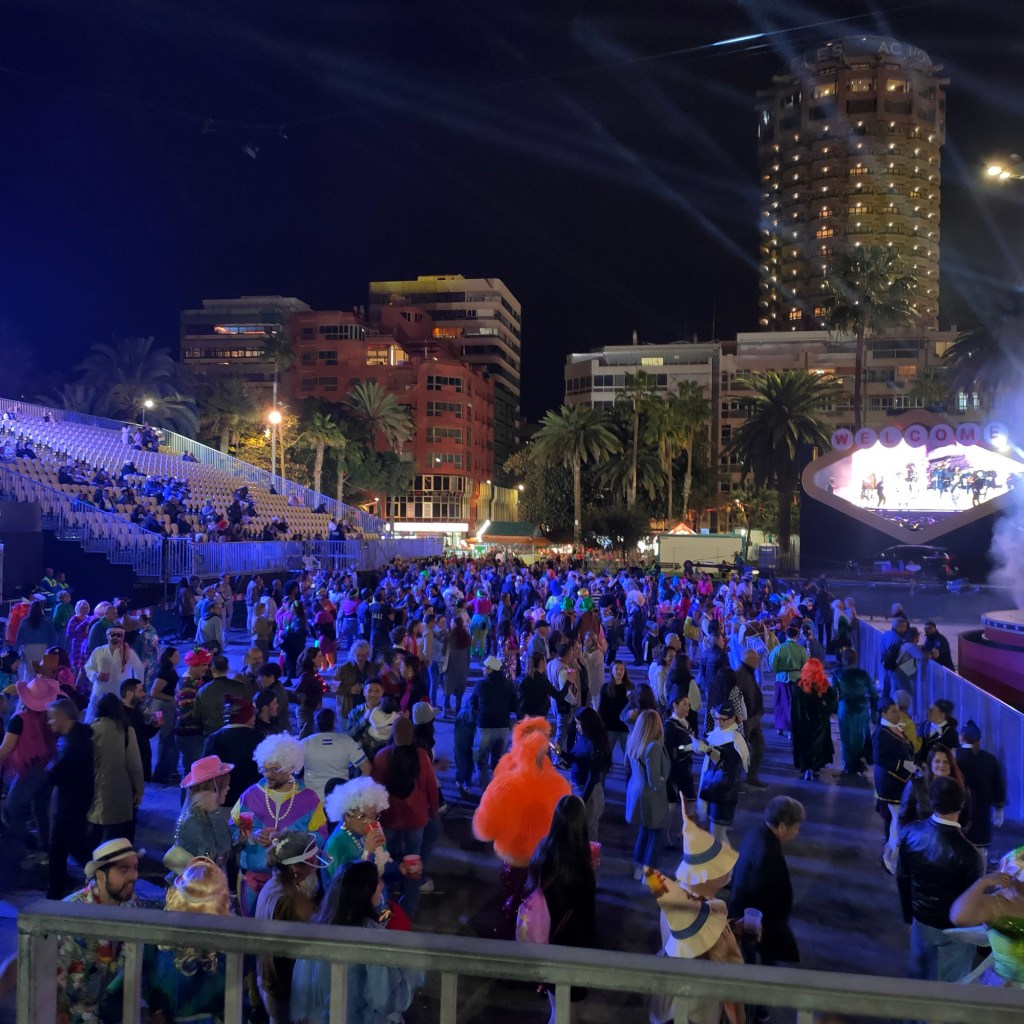
    The drag-queen competition sells out in minutes every January. We assumed the streets would be heaving with drag queens, teetering past in lashes and sequins. There are families in matching themes, whole clans dressed as pirates, astronauts, flamingos. Grandparents in wigs. Toddlers in capes. Chickens, cowboys, wolves. But no drag queens. As Angie and I strain to catch site of the show through a wire fence while perching on the bins, we can start to see why. These are not the cleverly made-up tongue-in-cheek performers I am used to watching on tv at home. 

   They are other-wordly, intergalactic, aliens. 

     In Roger’s classic words:

“In my day it was different. You knew where you were with Danny La Rue.”
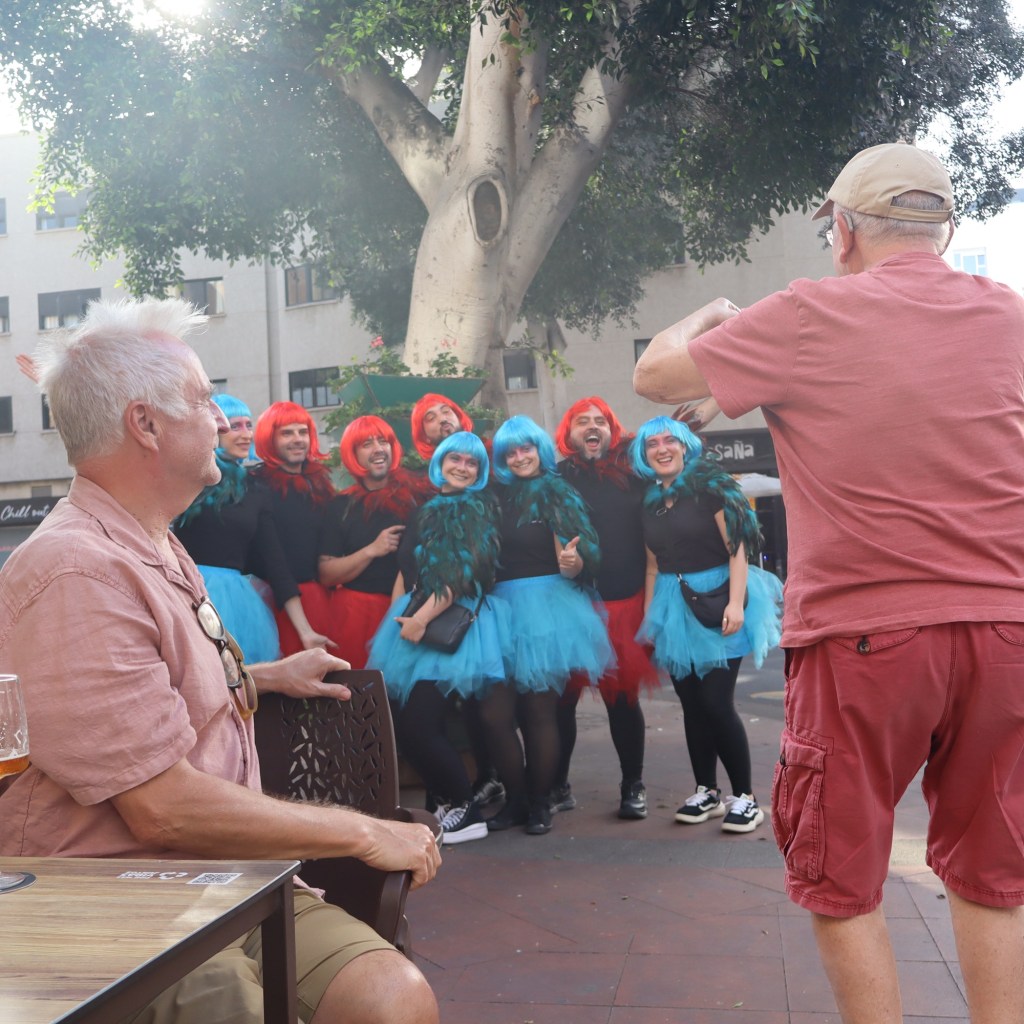
But here you often don’t know where you are — and that seems to be the point.

The toilet brushes arrive.

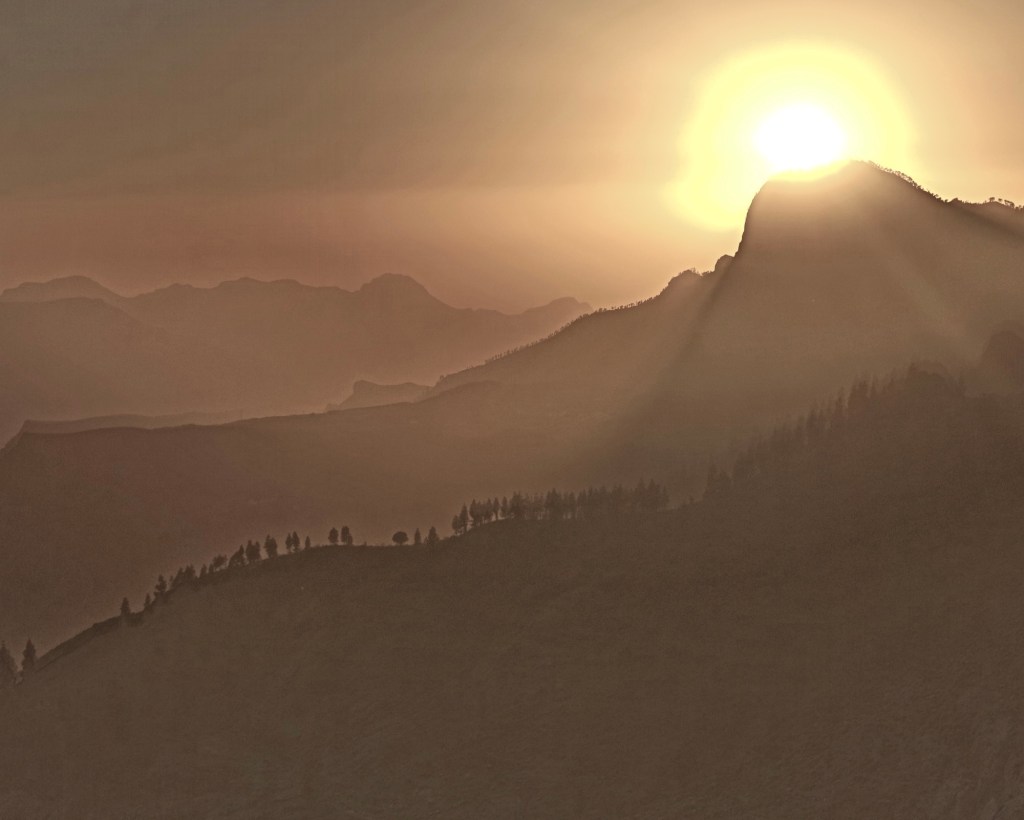
Into the mountains.

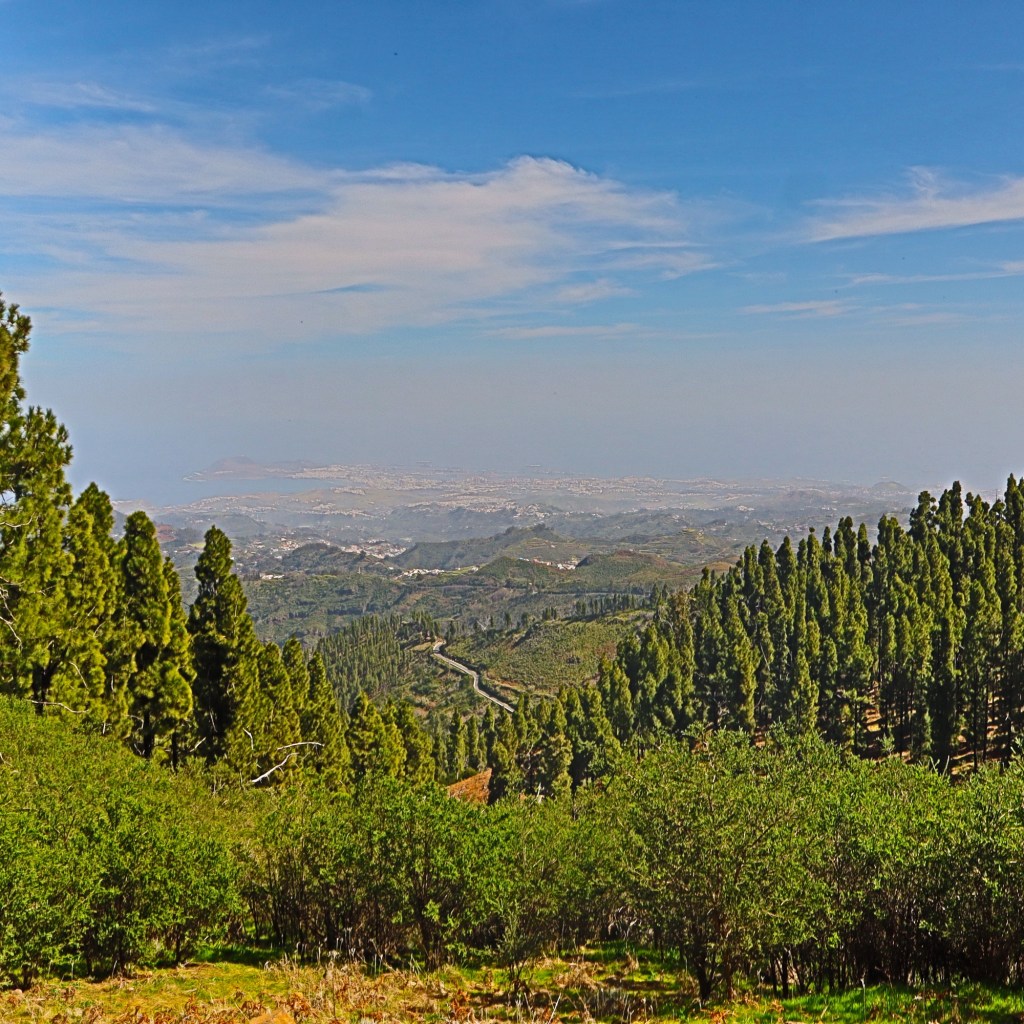
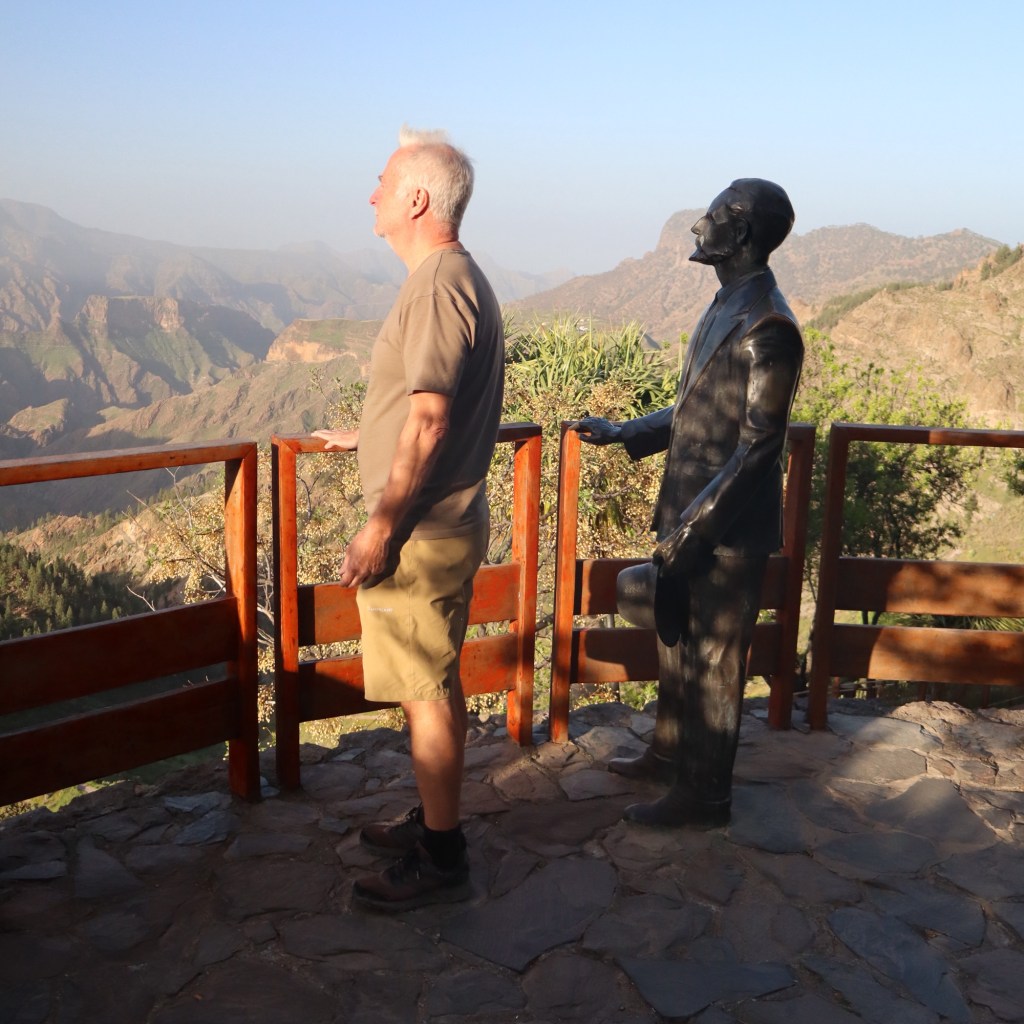
On our way from Tejeda to Artenara.

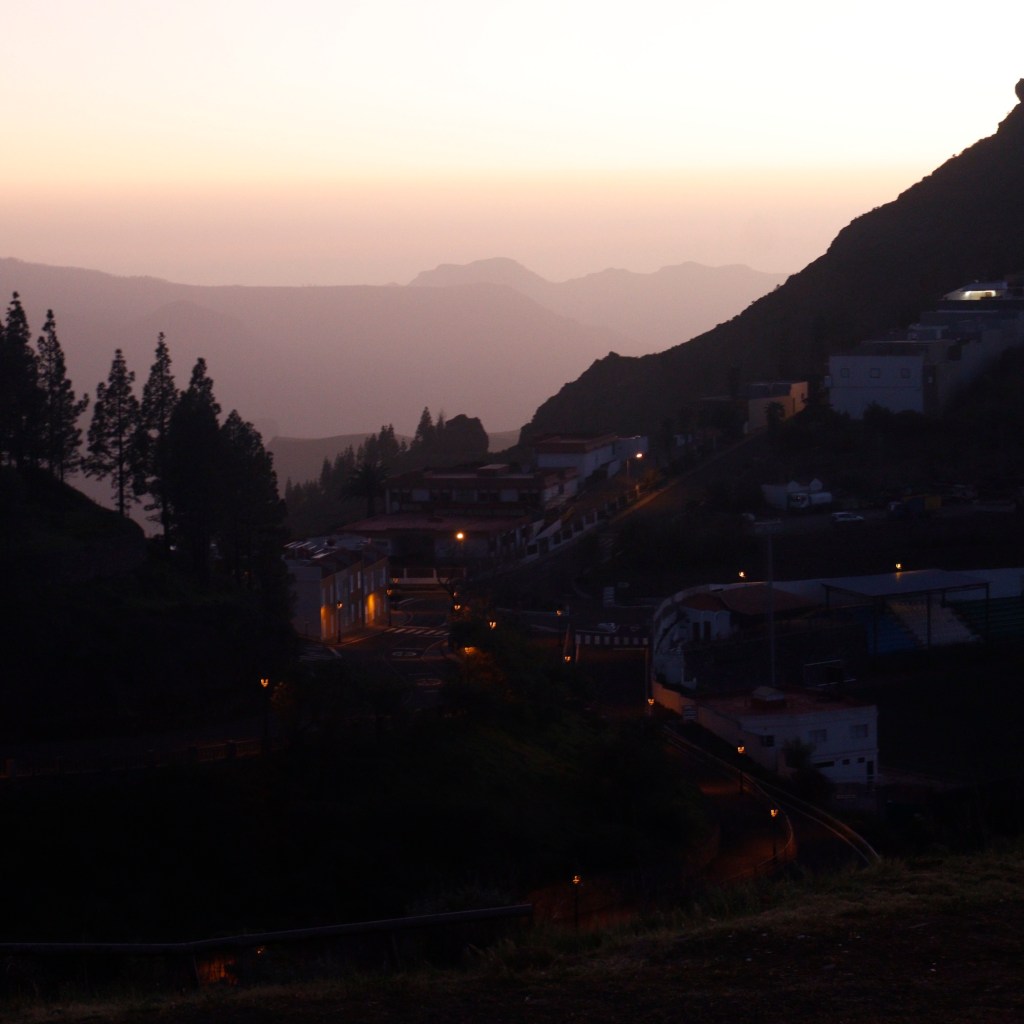
We had booked a night in Artenara, the highest village in GC at 1270 metres. We walked up from Tejeda, my poorly gripping Skechers making the trip feel unnecessarily hazardous. On the way we ate a huge baccadillo we’d bought at the bus station, and then discovered that everything and everywhere in Artenara shuts at 4.30pm. So we ate a plate piled with pork and chips to stave off later starvation. 

The village is spotless. A three-man team carefully watering a handful of municipal plants. A brand-new playground, but not a child in sight. I assumed the reason we’d struggled to find a hotel room had been everywhere was full, but in fact most tourists return to Las Palmas on the 6 o’clock bus. I’m glad we stayed, as the night sky was phenomenal. 

But the mystery remains – where is everyone?
Perhaps that’s the thread running through it all.

Gran Canaria never quite performs on cue. The drag is on stage, the pirates are in the street, the magician shows you one card and no more, the mountain village closes just as you arrive.

And yet everywhere, absolutely everywhere, there is playfulness. Drums thrumming in the distance, families committing wholeheartedly to silliness, fireworks going off in the square at midnight. On a Wednesday. 

We didn’t solve the mysteries.

But we did get the joke.
If an app says a walk is hard, take your crampons.

Silence, then Salsa.

    It is true that the alltrails app did call this walk “Hard”. It is also true that I didn’t tell Clive this. Apparently the next stage after Hard is Strenuous. Given that the Barranco de Azuaje ravine walk near Firgas involved descending into a ravine, scrambling through narrow rock faces, abseiling down and up cliffs, and wobbling across rivers, in retrospect this makes sense. I just thought it looked really pretty. And Clive can read.

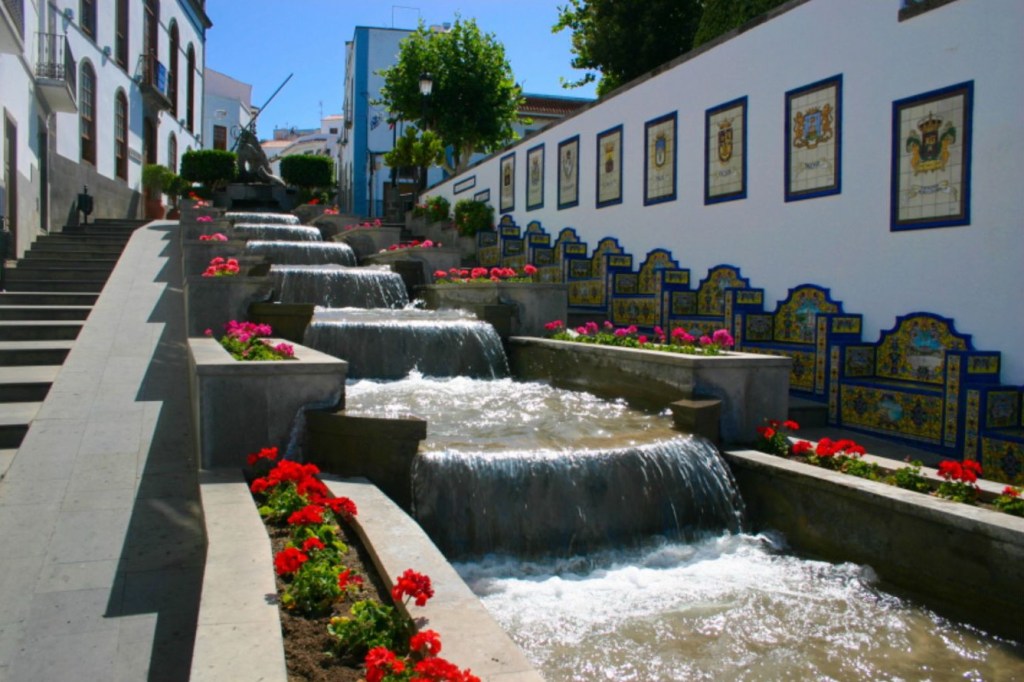
We took off into the hills above Las Palmas on a 2 euro bus to Firgas, a pretty little village in the hills. We had a litre of water with us, bought from the local shop as an afterthought. We were, in every respect, a mountain rescue team’s favourite category, “unprepared in every conceivable way”. Even down to my white Skechers which had very little grip, except around my broken toe. 

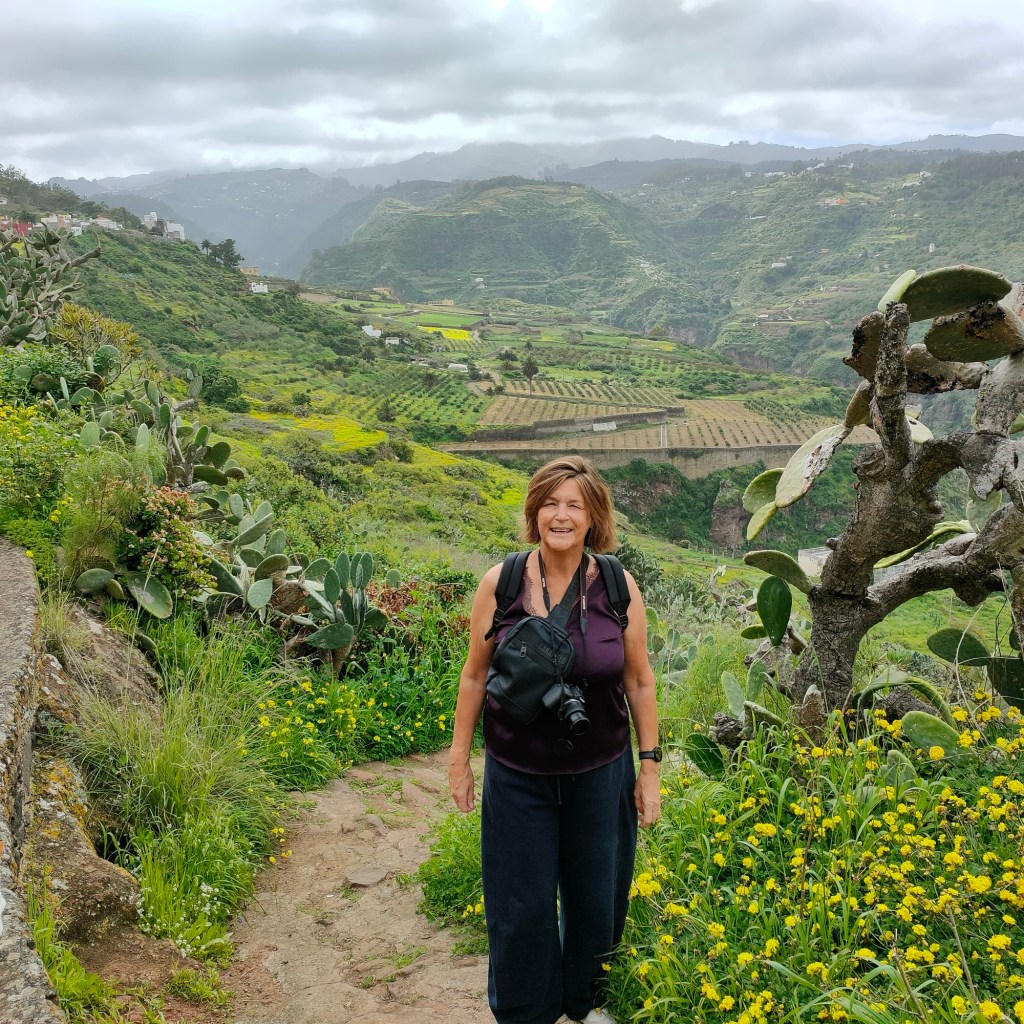
Bucolic.

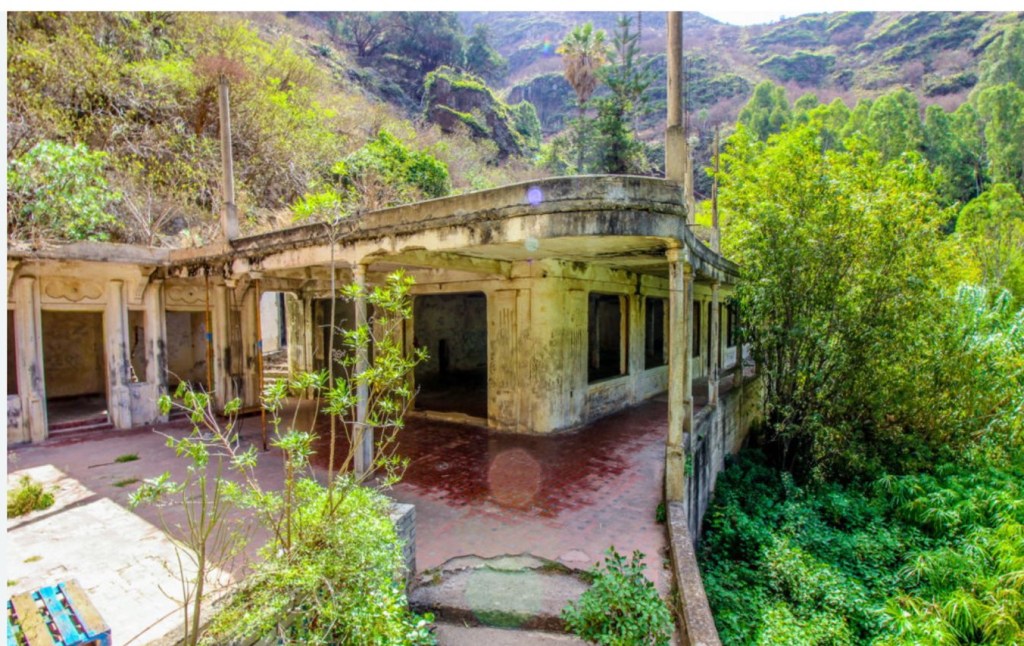
   First impressions here were silence. Resounding, all-encompassing quiet. We wound our way down, down, down, into a valley that grew darker as we descended, and louder as the sound of a river became clearer. Past a creepy derelict hotel, once a posh spa, then along the ravine bed.

Creepy old Spa from the 19th Century.

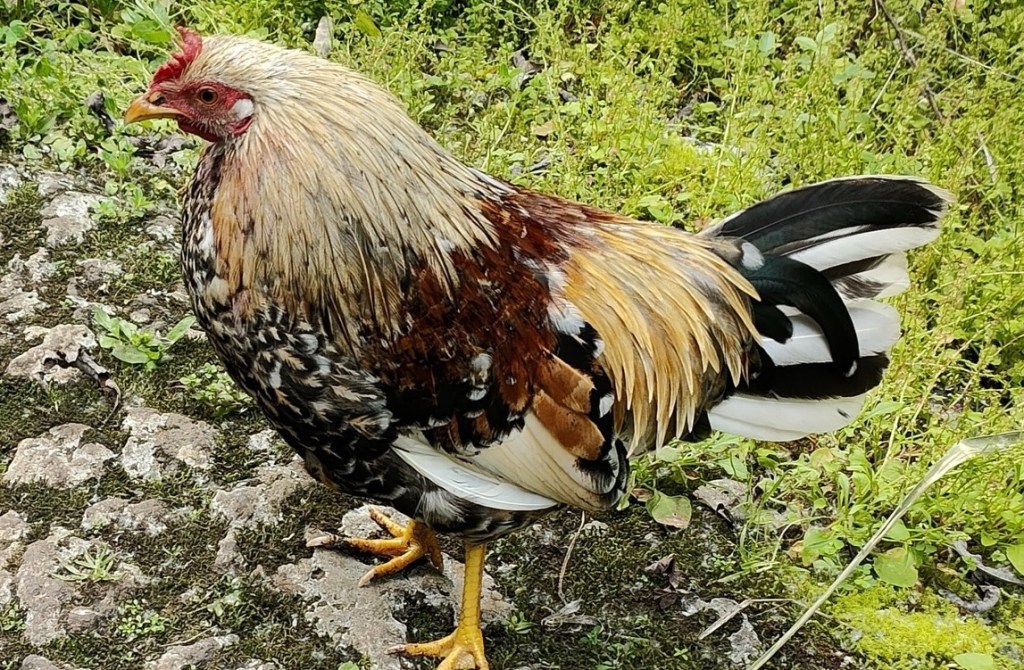
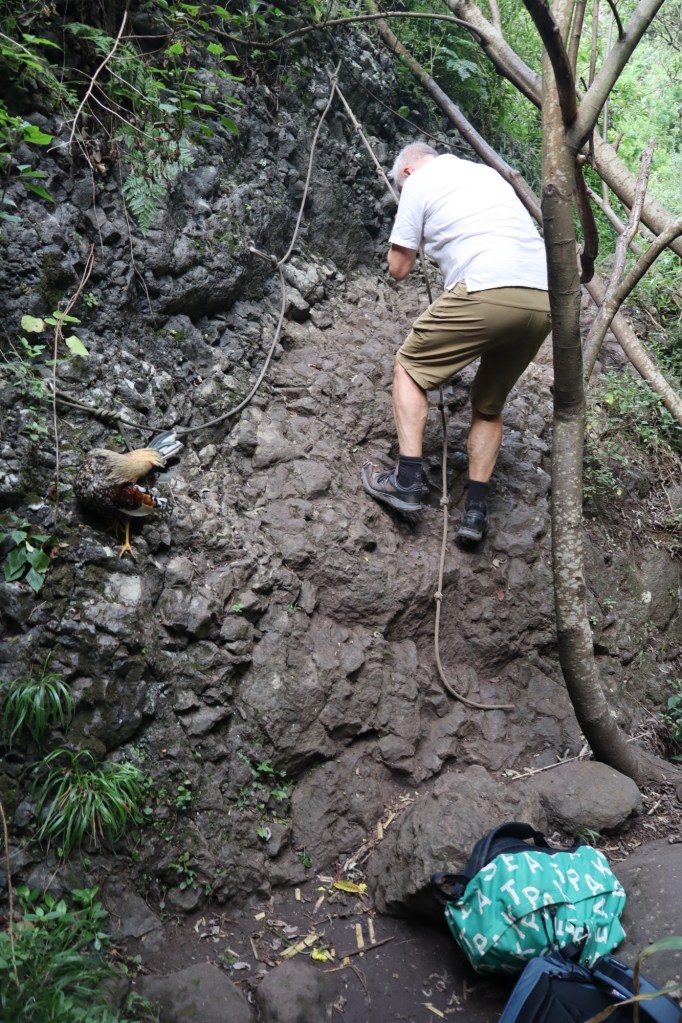
The alltrails blurb mentioned that the ravine had a jungly vibe, which is true, but with chickens. I have no doubt they had escaped from somewhere higher up and their owners couldn’t be arsed to retrieve them down here. Or maybe they were on an adventure, like us. 

Chicken on a day trip.

  Because we were too mean to pay for the Alltrailsapp, we didn’t have much to go by in terms of navigation. The walk summary had warned that there weren’t any signs and that it could get slippery, muddy, and rather perilous. In classic “middle-aged couple blithely entering a potentially dangerous situation while mainly thinking about the best place to eat their sandwiches” fashion,  we ambled along until ambling became crouching, crouching became crawling, crawling became climbing, the white shoes became black and filled with sludge, and we began to feel the faintest twinge of alarm that we might be lost. 


Safety briefing delivered by hen.

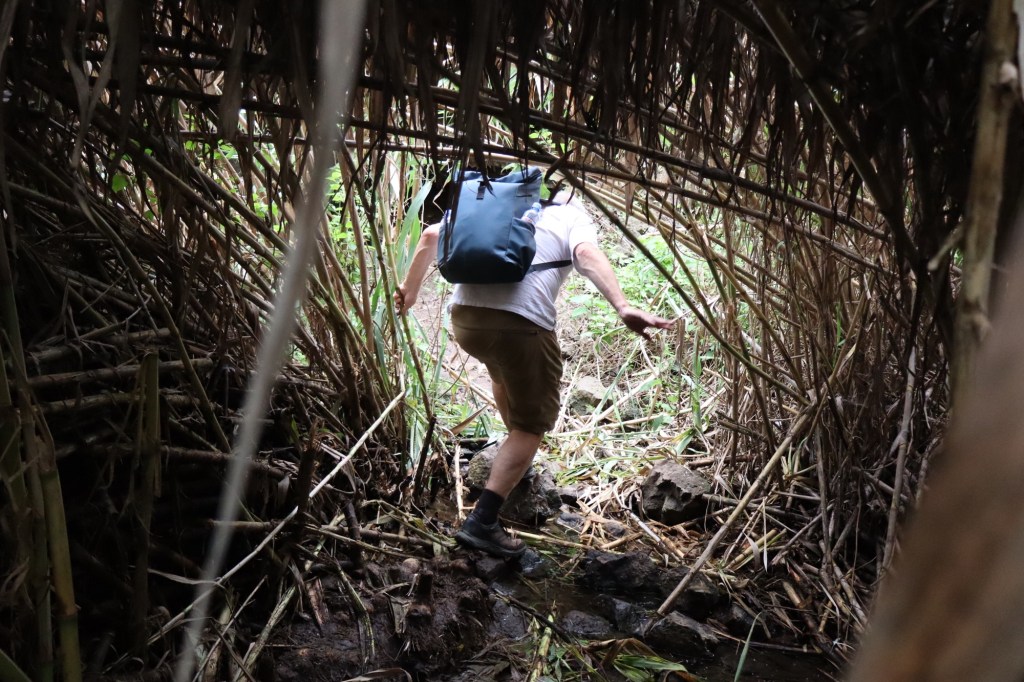
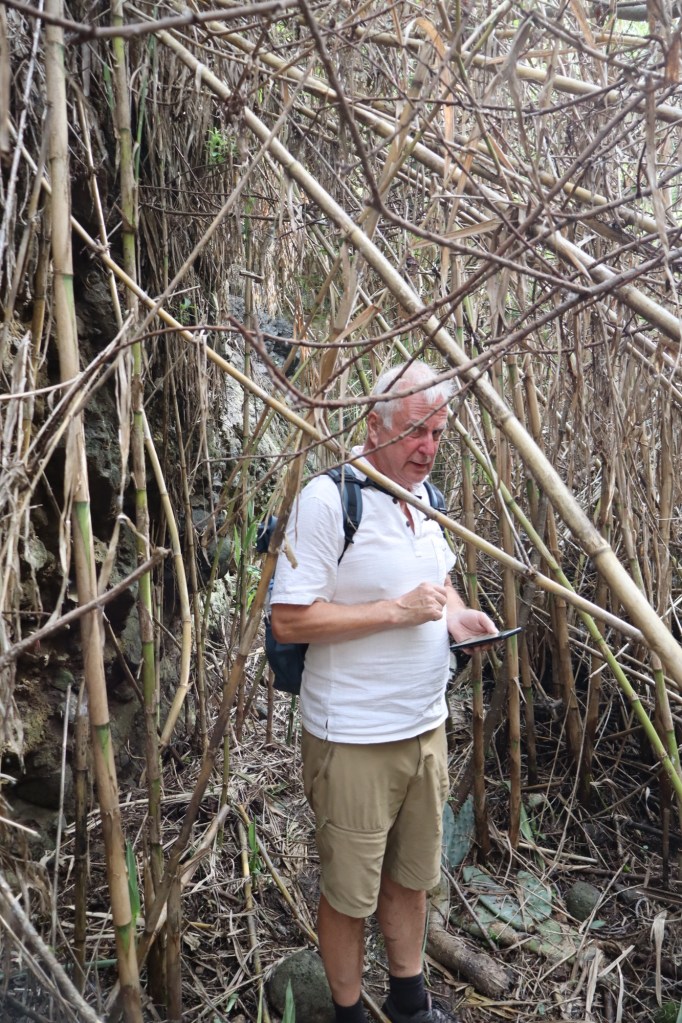
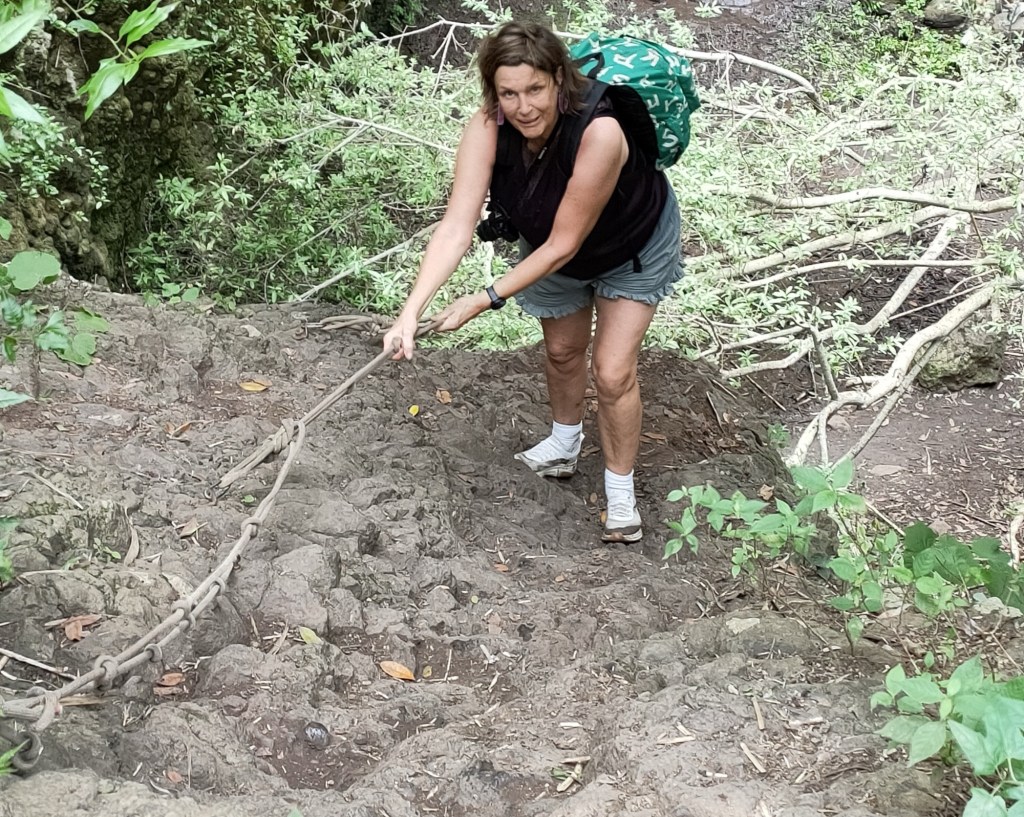
We had both read the book called ‘Why People Die On Walks” and it is almost always because they won’t turn around and go back the way they came. Having abseiled down a rock, fought our way though a bamboo tunnel and come face to face with a long stretch of water that seemed too deep to paddle through, we realised we were way off the route and needed to go back.

Valliant.

This decision saved our bacon and we eventually found the long, steep clearly marked path out of the ravine.

Never has a lemonade tasted so good. 

 One of the many things I love about Gran Canaria is that you can you be lost in the hills and an hour later be salsa dancing in Santa Catalina Square alongside two men dressed as chickens.

The strangest thing, though, was the woman jauntily boarding the bus in Firgas with her shopping trolley, heading down to Las Palmas for a spot of shopping. At 7pm.

We may have had a few beers…

Learning Spanish, Unlearning English.

A small holiday epiphany.

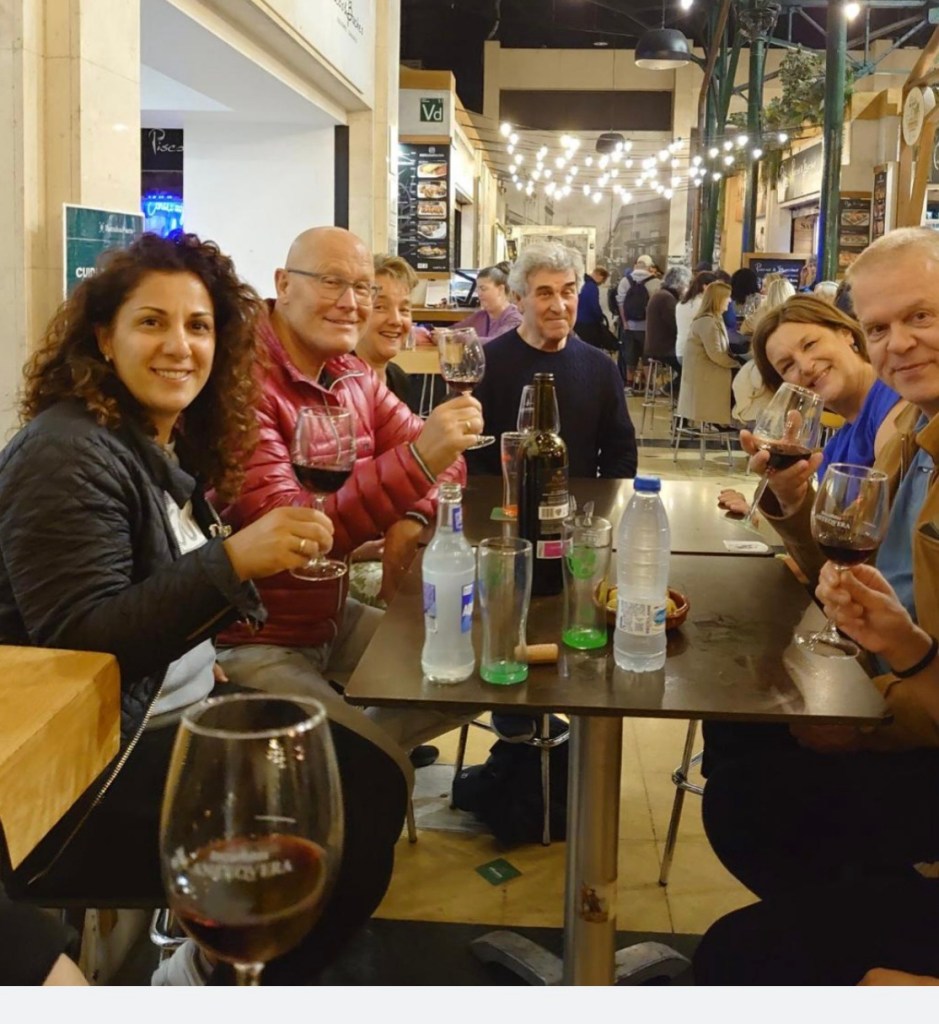
Some of our Spanish school with random friendly strangers we met in the Marcado while drinking and eating tapas.

   These are the stories I will never tell. Like a stand-up comedian destined to stay forever in the wings. Hiding from two German friends to avoid joining them in what seemed to be a fiendishly difficult salsa class in the square. Breaking my toe on the bedpost, and while it was still numb, getting Clive to pull it straight and buddy-strap it, as it stuck out at an alarming angle. Yesterday. On my birthday. Having my legs and bikini line waxed in faulty Spanish. All I’ll say is that Spanish women are a lot less prudish than the average English woman.

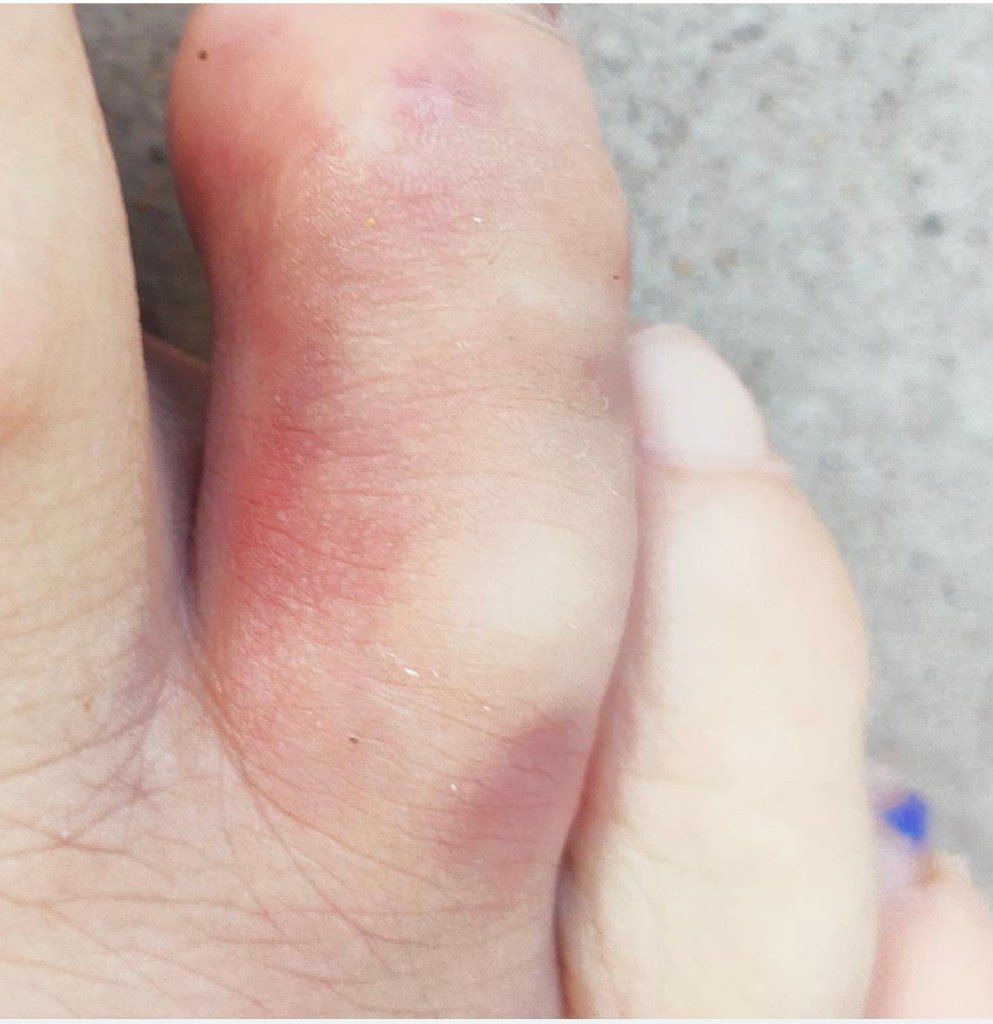
My broken toe. Sorry, I don’t have a lot of photos this week.

This week I’m in a class of twelve, and the vibe is very different to the previous weeks when there were five to eight people in each class. So our teacher never asks me what I did yesterday, although I studiously prepare it each morning, just in case. The adult me knows this is just how it goes. I’m at the back, hidden behind a row of people; I planned to move after the first day but the class is mostly German and when I arrived a little early the next day to execute my plan they were already sitting in the exact same seats they had put their towels on from the day before.

The schoolgirl in me is in a right old strop about being ignored. Or perhaps it’s the middle child. 

“Look at me!”

I’m shouting in my head, while studiously staring at the table trying not to catch the teacher’s eye. Old habits die hard, even when they’re doing the exact opposite of what I long for. 

There’s a bit of relief there too, as no matter how much we plan our responses, we are level B1’s, so our speeches usually cause expressions of puzzlement to appear on everyone’s face except the teacher’s. 

“He’s doing something three times a day, but I don’t know what. Everyone seems very impressed. What could it be?” is an example of my thoughts. 

“He’s sailing with the assistant in the bakery opposite?” No, actually, he’s dancing. But often the conversation moves on and I never find out. I still have no idea what he did three times a day. 

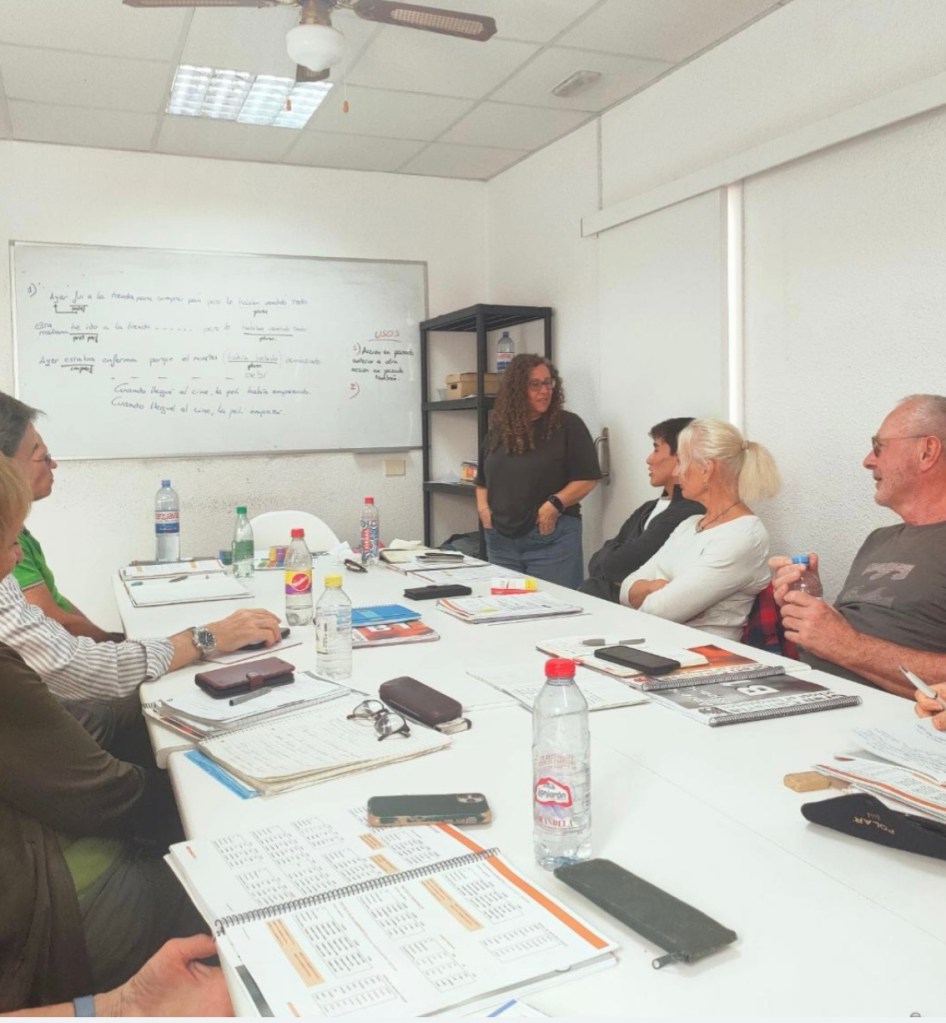
Some of the twelve people in my class this week. Natalia, our teacher, is standing at the front.

 An Italian student who has never done any Spanish before, rattles off paragraphs of speech that the teacher totally understands. She gently corrects about one word in thirty. He works in a hotel in Italy and and is doing the course to get better tips. 

   Italian and Spanish are called Romance languages, and are based on Latin. So he understands about 70% of Spanish already. When I am casting around for a Spanish word, the English ones that work tend to be Latinate or French-derived. For want of another word, these are usually posh words, brought to us by William the Conquerer, originally used mainly by the upper echelons. The Anglo-Saxon words never disappeared, because the majority peasant class carried on using them. The posh words often cluster around law, medicine and government. So in law there are an awful lot of phrases that basically are two words, one based on French, one Anglo-Saxon, meaning the same thing. Law and order, cease and desist, null and void, terms and conditions – everyone needed to know what these meant, not just the poshos.

The Canarian School of Languages.

   In order to level the playing field, when we socialise with people from other countries, we all try and speak in Spanish. Most people from other European countries can speak English, but attempting to speak Spanish for the last four weeks has made me realise how exhausting that must be for them. The only trouble is we are beginners, and so most of the time after a glass of wine or two, we haven’t the faintest idea what they are saying, and vice versa. 

   Tomorrow is my last day at school. I must say I’m glad. I now have a rickety scaffolding of tenses and vocabulary that I need to start using. If I learn much more, like Homer in The Simpsons, it’ll push the old stuff out of my brain. 

We now have three weeks to properly explore the island, host friends, and have a go at practising what we’ve learned. 

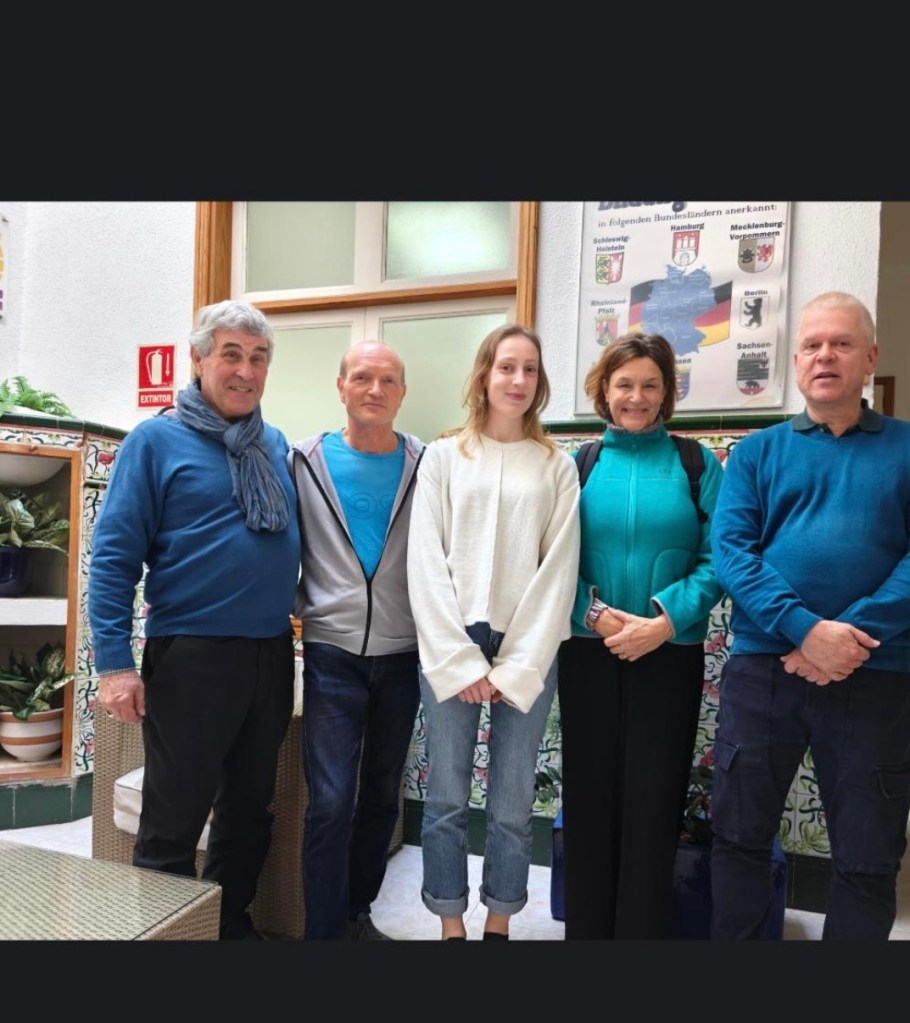
Probably my favourite class, the second week, on left Trevor, an amazing Welsh linguist/author, my mate Norb, who hypnotises people presurgery so that they heal fast and don’t bleed, Michelle, a sweet and very young German person, me, and Uwe, a German journalist.