HARNAS WILDLIFE CENTRE

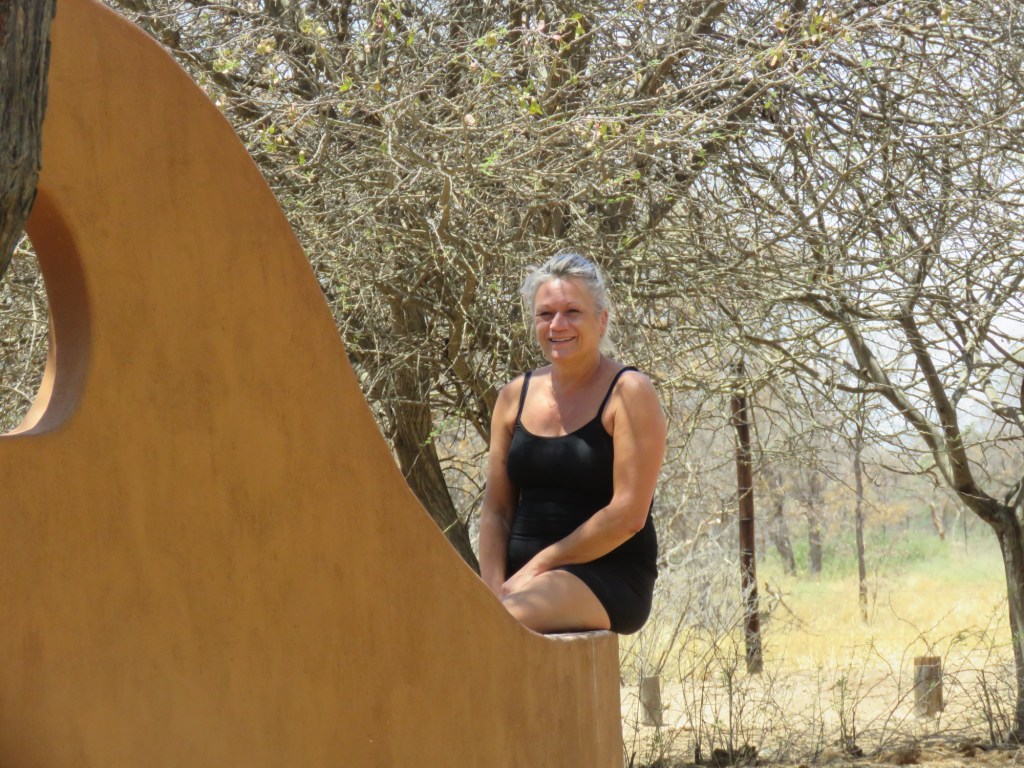
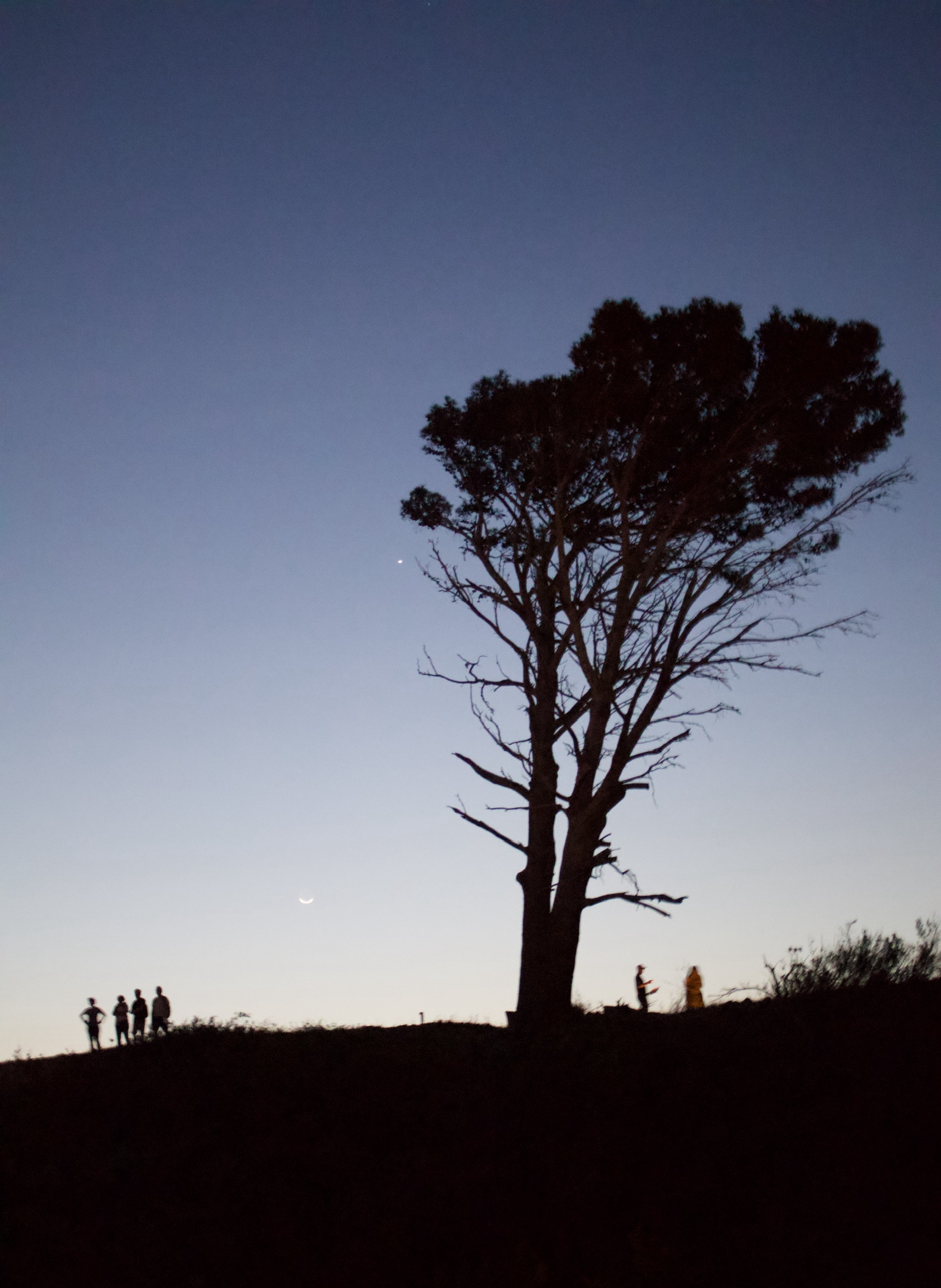
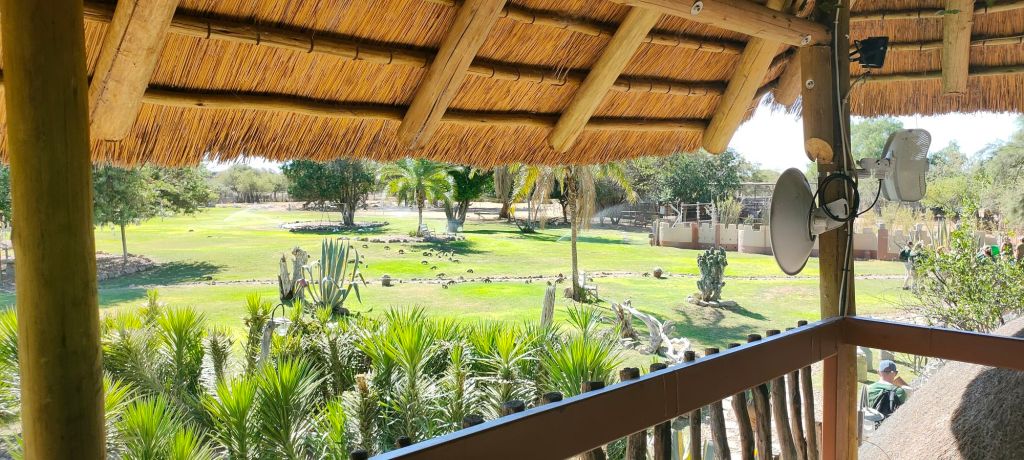
Looking out at Harnas from the morning briefing area.

Two baby crocs have done a runner from their enclosure and an escapee baboon is lurking on the roof at breakfast eyeing up the croissants. No-one seems especially worried about the crocs but a man with a slingshot turns up 10 seconds behind the baboon. The newbies except us are excited to see the baboon; the old timers, mostly Germans, are terrified.

“They are NOT friendly” Nicole shouts “they are HORRIBLE”.

A quite menacing looking morning visitor.

Harnas History

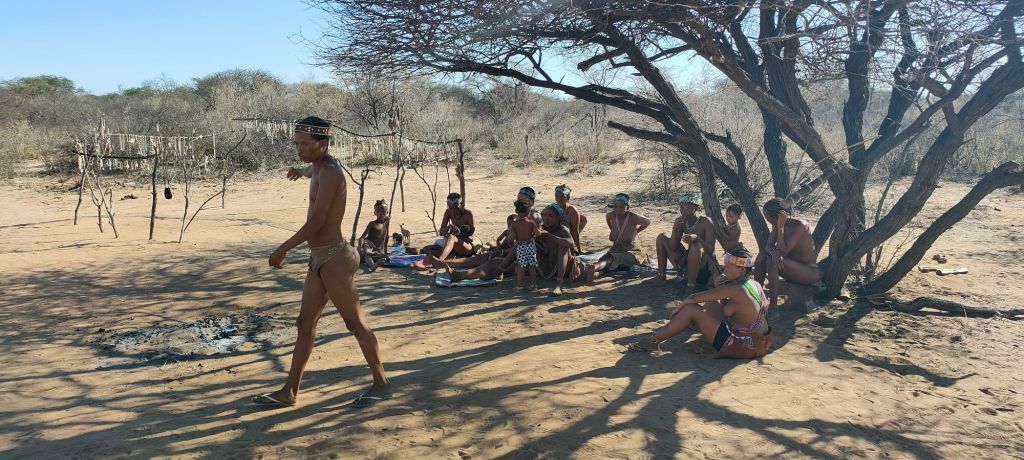
Harnas wildlife Foundation started with an abused vervet monkey rescued by the Van Der Merge family 46 years ago. Over the years it has expanded to play a major role in conservation. A large focus of the work achieved at Harnas is preserving the San culture, one of the most ancient in the world.
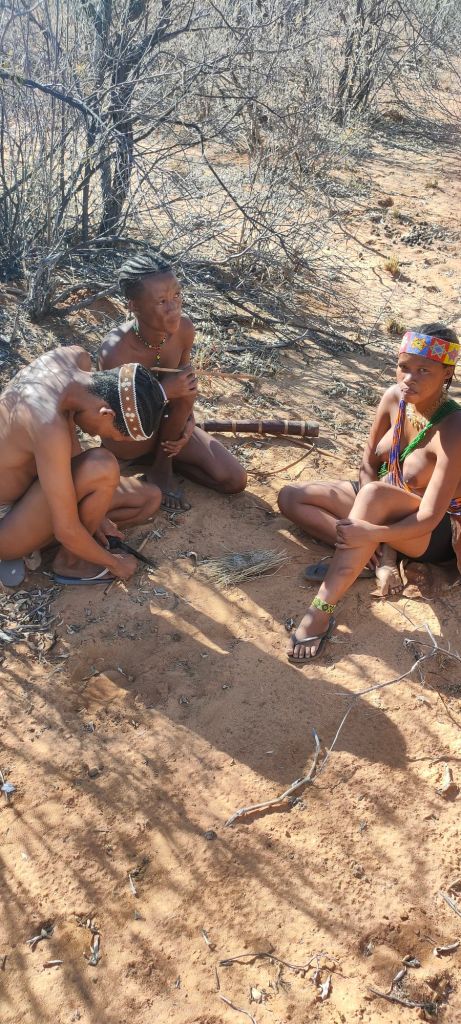
Survival tactics.

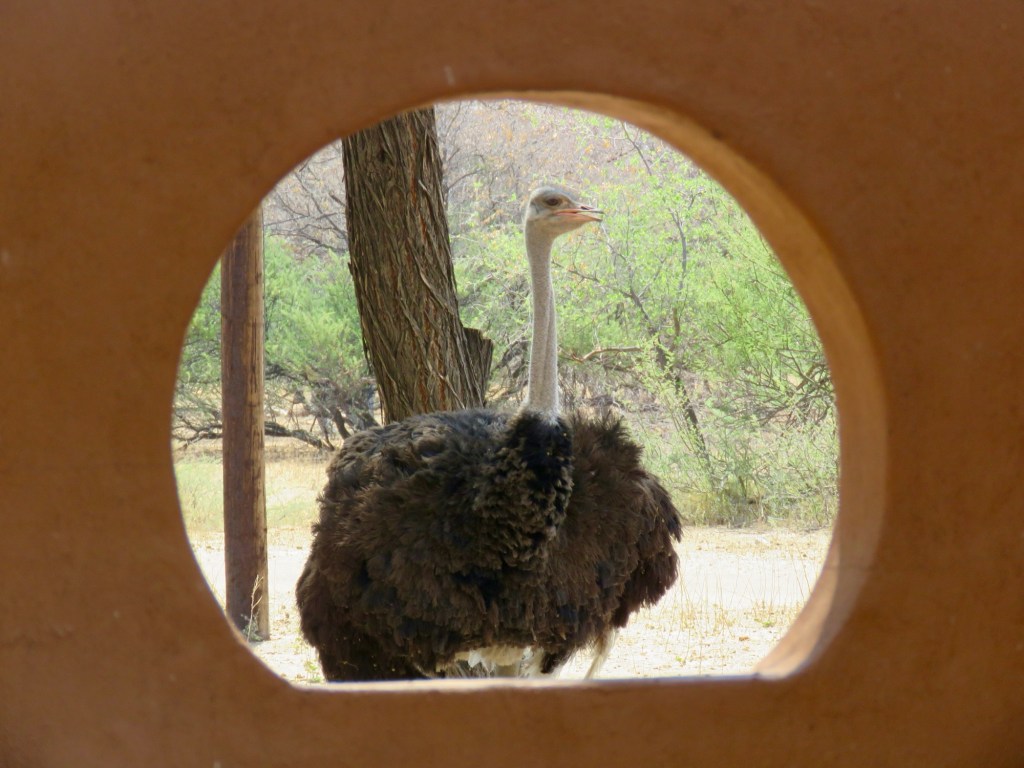
We have learnt to stand stock still when threatened by an agressive goose, and to run for your life if a baboon or ostrich attacks you. Or make like an ostrich by putting one arm up in the air and flapping your hand. I am not kidding.  However the ostriches seem pretty chilled, and love a spray down with the hose from our garden. Threatened vervet monkies apparently distract you with lots of false feints while one makes for your jugular. When feeding the crocs you keep your back to the wall and all sphincters on high alert.

In the absence of climbable trees, we are told to run away from a charging rhino in a zig-zag as rhinos don’t turn quickly. Neither do I, frankly.

The leopards miaow and purr like cats – who knew this about cats?!! They are leopards in disguise, but less likely to eat your face off when you get too close.

There is a particularly perilous narrow corridor where you have to walk between the mean, grasping arms of the vervets on one side and the garden sprayer on the other; the water is semi-treated sewage water I think, although when you ask any of the staff they become very vague. It certainly adds an extra layer of jeopardy in getting from A to B.

The perilous pathway.

Silly things humans do.

At the induction yesterday, Maria, our San tribe leader, regales us with tales of the hapless things volunteers have done in the past. Reaching into the lions’ den to take a better picture, trying to get a selfie with the rhinos, stroking a mongoose and losing a finger, carrying a baby giant tortoise the wrong way round and everyone watching in amazement as he suddenly threw the tortoise up in the air after it bit his penis.

We are also told to hide from poachers, as they will kill us aswell as the rhino. If caught they will be in prison for life, so have nothing to lose.

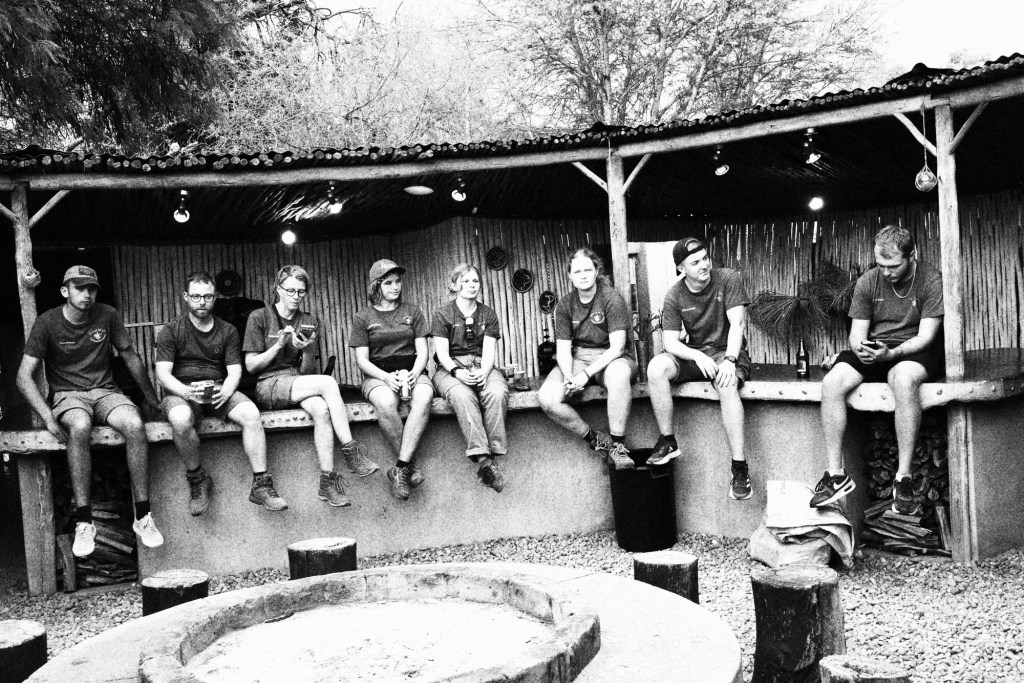
The Volunteers.

They are a sociable and friendly group, mostly 18-30 ish but with a few young at heart outliers like us, Christine (50) and Simon (78). There are very few Americans, one in fact, a Mexican lad who when he goes accidentally leaves behind a litre and a half of tequila, much to the unbridled joy of Toby, Philip and James sharing his bunk room.

Rhino tracking.

The 6 rhinos on the reserve have to be accounted for daily in case of poaching. Poachers can be in and out of the reserve in 10 minutes. The poachers put bottles in the electric fence to see if they’re still there the next day as if they are, it means no one is patrolling. The two San tribe trackers start at the watering hole and fan out from there.

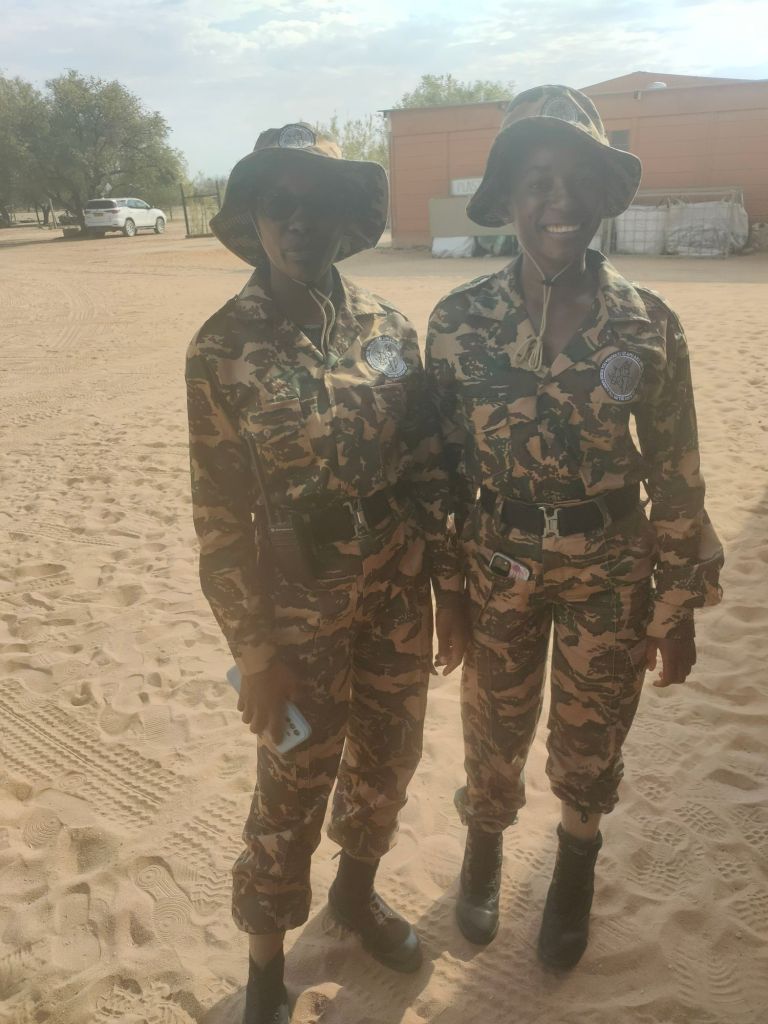
They follow their tracks, which are both footprints and troughs where they have dragged their feet to mark their territory. They also leave enormous piles of poo which I thought would be a composters dream but it is apparently very dry and mostly grass. I thought their skill in finding these creatures incredible.

The Worst Jobs.

Farm work.

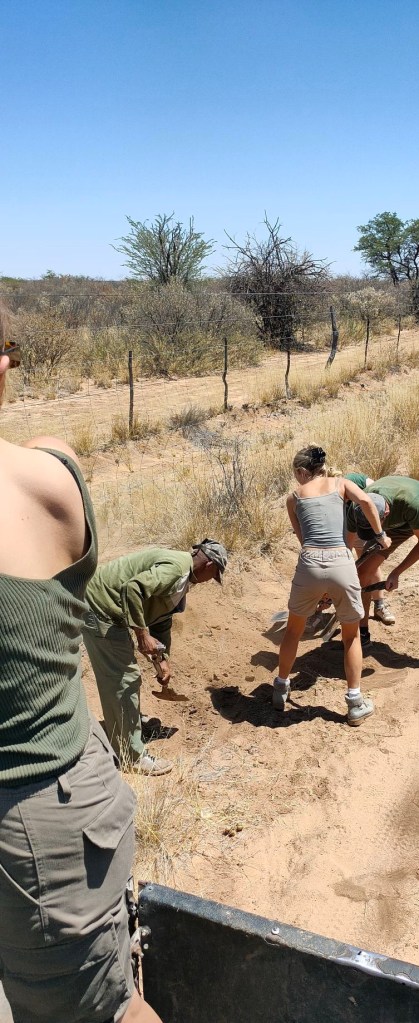
Filling holes.

There is no upper age limit on how much fun it is standing up in the back of a truck that’s rattling along dirt tracks, wind in your face, wild grin spreading ear to ear, sand between your wind blasted teeth. Our job was to hop on and off the truck to shovel sand back into holes that various hopeful animals from the outside – cheetahs, aardvarks, porcupines – have dug under the fence in a bid to reach Harnas’s watering holes and delectable selection of impala, springbok, dikdik and goats.
Wooding.

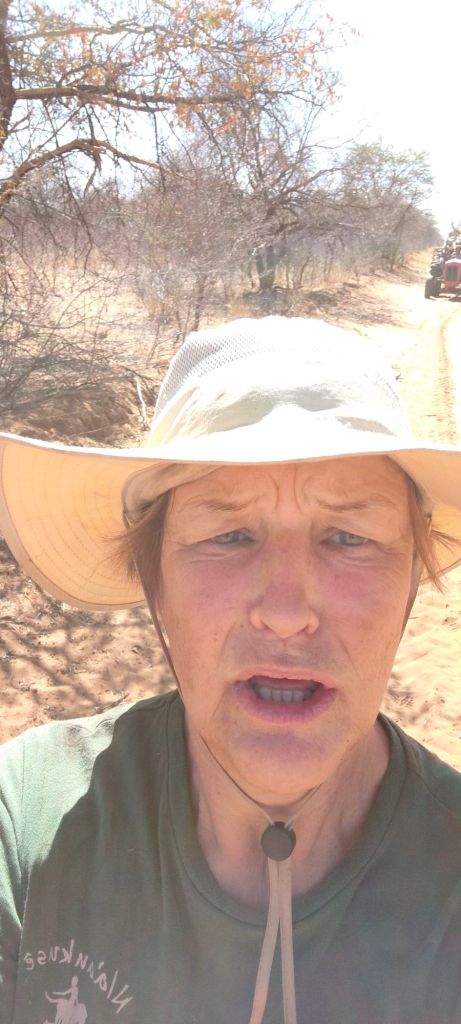
It’s another morning and we are sent to collect wood. I began with great girl guide level enthusiasm, hauling huge logs out of the bush and hurling them onto the lorry, she-woman style. But by the second collection, shallow breathing the hot air, huge sweat droplets stinging my eyes, I lurked in the shadows, hoping no-one would notice my reduction in productivity, and wandered what symptoms preceed keeling over from heat exhaustion. When I told this tale to Tanya, the research manager, she laughed and said “now you know why you see 5 people at work in Namibia and only one of them is working while 4 are resting”.

The Best Jobs.

Lion feeding.

This is definitely a fun activity. There are at least 10 lions, five cheetahs, and two leopards, in various massive enclosures. Some are there because their mothers have been hunting farm animals and have been shot by farmers, who then ring Harnas to collect the cubs. They often don’t know the full story, as they don’t want to discourage people from asking them for help. There is an 8 year old leopard that used to be called Ingwe, an African name for Leopard. Bottle-fed and hand-reared alongside the many dogs at Harnas at the time, his feral instinct kicked in a little earlier than at the expected 2 years old. At 16 months he blotted his copybook overnight by eating all the dogs. The volunteers renamed him Hellboy.

Hellboy.

In another enclosure there are five lion brothers all reared in Marietta’s kitchen – the lady who started Harnas 25 years ago. Flown across the border by a mysterious man, they were destined to be cuddly fluff balls on a Botswana game reserve and then shot for sport in an area no bigger than Trafalgar Square. But their Botswana heritage means the Namibian Governemt will not help rehome them. So there they are, five muscle bound testosterone fuelled beasts all vying for territory they shouldn’t be sharing. To reduce the fighting potential, at feeding time we have to strat them at one end of the enclosure and then race in the truck to the other send, the lions giving chase, so that each one is fed as they arrive.

Making the brothers work for their supper.
Letting Old Lady, an ancient vervet moneky, pick out my feas.
Olivia, who lost a foot (?hoof) in a trap. She is still a baby at 7 months old.

I have yet to regale you with tales of the school and the medical clinic but think I’ll post this as we are going up to a wifi free zone for 4 days – Etosha.

Getting trollied on a tram.

But first – shark news:-

Bouncing about in a cage in a force 5 with sharks skimming past a few centimetres from my nose was way less scary than I expected.

Inside the shark cage.

Visibility in the cage is very poor. The best place to see the sharks that appear once they throw the baited ropes into the sea is on the top deck of our boat. Best to avoid the front of the boat with the pukers, easily spotted with their green/grey complexion and sick bags glued to their faces.

I thought it strange that the sharks didn’t just wolf down the bait straight away but Clive thinks they like to have a nibble first to see if they like the taste. They are copper sharks, aka bronze whalers.

There are no Great Whites about as the Orcas have been eating them, in particular their livers, so they’ve all buggered off down the coast to Mossel Bay. Why it’s safer there, I don’t know.

The on/off wine tram in Franschhoek.

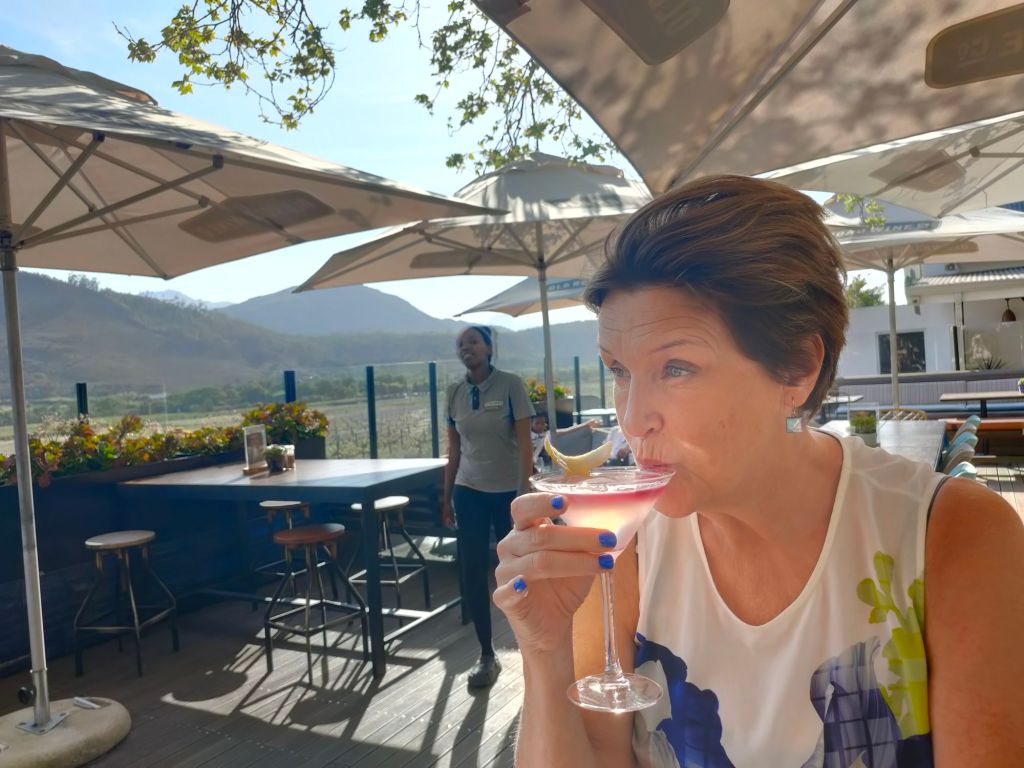
The wine tram is kind of a scam, as it’s really a very short track of train and mostly buses, but no-one cares as we are all trollied and can barely remember our names let alone write a Trip Adviser review.

We arrived at our first vineyard at 11.30 am as three separate small groups, but when we reboard the bus an hour later we are a decidedly tipsy unit.

A happy band of 7.

By the third vineyard the Zulu/ Leeds contingent are singing three part harmonies to a goat and the Dutch couple we have been chatting to are losing not only their English language skills but their Dutch too.

This place sells painting by Pigcasso. You can see him doing this to the sound of our group talking bollocks.

The Franshoek vines were originally planted by 300 French Huguenots who fled France in 1688 after King Louis XIV banned Protestantism. Shout out to the Holmes family on Clive’s side of the family, as they were Huguenots but fled to England.

The vines bake on North facing hillsides producing delicious wine varieties, although I couldn’t tell you which wine to buy as by the third vineyard they all tasted the same. But as a fall from grace after 9 months of sobriety it took some beating.

Visiting a township.

Cape Town is a city of two halves. Part polished and beautified, with fantastic food and wine, sandy beaches, a freezing sea, and Table mountain looming above it all. It has its share of historic buildings, many of which have troubled histories. The court house, where if they really couldn’t decide if you were coloured or white they stuck a comb in your hair.

The Court House

If it stayed in, you were coloured. Fell out, white.

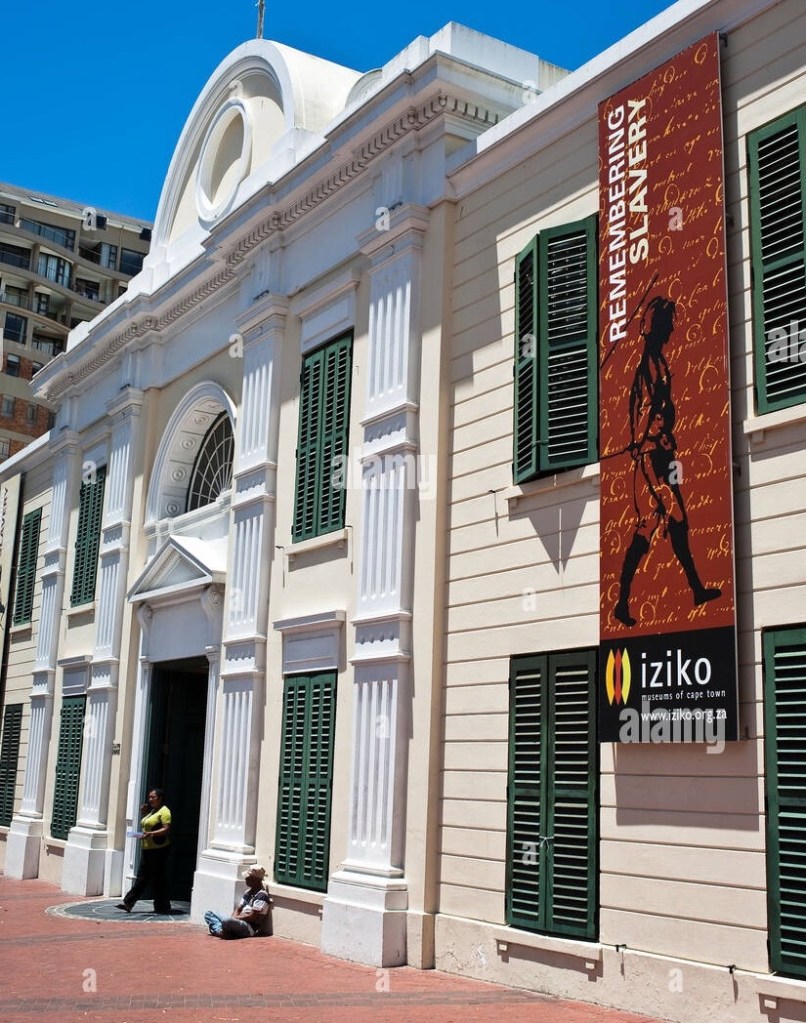
Nearby is The Slave Lodge, which is still called “The biggest 19th century brothel in Cape Town” in some aricles online, with no mention that the women were slaves.

The Slave Lodge, now a museum.

Most visitors don’t see the other half of Cape Town because it can be dangerous to visit. A British surgeon was shot while driving back from whale-watching in Hermanus. His wife, mother and 2 year old child were also in the car and survived. The main freeway to Cape Town being shut due to a strike, his GPS had directed him through a township adjacent to Langa.

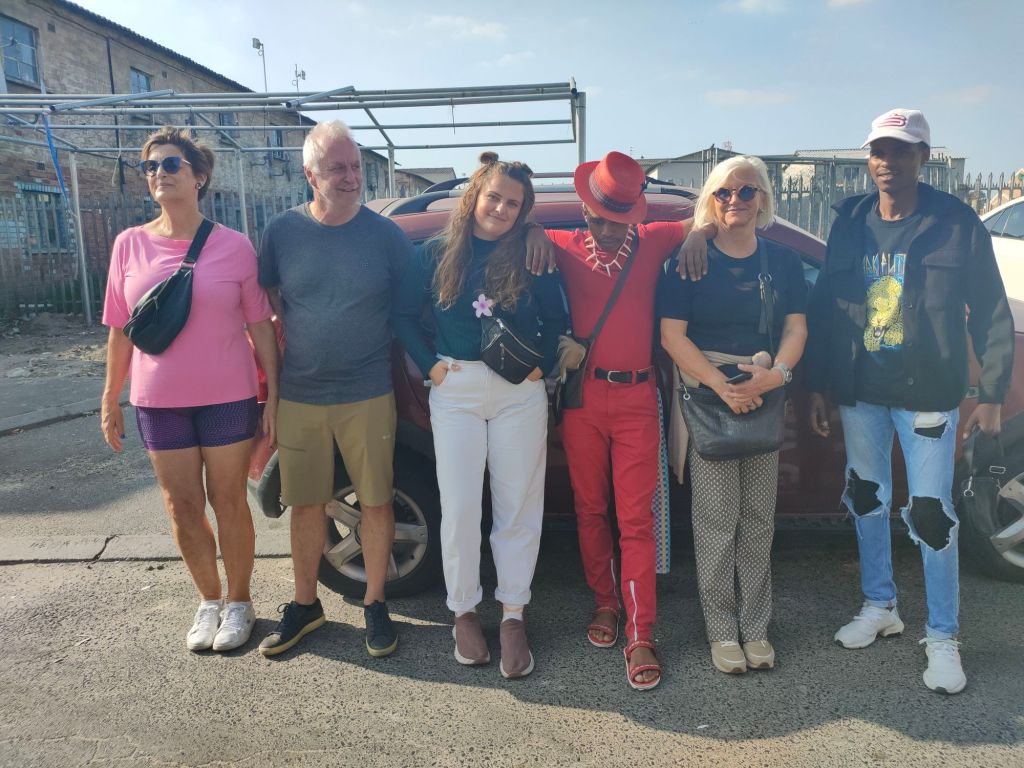
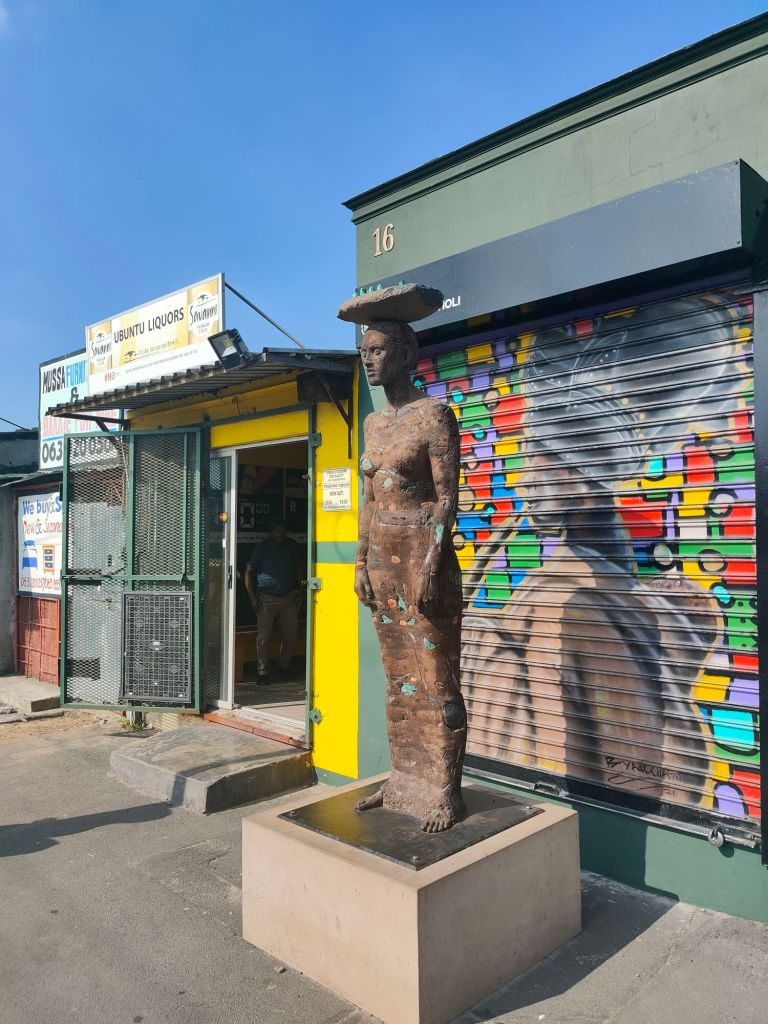
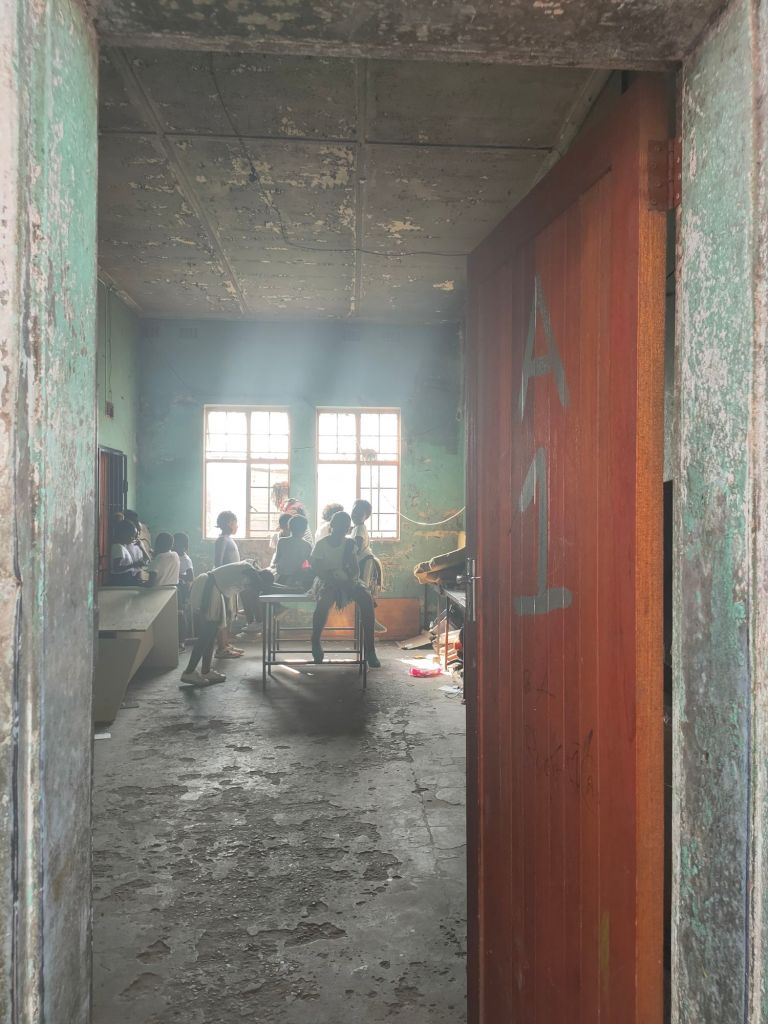
We visited Langa with Louis, a local tourist guide, who had spent 2 years during Covid living under a tarp being fed by kindly neighbours. The first Township, Langa was built in 1923 to segregate the black African community from urban areas and served as a labour resevoir. It still does. Visiting a Township felt like a difficult call, but I wanted to see for myself where the majority of coloured people still live.

Our guide told us that they want tourists to come, and that his job showing us around had been a revelation to him, meeting white non- South Africans who unlike the local whites were interested and cared about their situation (his words). He told us that the Township is bigger than ever, as squatting laws mean if you build a hut i.e a 1 meter square corregated iron box, and remain there for 48 hours, you have the right to remain there.

Watching a group of children dancing and singing to a crowd of local people chilling in Langa on a Saturday afternoon I felt simultaneously interested to see African music performed for African people and hugely conspicuous in our nosy whiteness.

Poverty Porn is the idea that by writing about it I am objectifying it. But by not writing about it I’d be sweeping it under the carpet. But watching a performance by local artists who have not been wheeled out for us, the tourists, to gawk at did feel different. The main streets have surveillance cameras overlooking them, but Louis took us deep into the heart of the Town, to show us the streets that regularly flood, the water pump serving hundreds on a street corner, the portaloos. It is difficult to imagine how people get to work in places like the waterfront in central Cape Town looking spic and span when they live in these conditions. But they do.

Langa’s Saturday afternoon dancing and singing in the square.

We’re now in Harnas, a wildlife sanctuary in Namibia. We are properly busy, exhausted, and the wifi is crap!


Shewees and sharks in Africa.

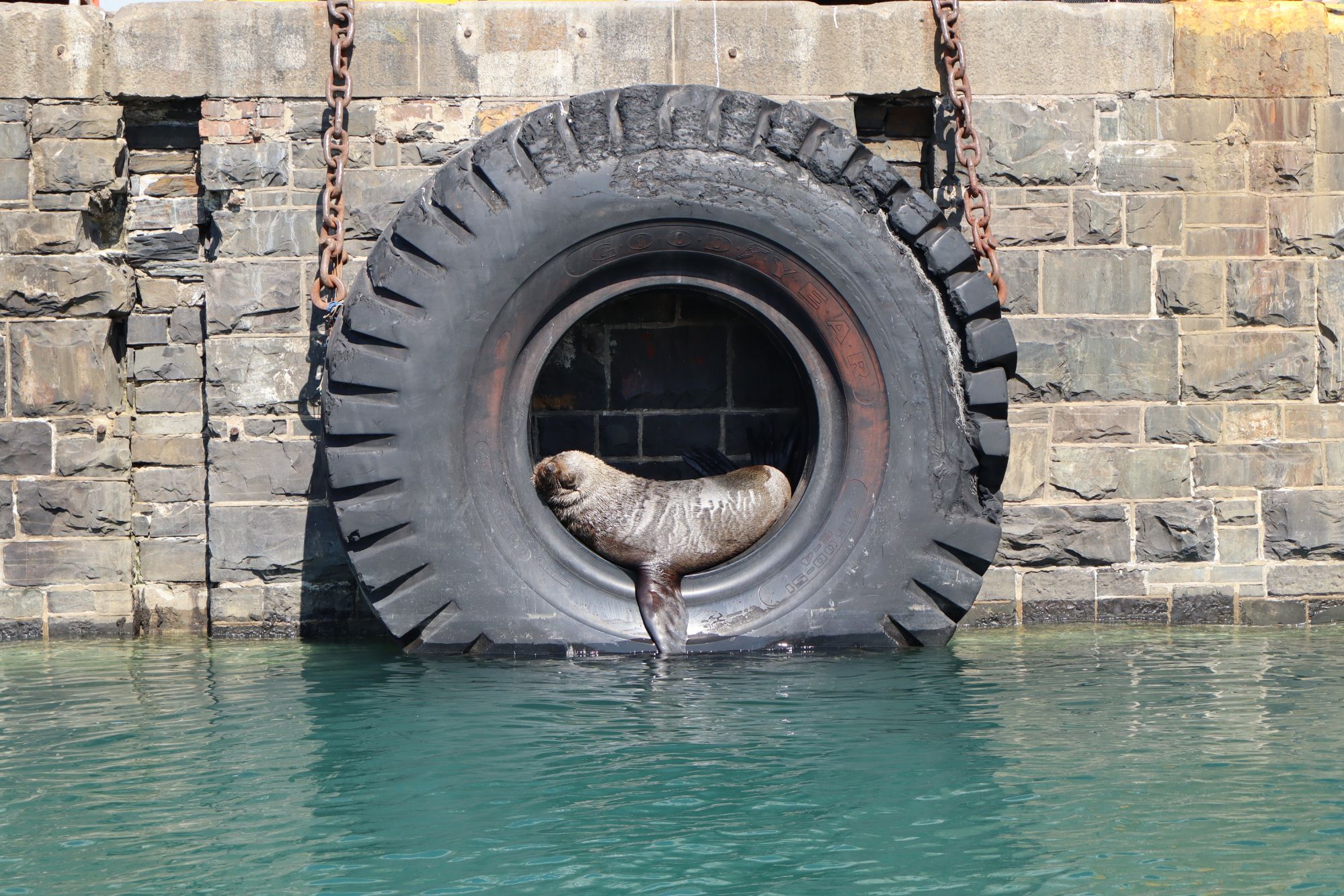
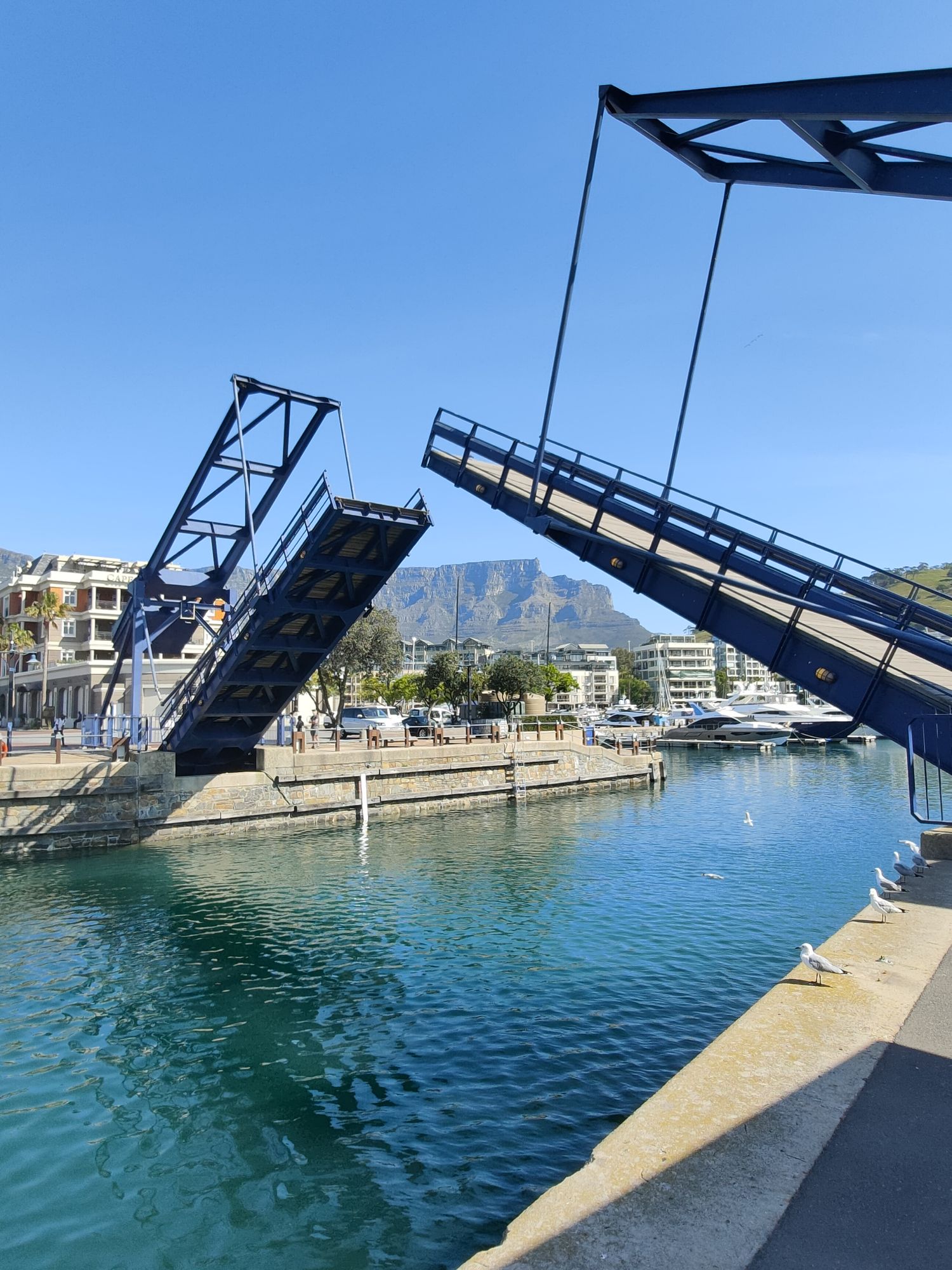
A seal snoozing in Cape Town harbour.

     The shewee arrived with an hour to spare before we left for Heathrow. Strange to think that this might save my life. I’ve read that lions think a zipped up tent is an impenetrable wall, and I don’t want to shatter that illusion by clambering out in the night for a pee. Short of catheterising myself every night the shewe it is.

Here it is. Disgusting, yet liberating. I could have a wee at the side of a road if I wanted to. Must remember to use it the right way up, unlike friend Margaret.

We are hiring a 4 by 4 with a tent on top to cross Namibia in a few weeks time. We are doing this purely on the basis that my sister told us “everyone does it,” although she didn’t camp, and no-one we’ve met who’s been to Namibia has either. She did have three small children with her and although I am sure the prospect of one of them being snatched by a baboon might have seemed attractive at times, I can see why camping might not appeal. I hoped that Namibia being mostly desert might confine the lions to the parks where there is water, but they have adapted. Baboons know how to get through locked doors and form raiding parties, so I can’t imagine they’ll find zips very taxing. If the lions and baboons are in cahoots, we’re in trouble. 

   We are now in Cape Town. My mind is completely distracted from the last few days of hopping on and off a tourist bus and whale watching as we are swimming with sharks today. Clive keeps emitting little yelps of excitement and yips of joy, to a background of a quiet keening sound, like the wind currently whistling across our balcony, which is me. Why why why did I say I wanted to do it when  my inner psyche is screaming with fear? Well, my outer psyche got the memo too late.  There is a shallow fish filled corridor of sea around Dyer Island which is very popular with sharks.

The sea off L’Agulhas, where two oceans meet. (Atlantic and Indian).

It’s near Gansbaai, on the way down towards L’Agulhas, the southern most tip of Africa, where the Atlantic and Indian Oceans merge. The two oceans are around 5 degrees difference in temperature, affecting the wind, clouds and precipitation as well as bringing nutrient rich  eddie’s of cold water up from the deep,  attracting all manner of wildlife. 


After a brief burst of  false hope when the driver couldn’t find us we’re now on our way. Pray for me.