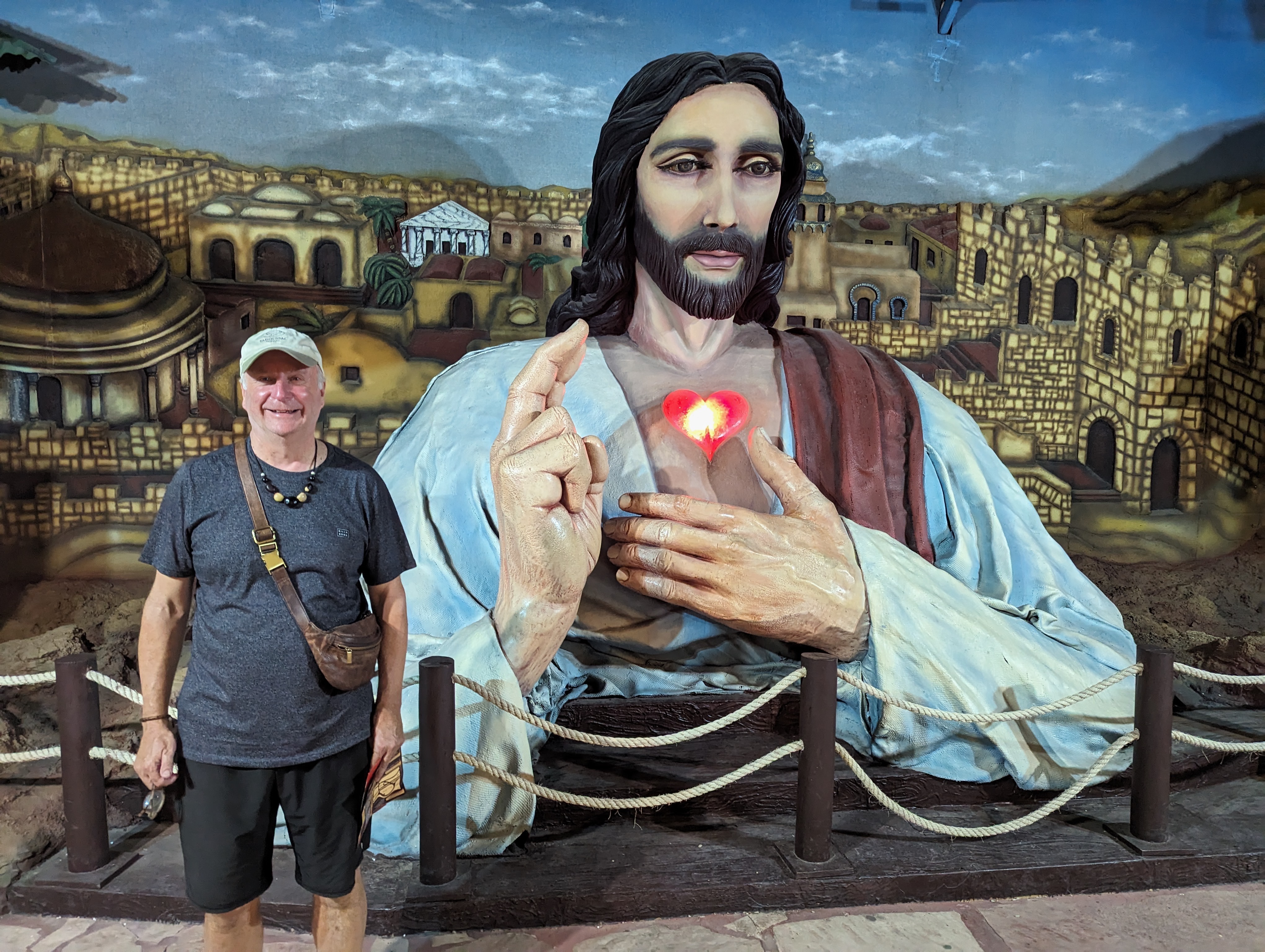
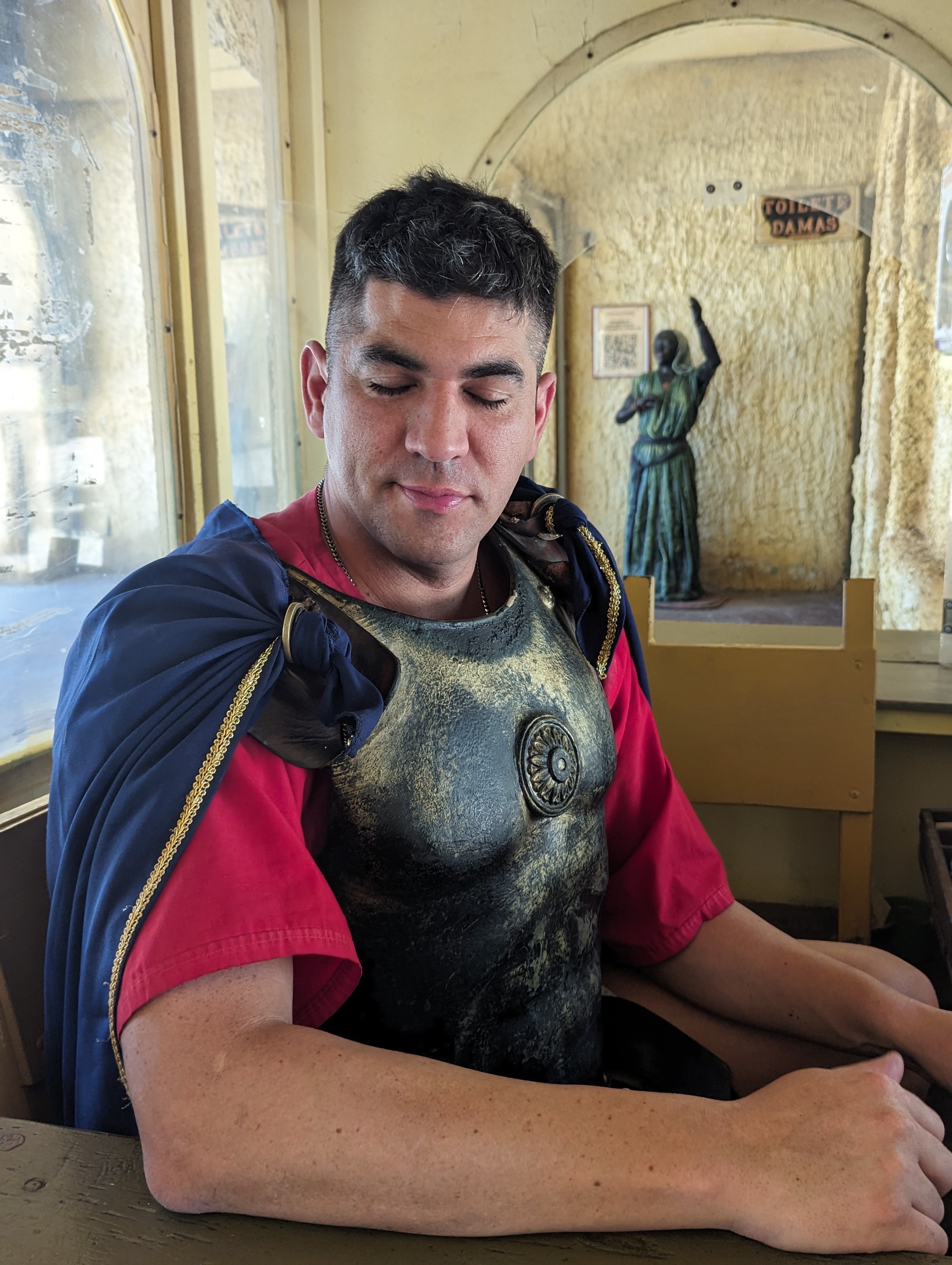
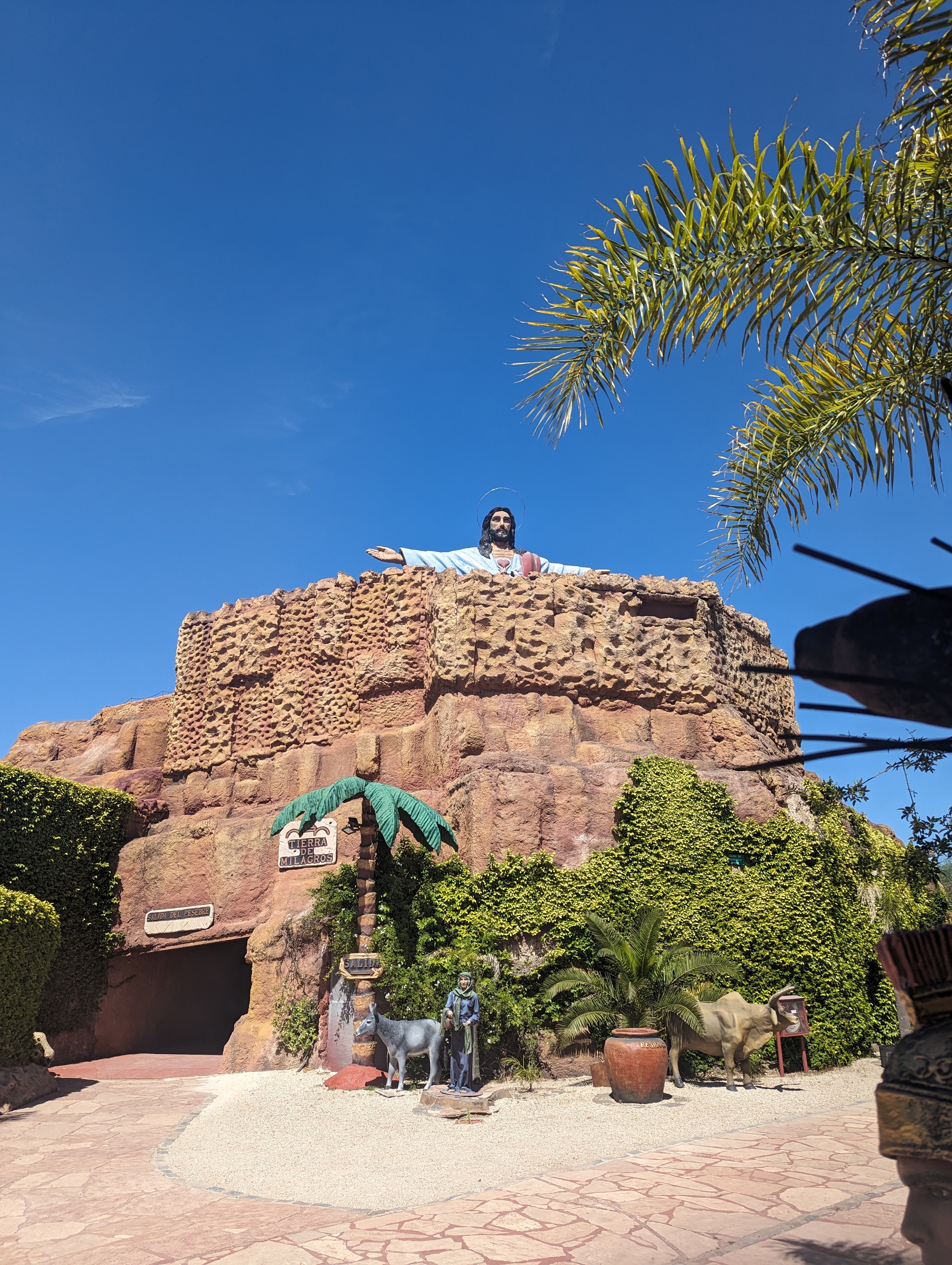
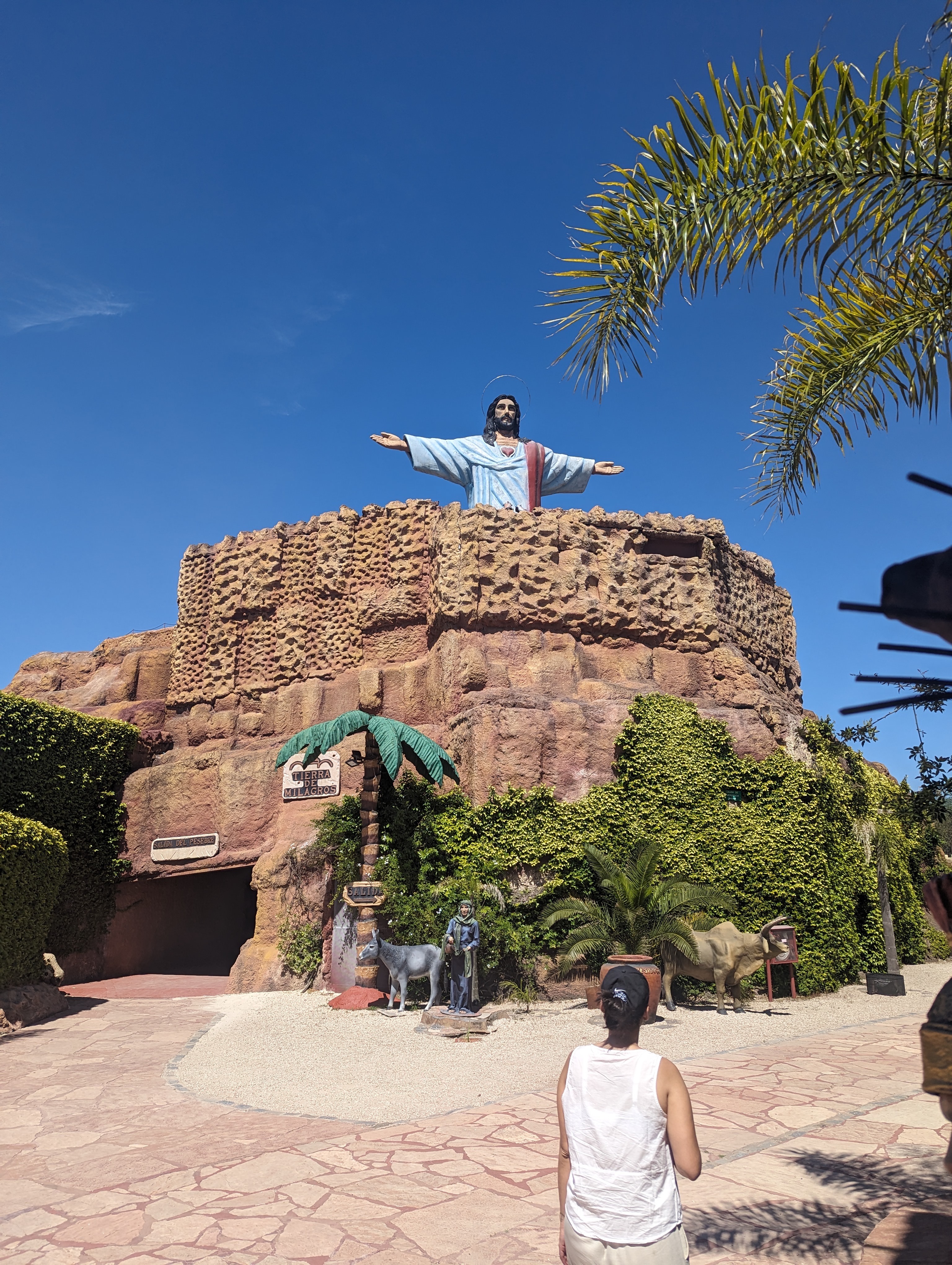

There’s a small, sad, plastic Christmas tree on the way into Jumbo, our local supermarket, and although the market stalls are selling decorations, it’s 30 degrees in the shade; I just wasn’t feeling it. Until we went to Tierra Santa. It sits on the north coast under the flight path of BA national airport, with couples on garden chairs with cold boxes sitting in the shade enjoying the sea breeze on the road side opposite, the place empty except for us and a few Argentinian families. We went there to chortle and snigger at the plastic animations,but as we toiled up a steep hill there are three bodies hanging from crucifixes, gambling Roman soldiers slouched on surrounding rocks , and women with their arms raised imploringly at their dying mens’ feet, all plastic statues. The broiling heat, just as there would have been two thousand years ago, the silence, and the suffering, stop us in our smirking tracks. A nativity scene playing Handels Messiah, and giraffes, elephants and lions creaking out onto the stage for the creation, Adam and Eve eventually appearing with their nether regions covered in green polythene holly and artfully arranged hair, is quite joyful though. I may be an atheist, but I love all choral music, especially this stuff, and I am in heaven. The reason we were there was to see the hourly resurrection, and it doesn’t disappoint, although perhaps you had to be there.
The resurrection
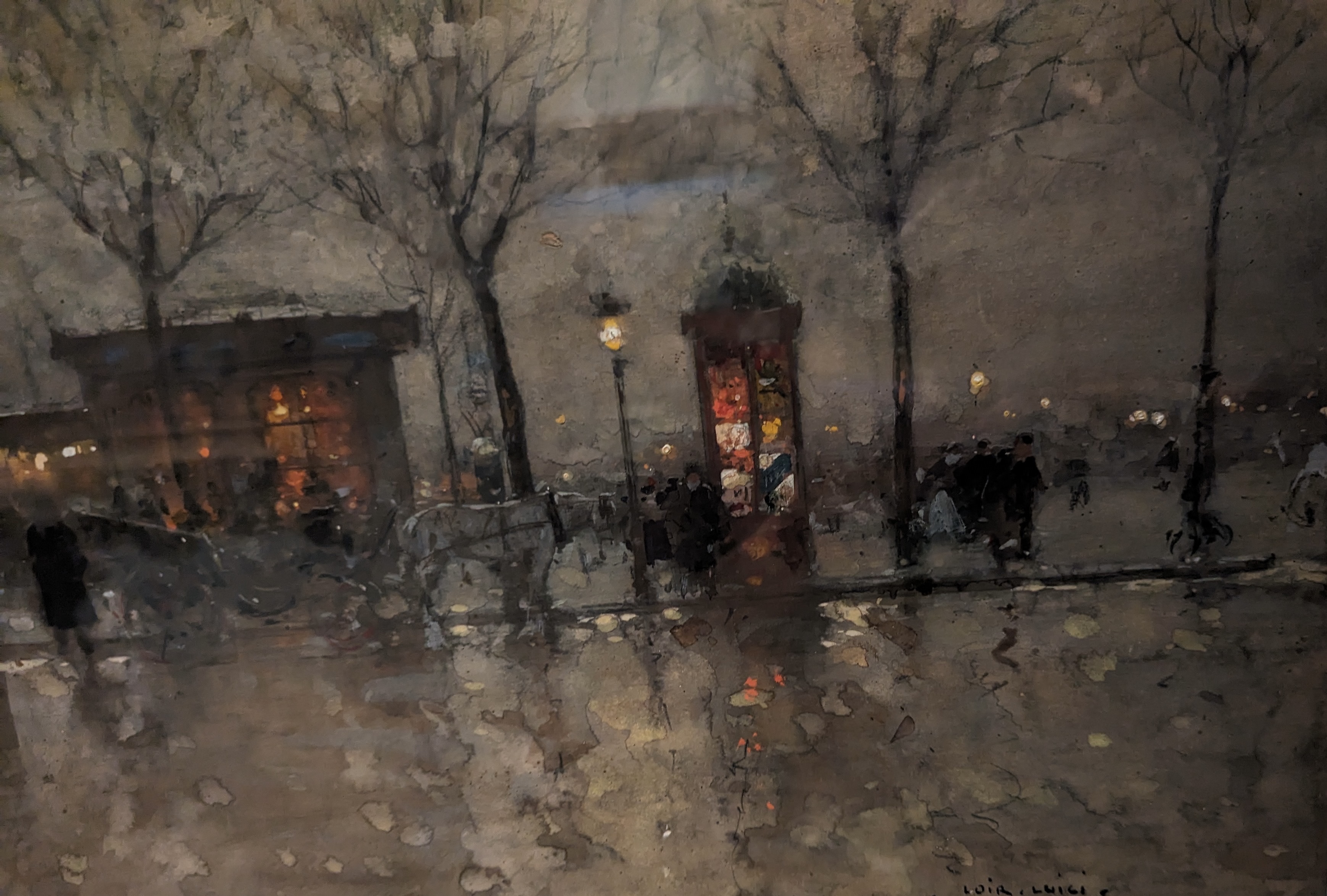
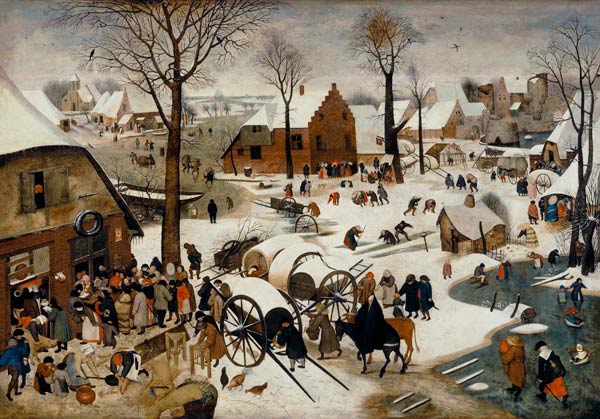
Although I can’t deny how much I love the sun, in the galleries we have visited all over Buenos Aires I am drawn to the winter paintings; bleak leafless landscapes that remind me of what we are coming home to, Brueghel’s transplanted census to snowy Holland, Paris in the winter rain, I love them all. But there is one artist I have never heard of called Joaquin Sorolla y Bastida whose paintings are just so evocative of light and the beach on a summer’s day you can almost hear the kids’ shrieks of joy, the horses grunts as they haul boats out of the sea, the waves lapping at the sand, that would make the most ardent winterphile yearn for summer.
Playa de Valencia by Joaquin Sorolla
Joaquin Sorolla.
Sur le quai de Paris Luigi LoirBrueghel The Census seen at Collection de Arte Amalia FortebatAlfred Sisley
Yellow fever drives out the rich.
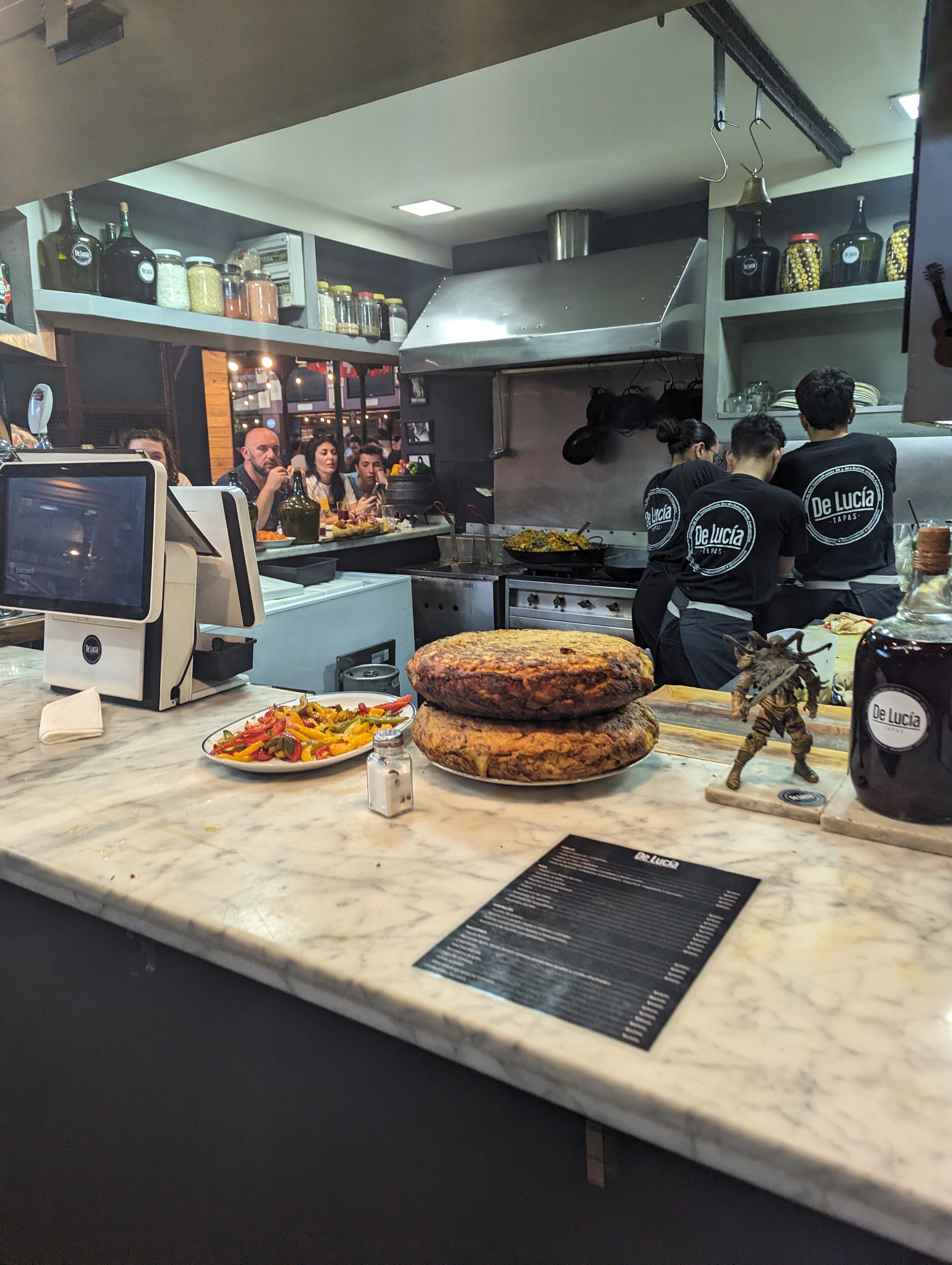
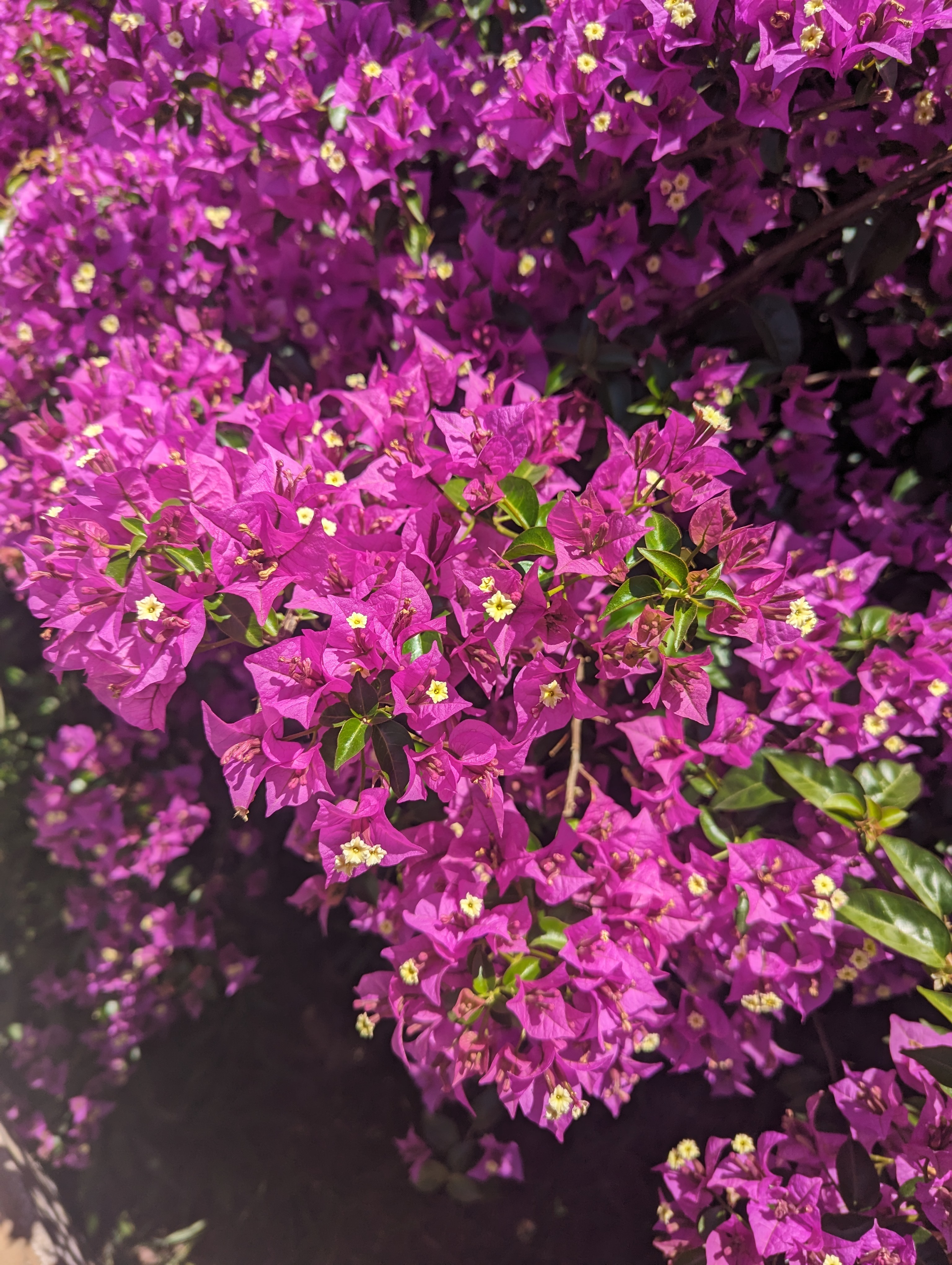
The cobbled streets, bougainvillea tumbling from metal balconies and bars on every corner make San Telmo feel like 19th century Paris, when the rich people living there fled with just the clothes they were wearing as yellow fever swept in, leaving their fully-furnished houses to be divided up into low rent tenements. There’s a small central raised square where couples tango before passing around their hat and a central market selling slabs of tortilla sliced from huge yellow potato-studded motherships made the night before.
San Telmo
The disappeared.
The white head scarves are now painted onto their route around the obelisk. Very few of the mothers remain.
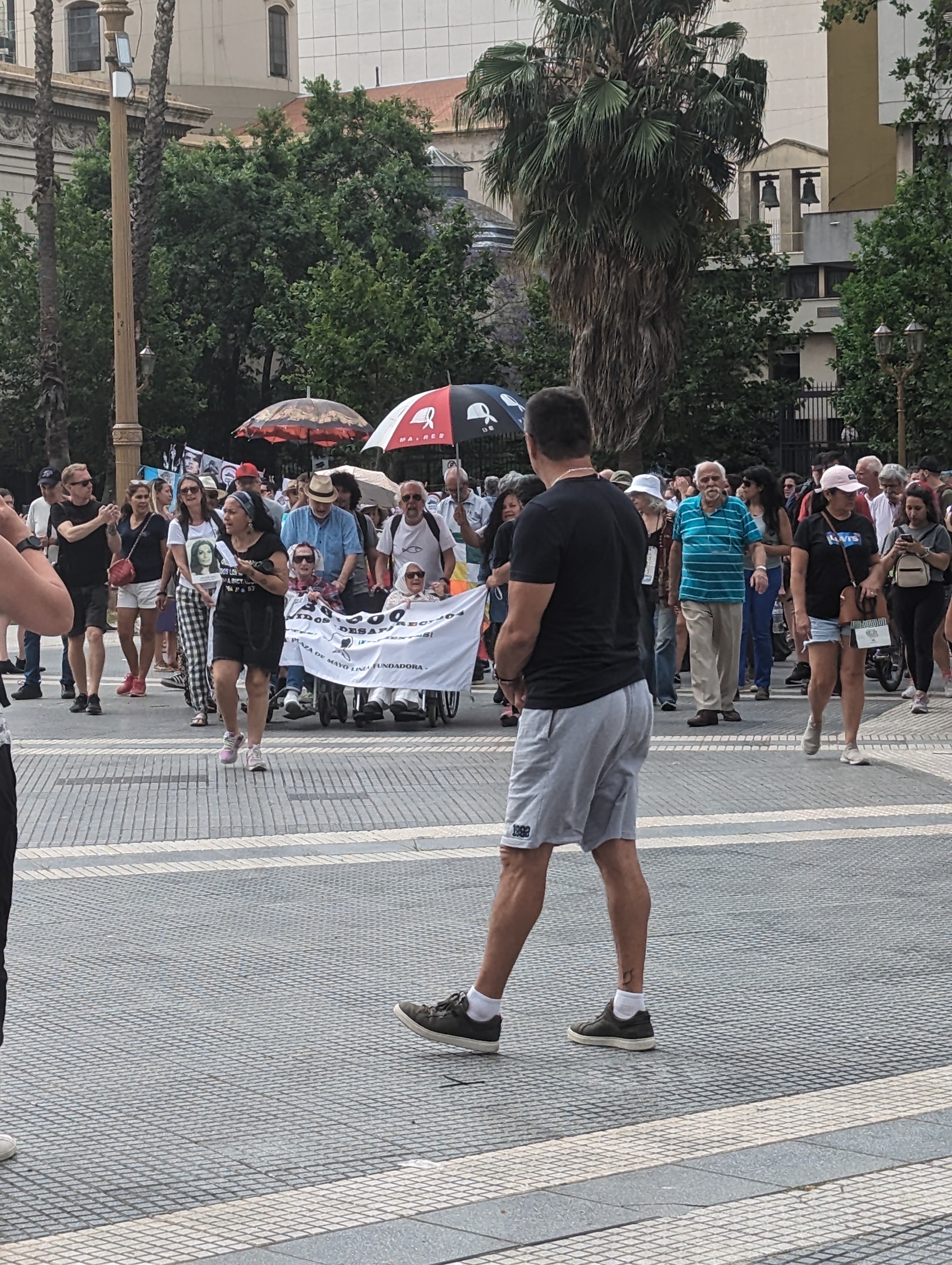
We were not sure if visiting the Remembrance Centre might be a form of dark tourism, peering at dimly lit attic spaces, freezing in winter and stifling in summer, where poor souls spent their final days before being anaesthetised and turfed like rubbish into the Rio de la Plata on so-called death flights. But then we came across the “mothers of plaza de mayo” walk in around the pyramid in front of the red house, the equivalent of the Houses of Parliament in the UK. They have done this every Thursday at 3.30pm since 1977. They wear white headscarves, and movingly, there are only three or so women left, in wheelchairs fronting a large crowd who walk slowly chanting the names of the 30,000 or so people who “disappeared”. The Remembrance Centre lies in the far West of BA, and was formerly one of over 750 clandestine detention, torture and extermination centres in Argentina between 1976-83 when the military dictatorship ruled. In addition Milai, the president in waiting, has denied the numbers of people involved, and his running mate, president, Victoria Villa Rruel, and presumably next Vice-president, is an outspoken apologist for the Junta. All good reasons to go and bear witness ourselves, I feel.
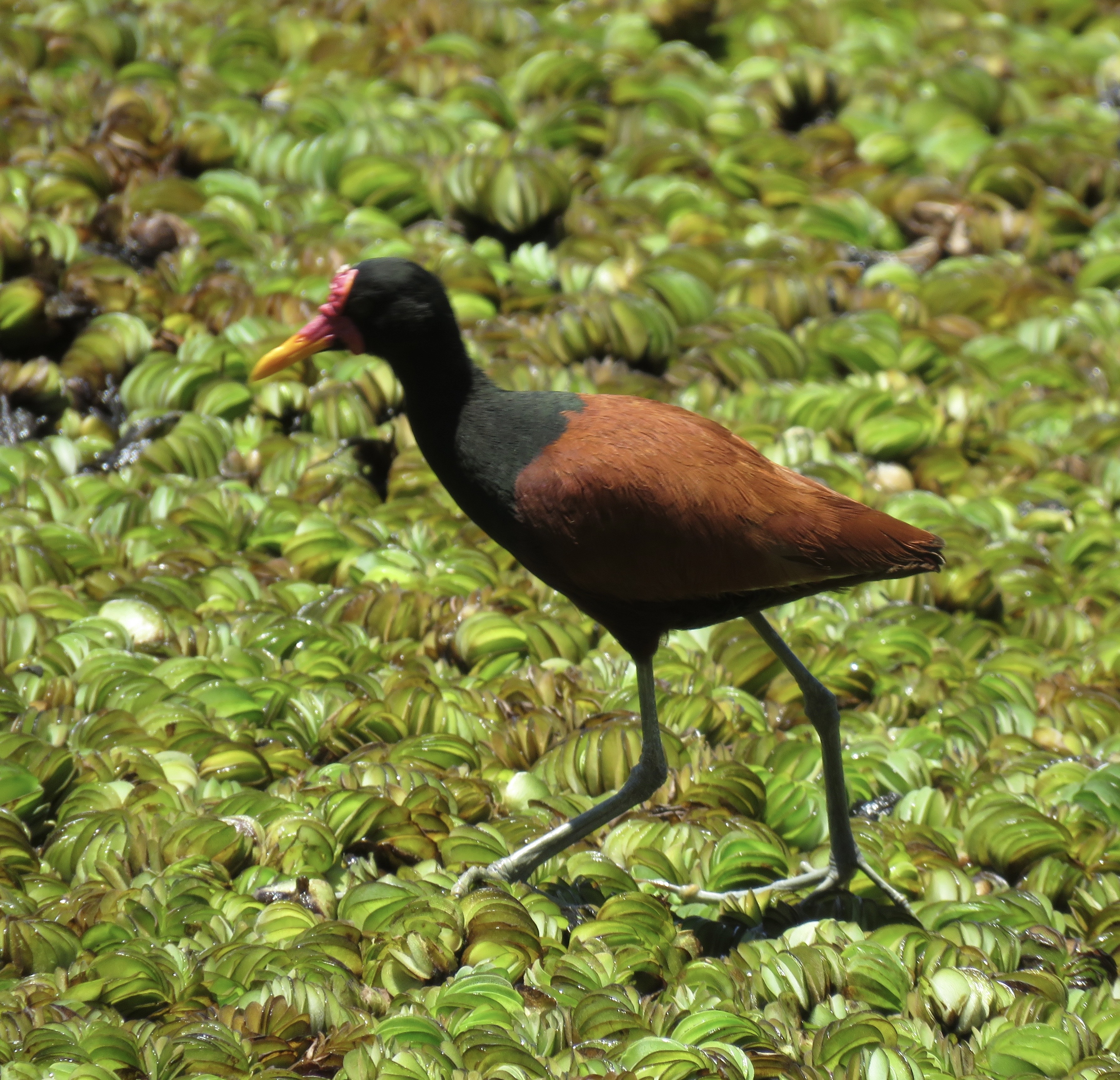
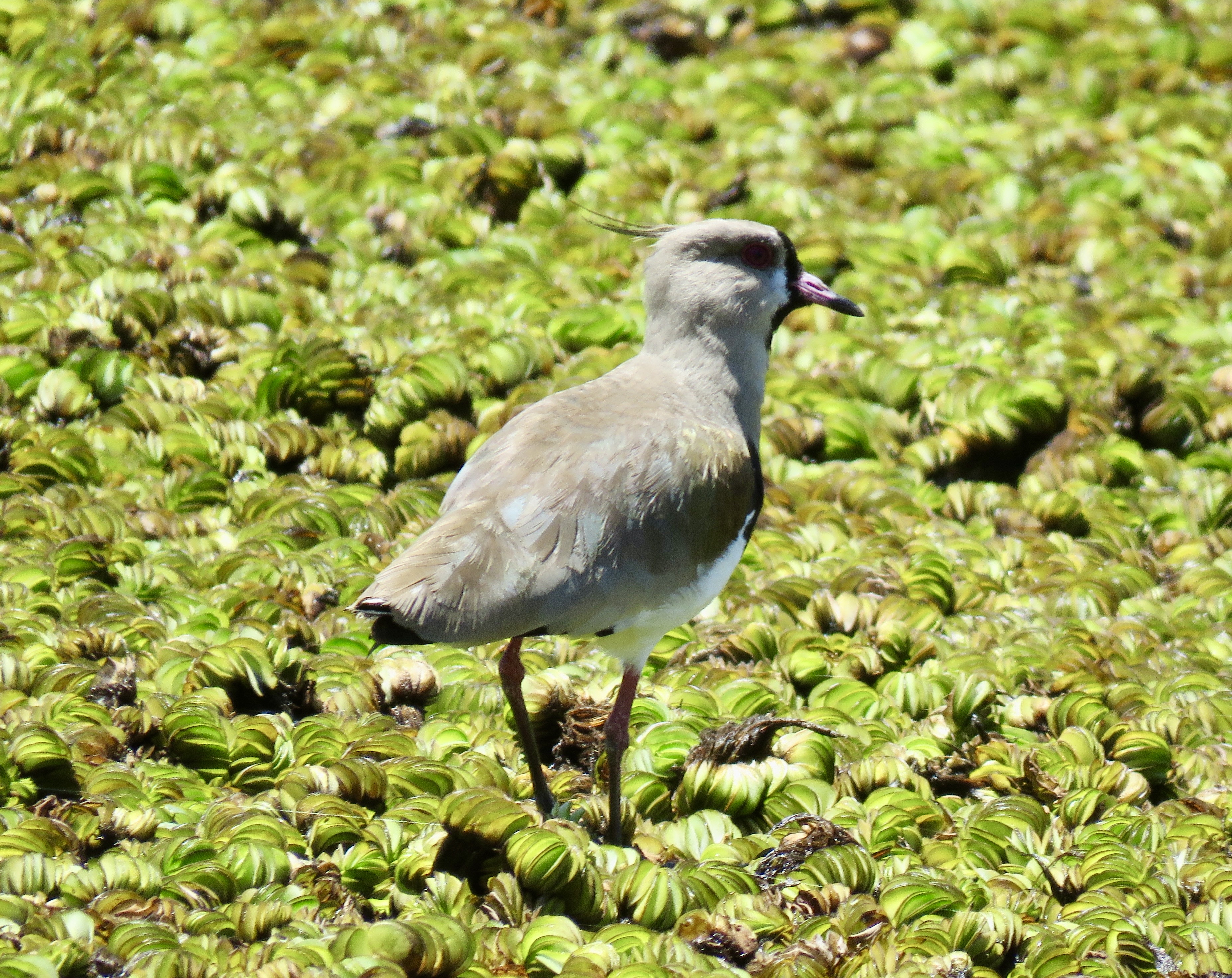
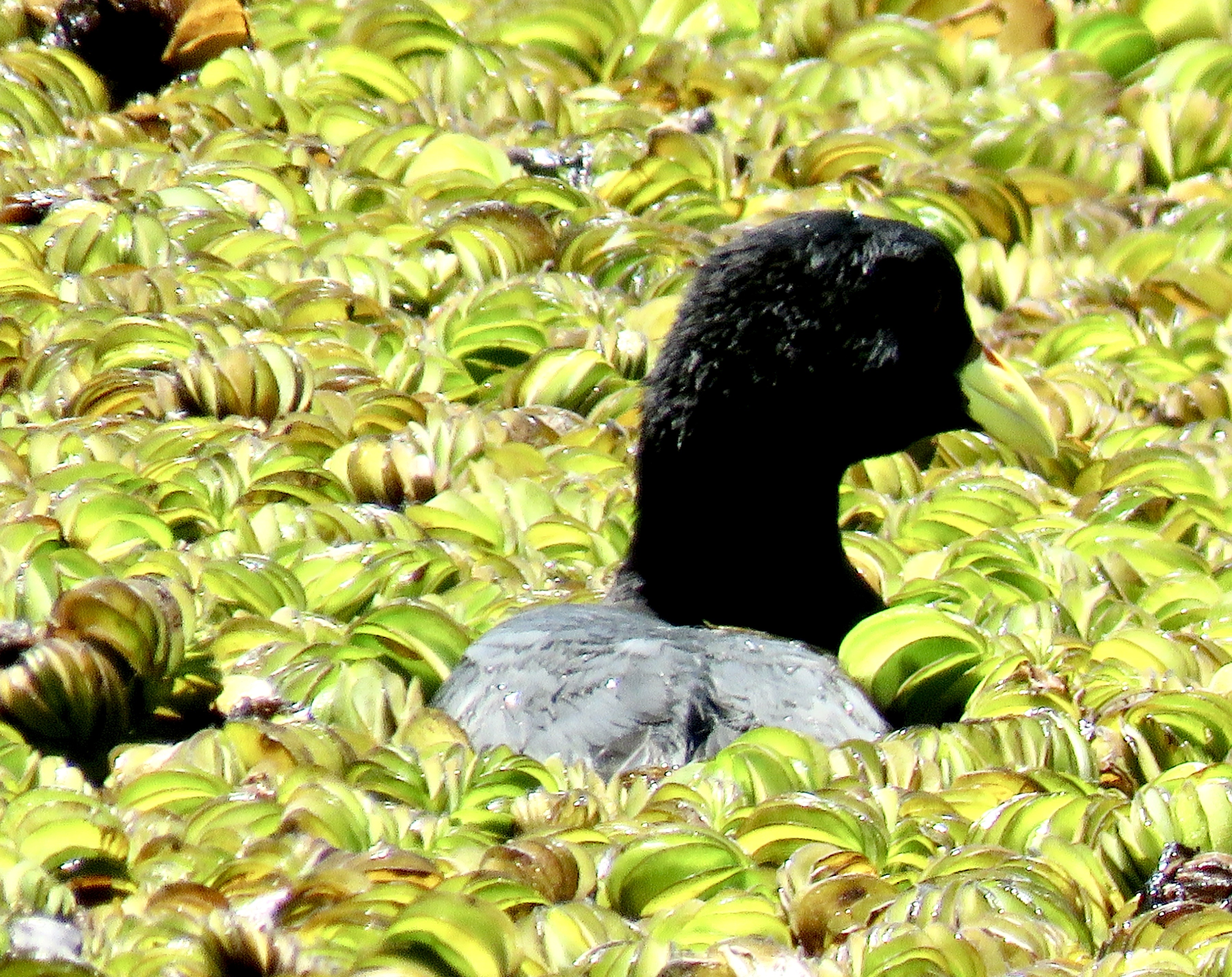
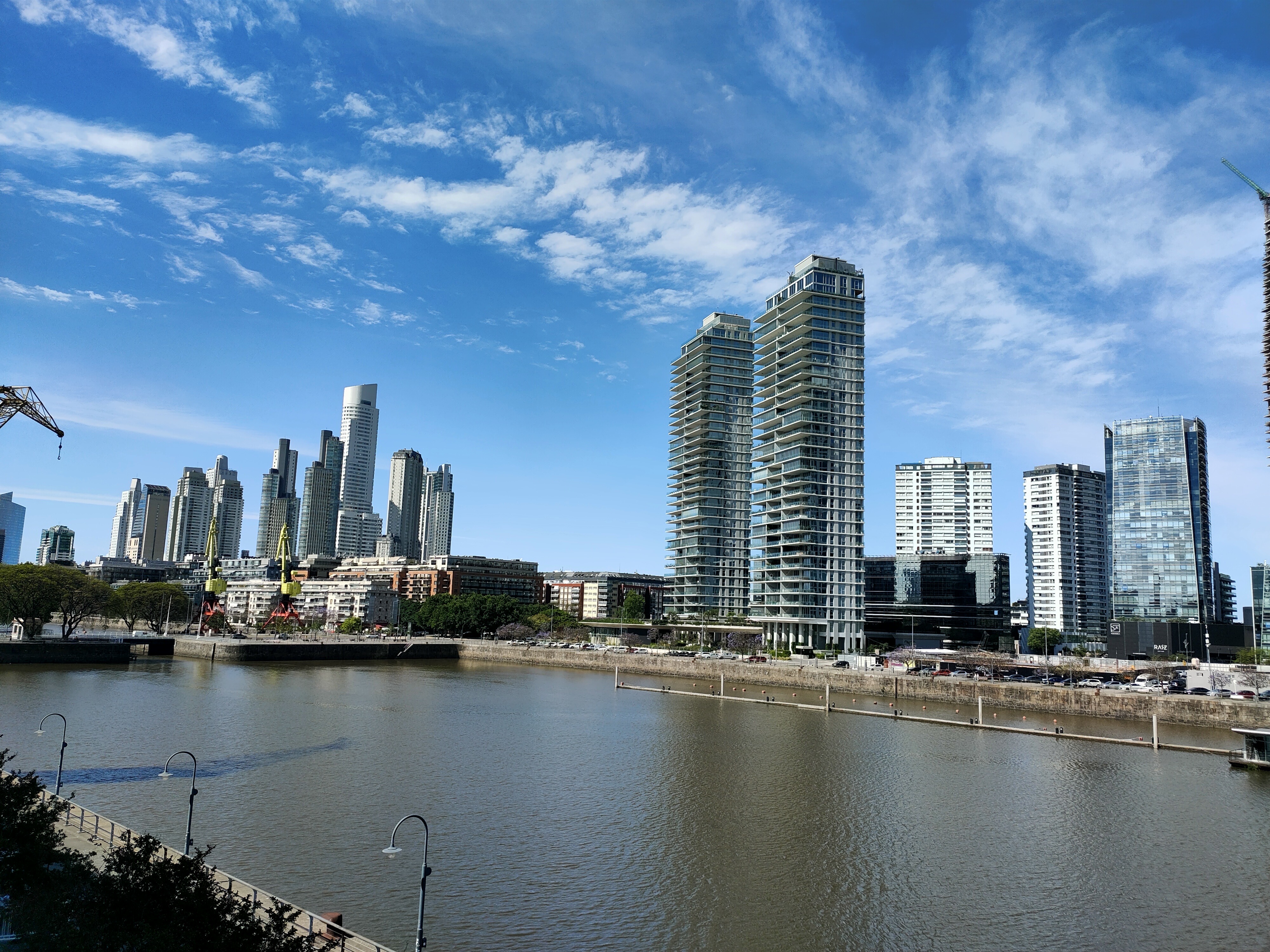
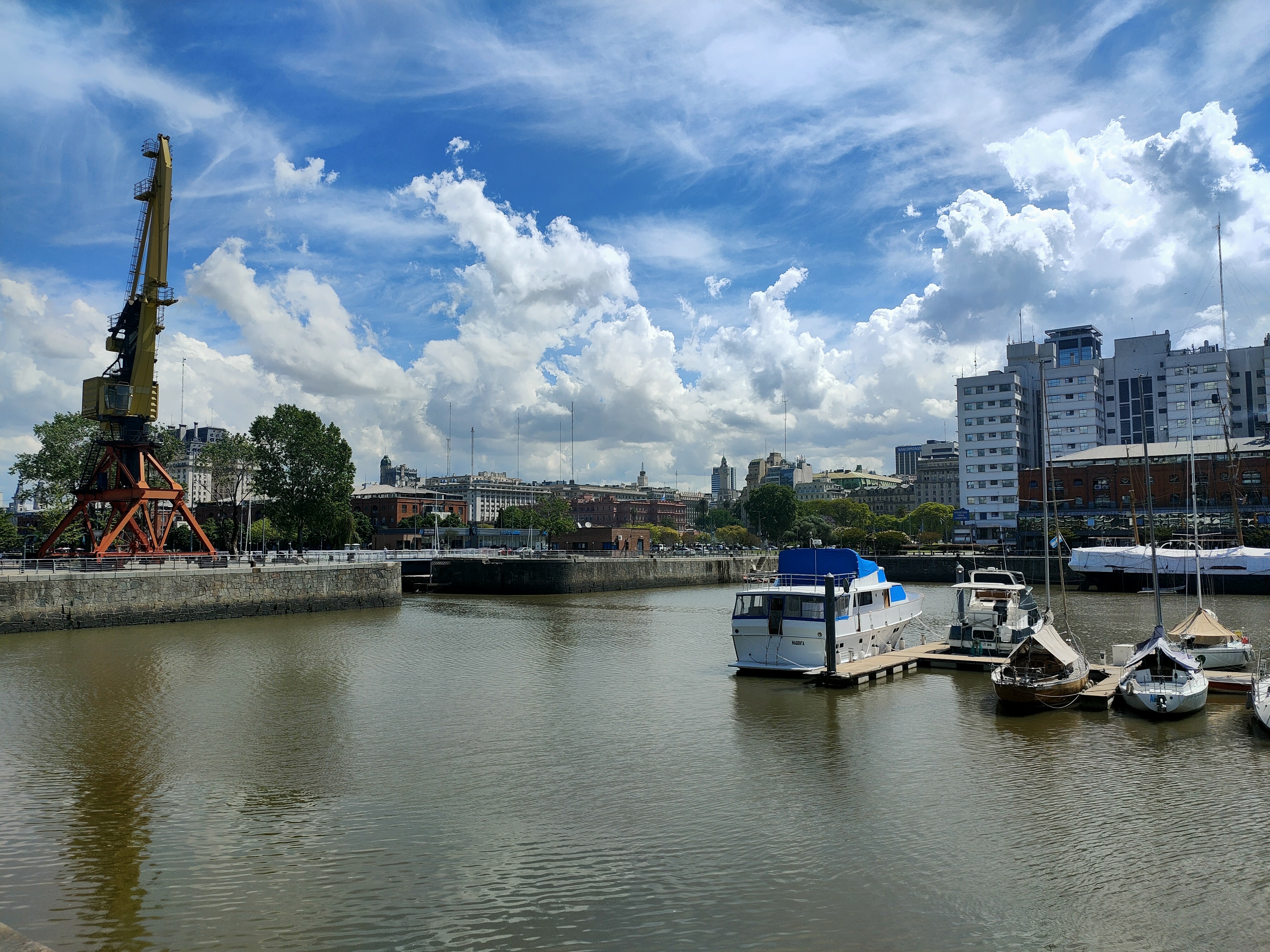
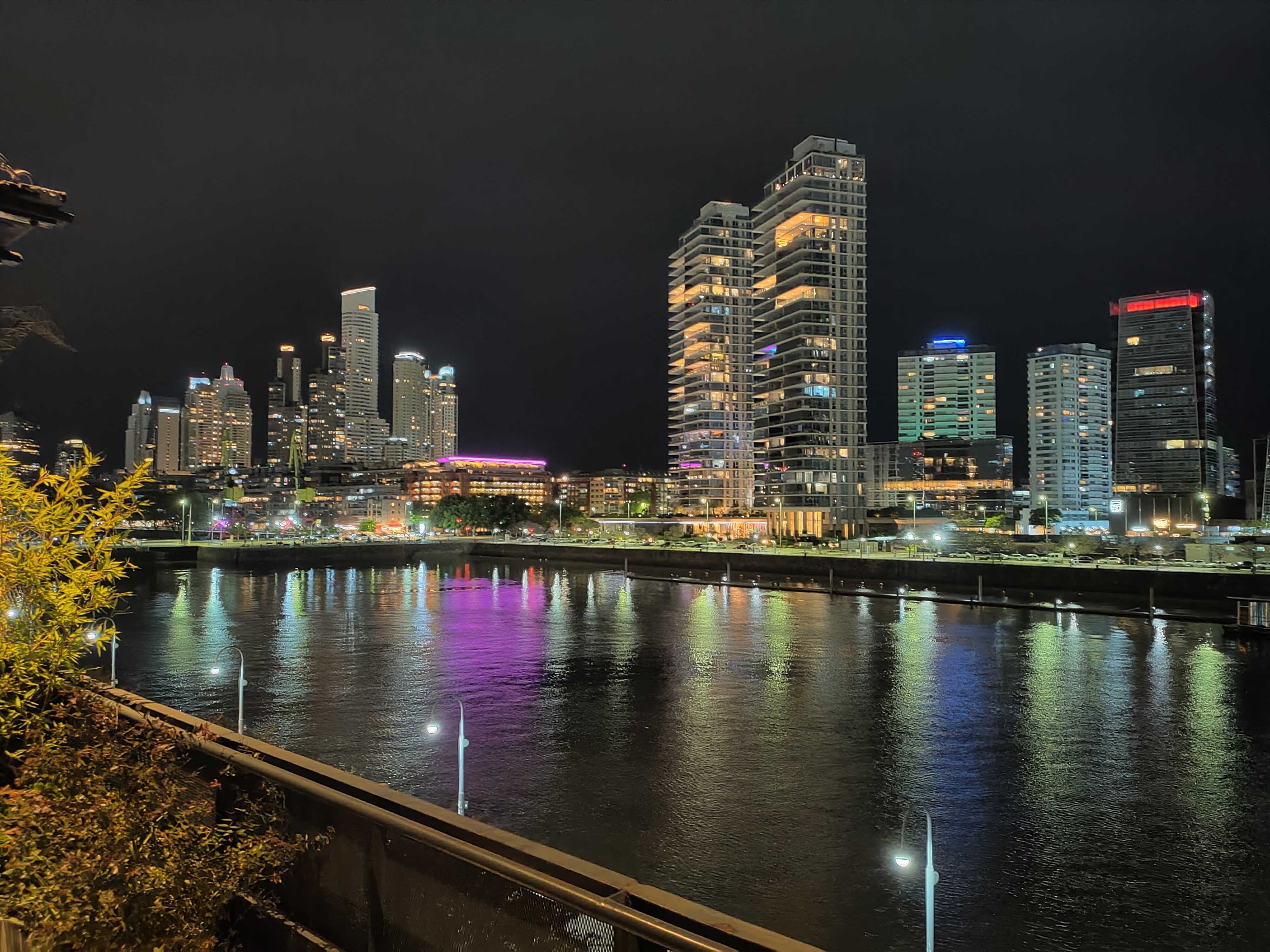
Our flat is in a converted warehouse in Puerto Madero, on the east side of San Telmo. This area used to be the first port in BA, but fell into disuse for 90 years until cleaned-up and gentrified. Between us and the river Plata is a huge eco wetland that has been left to re-wild.
Wattled JacanaLapwing?Some kind of Coot?A tropical Kingbird
A Tiger heron
We see a Tiger Heron, and loads of birds we have yet to id.
Our home until this Saturday
A day trip to Uruguay
One day this week we crossed the Rio de la Plata, so-called because the Spanish enticed immigrants with the promise of silver = “Plata”, that no-one ever found. Reminiscent of a trip from Lymington to Yarmouth, but with customs, we’d been warned the food in Uruguay might be bland, but we stuck with spag Bol, and as always, it came good. Colonia had a chilled, laid back green leafy vibe that made us kick ourselves for not bringing our binocs because the birds were crazy in their variety. There really wasn’t much to do there after lunch, as we and pretty much all the day trippers on our ferry could be found in Colonia’s’ every nook and cranny lolling about on patches of grass, slabs of beach and benches in the park waiting for the 6 o’clock ferry back.
Old car in Colonia Desperatingly trying to get comfortable on rocks.
Another death defying day in paradise.
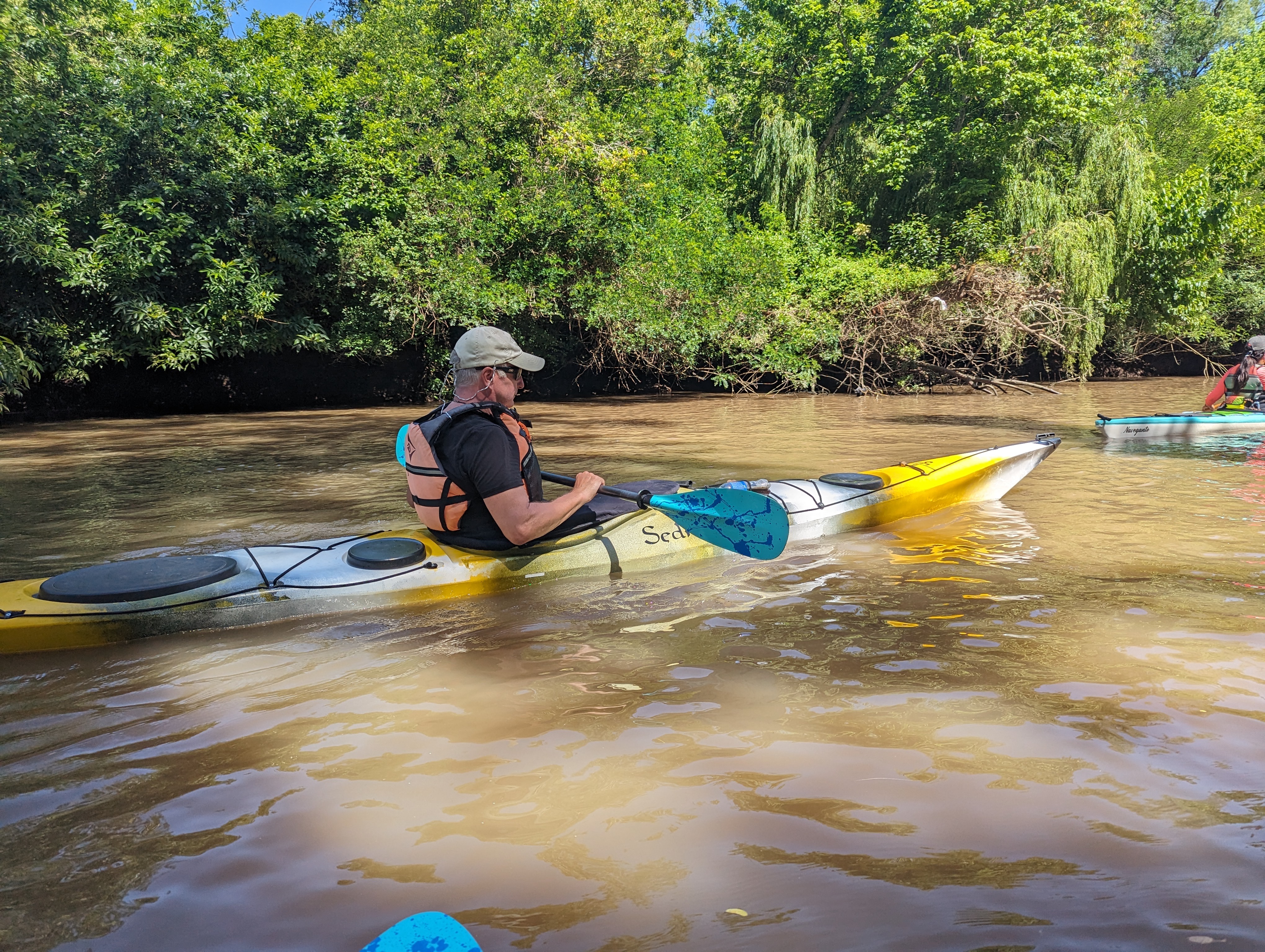
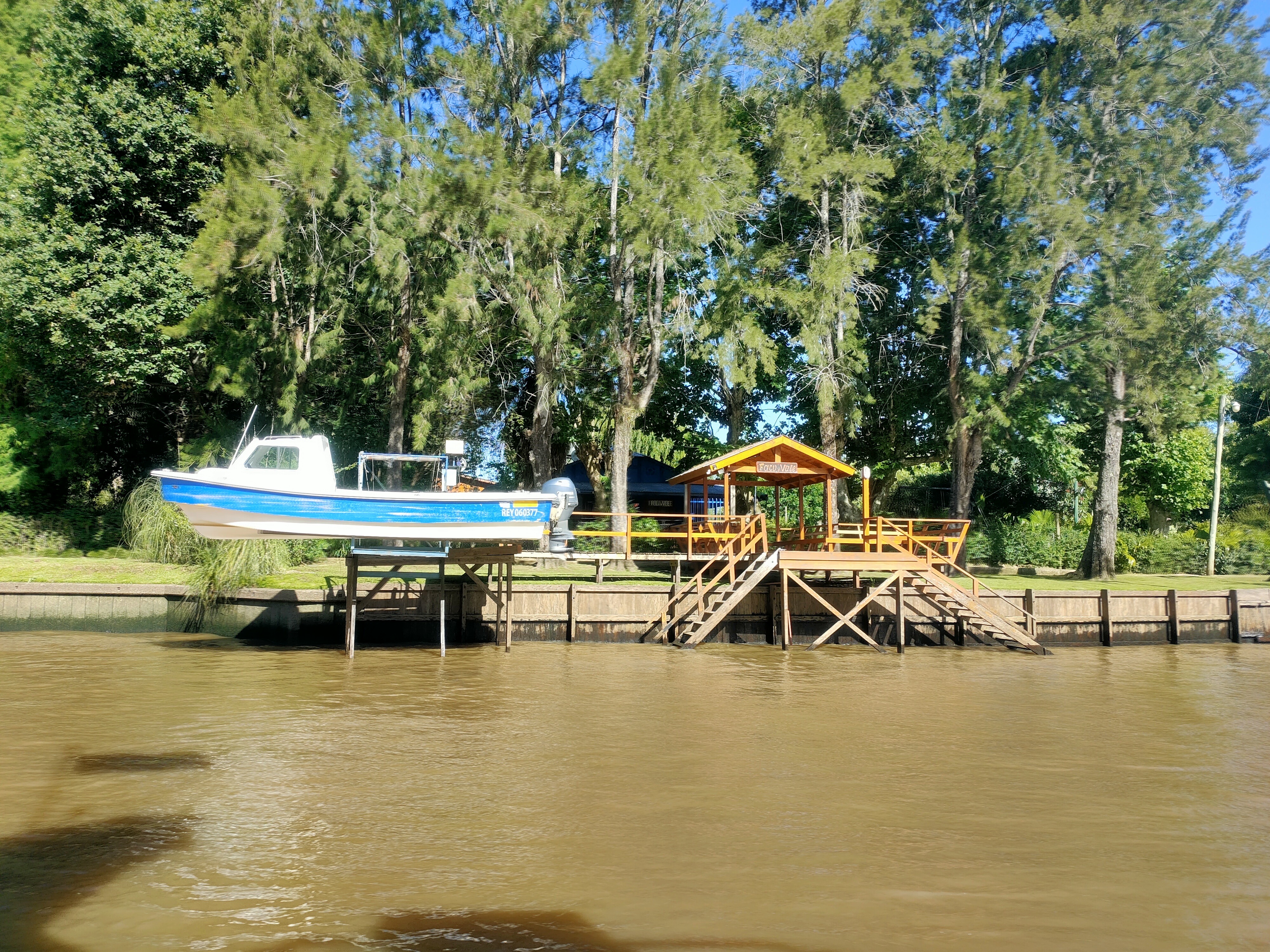
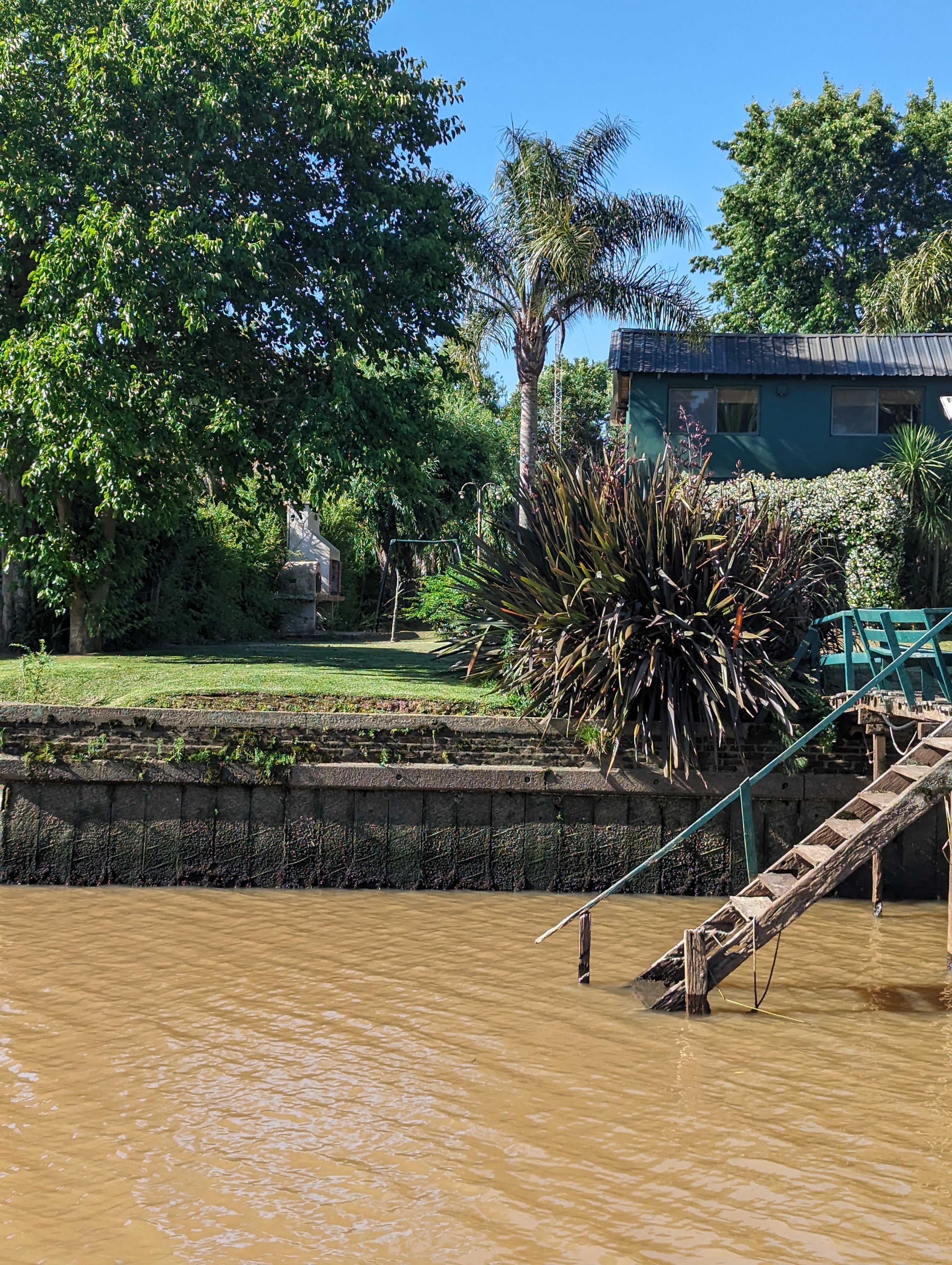
The only way to see Tigre, an area of hundreds of small islands a 30 minutes train ride north of central Buenos Aires, is by Kayak, a blog I found tells me, as you cannot walk between the islands. What I hadn’t bargained on was the kayaks being proper sea going ones with splash hoods and the stability of a three-legged giraffe. We set off with Adrianne and her assistant, a retired armed police officer, reassuring if we get mugged by gun-toting kayak robbers, and head straight into the main thoroughfare where the wash is huge and the chances of flipping 180 degrees feel high. I fear my fib to our guide that we know how to kayak will now lead to our deaths by drowning, and fess up so that I get a quick lesson in what to do if I capsize. To be fair we have pootled up and down Beaulieu river a few times, and even owned a blow up double kayak which I seem to recall went round in circles and ended up gathering mould by the side of the house. We paddle like maniacs across this M1 of rivers and are relieved to arrive in a series of much smaller, calmer tributaries. The places hidden in the greenery vary from stunning glasshouses to one roomed beach houses, all on stilts as they regularly flood. There’s a shopping barge that brings vital supples, a rubbish barge that takes your refuge hung from the end of the jetty, and it must be magical at night, although a mossie heaven no doubt.
The mesmerising effect of our boat’s wash on the reedbank
Tara for now
Well, this is over and out for this trip. Things I’ve learnt are – I really don’t need many clothes, even in cold weather, I can make do with a very limited repetoire, and wow does it make life easy. I have hardly any eyelashes left from the dreadful make up remover here. But they’ll grow back. I feel my pants should get some kind of medal having lasted this long and not being that saggy in the gusset – I think they even have another trip in them! I haven’t lost that many things since the last list, the most annoying is my headphone case, no doubt still languishing under the chair on a bus somewhere, and a second pair of sunglasses that lasted 24 hours – lucky I never spend much on them for that reason.
The things that have been life savers:
A phone with 5G. I actually don’t think we could have done this trip without one of us having access to google maps etc all of the time.
Squalling babies? Brazillian families who don’t stop talking at all on a 12 hour bus trip? Someone, somewhere, watching their videos on full volume? Noise cancelling headphones.
Ear plugs. There is not always another bedroom to retreat to when the snoring reaches 4 million decibels. Note that sentence has no subject.
Our fanny packs, as the yanks fondly call them. I fully attribute having one to not losing my phone and credit cards, and they are difficult if not impossible to pickpocket.
A charge free account like Starling. We discovered rather late in the day that using a debit card gave us a rate close to that on the black market.
Photocopies of our passports. You practically can’t breathe here without knowing your passport number, in fact people have been stupified that we couldn’t reel it off by heart.
A plug I bought Clive online that has three adapters that worked in Chile, and Argentina, but also has loads of inlets for USB’s and stuff.
A power pack. Great when everything’s dying, there are no plugs and I am at a vital point in my book/on netflix with god knows how many hours of limbo ahead.
Having US dollar bills in big denominations.
A magnifying mirror and tweezers, obviously.
So home we go, to the rain, cold, friends, and family, the last two of which I have really, really missed.
I’d love to steal this and put it on the corner of our road.
There’s a storm in Buenos Aires and no seats left in the departure lounge as all the flights are delayed, toddlers are going off like grenades left, right and centre, and the queue for the ladies loos is predictably gigantic. Eventually it’s clear that all our flights have been cancelled.
Team work prevails.
I wait for our luggage while Clive dives into the morass of people at check-in trying to get out of Buenos Aires. He is third in-line but unfortunately a German girl at the front wielded even better team work and her 12 ebullient compatriots appear with all of their luggage, ecstatic that she has nabbed the last of that evening’s remaining flights. There are no flights left until the day after tomorrow. Our final trip, to Puerto Madryn and the whale watching trip, might be the one that got away.
Will our brains explode at 2 am?
Eventually we are offered flights at 4am, to Trelew, half an hour’s drive from Madryn, which we accept. There are only $600 a night hotel rooms left in BA, so as we would be sleeping in the airport anyway, we figure we might as well go for it, although with some trepidation. Apart from rare events when we might stay awake until oooooh 2am, we never go to bed after midnight, and are generally tucked up and snoring by 11pm. We are genuinely scared that our brains might explode after 2am. Hence Clive’s “Remember to be nice to each other” as we make an uncomfortable camp for ourselves in Burger King, no doubt expecting me to bury my teeth into one of his carotid arteries at 3 am when he says something (he thinks is) innocuous.
A pod of dolphins passes by our window.
Our living room in Puerto Madryn.
We eventually arrived in Puerto Madryn at 8am. I dreaded it being like another La Serena in Chile, blowing a hoolie up a gazillion mile long sand blasted beach with circling vultures. But it’s more Hove circa 1960, and getting back to self-catering is a joy, especially when we spot a pod of passing dolphins from the living room window.
After a day of recovering, we head for the Valdez Peninsula, to see some wildlife, especially whales. Our guide is at the extreme end of pessimistic, preparing us all for disappointment. He explains that the mothers are teaching their babies how to swim, to dive, and to feed, and they will be gone by next month, down South to the Antarctic. They spend a lot of time diving to feed on krill, tiny little prawns they sift through keratin curtains lining their mouths. Hence they aren’t seen at the surface much.
I am 100% prepared to see nothing at all.
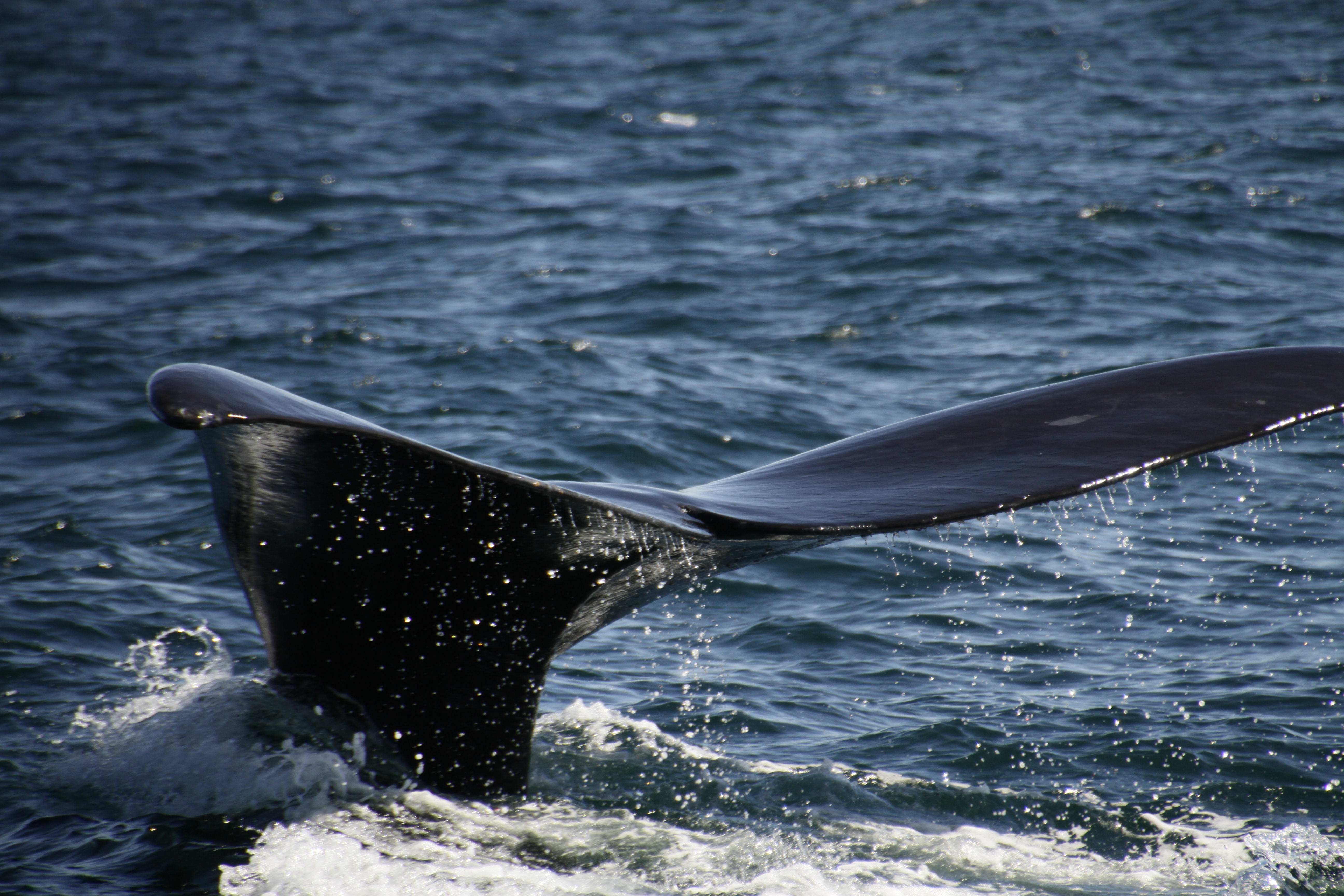
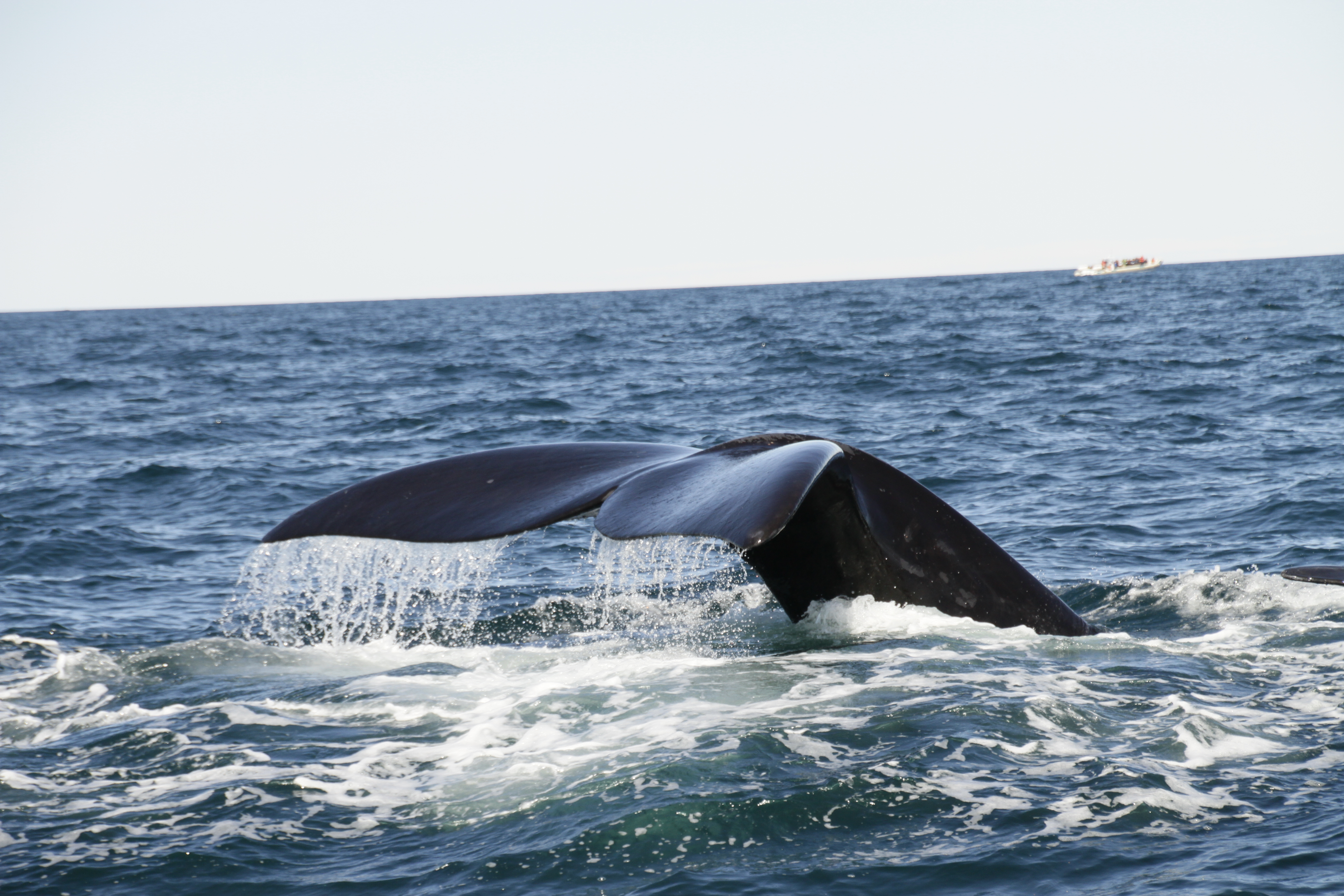
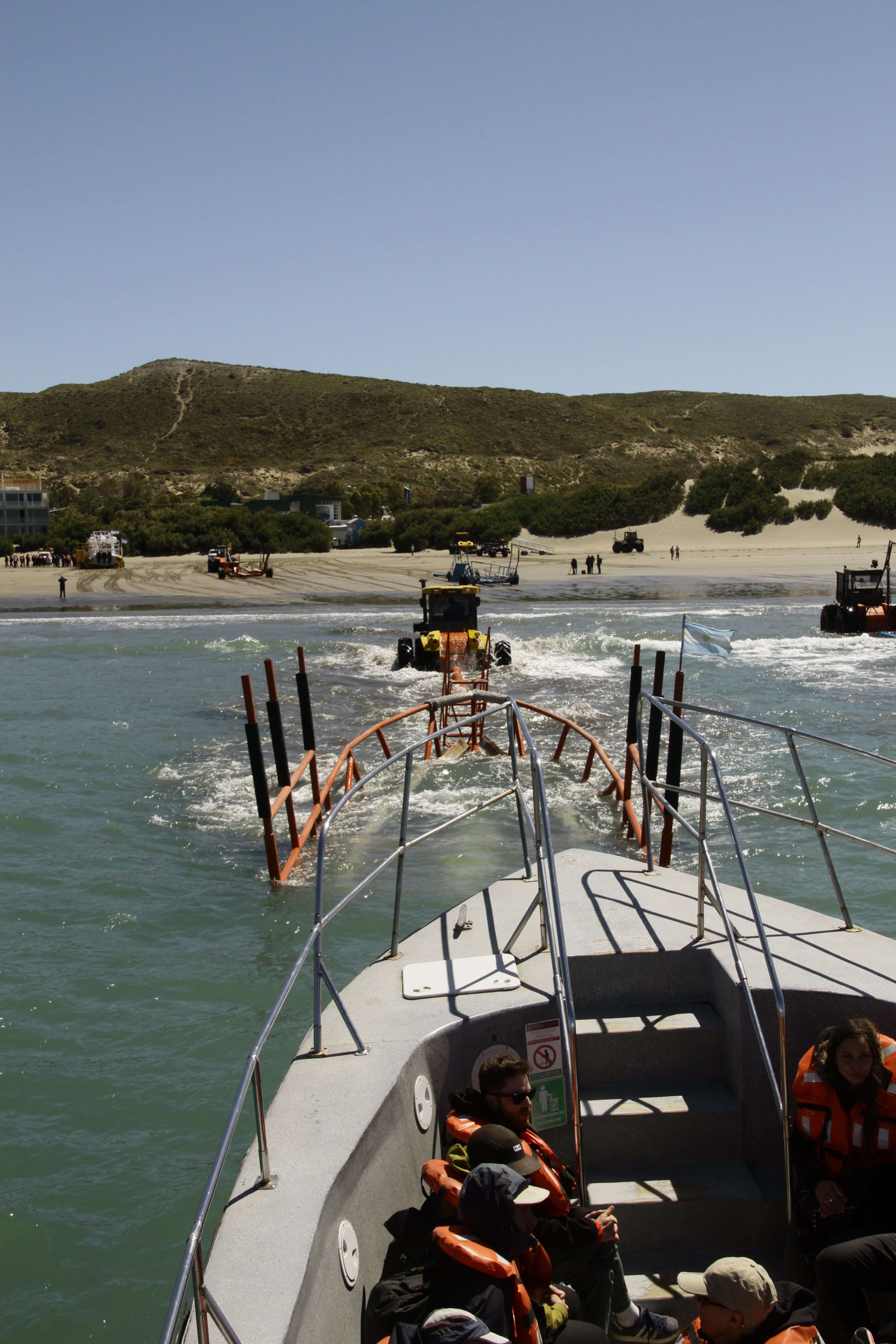
The beauty. They are curious and friendly. This is the money shot. A baby whale swims by our boat, sussing us out. In heaven. Coming back in to Piramides. She is right by the boat.There she blows. Sorry, had to be said.
I lost count of how many whales we saw – all Southern Right whales, all in possession of a 100 -200 tonne baby whale. They come to this bay near Puerto Piramides because it is shallow. This keeps them safe from Orcas, whose preferred method of hunting baby whales is for one orca to swim above the baby while another swims below it. The lower orca shoves the baby towards the surface while the other orca blocks its blow hole.
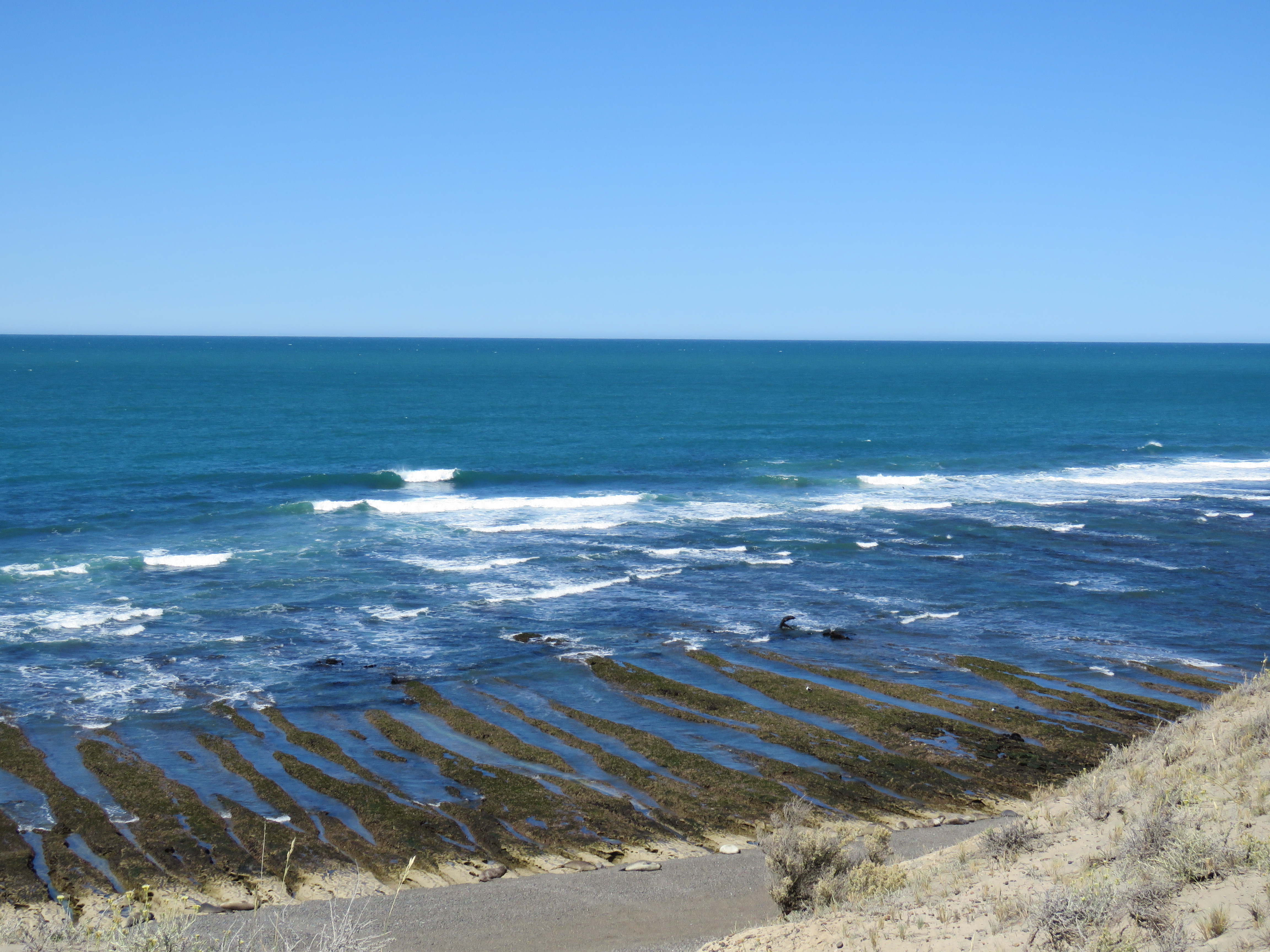
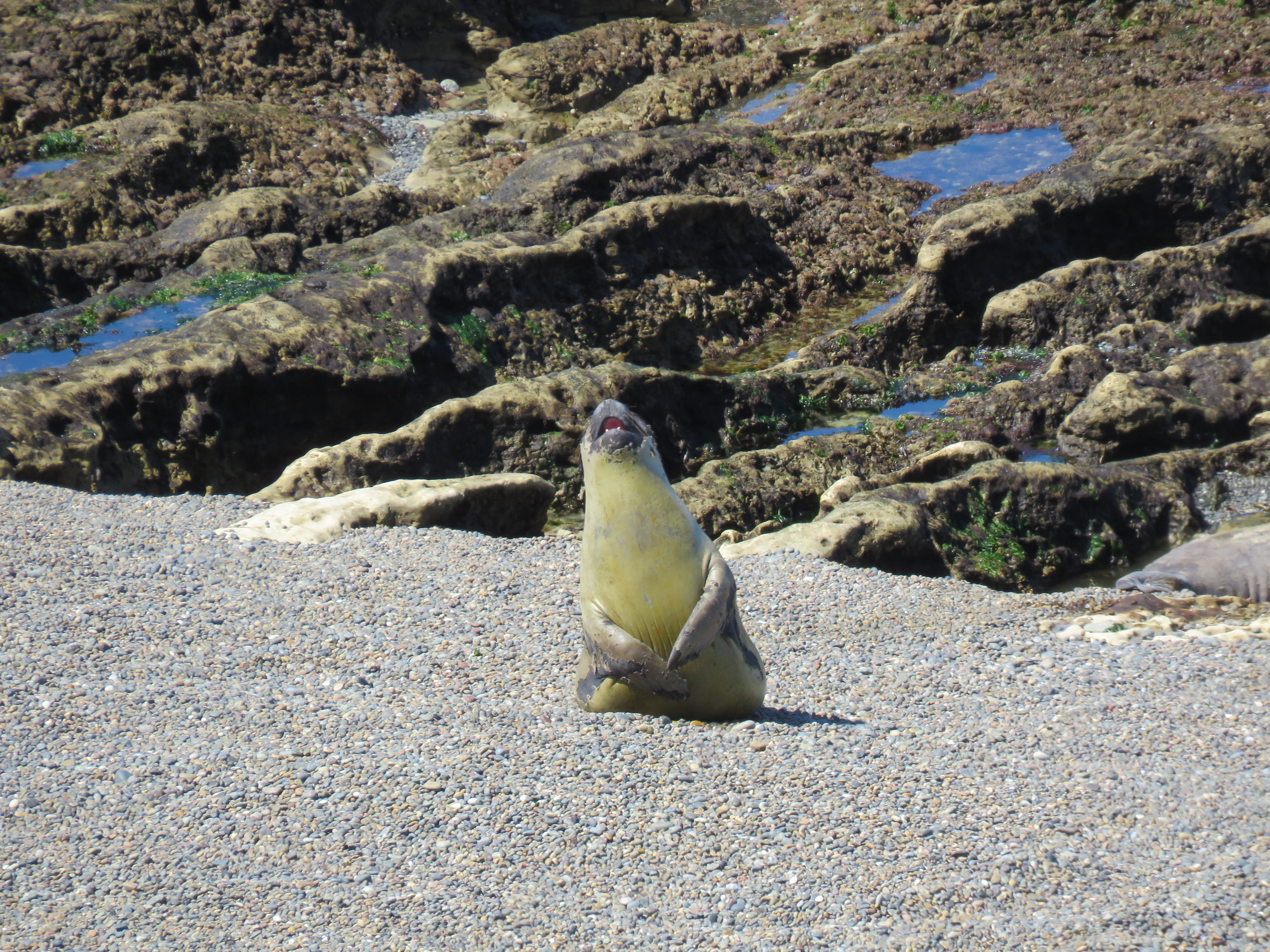
Caleta Valdes and seals. Not the best view of seals we’ve had tbh. This is where Orcas have been seen to hunt by deliberately strand themselves.
Puerto Piramides is a cool little village that reminds me of somewhere on a Greek island. We decide we’ll stay here when we return.
Elsewhere on the Valdes peninsula, which you reach via an isthmus near Puerto Madryn, is one of only two places in the world where Orcas have learnt to intentionally strand themselves to hunt the seals snoozing obliviously in the sun. The mothers have taught their children to do this, and interestingly the seals haven’t done the same and taught their broods to move away from the sea edge. Like lions, it’s the females who hunt, as the males are too big to be stealthy. The male only joins in if they need a bit of muscle, otherwise he holds back while looking after the babies.
Little armadillos, walking across my floor.
Although a rather flat and unexciting landscape, there’s a tremendous amount of wildlife here. After the whale watching we are as high as kites. As we get off the bus to see some seals, Clive says
“I feel lucky- I AM going to see an armadillo today”,
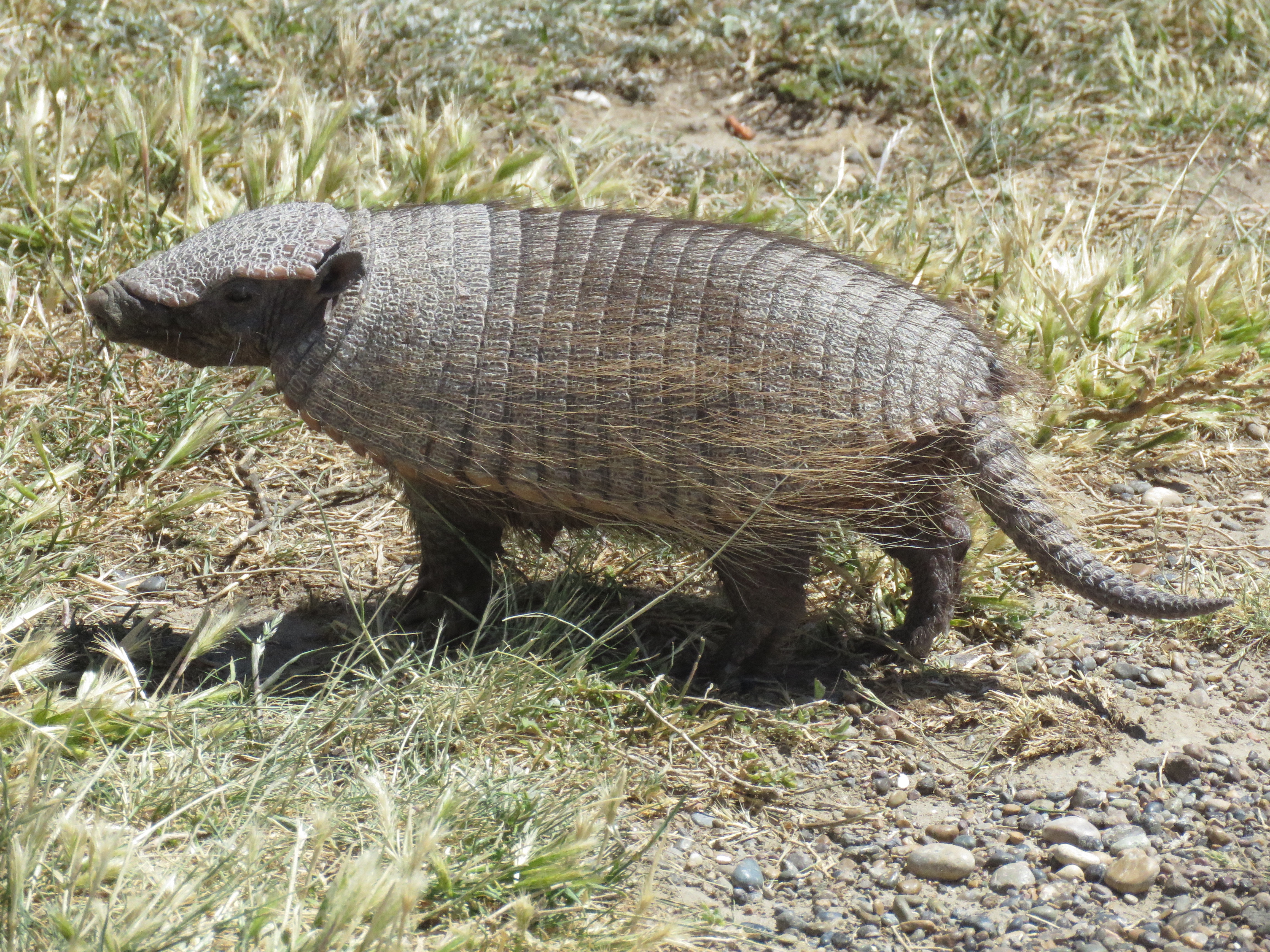
And Immediately, one scuttled past. They were much smaller and nippier than I expected, and not afraid of humans. I have a strong suspicion that their diet includes snippets of ham and cheese sandwiches nicked from the tourists in the tea house but our guide says they are there for the fresh water.
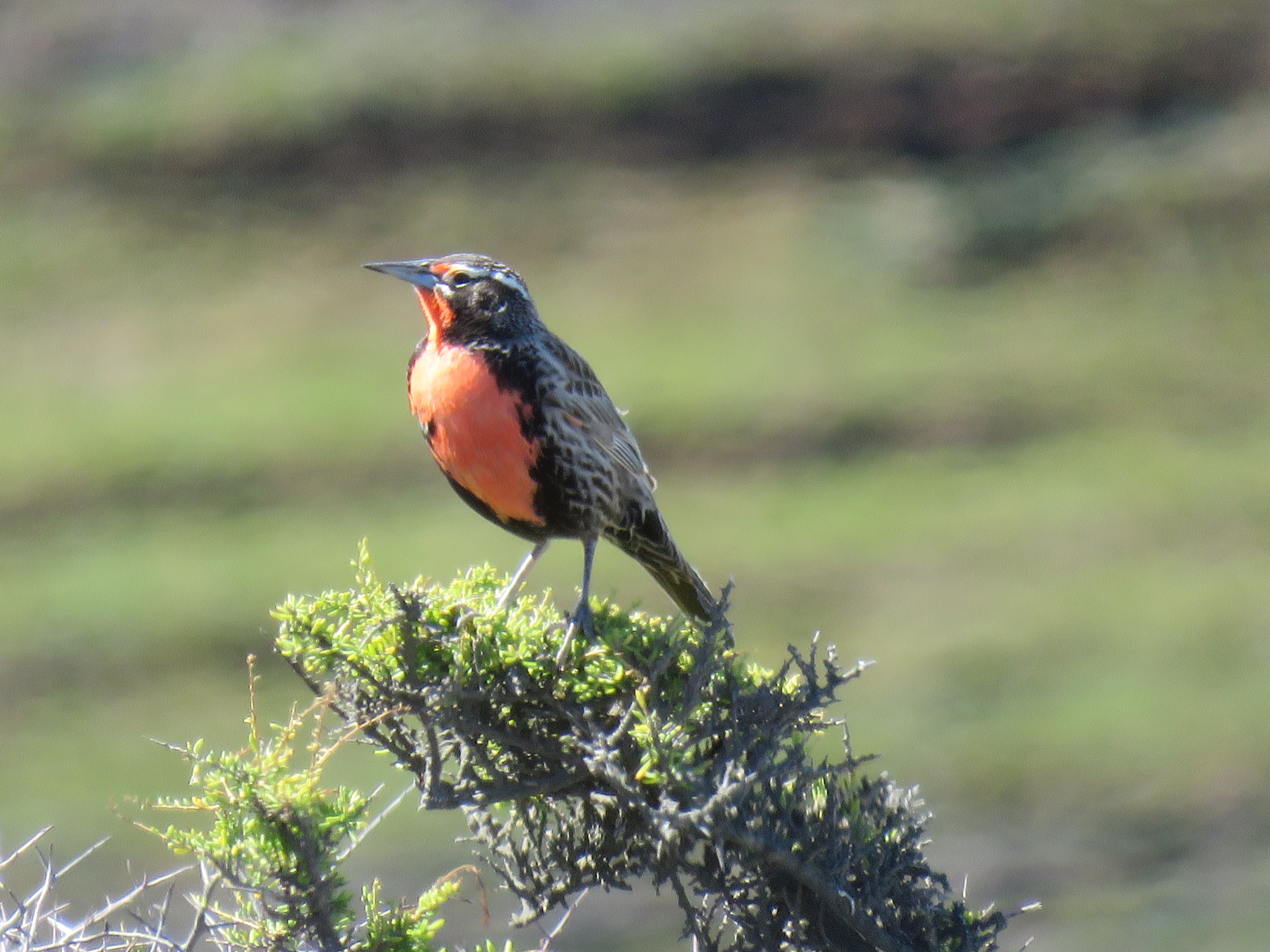
A long tailed meadow sparrow spotted at Caleta Valdez. Liolanus melanops Caleta Valdez again. A female seal A hairy armadilloI can’t resist another picture as he posed so willingly.
Wales transplanted to Argentina.
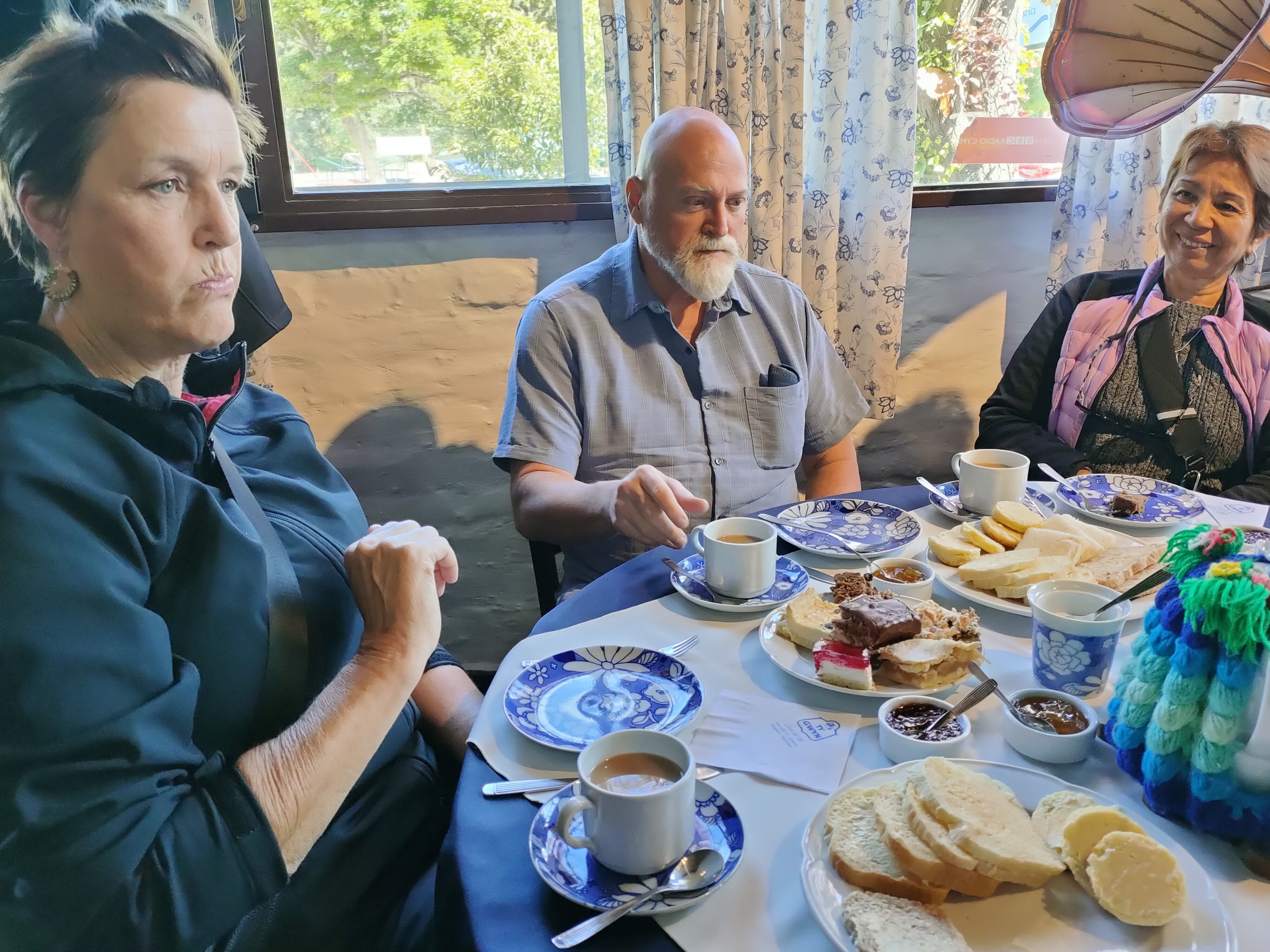
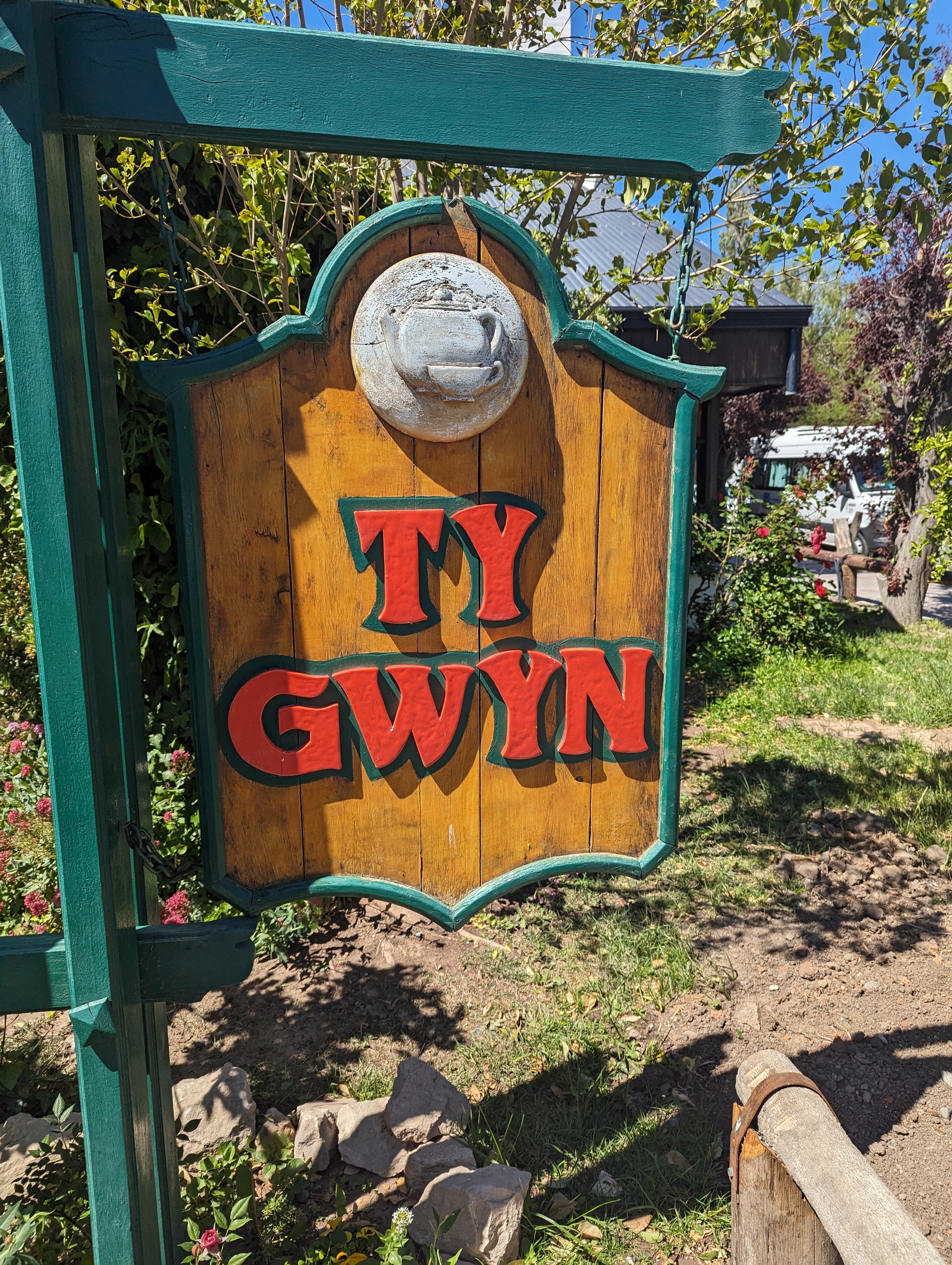
A Welsh colony arrived here in the mid 1800s to escape the English yoke that banned the teaching and speaking of the Welsh language and religion. On a day we went to see yet more Magellan penguins at Punta Tombo, we popped in for a carb fest at a cafe in Gaiman, aka “Welsh tea”. Welsh is still spoken here, although I am not sure if that’s a first or second language. I would dearly love to tell you the waitress bowled up and said “”Helo, what’s occurring?” But she spoke Spanish, disappointingly.
The old train station in Gaiman.Scones and jam but no cream. My face says it all. Yes, we are in Argentina.
Cramming for a Spanish language test.
We are back in Buenos Aires and due for a Spanish language test this afternoon as we are going back to school. My overwhelming feeling is excitement that we have 19 days to explore this beautiful, interesting and sunny city. The weather is warm and sunny.
I am frantically cramming sentences that are way beyond my proper level as I don’t want to be in the beginners class, and as a class A crammer, a skill honed to polished perfection at uni 41 years ago, I am optimistic. Deseame suerta!
Whenever I’m in a bus or taxi here, waiting at a crossing, and a car pulls up alongside us, a lone driver patiently waiting for the lights to change, I am so jealous of them I want to wrench them out of the driving seat, jump in and drive, goodness knows where. My car is a slice of personal space, of autonomy, me-time. Here I am never further away from Clive than a King penguin and it’s baby. I don’t miss my garden at all, as it’s November and is probably under water; instead of pruning my roses, I tend Clive’s eyebrows. But boy, do I miss my car.
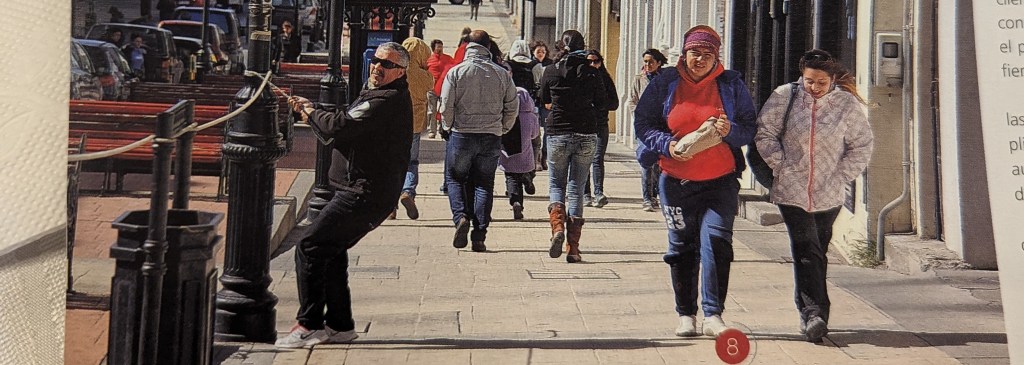
Since we’ve been in Patagonia, where ropes are strung between lamposts so you can cling on to them rather than be tossed rolling down the street like tumble weed, I have worn the same clothes for two weeks, maybe longer now – black action pants, t-shirt, snug, coat, thick socks, walking boots, woolly hat, gloves +/- thermals.
Man clinging to rope so he’s not blown away.
We stay for such short times in hotels I can’t face opening my suitcase, putting on make-up, taking it off, wearing jewellery, getting out my pj’s, moisturising, brushing my hair. My face is reptilian, wizened, dry and scaly from the wind and cold; my legs hairier than a baboons. I draw the line at not cleaning my teeth; even baboons have standards. It’s 90% liberating and 10% unhinging to be so free of any aesthetic concerns. Our waistlines, despite us being much fitter, are no thinner as our diet here, born of late night arrivals and early morning starts, centres around croissants, bread, crisps, chocolate, beer and fanta orange. I know “No friday night feeling!” is the complaint of some retirees, but the opposite can also be true – every day is a Friday.
We’ve gone feral.
King Penguins.
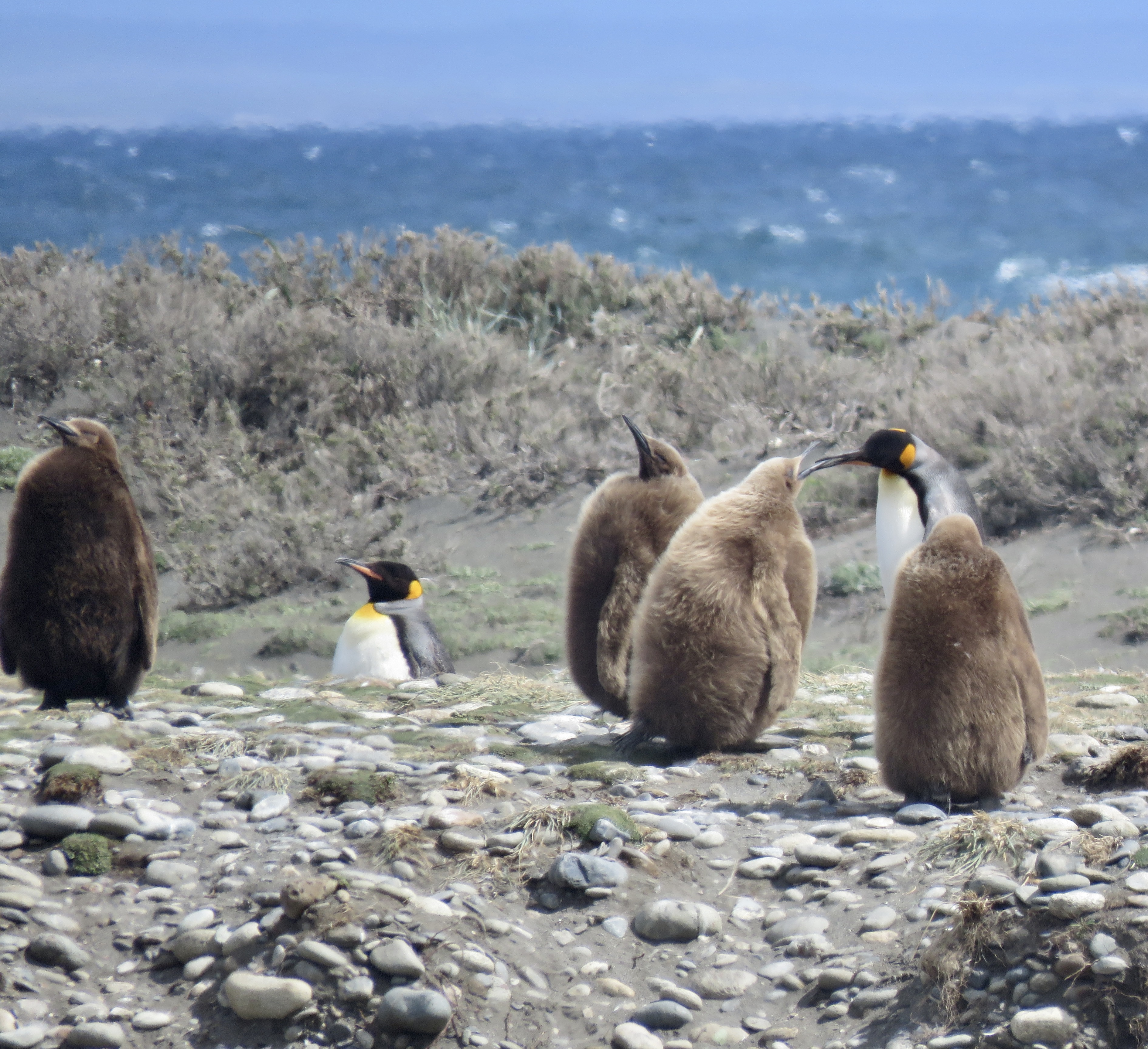
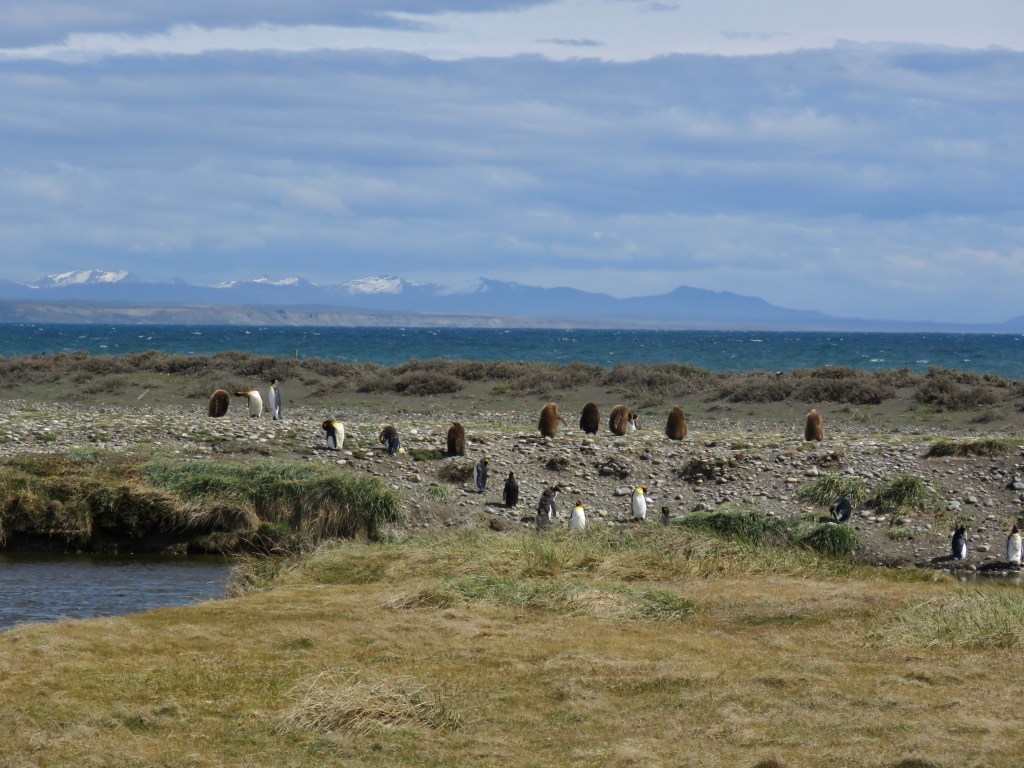
King penguins don’t care what I look or smell like. It is difficult, as we peer through our binocs off the coast of Terra del Fuego, not to attribute human feelings to them. A large wobbling ball of brown feathers shuffles alongside their smaller parent squawking up a storm, beak wide open, never more than 3 mm away, and as they gently peck him on top of his head to get him to give it a rest his head keeps popping back up, beak ever wider, squawks ever louder. A nice little metaphor for parenthood right there. They are 10 months old and in a few weeks will moult and be sea-bound, and on their own. Only around 60% of them will survive to breed. There will be about a weeks gap and then their parent will have a new pregnancy on the go. Brutal.
Most of the baby’s bulk is their feathers. When they’re in the water they look more like seabirds than land animals.
Ushuaia.
Defies expectations.
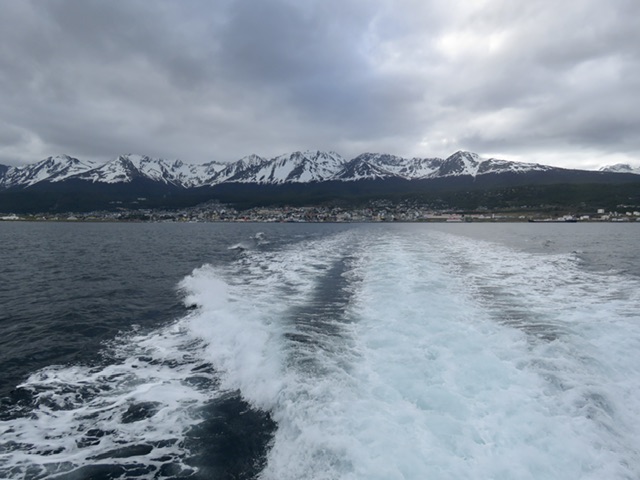
I am always struck by the difference between my expectations of a place I’ve never seen and the reality, as they rarely match (Santiago, I’m looking at you.) I thought Ushuaia would be a cruise terminal with a few scattered tourist offices, restaurants and hotels, teetering on the end of the world like the bus in The Italian Job. It turns out it’s a vibrant, smart, port town that caters for skiers in the winter and cruises in the summer, with an alpine vibe, timbered restaurants,expensive adventure gear shops, weather that turns on a sixpence from blinding bright sunlight to sleeting snow, and a bone-chilling wind blowing up the Beagle Channel straight from the Antarctic.
Old and new- the wreck a reminder that this stretch of water is perilous. Great ambience here. A church in the Main Street.
Ear wigging.
Eavesdropped gossip on our journey down, which involved our fourth passage through border control between Chile and Argentina, is that everything in Ushuaia is fully booked. Not to be disheartened, we decided on arrival to walk down to the office and try our luck.
Perseverance pays off.
We strike gold, booking one of the last penguin viewing slots that probably hasn’t shown up on-line. The English couple in front of us booked this 3 months ago and are only here to pay, but a Frenchman who did this has discovered that because he didn’t pay on-line, he’s lost his place. We’re all trying to pay upfront in cash, as it costs a third as much than if you pay on-line in dollars, but even more if you book it through a tour operator. Pirator is the only place in Ushuaia that has a licence to let people set foot on the penguin island, and they are only allowed to take 80 people a day in 4 groups. We also have to pay for a separate boat trip on a different day, which Clive is very sniffy about but it turns out to be tremendous, with several birds we’ve never seen before, including a blackish cinclodes:
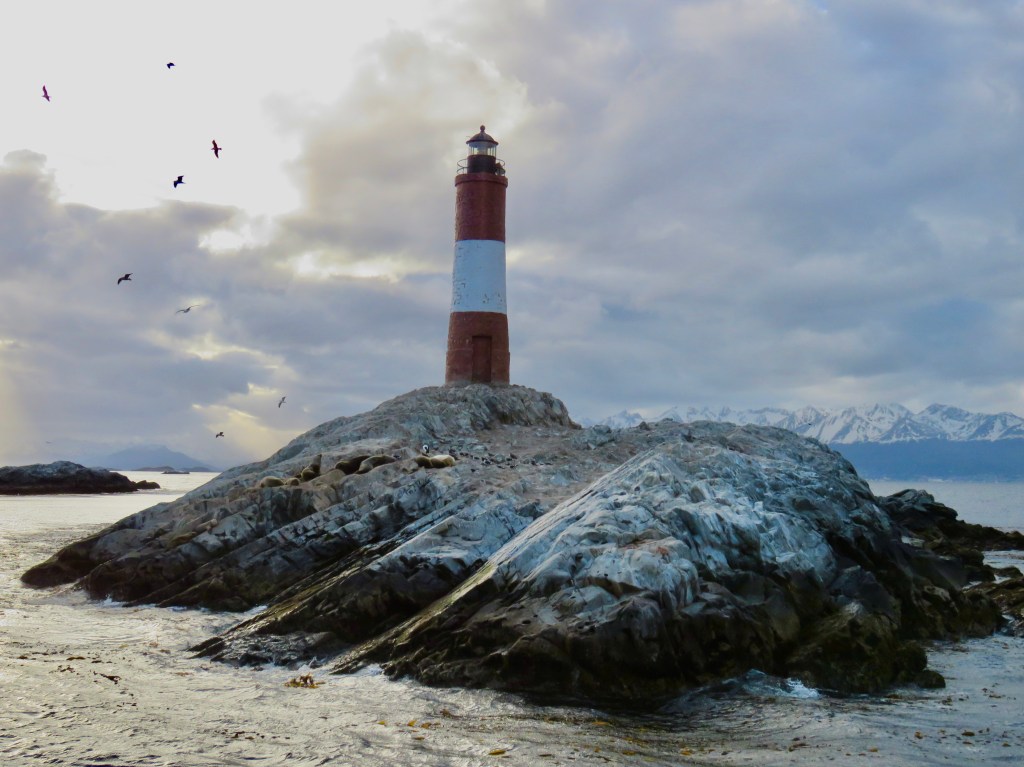
They only ever come onto the boat at the lighthouse, to drink the fresh water that lies in puddles on the deck. A rather non-descript looking bird, nevertheless it is almost extinct and can only be seen in the Beagle Strait and The Falklands.
The residing alpha male seal top, a hopeful contender, bottom.
Be afraid.
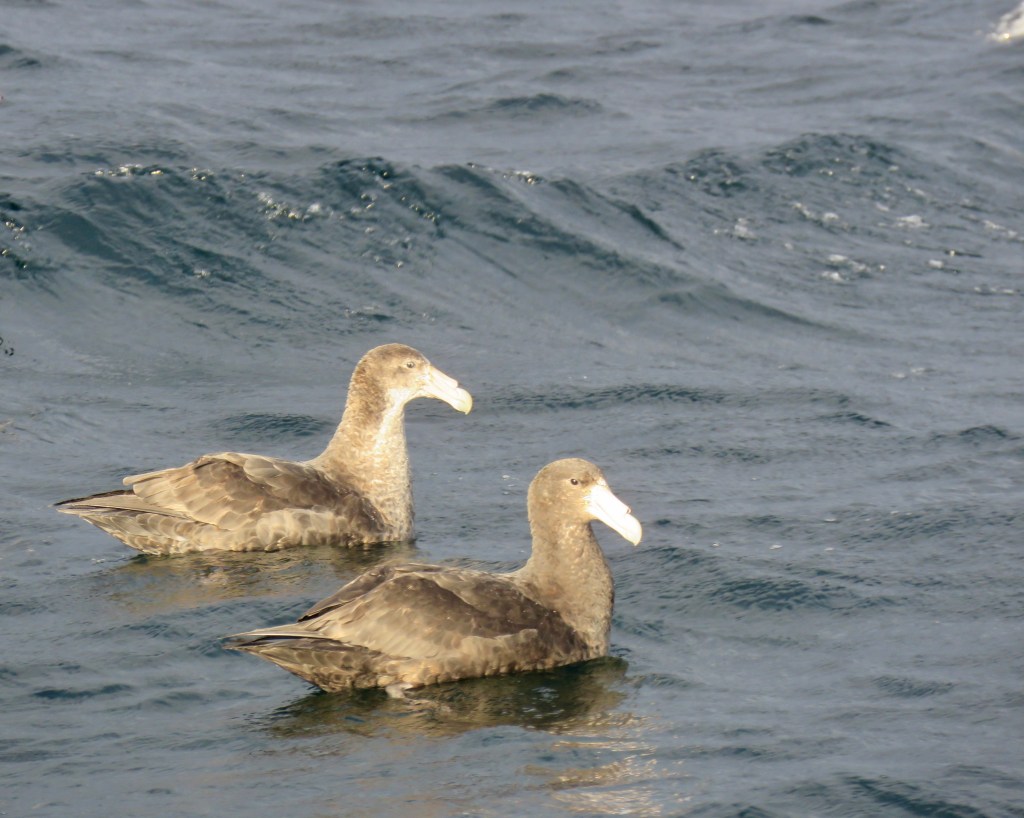
We watch as a Southern giant petrel drowns a seagull and then eviscerates it to feed on its innards. There’s something psychopathic about this – you expect to see birds fighting in the skies, perhaps to the death, but the petrel just sits on the bird in the sea until it drowns. It turns out drowning your prey isn’t unique to petrels, as orcas do it too, lying on top of a whale’s blow hole so it suffocates; then it eats only the lips and tongue. Nature, red in tooth and claw.*
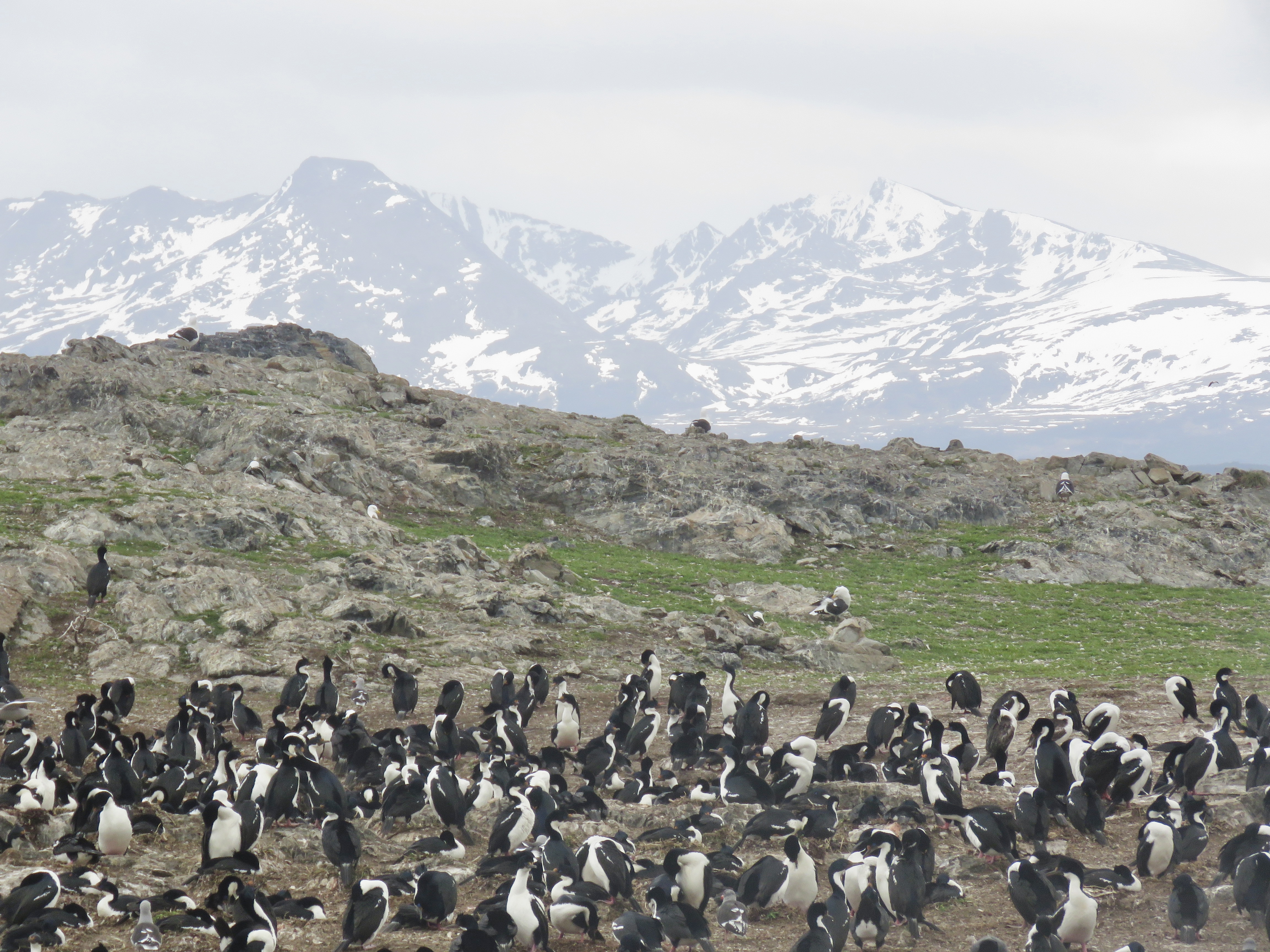
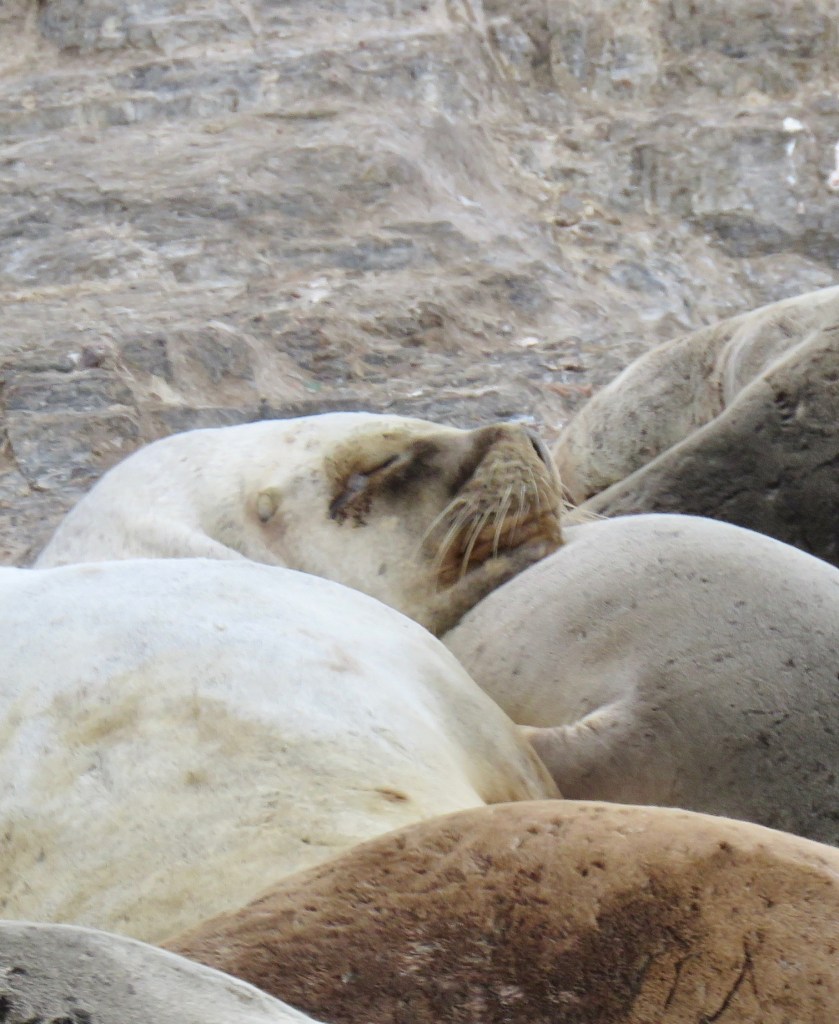
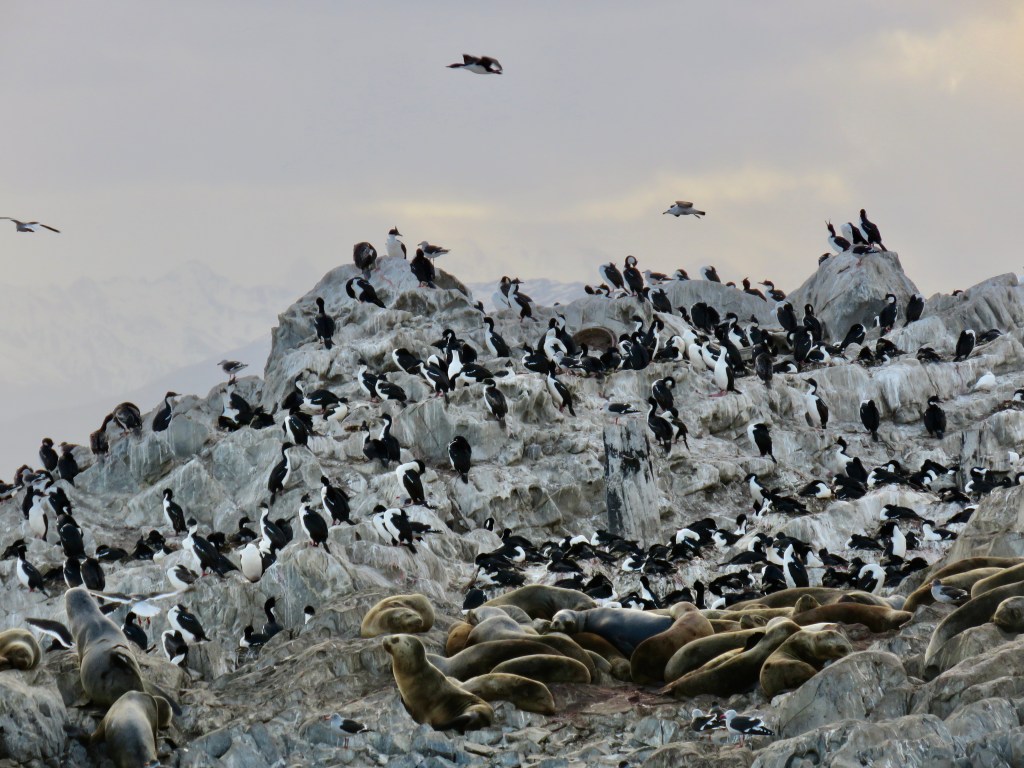
The boat takes us really close to a colony of cormorants and seals. Seals are coming up to mating season, the time for a lot of argy bargy when settled alpha males fight off young upstarts hoping to steal some of his harem of 20 or so females.
The petrol after drowning a seagull and then eating it.
A napping femaleImperial Cormorants have piercing blue eyes.Southern giant petrols aka stinkpots.
Magellanic cormorant – no blue eyes, but has orange colour around eyes.
New Forest mud maestros.
The next day we’re walking to the Emerald lake behind Ushuaia, yet another glacial lake and hobbit walk through dense, dark woods, river beds, gnarly paths, steep climbs, but with the added thrill of mud, mud, glorious mud. I feel we are mud maestros, having walked in it, through it, over it with kids, dogs and grandma’s for 25 years in The New Forest – we know mud. And so it proves. We can hear the cries of laughter as groups get stuck sinking thigh deep into the infamous bog as we take the firm left hand side by the river, gratifyingly overtaking them all. (No-one dies).
A crested carcara, after my sarnie.
I don’t know if it’s the altitude we have been at and all the walks we’ve been doing but we fly up to the lake and back, and when we share a taxi back to Ushuaia with a Canadian he jokes that we beat everyone on our bus, most of them under 40. Except him. Competitive – moi?
When a man is tired of penguins, he’s tired of life.
Below – penguins oiling their feathers on Martello island.
Gentoo penguins.
A Gentoo penguin nesting on their egg/son it’s stone plinth.
I move out of this Magellan penguin’s way.
“Well, I never did…”
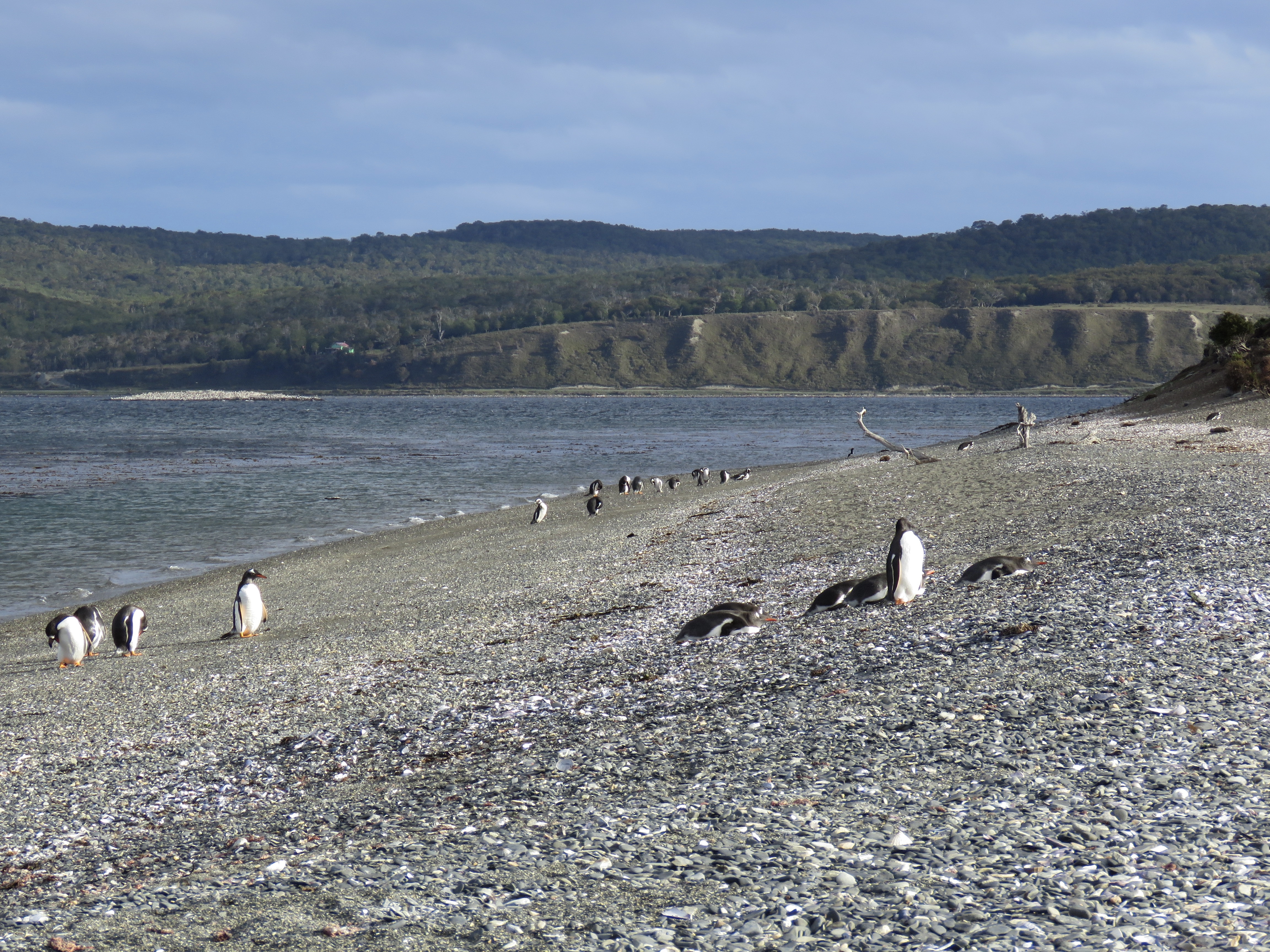
On our last day we visit Martello island to walk among Gentoo and Magellanic penguins, and one stray King penguin. It’s a peaceful place buffeted by a gentle breeze around 20 minutes by rib from Harberton Estancia, a sheep ranch owned by an English family for 150 years. The farm was the first estancia (ranch) built on Tierra del Fuego in 1886.
Photos above show the estancia loo, sensibly placed I feel, then a barn oozing history and dust, and lastly Clive by the rib that took us to Martello island.
No selfies and no coughing.
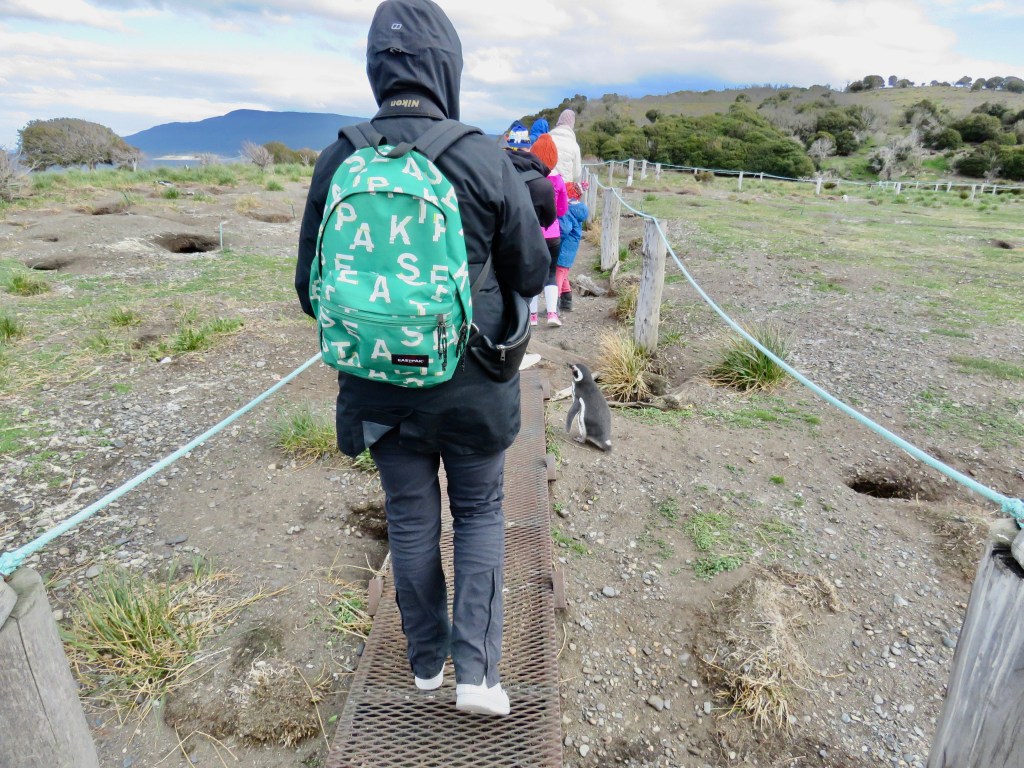
Our guide gives us strict instructions about staying 3 metres away from them, not poking them with a selfie stick or breathing near them. Avian flu is on the rise and they absolutely do not want it here. Some of the Magellan penguins didn’t get the memo though, and stand in our way on the path. There’s quite a few small children in our group and I am surprised by how good they are, even the toddlers tiptoing silently around the penguin who doesn’t seem bothered by us (they are very shortsighted out of the water).
Monogamous penguins.
The Magellan penguins are here year round and are monogamous on a yearly basis, and as they are currently breeding, we can see one or other parent down in their hole on the egg/s while the other is at sea feeding or oiling themselves down on the beach to stay sleak in the water.
Romance very much alive in penguin world.
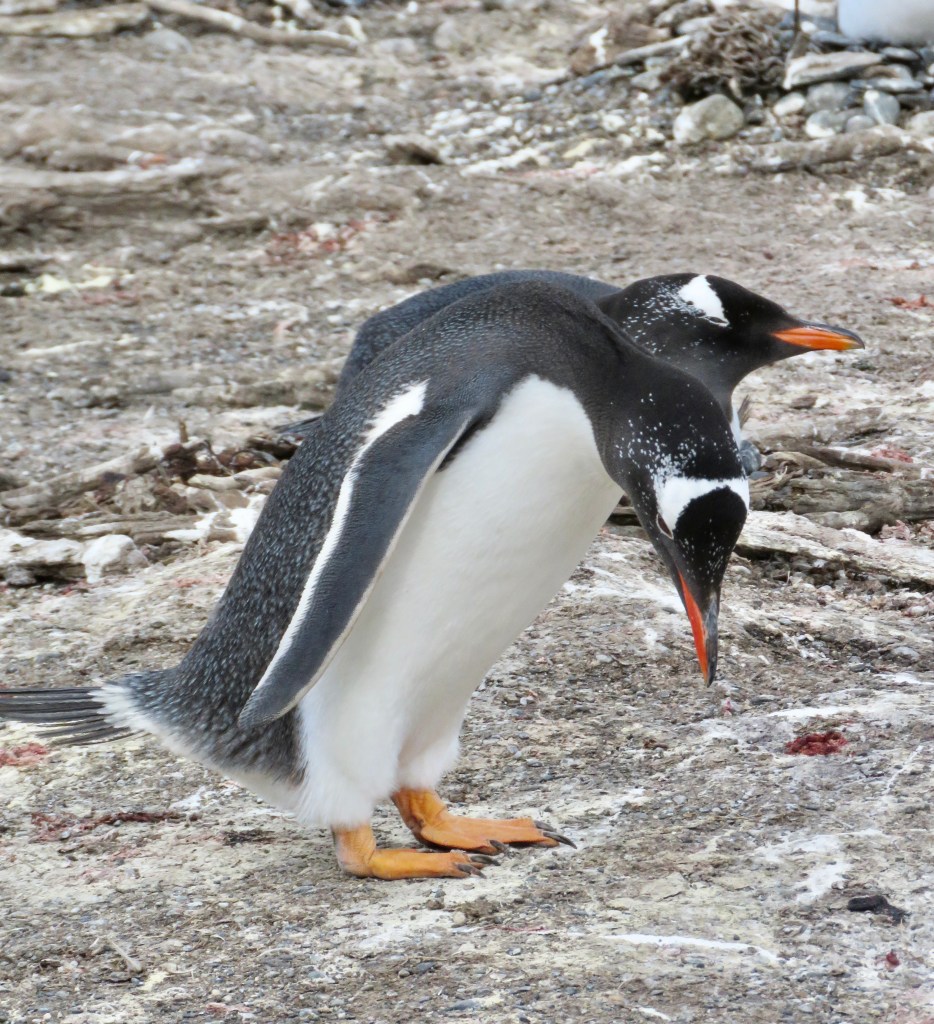
The Gentoos arrive every October to mate. The 2-3 year old males display their worthiness by presenting single females with their best stone, rubbed smooth by the sea, to lay on their future nest. They lay their eggs on a pile of bricks as they think they’re on ice although they’re not; it’s touching to see their mate hovering near the nest, gently tucking in a stray feather here and a bit of fern there under their mates bottom to keep the eggs snug.
A Gentoo penguin lining their nest.
Next stop a Welsh colony – and some whale watching.
We are now heading North for some whale and dolphin watching in Puerto Madryn on the east coast, plus a spot of Welsh breakfast. It’s 25 degrees, apparently, which I just cannot imagine.
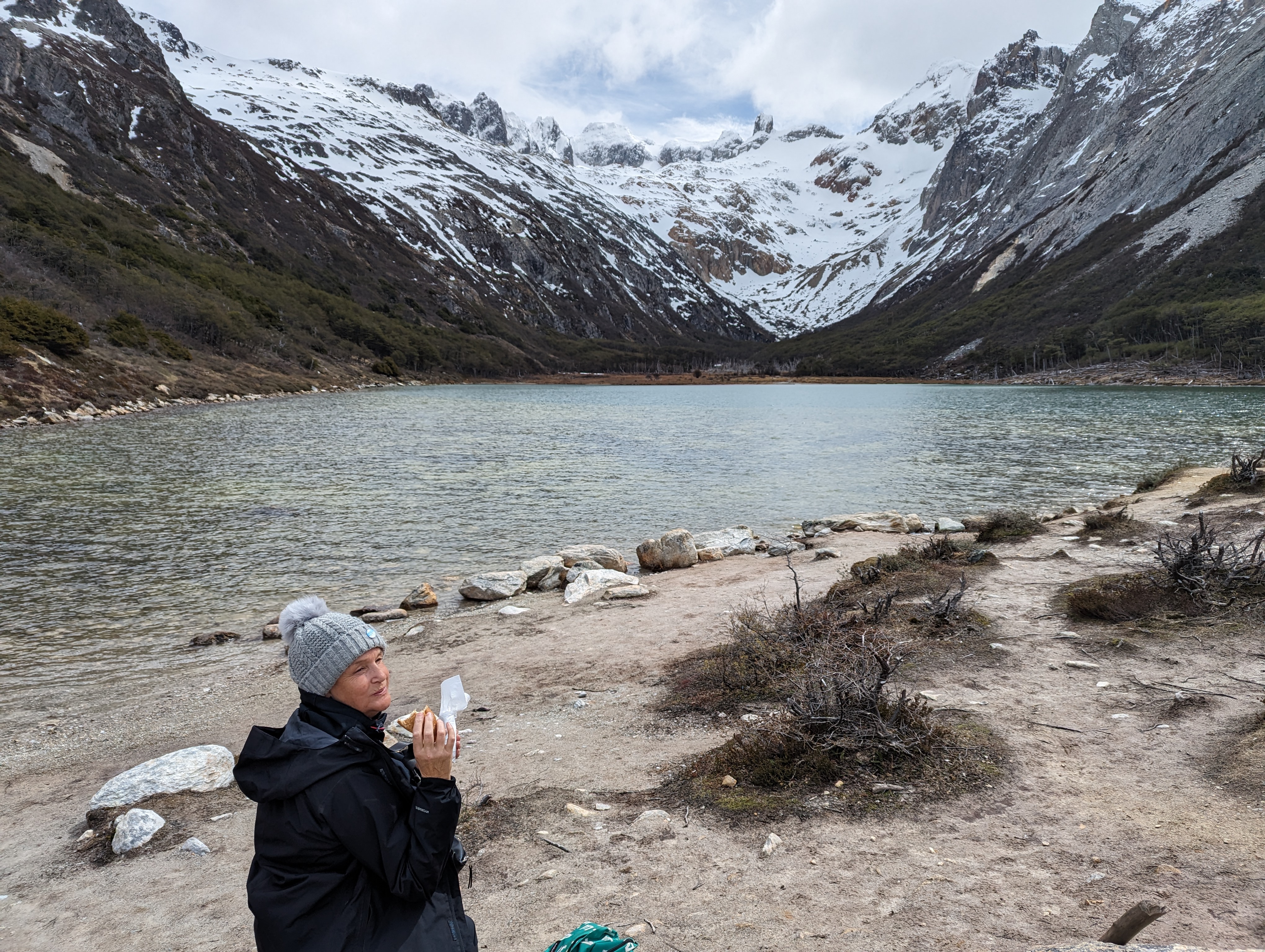
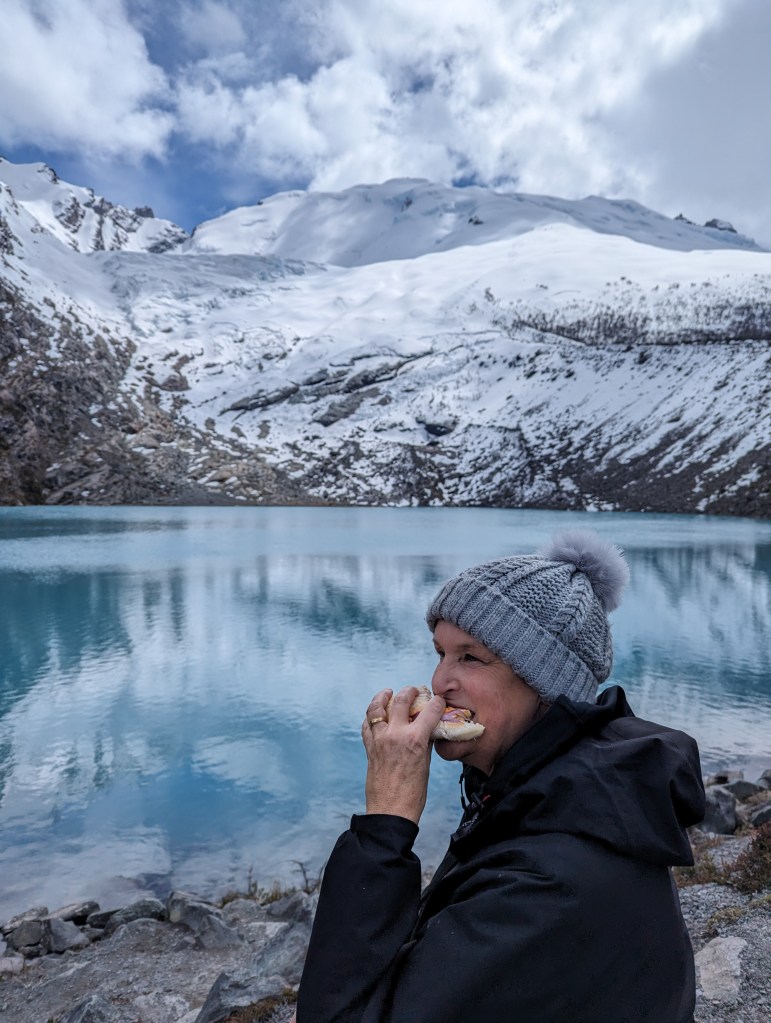
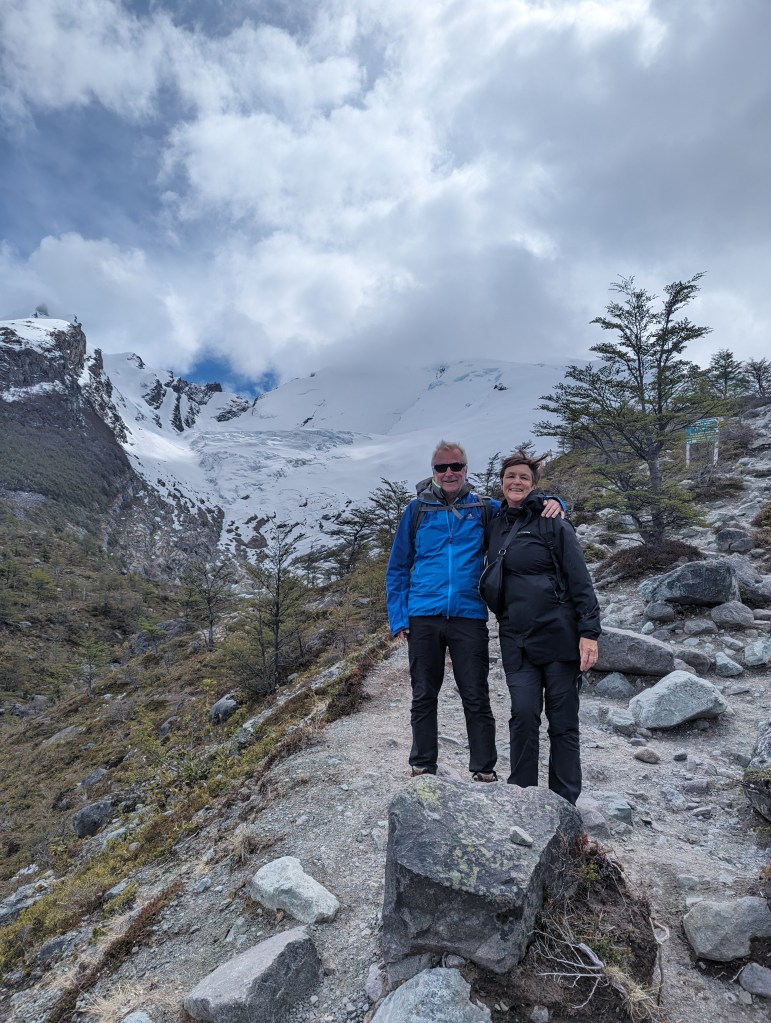
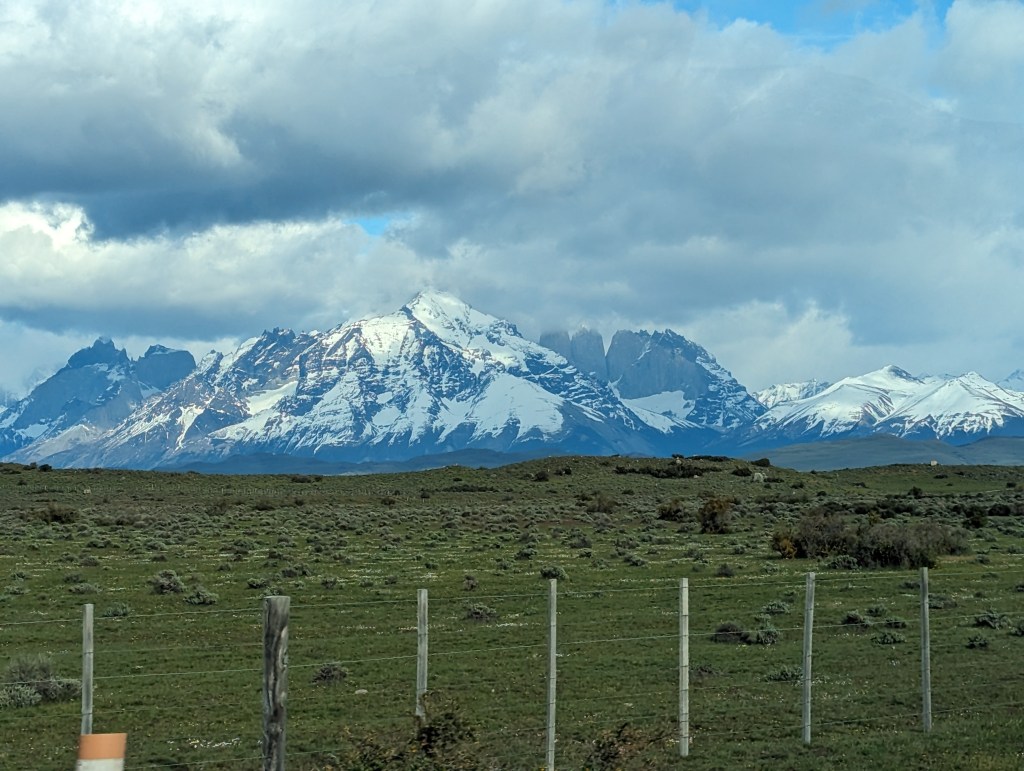
The word for blue in Spanish is azul, which seems like the perfect word for the blue of the small glacial lake we’ve just climbed up to. On a scale of 1-10, 8 for me being Ben Nevis, this is maybe a 6. It’s only an hours climb, and quite steep. Our lovely airbnb host told us there’d be a 30 km bus ride and I’d imagined a number 59 bus taking us along a tarmacked road to the start of the walk; silly me – we took a bone rattling minibus crammed in with 14 others, along a rough old track alongside a river with trout making their way upstream, and mountains on all sides. It snowed intermittently, but we were lucky, and as we climbed through the forest the sun came out, and we made it to the top and the glacier. It turned out to be a good training walk for the big one we do a couple of days later.
Laguna Torre
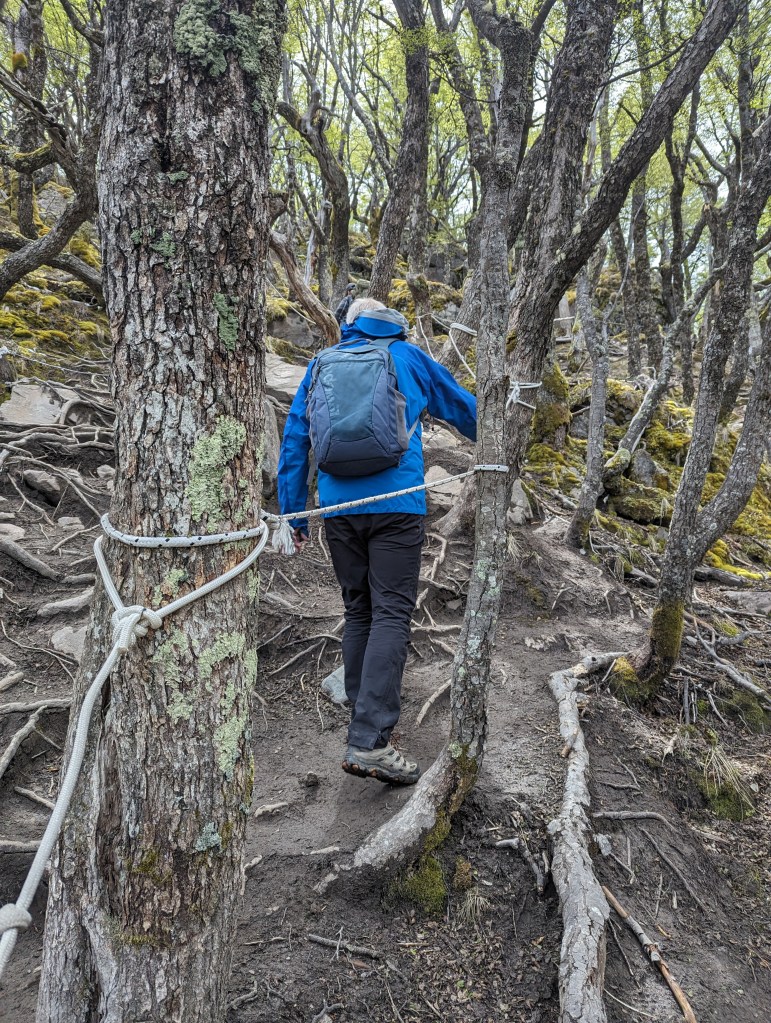
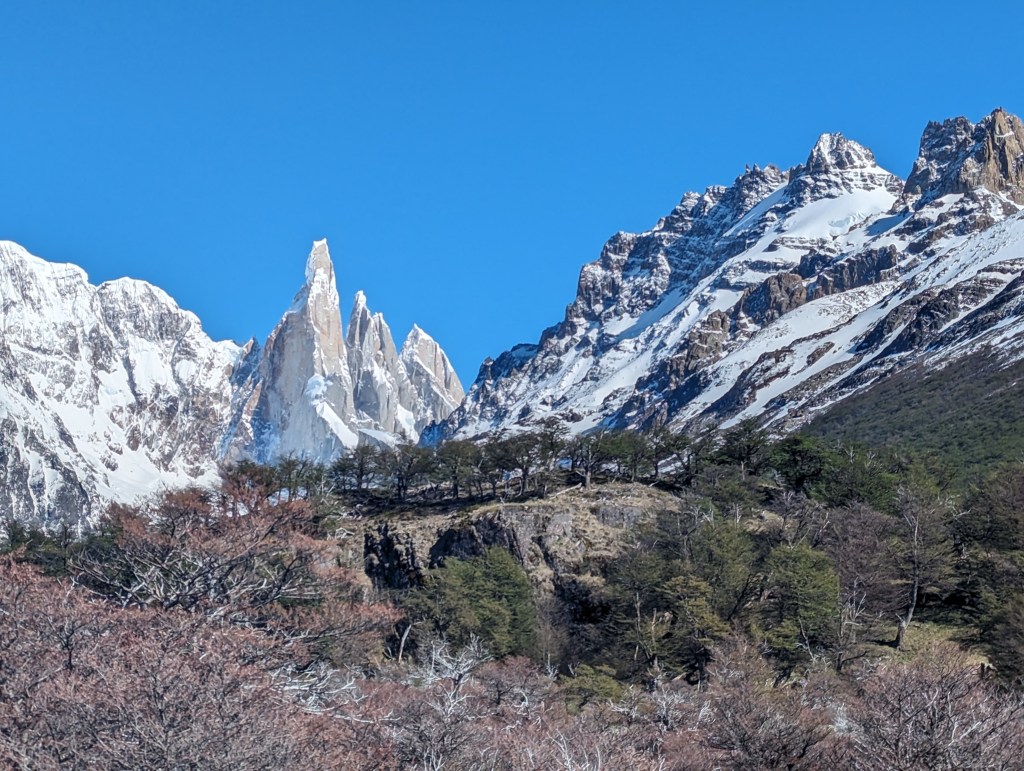
With steep climbs requiring chains to pull yourself up, passing through gnarly old woods, dried out river beds, and paths laced with tree roots, it was quite the hands down hobbitiest walk I’ve ever done. A 24km round trip, culminating in another Glacier above a glacial lake lined at the edges with a lot of exhausted people, mostly a good 30-40 years younger than us – yay for the oldsters!
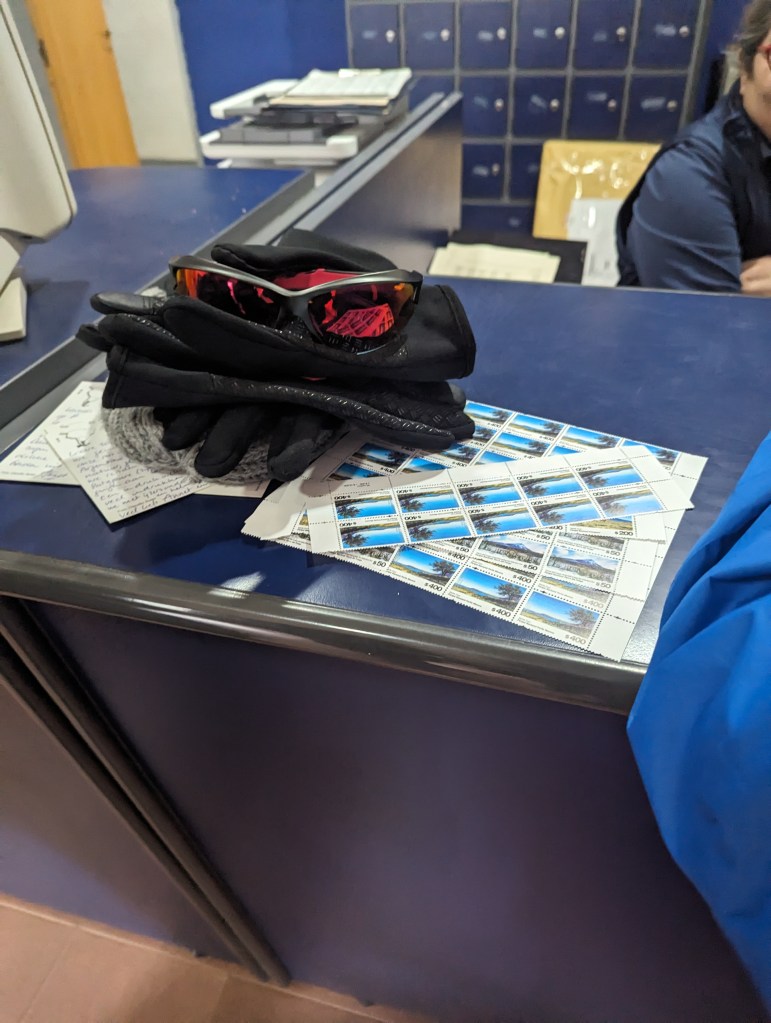
Stamp inflation
Lucky I’d left a gap for the 7 stamps
We have an amusing interlude in the Correa (post office), as it seems impossible to buy stamps anywhere else. The lady behind the counter sends us all , one by one, into a queue for stamps, where no one sits behind a counter, and she busily avoids our eyes as we eventually bond with the rest of the queue as we wonder why she can’t sell us stamps for our postcards, and how late Ng we’ll be waiting. Eventually another lady appears, the stamp lady, clearly, and shows us how to put the 12 stamps required per postcard costing £2.25 red rate onto each card. I end up buying 18 quids worth, due to my useless Spanish. Inflation has hit the stamps as well as the money.
Torres del Paine.
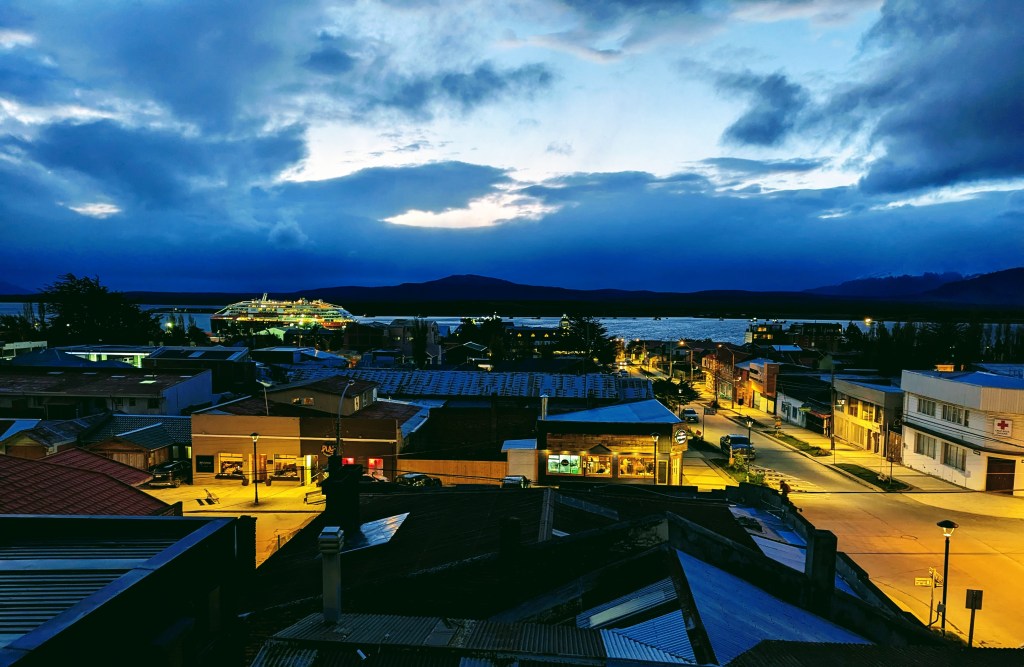
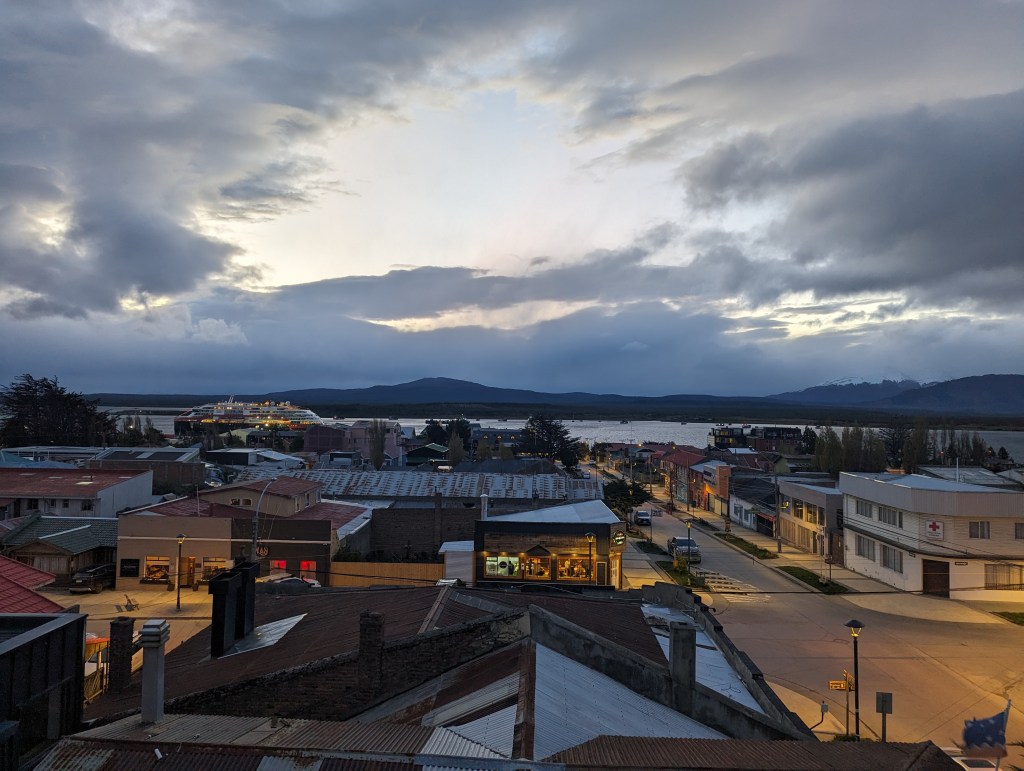
Puerto Natales from our windowAnother hotel viewAnd another. That’s a Hurtygurty cruise ship in the harbour – I have had ambitions to go on one ever since my friend Margaret sent me a goodbye-old-friend-I’m – about-to-die- in- a-storm email from one. She survived.
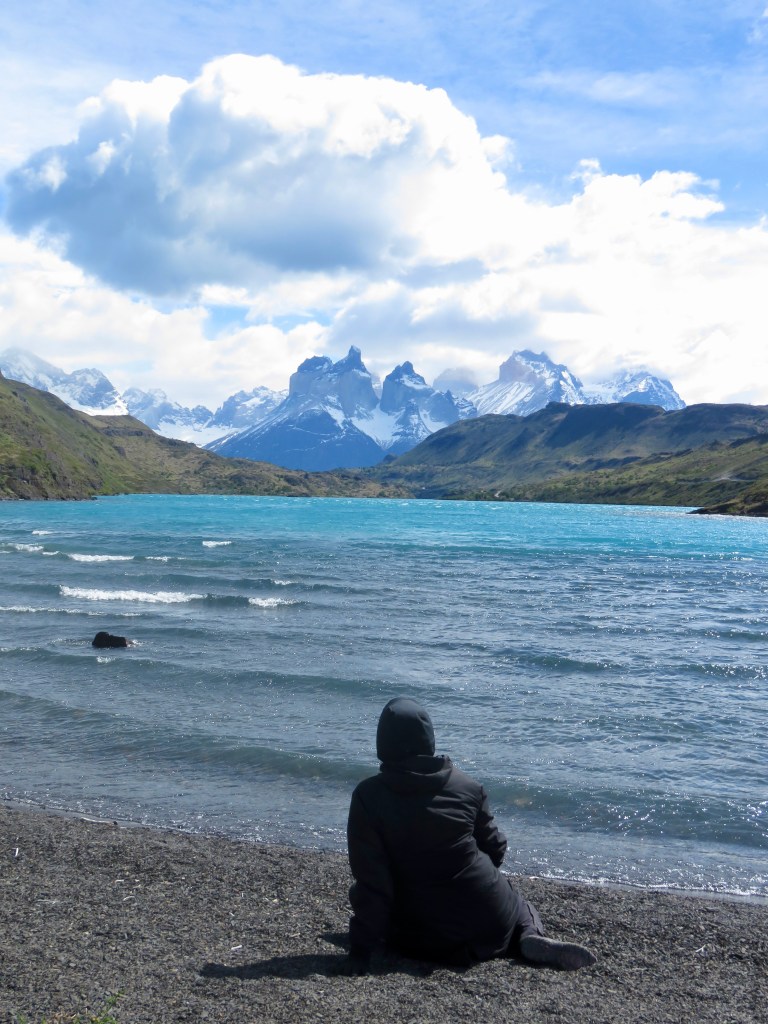
We left El Chalten and 8 hours later arrived by 2 buses in Puerto Natales, a very smart little town in Chile we’re using as a jumping off point into Torres del Paine National Park. In Spanish and a native language called Teheulche this means Towers of Blue.
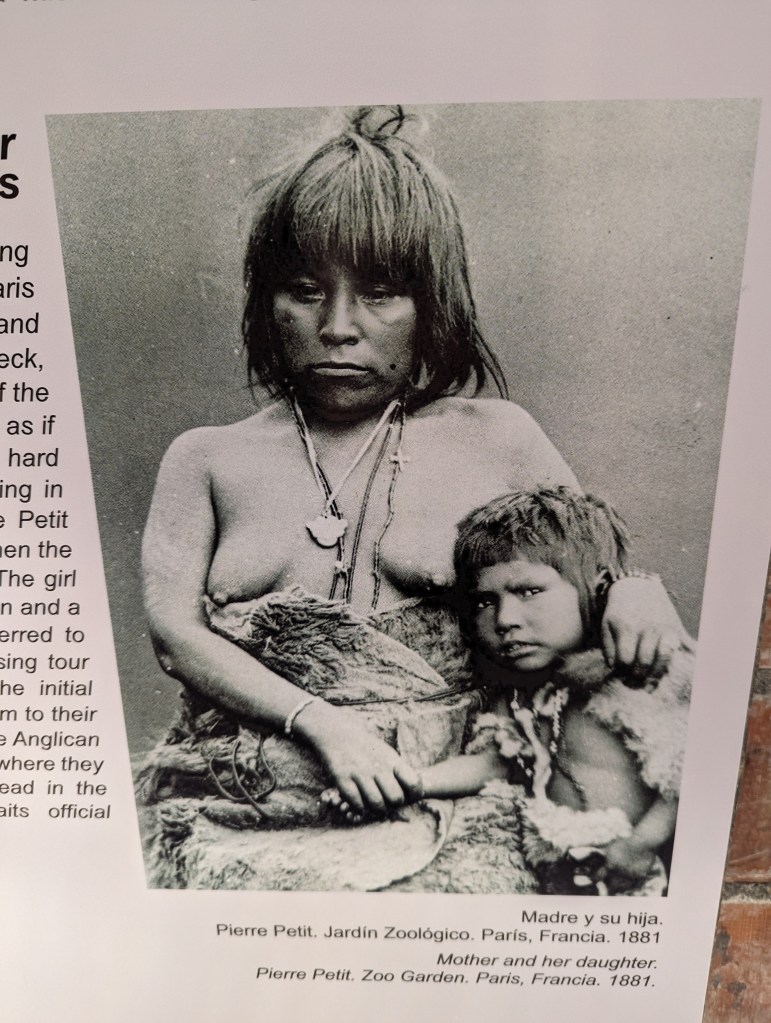
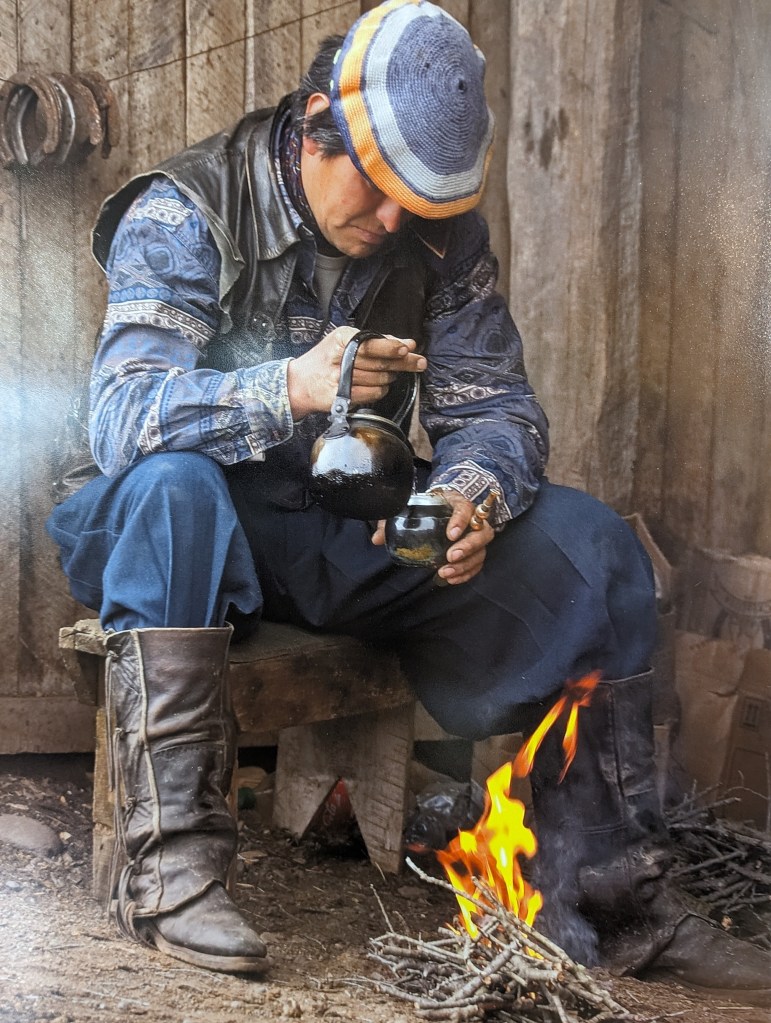
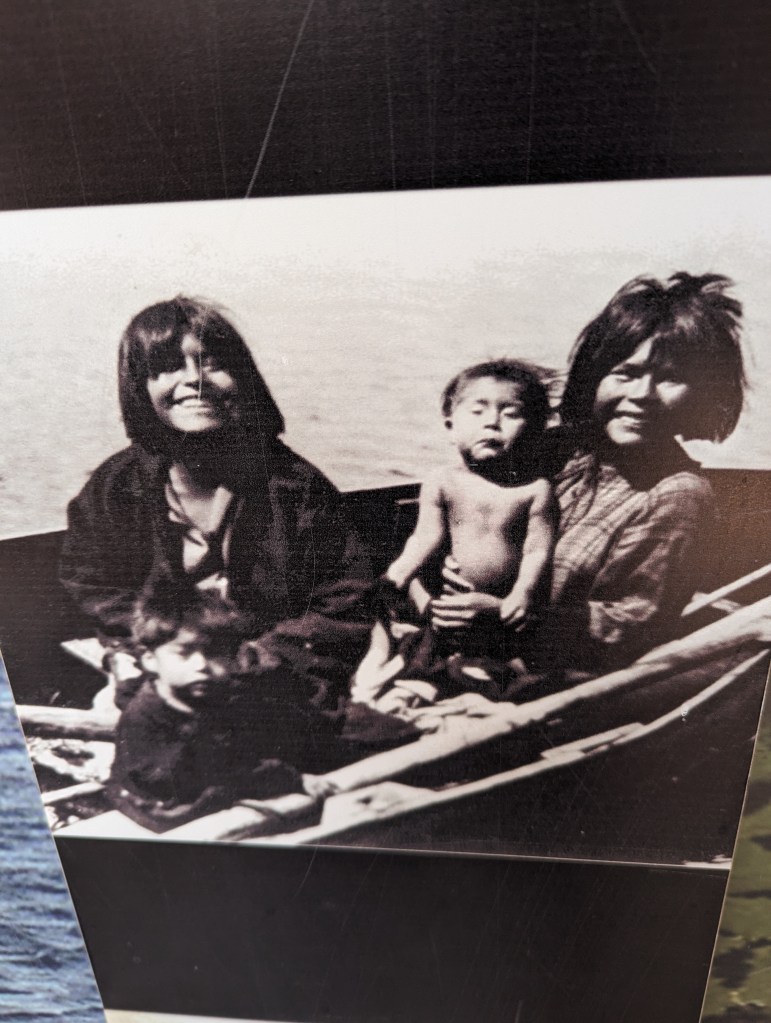
There were several different aboriginal groups living in the area for thousands of years, both around here and down in Tierre del Fuego where we are going soon. Ferdinand Magellan called it “The land of fire” in the 16th century, because of the many bonfires lit by the natives seen on shore by the first European explorers.
Lakes are different colours due to the algae and minerals in the water.
Unbelievably, considering how cold it can get here, these people were often naked, even the babies, seemingly undisturbed by snow, rain, wind, whatever the weather brought. They used the fires to keep warm.
This mother and child were in a zoo when this picture was taken. The young girl died soon after it was taken. One of the oldest photos of indigenous people. The young males in the tribes dressed as devils. I’m not sure why. I’ll get back to you on this.
In the 19th century they were almost completely wiped out by measles, brought by missionaries and settlers, to which they weren’t immune, but also by hunters, paid to find and kill them. Some were shipped off to zoos in Europe. The barbarity seems almost impossible to believe nowadays, done so that settlers could farm sheep on the land. The last laugh definitely goes to vegetarians, although it’s a somewhat hollow one.
A ridiculously hairy, extremely friendly “wild” dog.A street dog kennel
Puerto Natales has a lot of dogs, usually long haired ( because it is freezing here most of the time), and always friendly, that loll about everywhere in a state of stupor unless a motorbike or a car with a dog drives past when they suddenly all jump up and run at the car or bike, ibn a pack, barking like mad. The whole thing is hair raising to watch and no doubt leads to some horrible injuries to the dogs. These dogs look well fed and healthy, but aren’t owned by anyone, and have kennels on the side of the road and are clearly fed by someone, although who remains a mystery.
Mylodon Cave.
Another visit takes us to see a cave where they’ve found Mylodon bones, a long extinct giant sloth I’d heard of from Bruce Chatwin’s “In Patagonia”. It’s huge, very chilly, and not at all the safe, cosy hideaway I’d imagined.
The cave where they’ve dug up Mylodons’ fossilised remains. There are wooden Mylodons all over the place
Pisco Sours should have health warning.
Being back in Chile we are being very careful not to just pile into the nearest restaurant as prices are pretty much the same as in the UK, sometimes higher. However a Pisco Sour in the bar upstairs is only £4 and it is delicious. You should only have one though as they are very strong. So obviously I had two.



































































 Travellinglight